Visual comprehension Addition & Subtraction Worksheets for Ages 4-7
7 filtered results
-
From - To
Welcome to our collection of Visual Comprehension Addition & Subtraction Worksheets designed specifically for children ages 4-7. These engaging worksheets are tailored to enhance young learners’ ability to understand and solve basic math problems through visual aids. By incorporating vivid illustrations and relatable scenarios, we make math exciting and intuitive. Children will practice addition and subtraction in a playful manner, improving their comprehension skills while building a strong mathematical foundation. Our user-friendly worksheets not only foster critical thinking but also promote confidence in early math concepts. Perfect for homeschooling or additional practice, these resources will make learning math enjoyable!
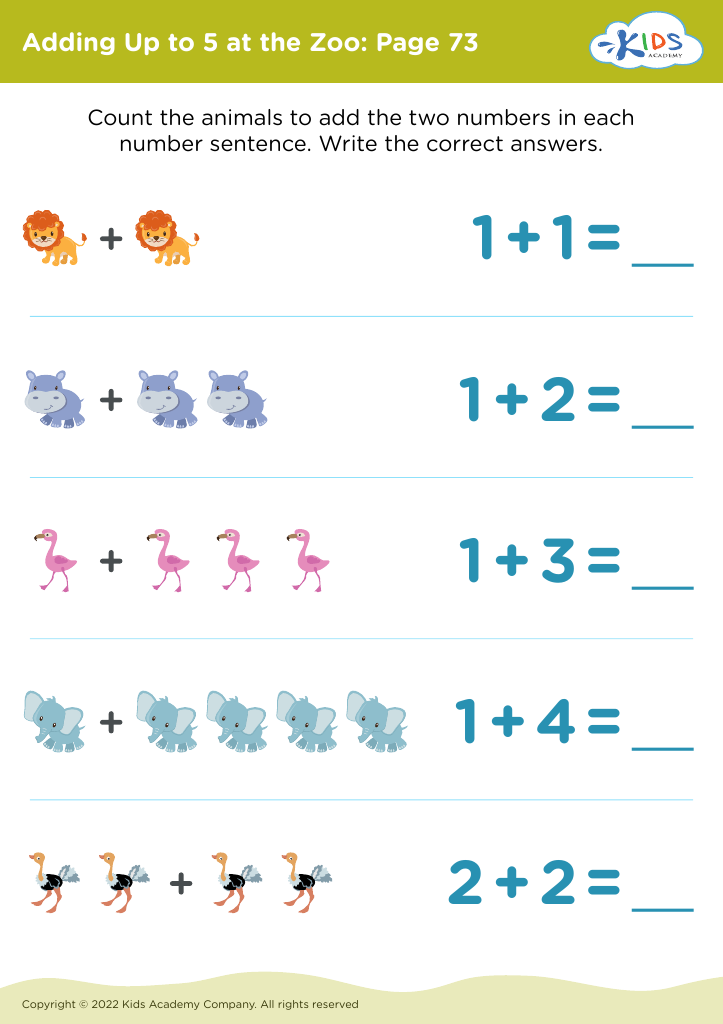
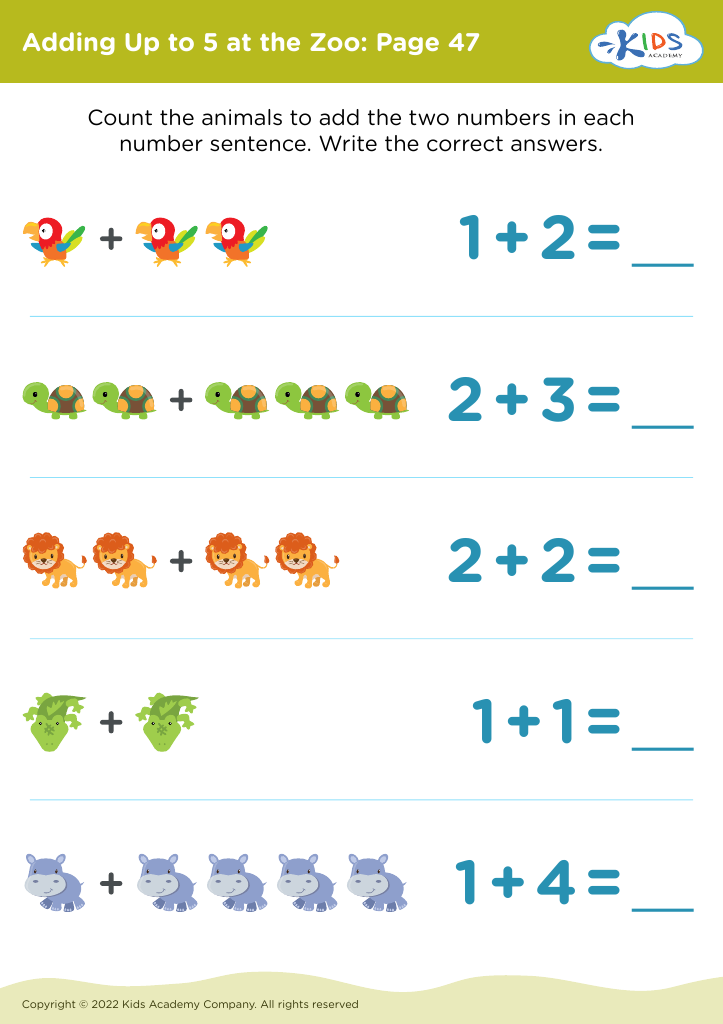
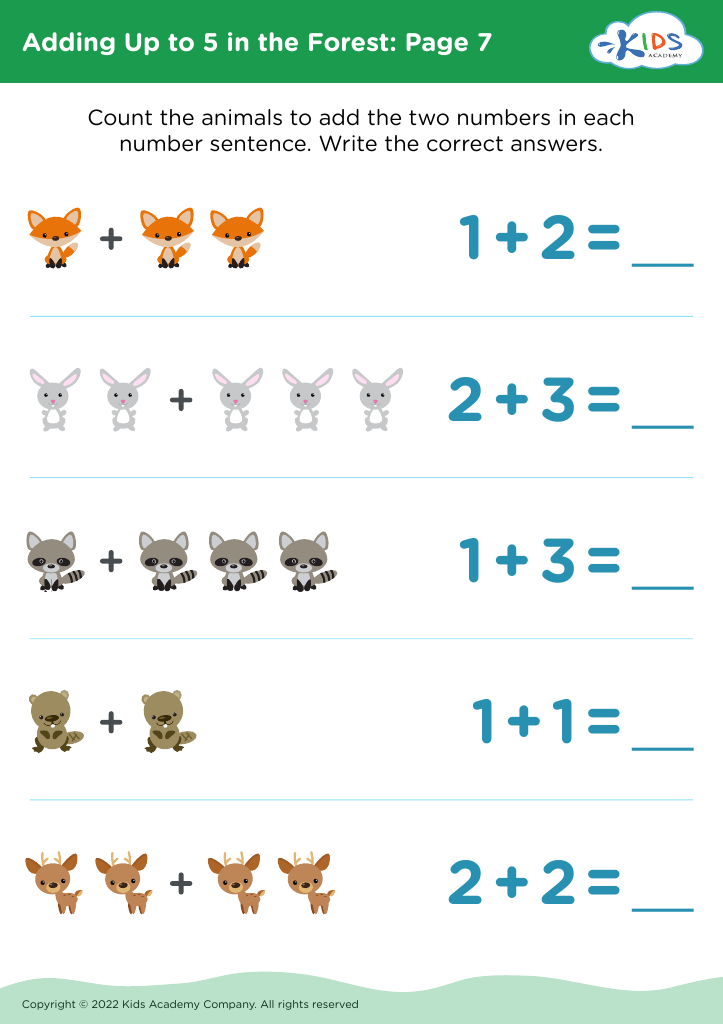
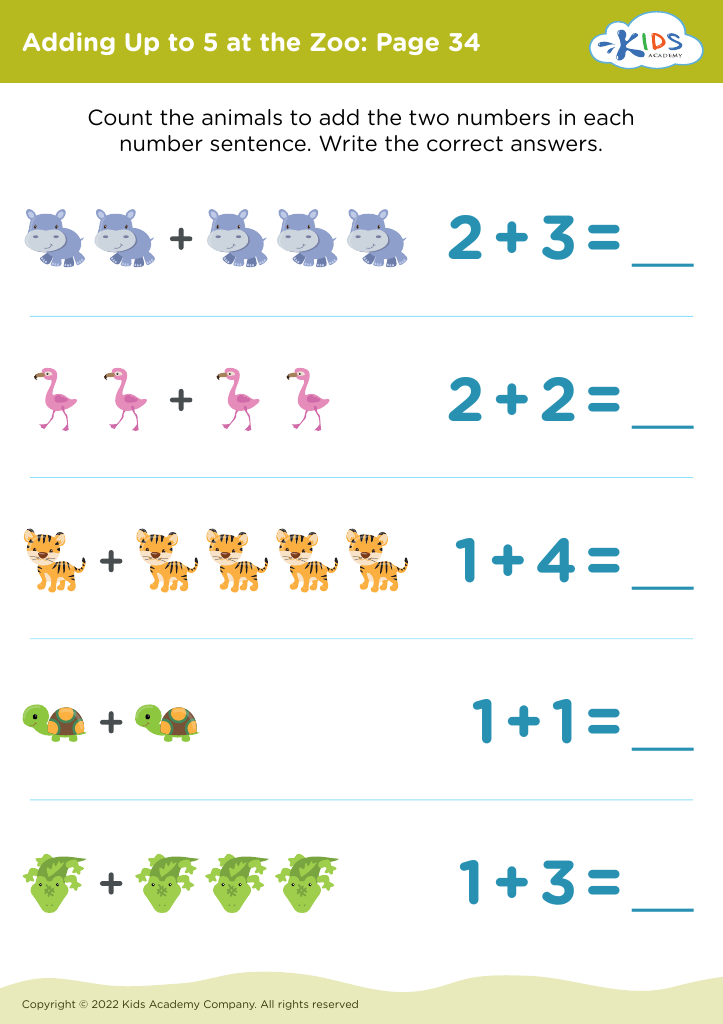
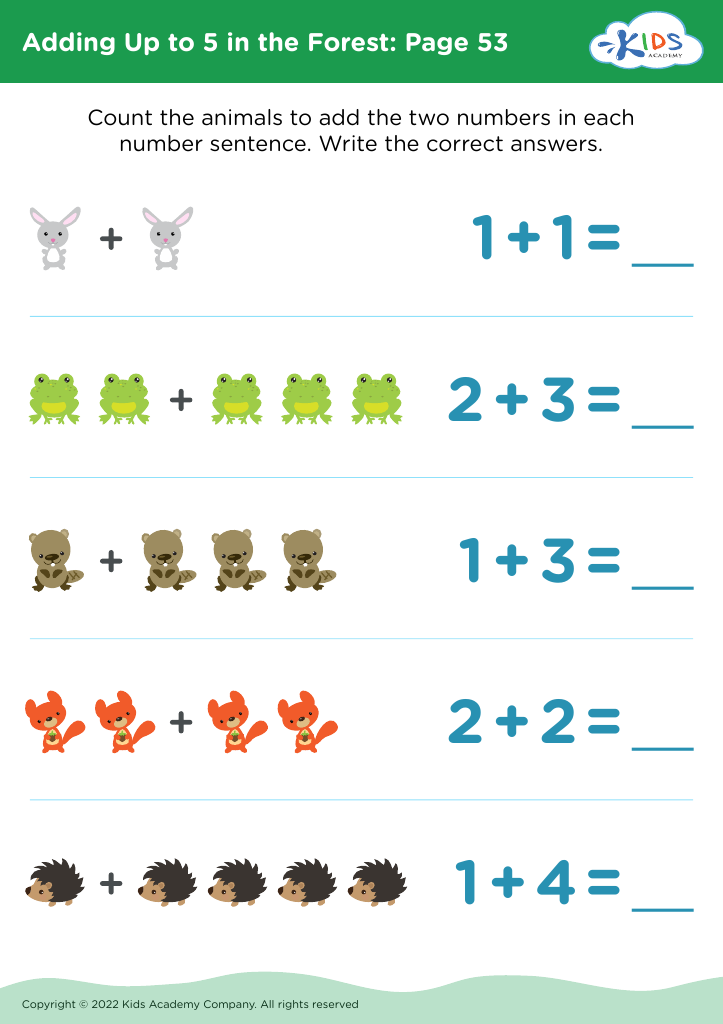
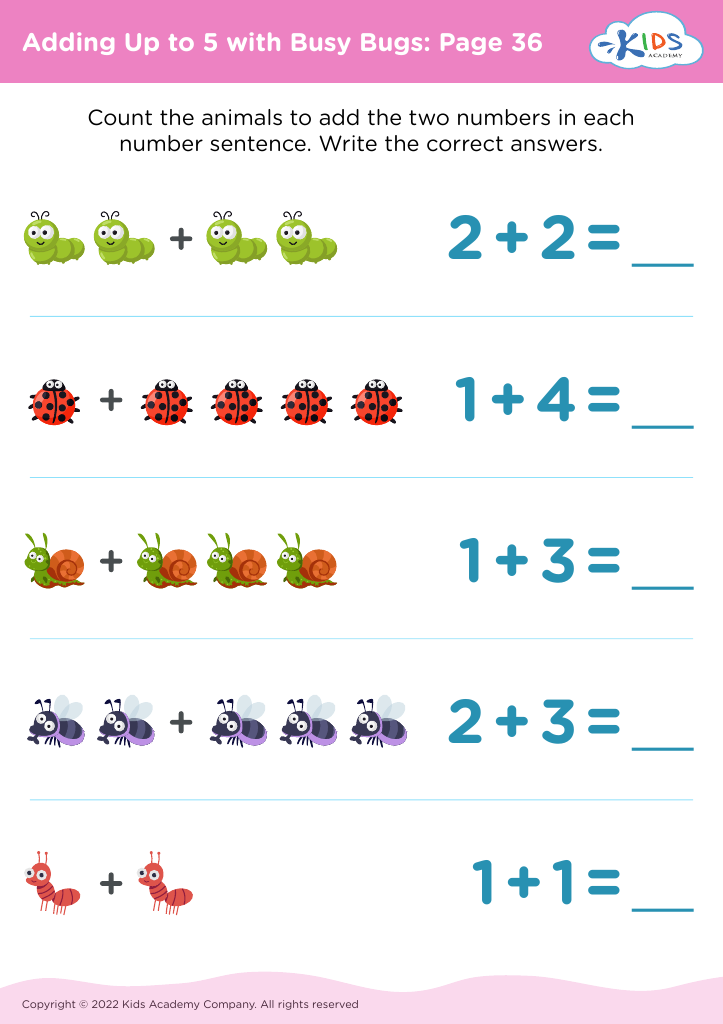
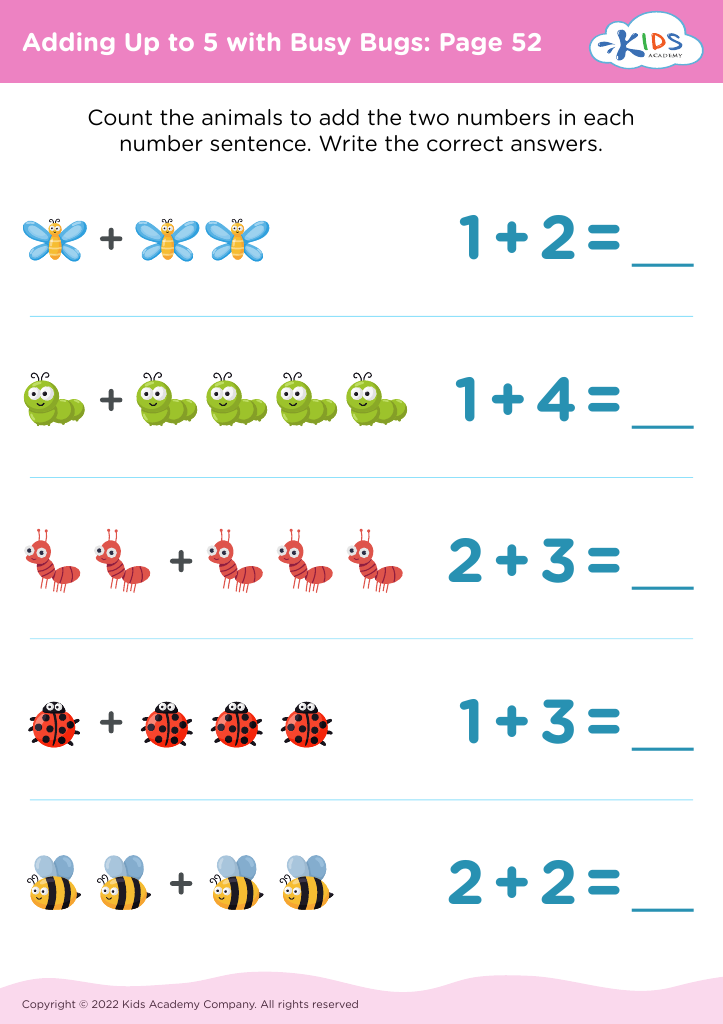








Visual comprehension of addition and subtraction is crucial for children aged 4-7 as it lays the foundation for their understanding of mathematics. At this early age, children are developing cognitive skills and learning how to process visual information. By using visual aids such as counters, number lines, or visual representations of problems, they can better grasp the concept of numbers and operations.
When parents or teachers emphasize visual comprehension, they help ignite a child's curiosity and promote engagement in learning. Visual learning caters to various learning styles; some children may respond better to imagery than abstract numbers. This method can lead to higher retention rates and a better overall understanding of mathematical concepts.
Moreover, enhancing visual comprehension builds problem-solving skills and critical thinking abilities. Children learn to visualize problems and find solutions more effectively, which not only aids in mathematics but also supports future subjects across the curriculum.
Furthermore, establishing a strong base in addition and subtraction prepares children for more advanced mathematical concepts later on. Ultimately, fostering visual comprehension in young learners helps create confident, capable mathematicians — a vital life skill that extends beyond the classroom.








