Visual learning reinforcement Addition & Subtraction Worksheets for Ages 4-7
7 filtered results
-
From - To
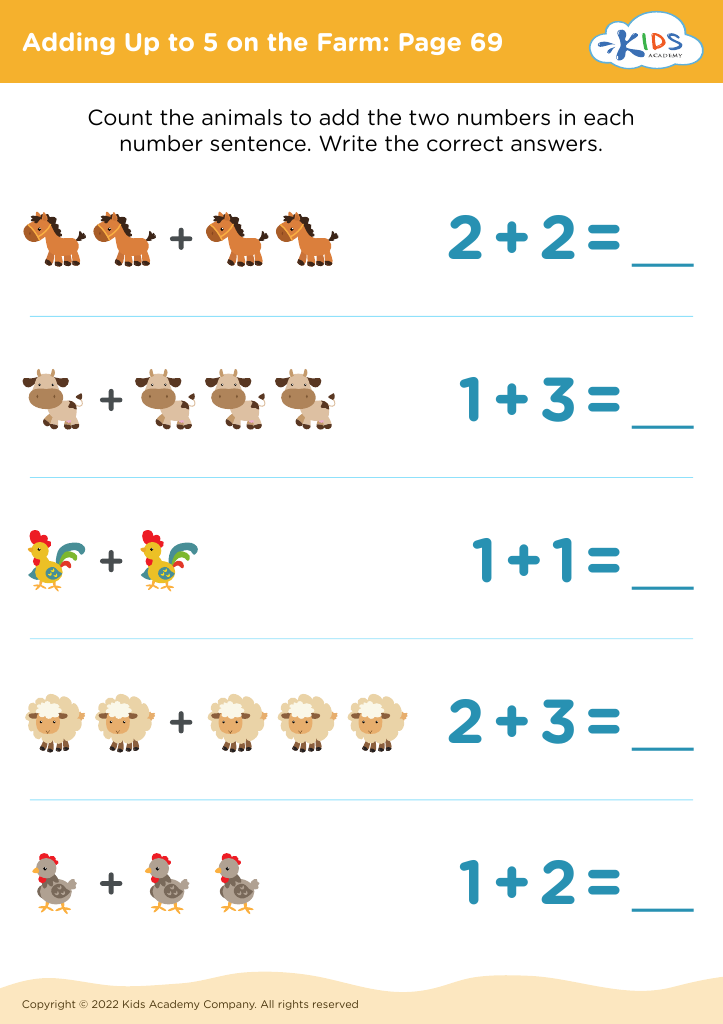
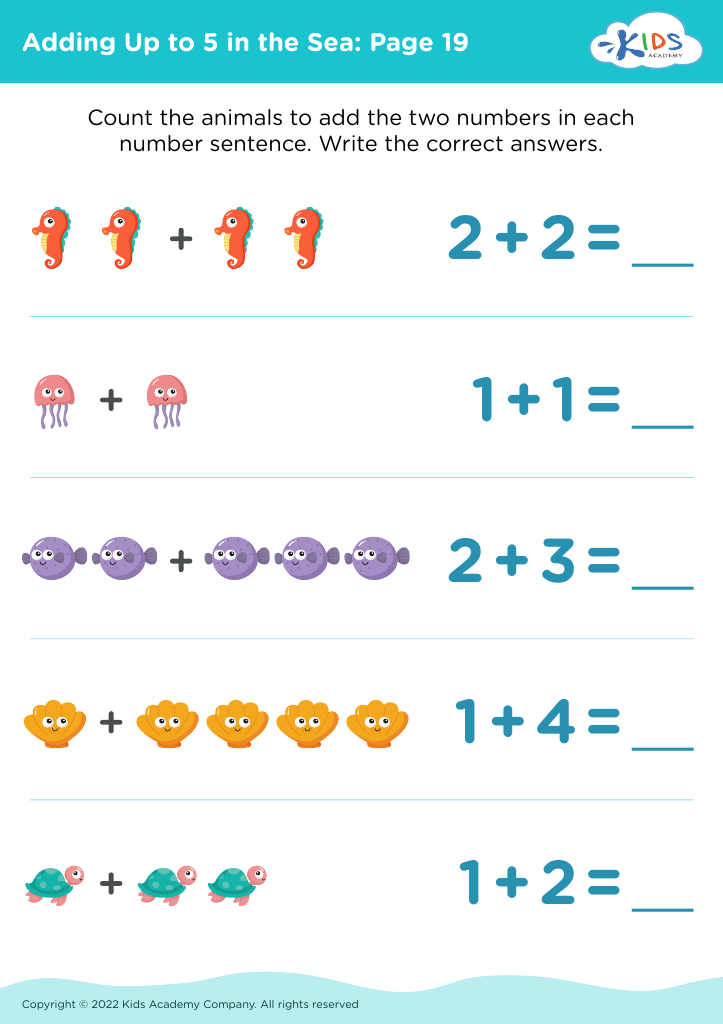
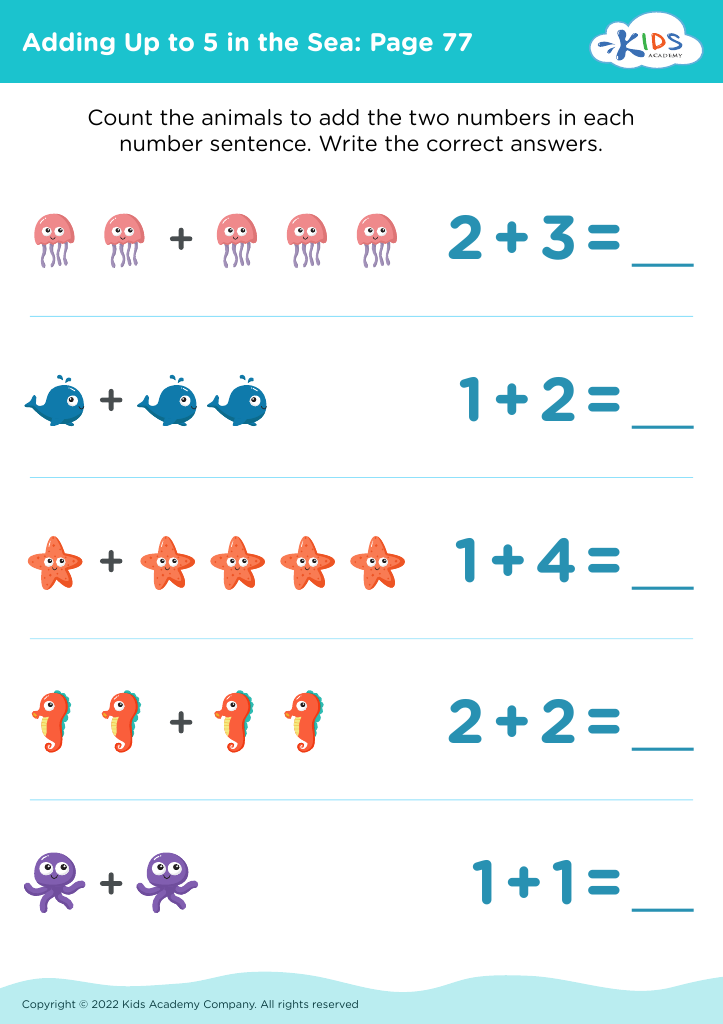
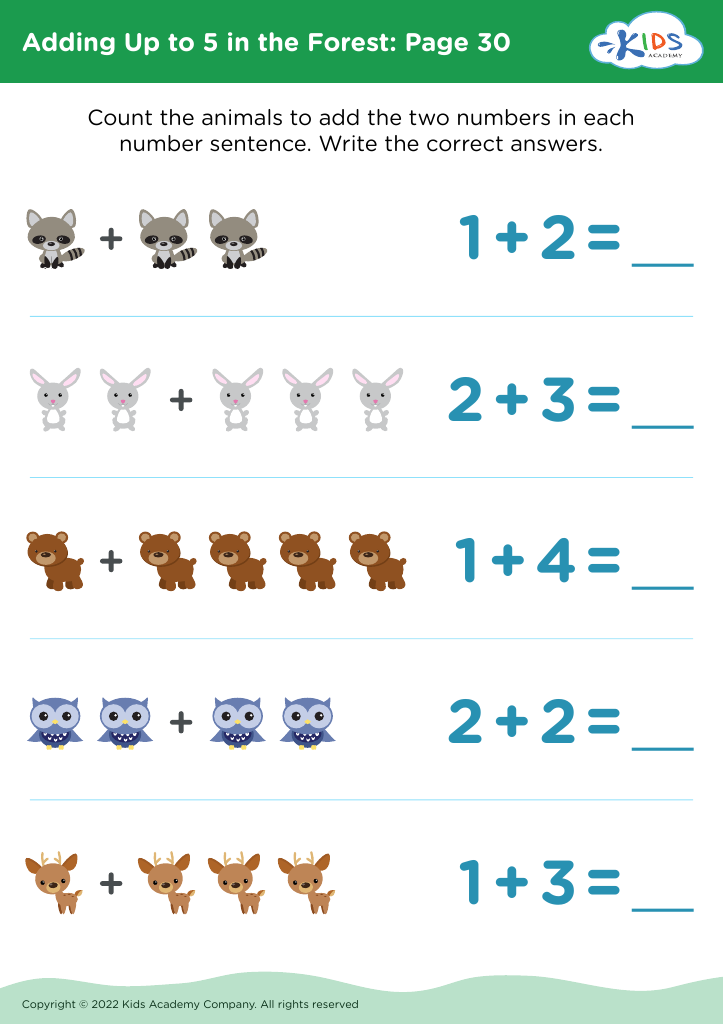
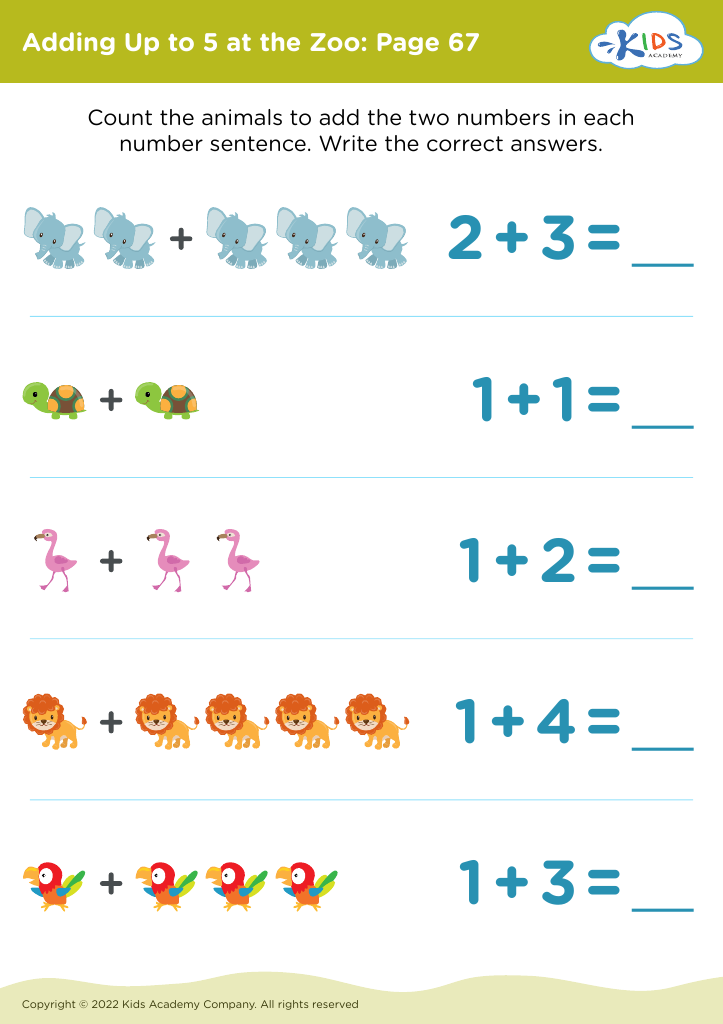
Explore our engaging Visual Learning Reinforcement Worksheets designed specifically for children aged 4-7. These appealing resources combine vibrant visuals with interactive exercises to help young learners grasp essential addition and subtraction concepts. Each worksheet incorporates familiar shapes, objects, and colorful illustrations, making math fun and approachable. Tailored for early grade learners, these worksheets aim to enhance understanding, boost confidence, and develop critical problem-solving skills. Our user-friendly format allows for easy printing and classroom or home use. Foster a love for math while nurturing visual learning – perfect for parents and teachers seeking innovative ways to enhance foundational arithmetic skills!
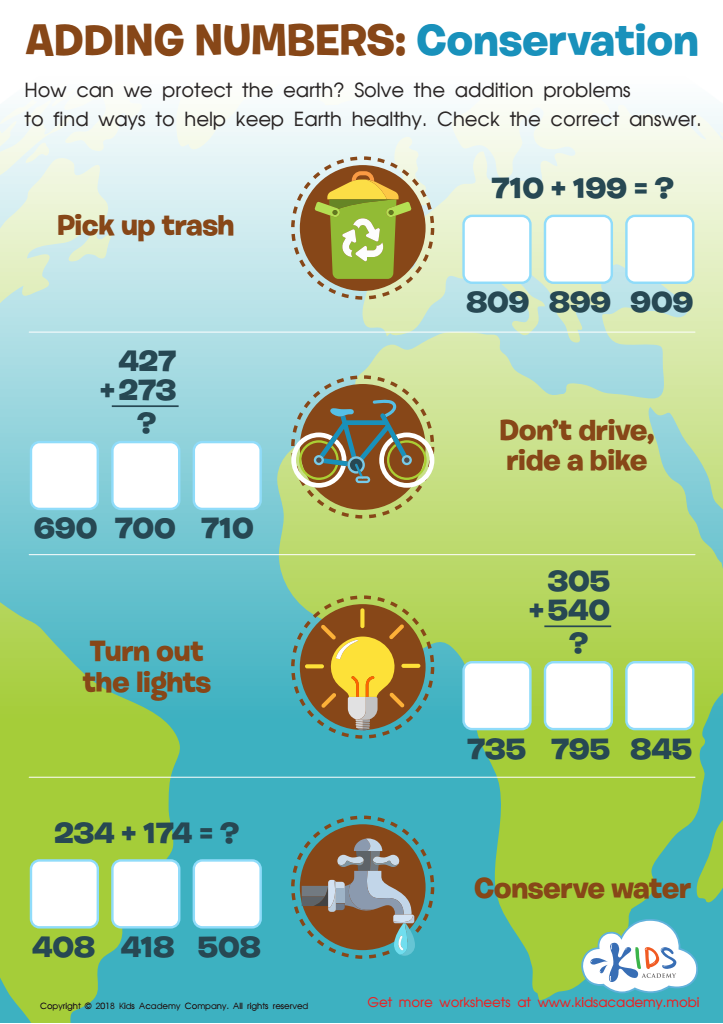
Adding Numbers: Conservation Worksheet
 Assign to My Students
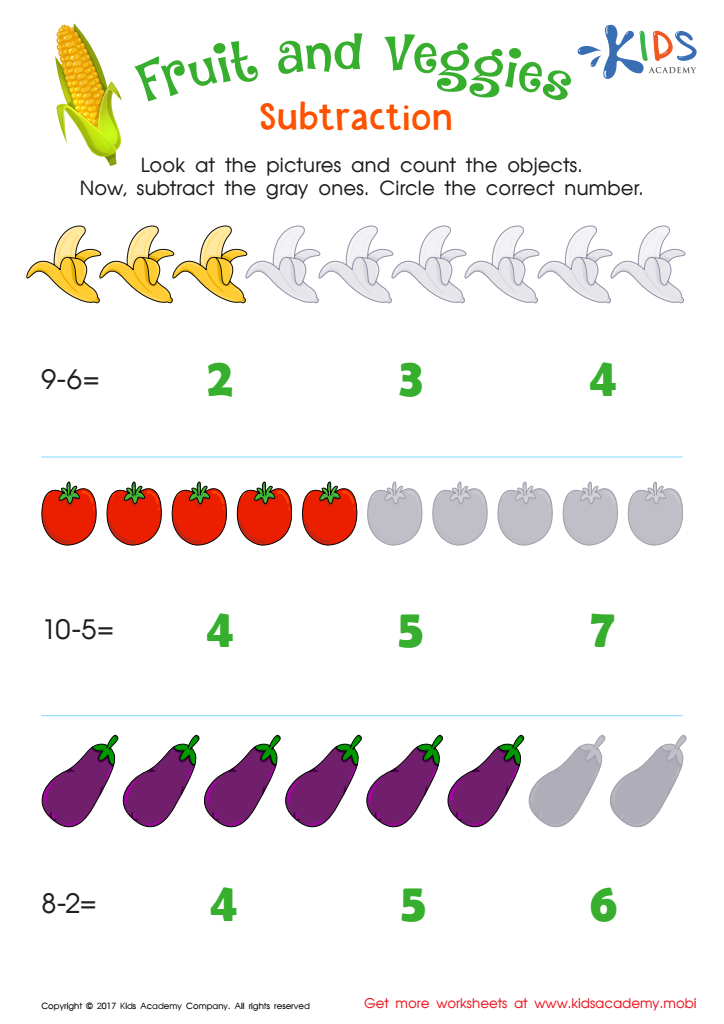
Fruit and Veggies Subtraction Worksheet








Visual learning reinforcement plays a crucial role in teaching addition and subtraction to children aged 4-7. During these formative years, children are increasingly developing their cognitive abilities, and incorporating visual elements into their learning process significantly enhances their understanding and retention of mathematical concepts.
Visual aids—such as pictures, diagrams, and manipulatives—allow children to visualize numerical relationships, transforming abstract concepts into tangible experiences. For example, using number lines or counters can help young learners grasp the concept of "adding" or "taking away." This hands-on approach engages multiple senses, making the learning experience more interactive and enjoyable.
Furthermore, visual learning supports various learning styles. Some children may be more auditory or kinesthetic learners, but most respond positively to visual stimuli, which can spark curiosity and encourage exploration. Engaging visuals also reduce anxiety associated with math, promoting a more positive attitude towards learning.
Ultimately, when parents and teachers prioritize visual learning reinforcements for addition and subtraction, they set a solid foundation for more complex mathematical concepts in the future. This approach not only builds confidence in young learners but also fosters critical thinking and problem-solving skills essential for lifelong learning.








