Check out this FREE Trial Lesson on Addition & Subtraction for age 4-7!

Exactly the Same, or Not

Favorites
With answer key
Interactive
  • 4-7
  • Visual Learning
  • Addition & Subtraction
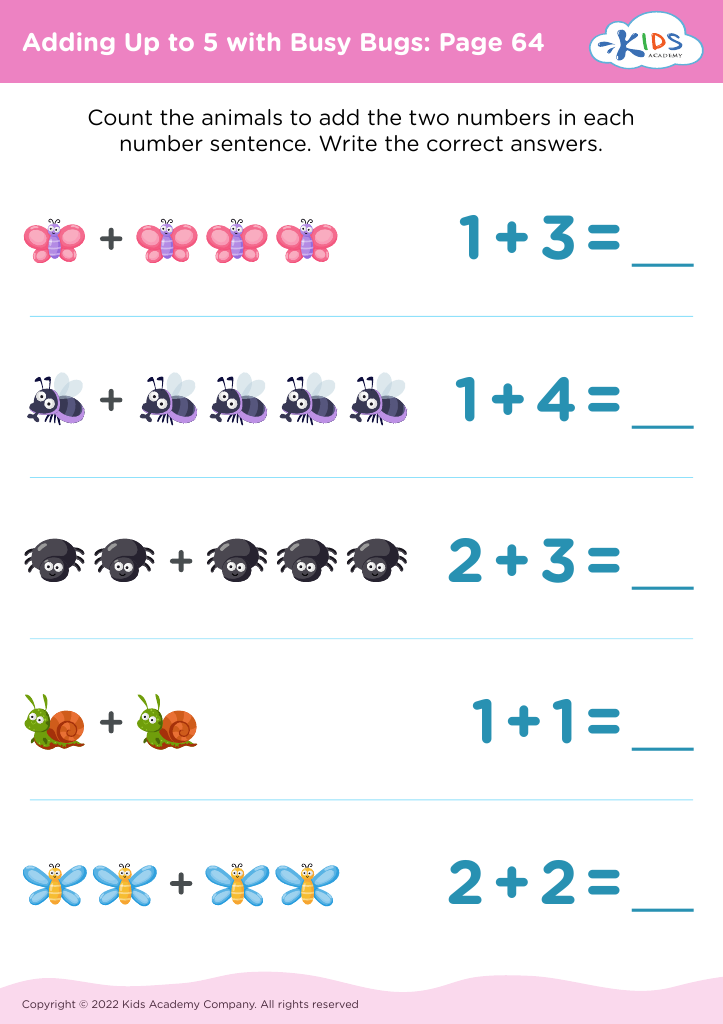
Adding Up to 5 with Busy Bugs: Page 64
Worksheet
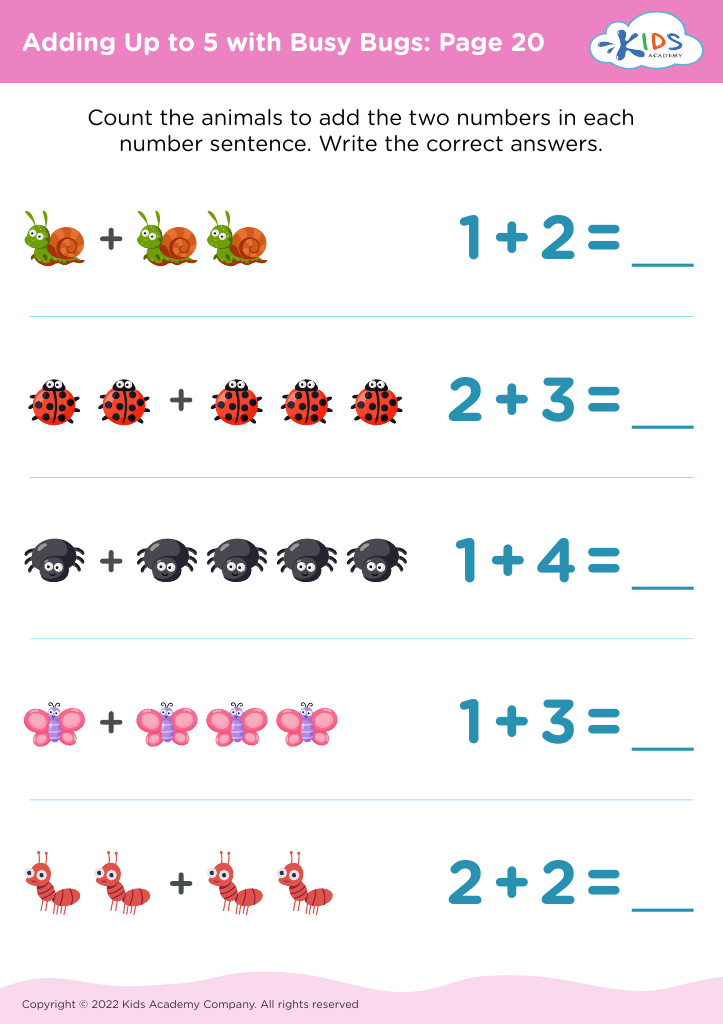
Adding Up to 5 with Busy Bugs: Page 20
Worksheet
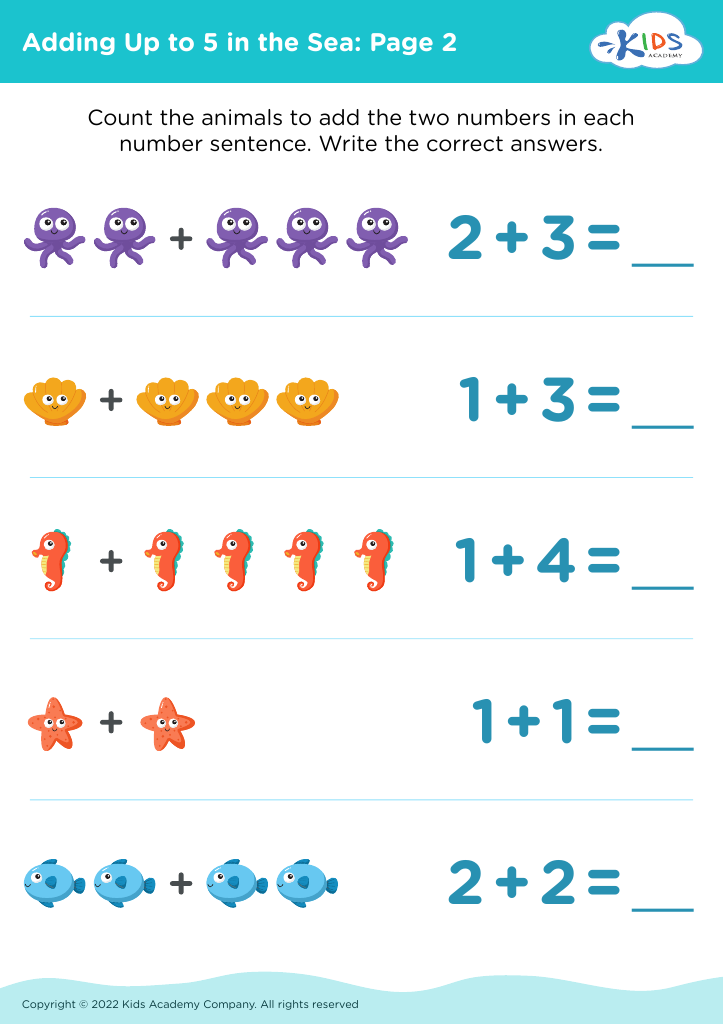
Adding Up to 5 in the Sea: Page 2

Adding Up to 5 in the Sea: Page 2

Adding Up to 5 in the Sea: Page 2
Worksheet
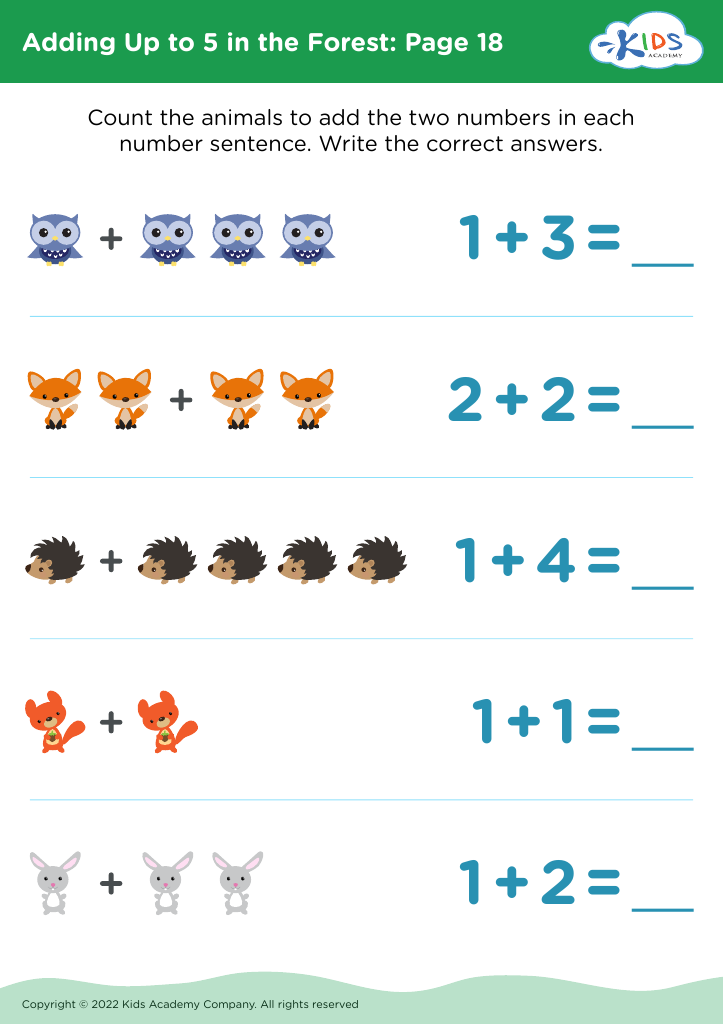
Adding Up to 5 in the Forest: Page 18
Worksheet
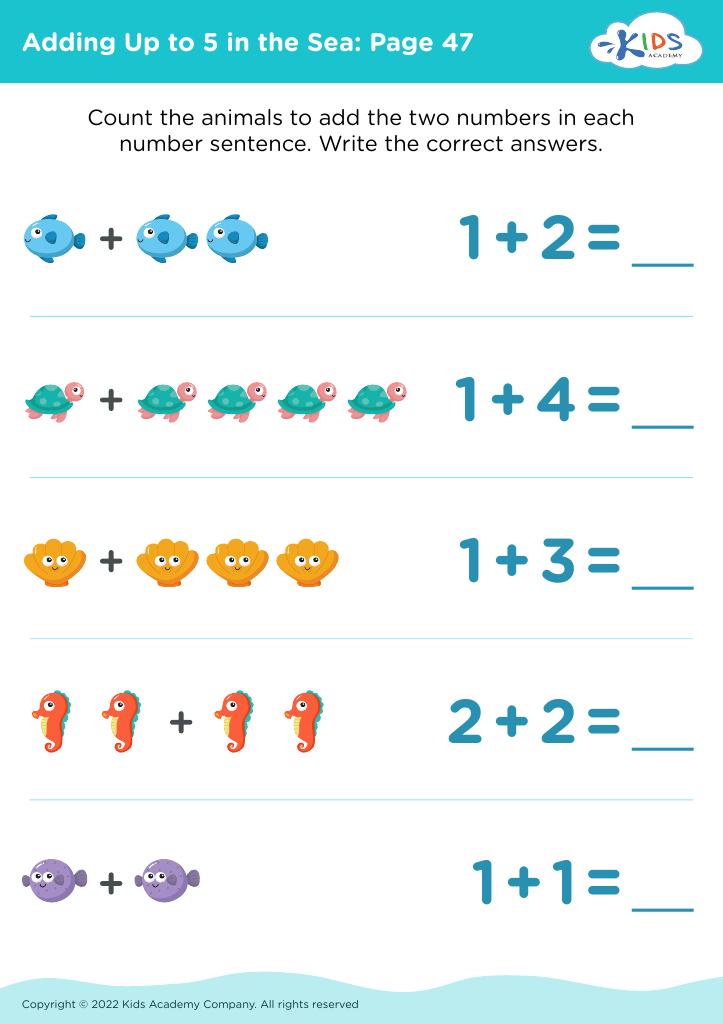
Adding Up to 5 in the Sea: Page 47
Worksheet
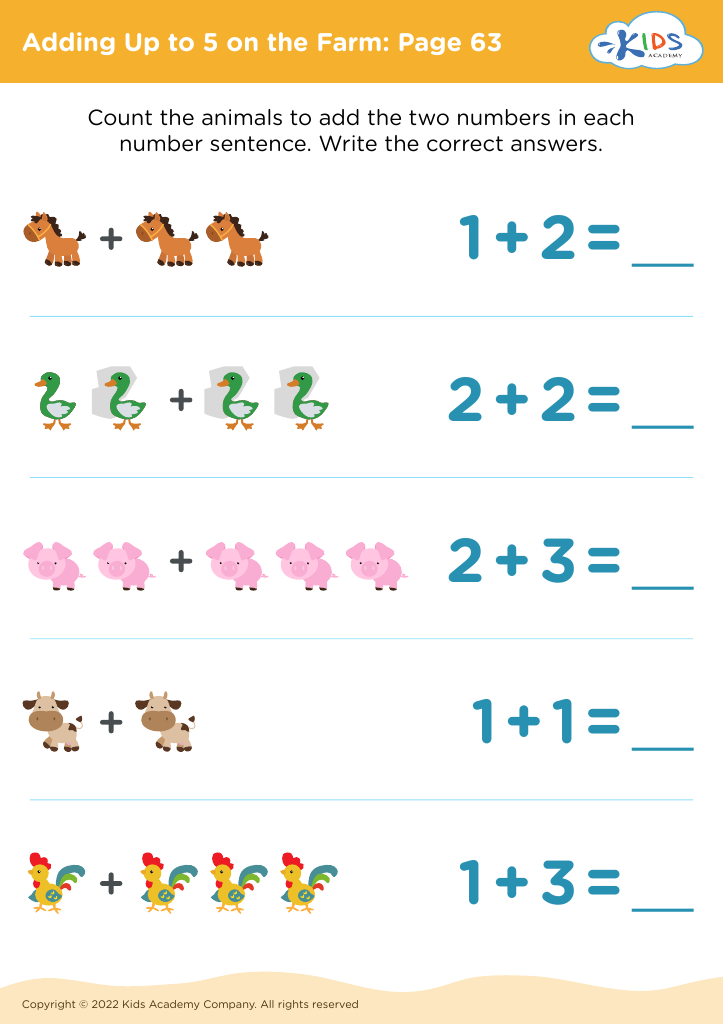
Adding Up to 5 on the Farm: Page 63
Worksheet
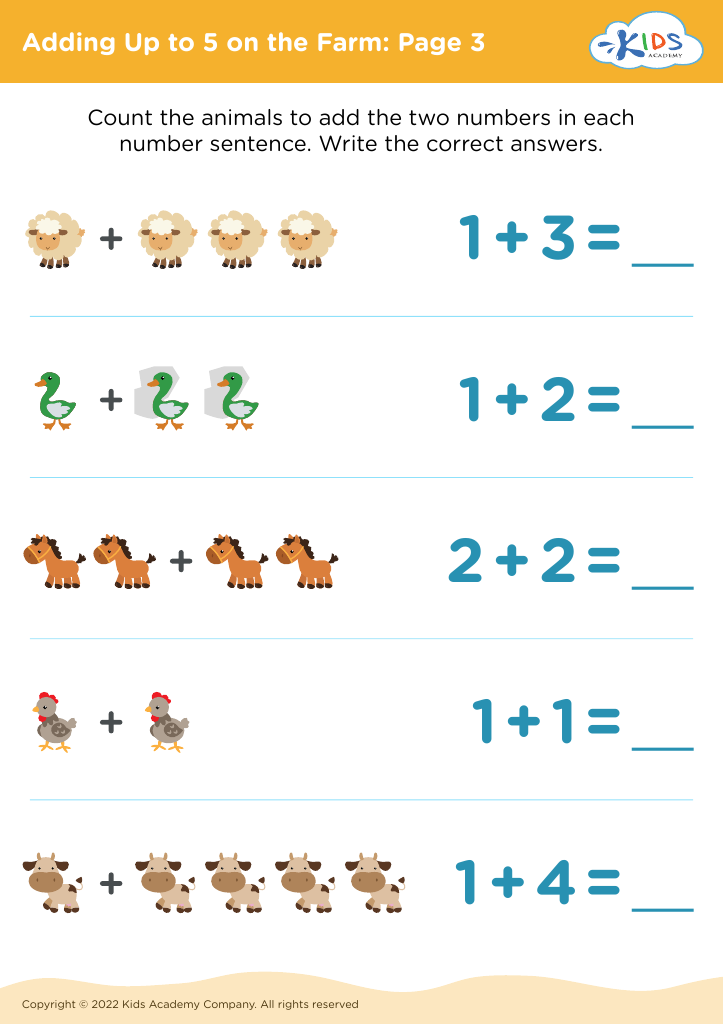
Adding Up to 5 on the Farm: Page 3
Worksheet
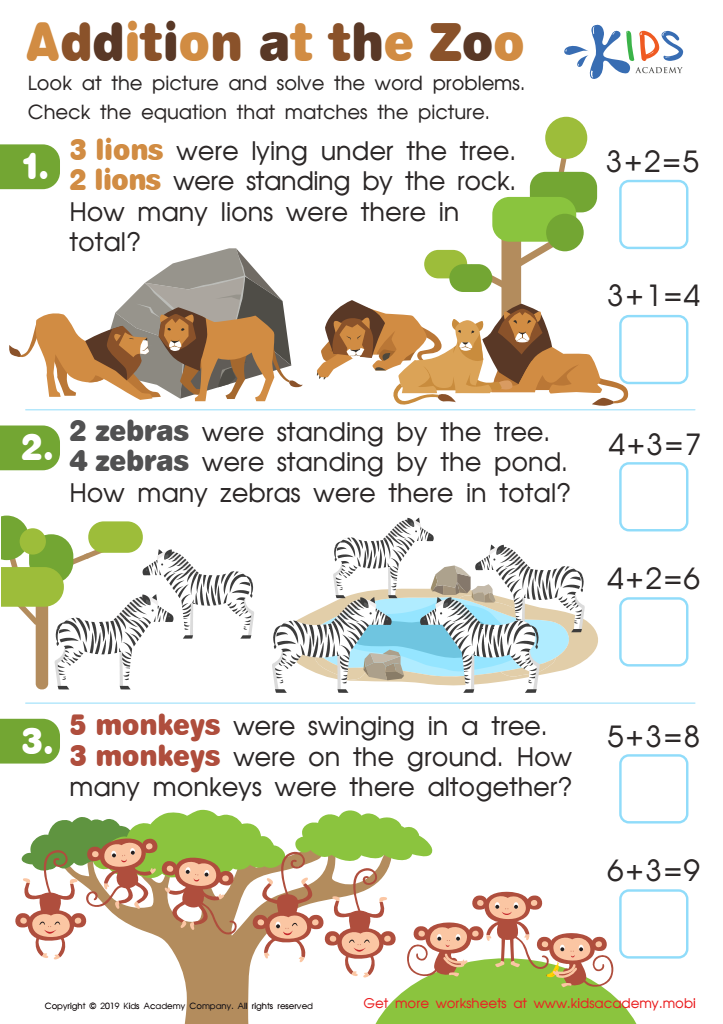
Addition at the Zoo Worksheet

Addition at the Zoo Worksheet

Visit the zoo with your kids and point out all the different animals. Ask them to name their favorites and identify animals on a worksheet. Challenge them to solve word problems related to the pictures. Ask them for the equation that fits the picture and check the answer.
Addition at the Zoo Worksheet
Worksheet
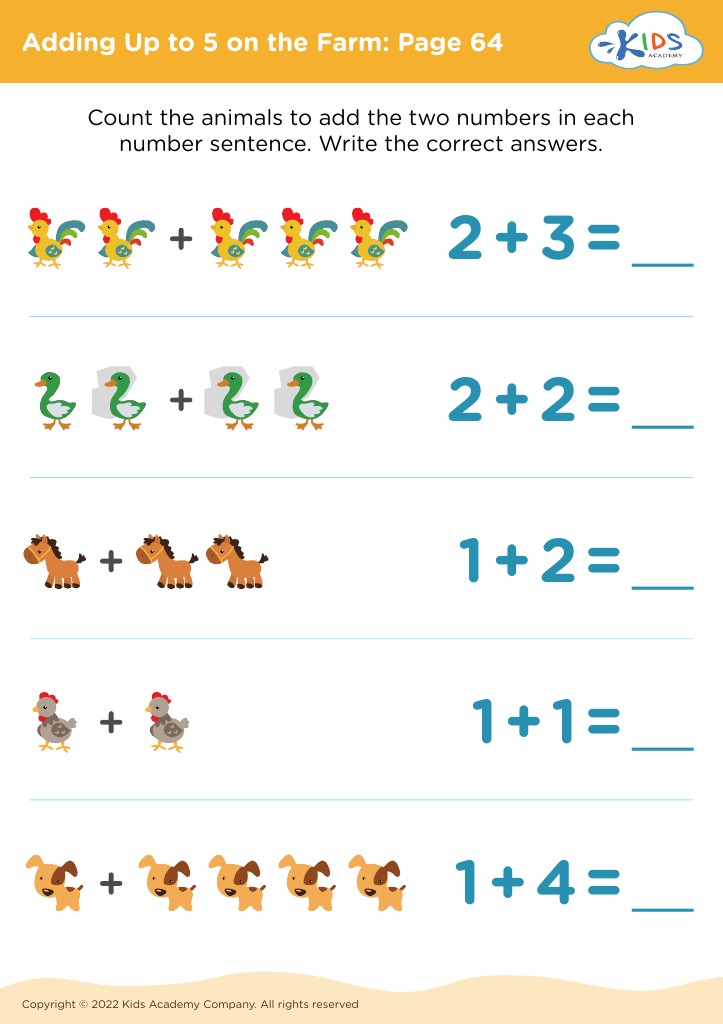
Adding Up to 5 on the Farm: Page 64
Worksheet
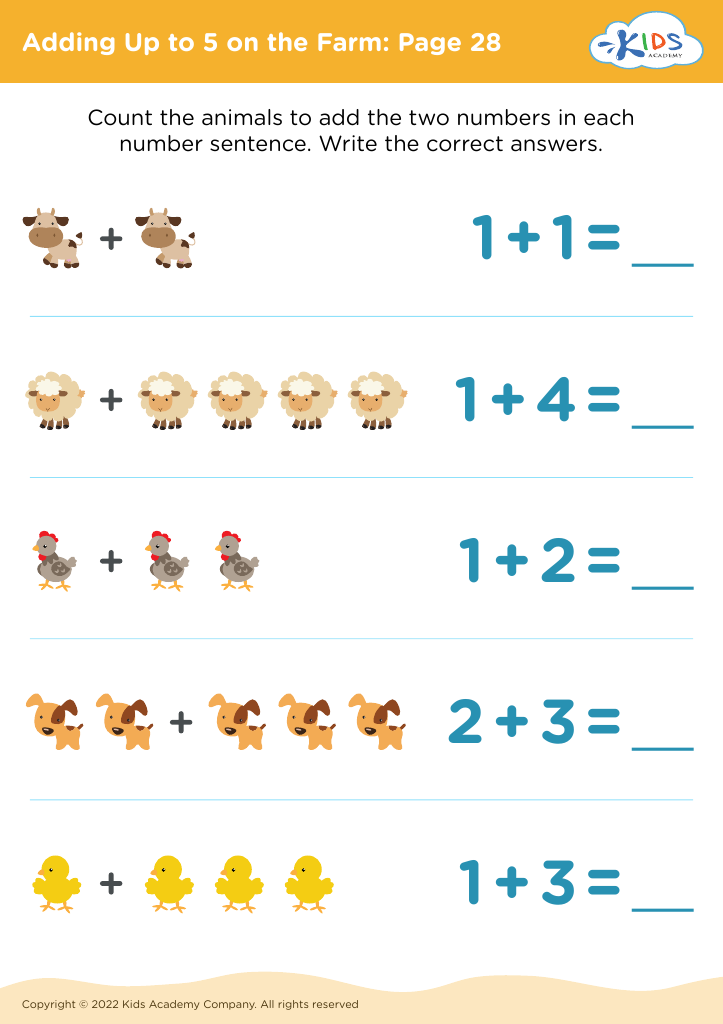
Adding Up to 5 on the Farm: Page 28
Worksheet
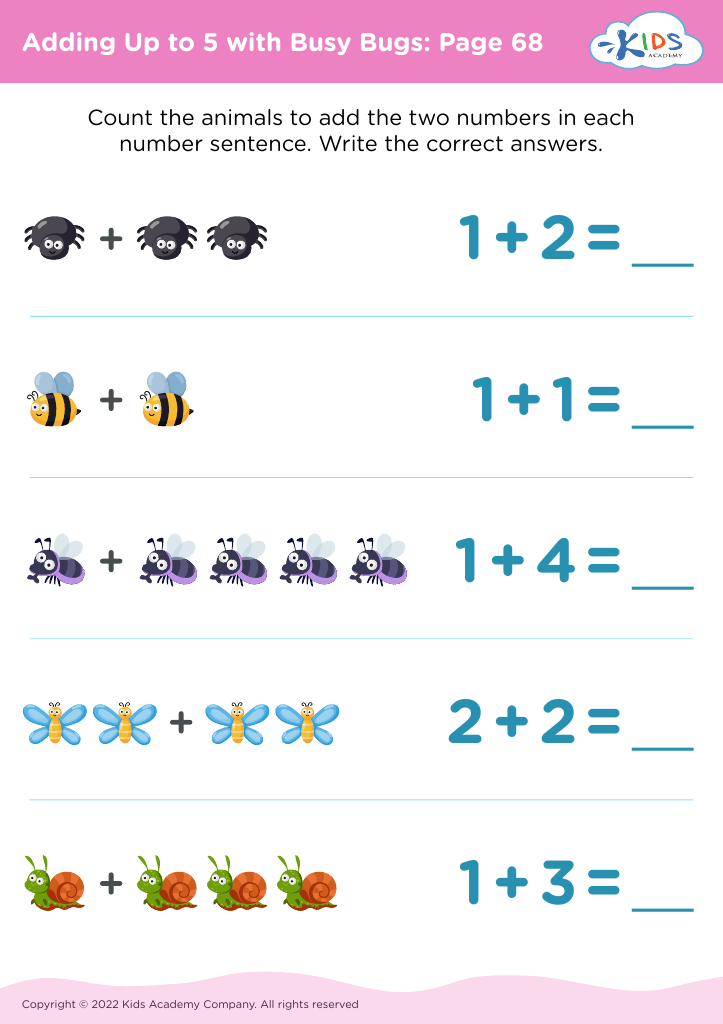
Adding Up to 5 with Busy Bugs: Page 68
Worksheet
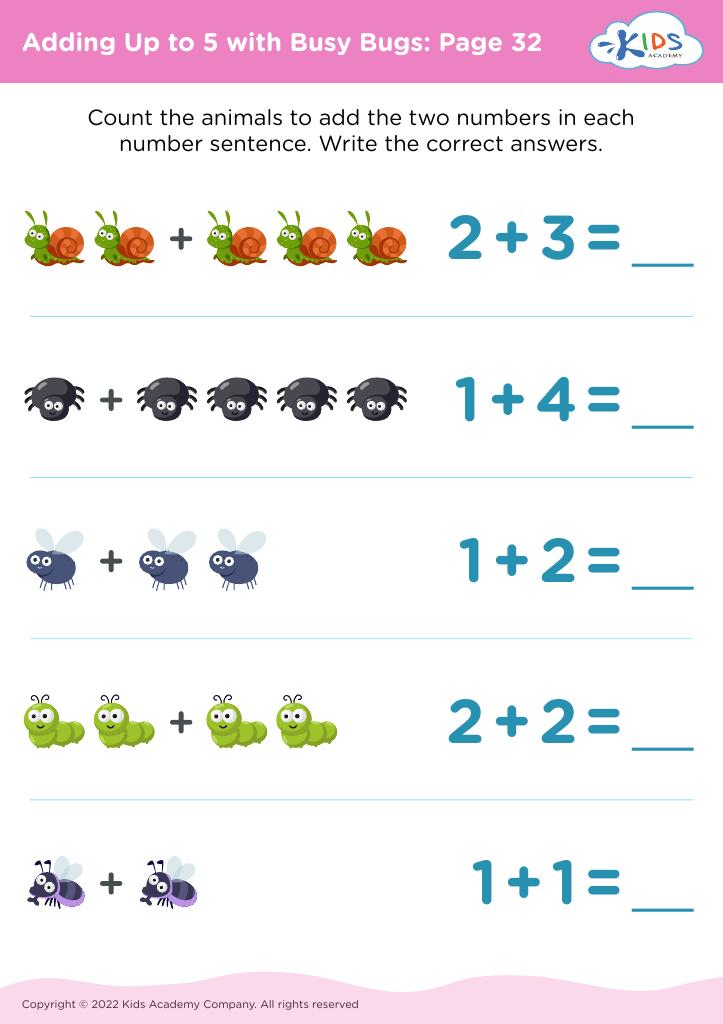
Adding Up to 5 with Busy Bugs: Page 32
Worksheet
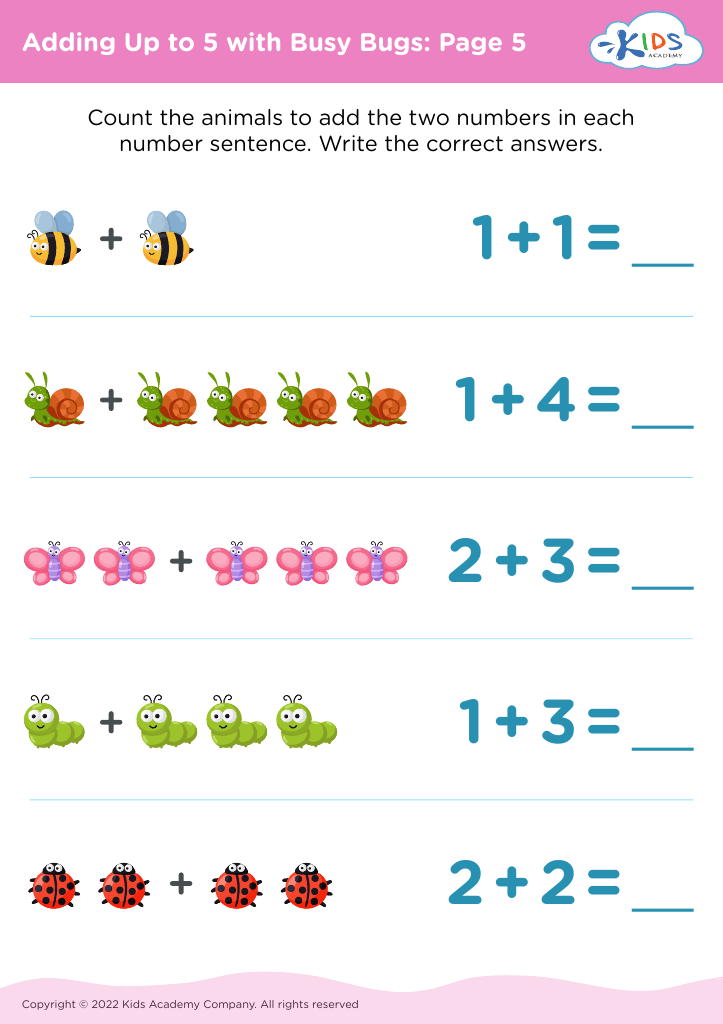
Adding Up to 5 with Busy Bugs: Page 5
Worksheet
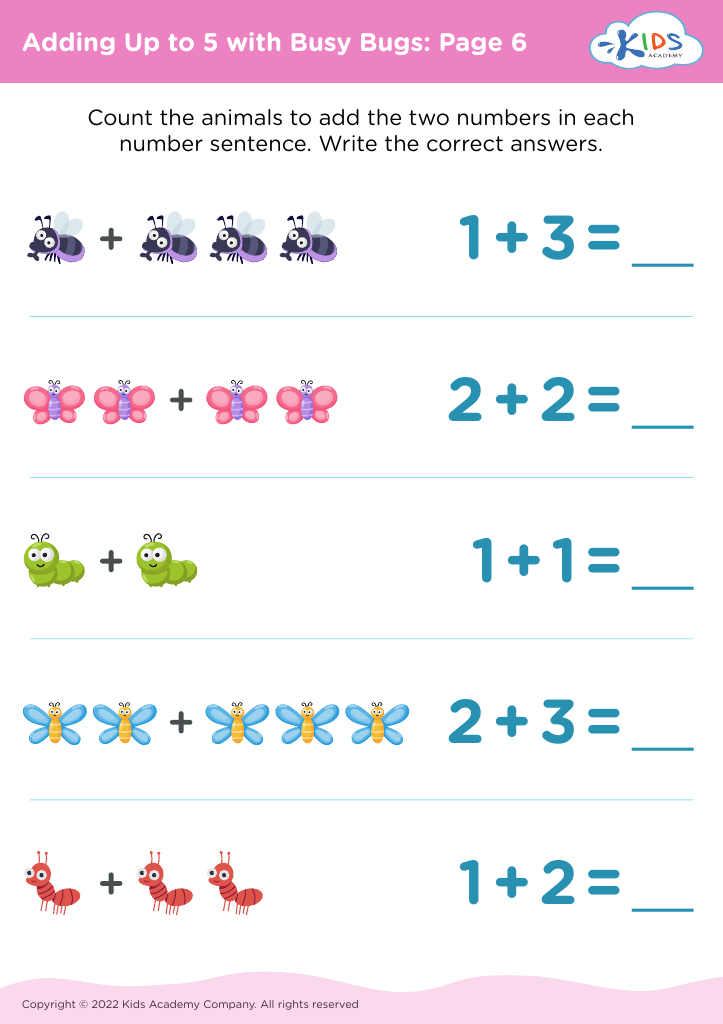
Adding Up to 5 with Busy Bugs: Page 6
Worksheet
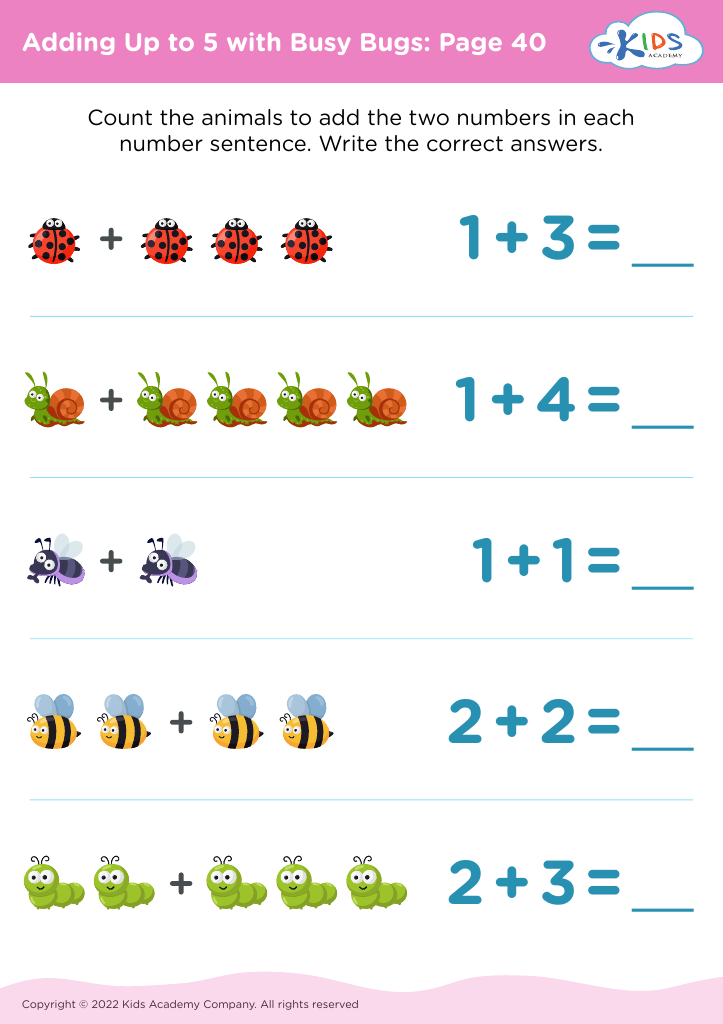
Adding Up to 5 with Busy Bugs: Page 40
Worksheet
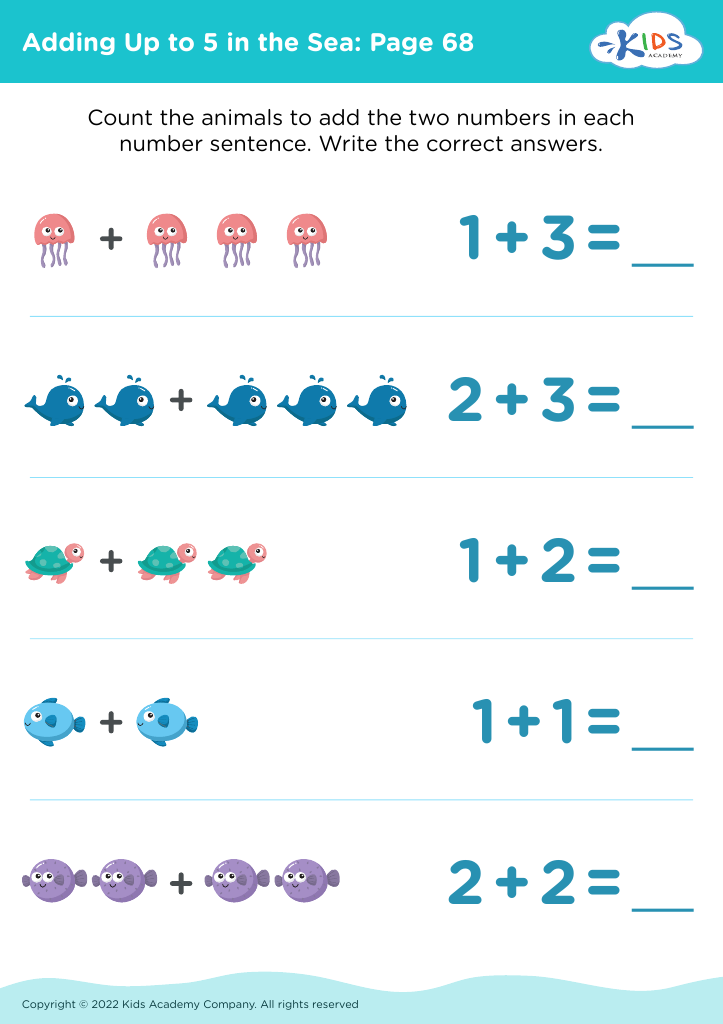
Adding Up to 5 in the Sea: Page 68
Worksheet
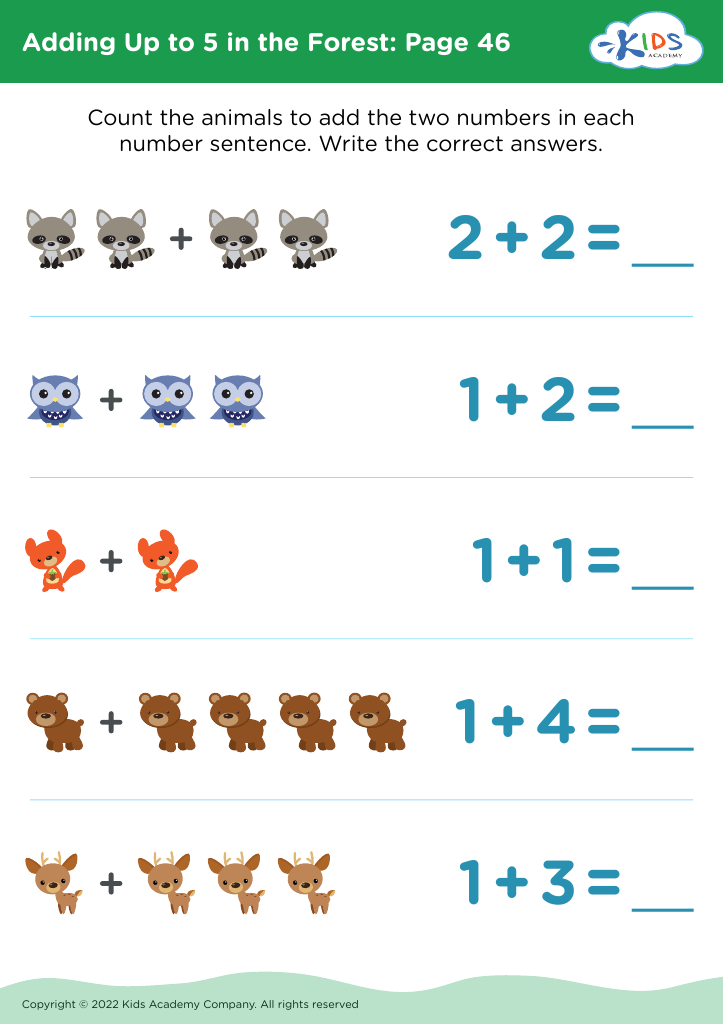
Adding Up to 5 in the Forest: Page 46
Worksheet
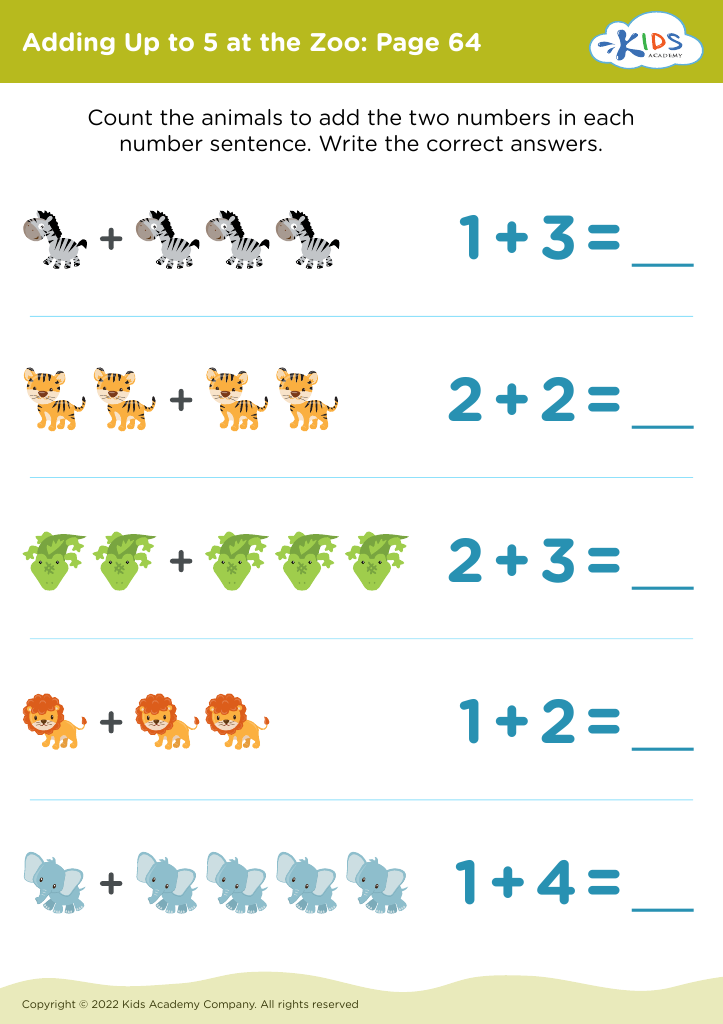
Adding Up to 5 at the Zoo: Page 64
Worksheet
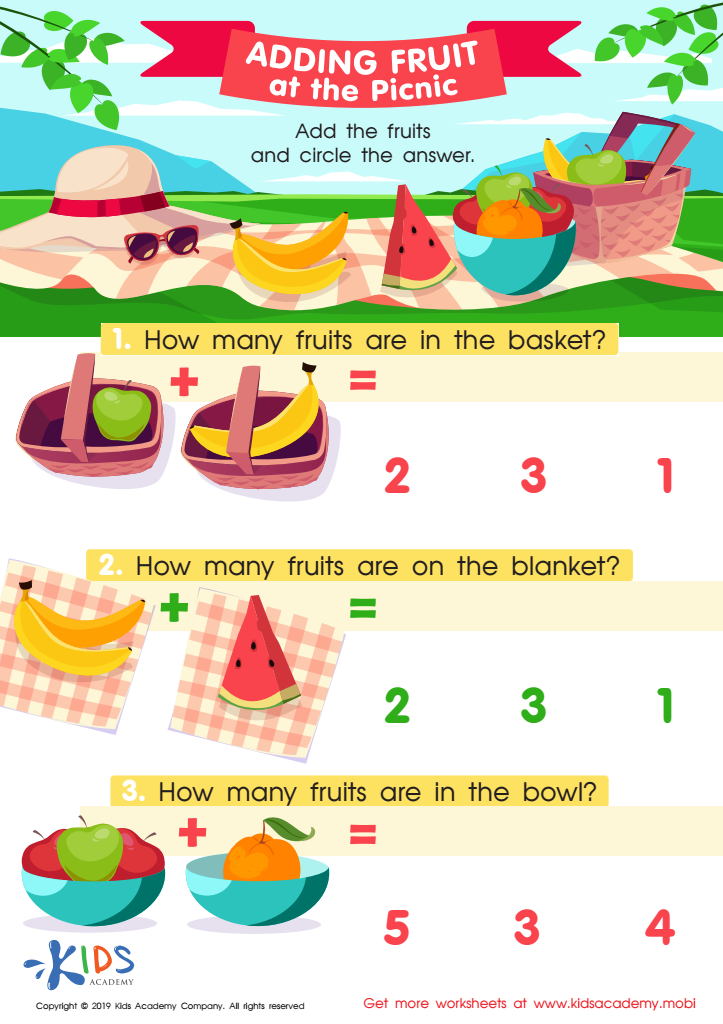
Adding Fruit at the Picnic Worksheet
Adding Fruit at the Picnic Worksheet
Picnics are a great way for the family to enjoy a fun day in the sun! Get your kids involved by having them help load the picnic basket and do this worksheet to practice their math skills while they get ready. Identify the fruits in the picture, add them up, and circle the correct answer.
Adding Fruit at the Picnic Worksheet

Worksheet
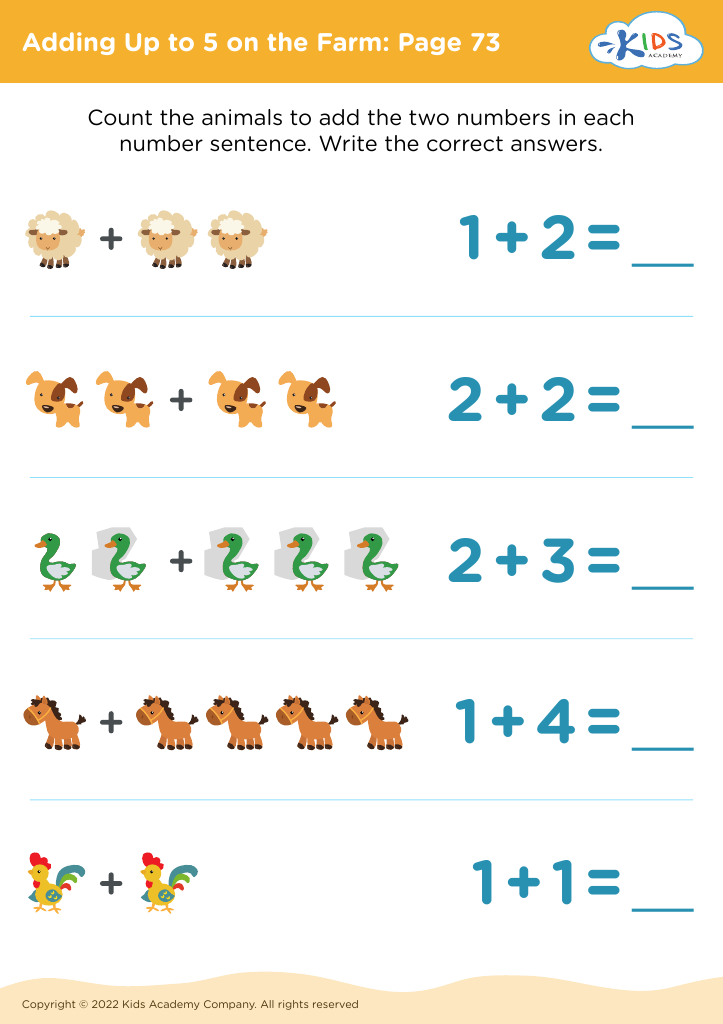
Adding Up to 5 on the Farm: Page 73
Worksheet
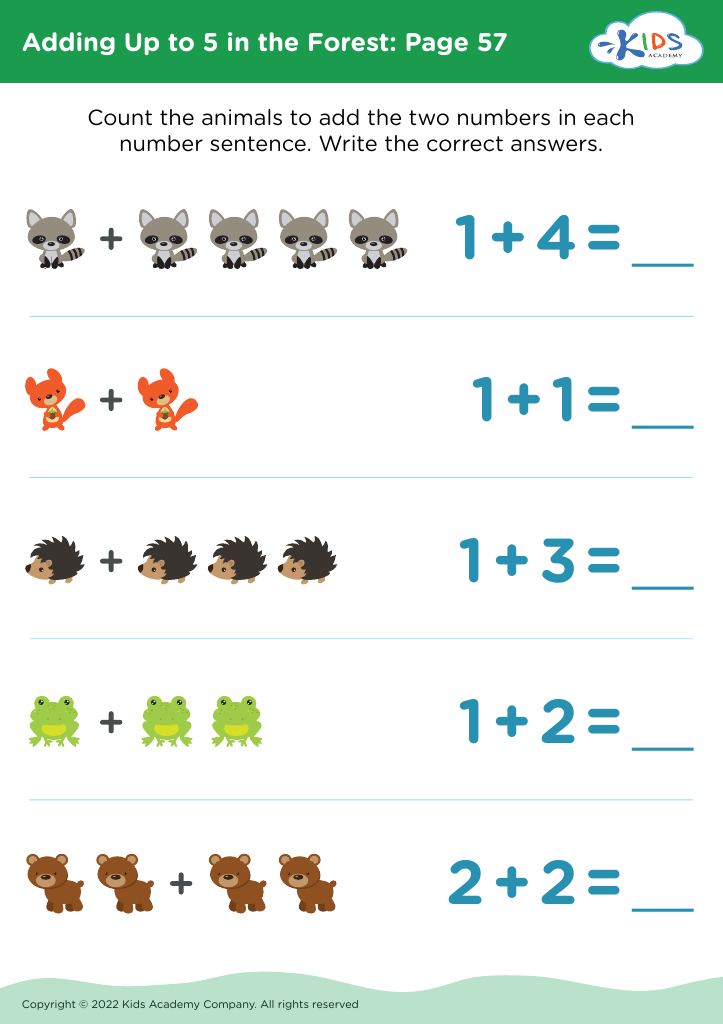
Adding Up to 5 in the Forest: Page 57
Worksheet
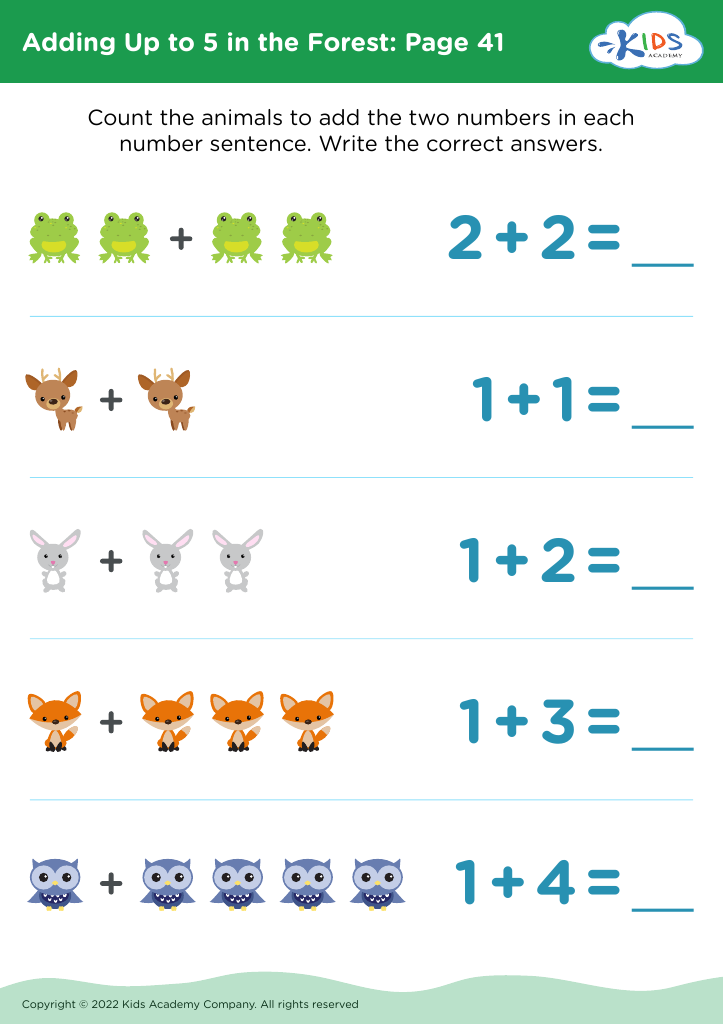
Adding Up to 5 in the Forest: Page 41
Worksheet


... 3 4

Parents and teachers should prioritize visual learning for addition and subtraction for children aged 4-7 because it lays a strong foundation for mathematical understanding. At this developmental stage, children are highly receptive to visual aids, which help them grasp abstract concepts through tangible representation. Visual learning utilizes objects, drawings, and interactive tools like counters or number lines, making math relatable and engaging.

By incorporating visual strategies, children can recognize patterns and develop problem-solving skills. Visual representations foster critical thinking, as kids learn to visualize numbers and operations, leading to a deeper understanding of relationships between them. This approach caters to various learning styles, accommodating both visual and kinesthetic learners, and can boost confidence by making challenging concepts more accessible.

Moreover, applying visual learning techniques can encourage a positive attitude toward mathematics. Early experiences with math can shape a child’s perception of their abilities, influencing their future academic choices. When kids see math as fun and manageable, they’re more likely to remain engaged and curious, fostering a lifelong love for learning. Ultimately, prioritizing visual learning in early math education equips children with essential skills they will use throughout their educational journeys and daily lives.