
Visual-motor skills Addition & Subtraction Worksheets for Ages 4-7
4 filtered results
Difficulty Level
Grade
Age
-
From - To
Subject
Activity
Standards
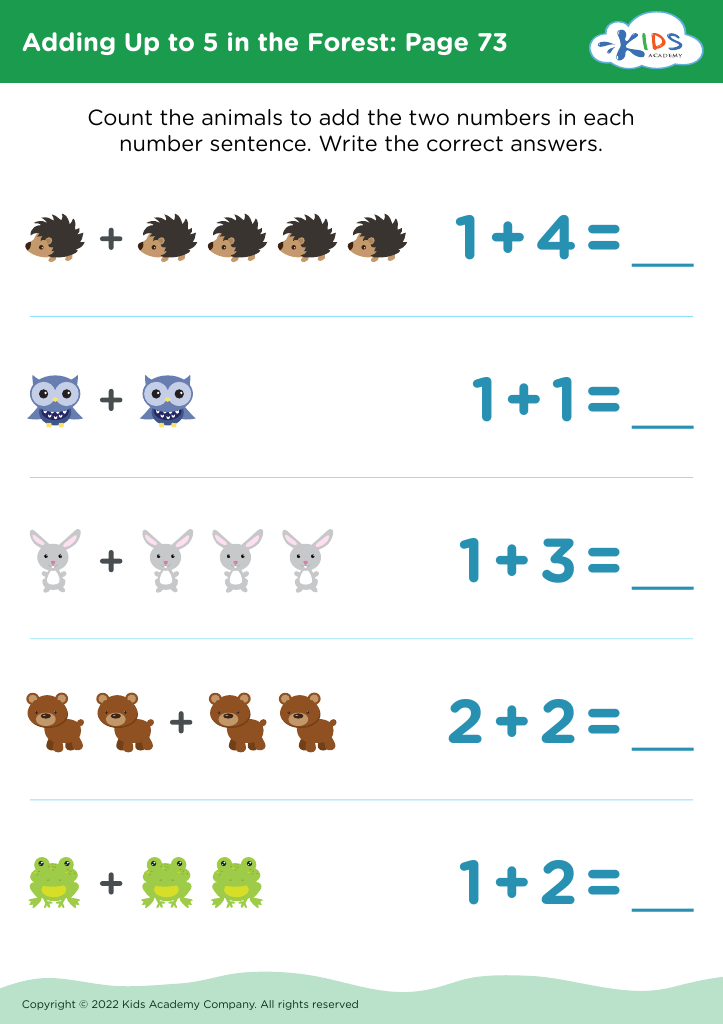
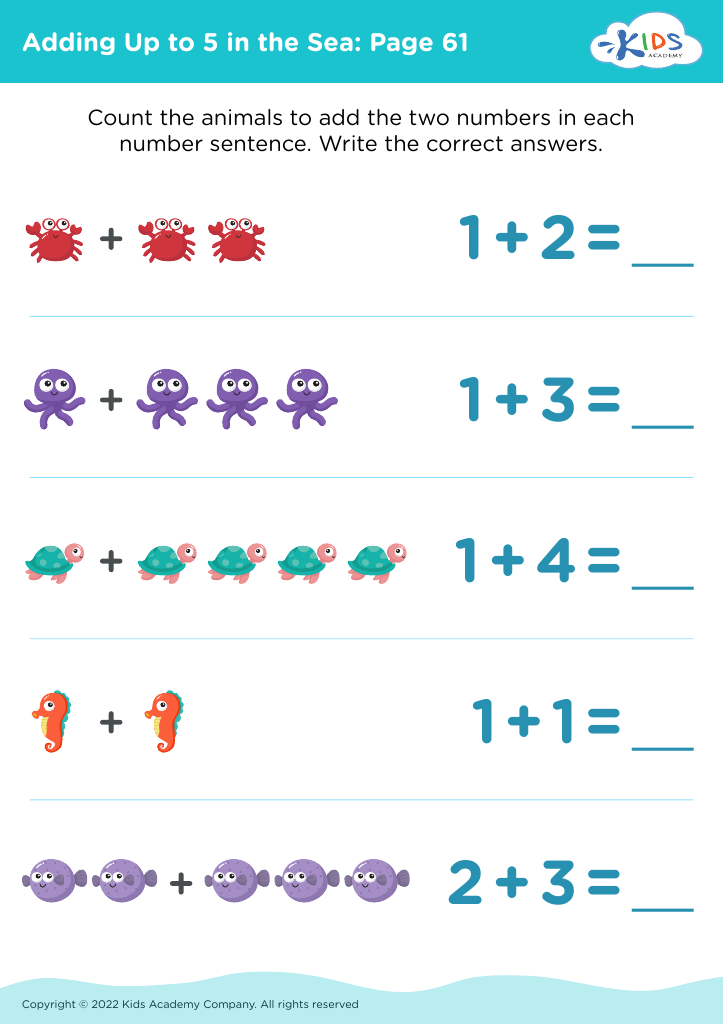
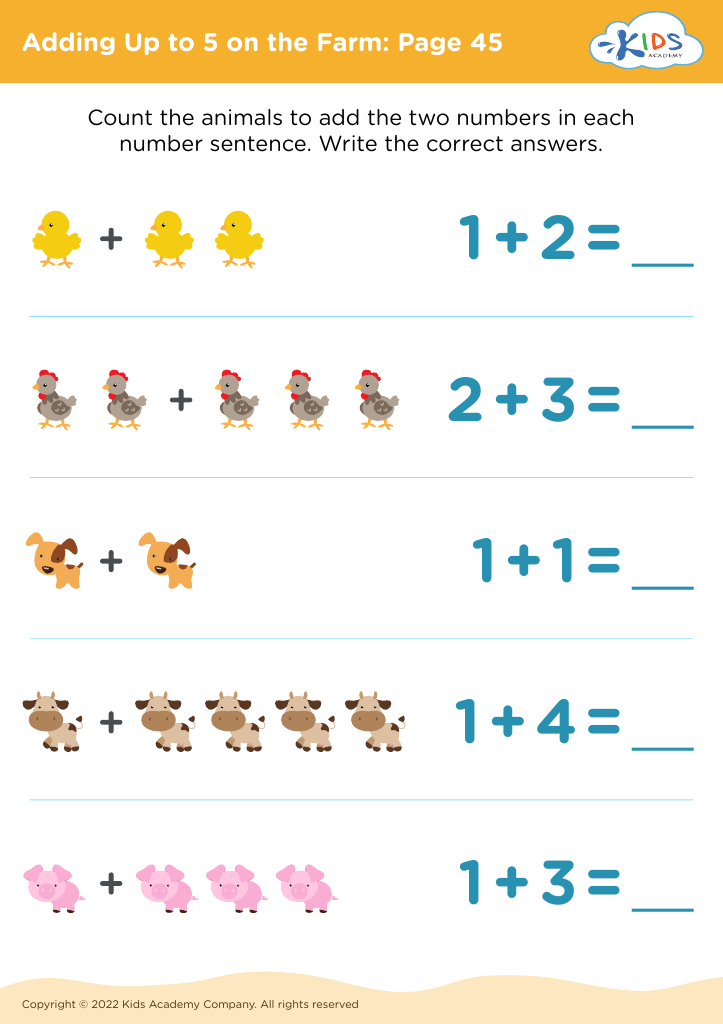
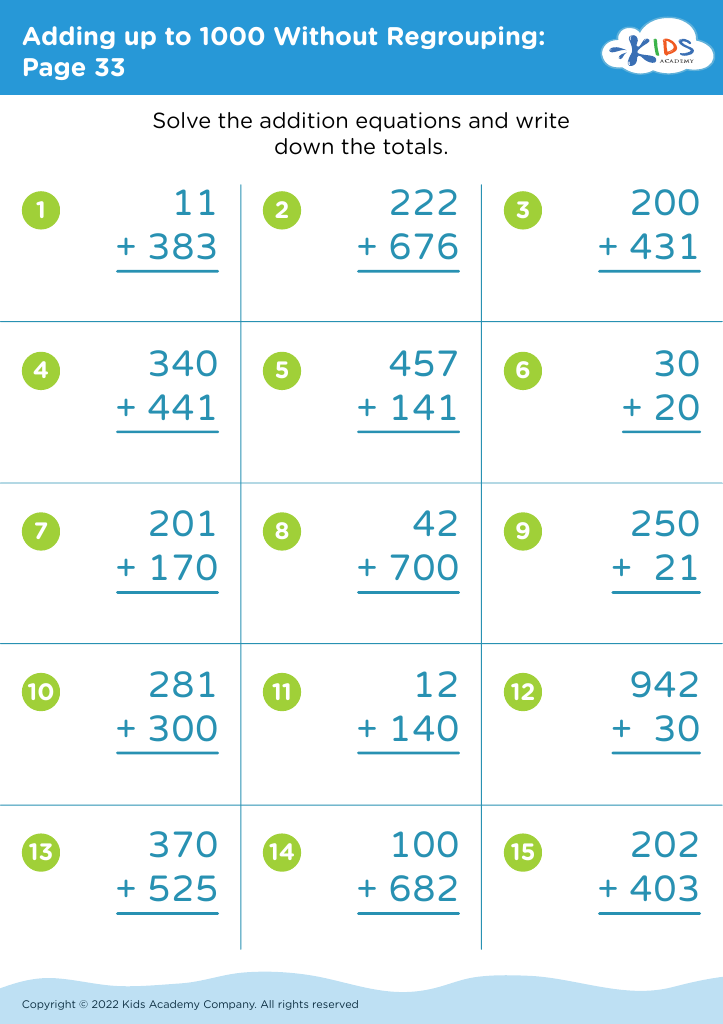
Enhance your child's learning experience with our engaging Visual-Motor Skills Addition & Subtraction Worksheets designed specifically for ages 4-7. These worksheets combine essential math practice with visual-motor skill development, helping young learners improve their coordination and focus while mastering basic addition and subtraction. Colorful illustrations and fun activities keep children motivated as they trace, draw, and solve problems, making learning enjoyable. Our carefully crafted resources are ideal for homeschooling, classroom use, or supplemental learning, ensuring that your child builds a strong foundation in math and develops vital skills for academic success. Download and watch their confidence in math grow!
Favorites
With answer key
Interactive
Join Kids Academy for Free
Who is primarily going to use this learning content?








Visual-motor skills are fundamental for children's learning, especially in activities like addition and subtraction, which are crucial in early math development. Ages 4-7 are key developmental years where children transition from basic number recognition to engaging with more complex mathematical concepts. Strong visual-motor skills support these advancements, enabling children to visualize numbers, patterns, and relationships effectively.
When parents or teachers focus on enhancing visual-motor skills, they help children develop the ability to coordinate visual input with motor responses. This is particularly important in mathematics, where children must often manipulate objects, write numbers, and solve problems using their hands and eyes in tandem.
Engaging in activities that improve these skills—such as drawing numbers, using blocks for counting, and completing puzzles—can not only make math enjoyable but also foster a deeper understanding. Moreover, strong visual-motor skills contribute to a child's overall confidence and competence in academic settings, leading to a positive attitude toward learning and problem-solving.
In summary, by prioritizing visual-motor skill development in early learners, parents and teachers lay a strong foundation that will benefit children throughout their academic journeys and beyond.








