Filters

108 filtered results

Clear all filters
Favorites
With answer key
Interactive

108 filtered results

Difficulty Level

Grade


Check out this FREE Trial Lesson on Addition for age 4-7!

P

Favorites
With answer key
Interactive
  • 4-7
  • Addition skills
  • Addition
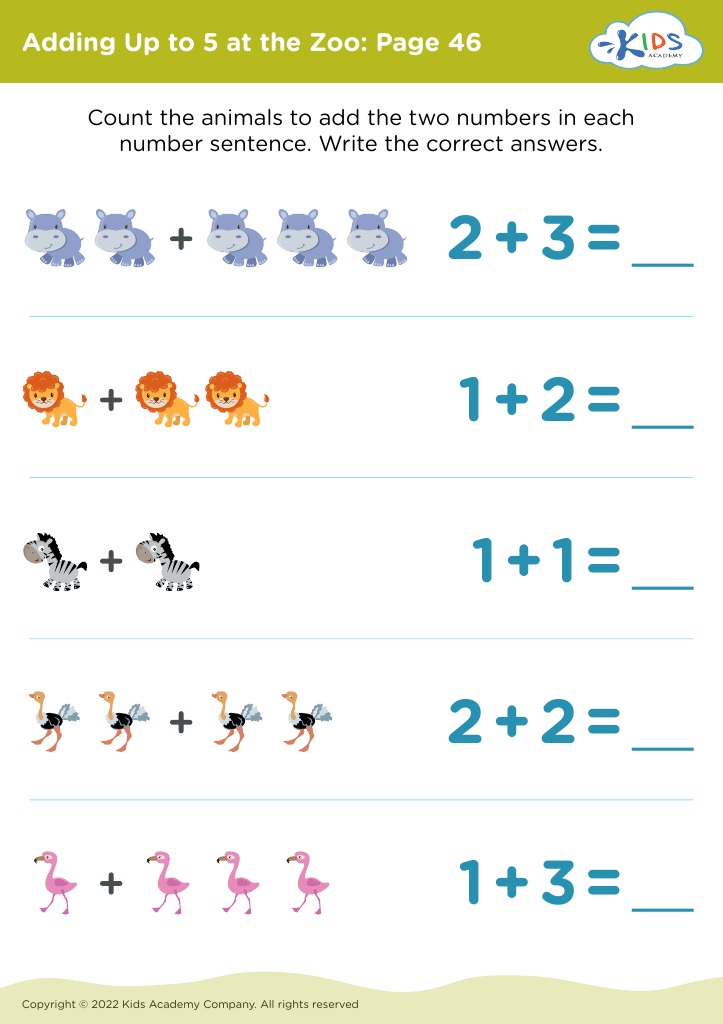
Adding Up to 5 at the Zoo: Page 46
Worksheet
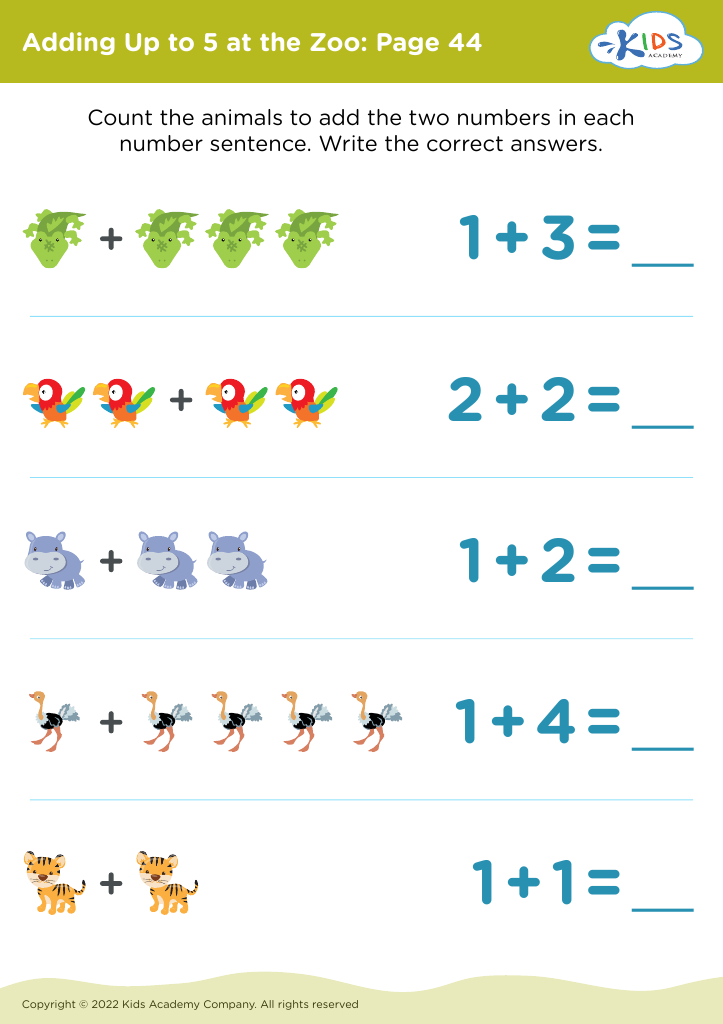
Adding Up to 5 at the Zoo: Page 44
Worksheet
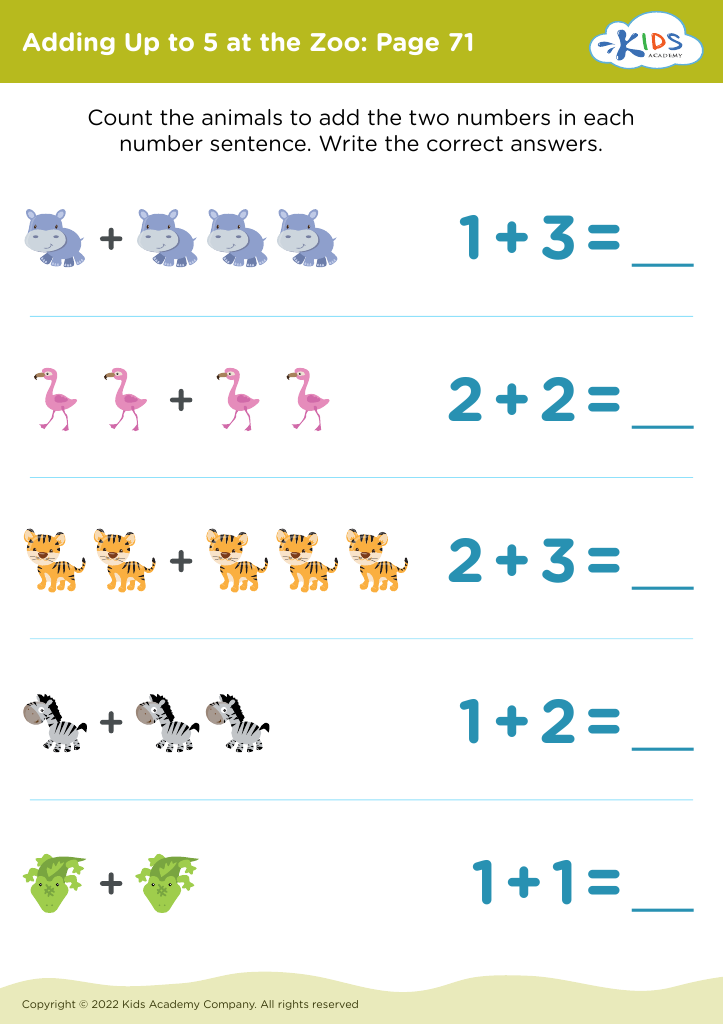
Adding Up to 5 at the Zoo: Page 71
Worksheet
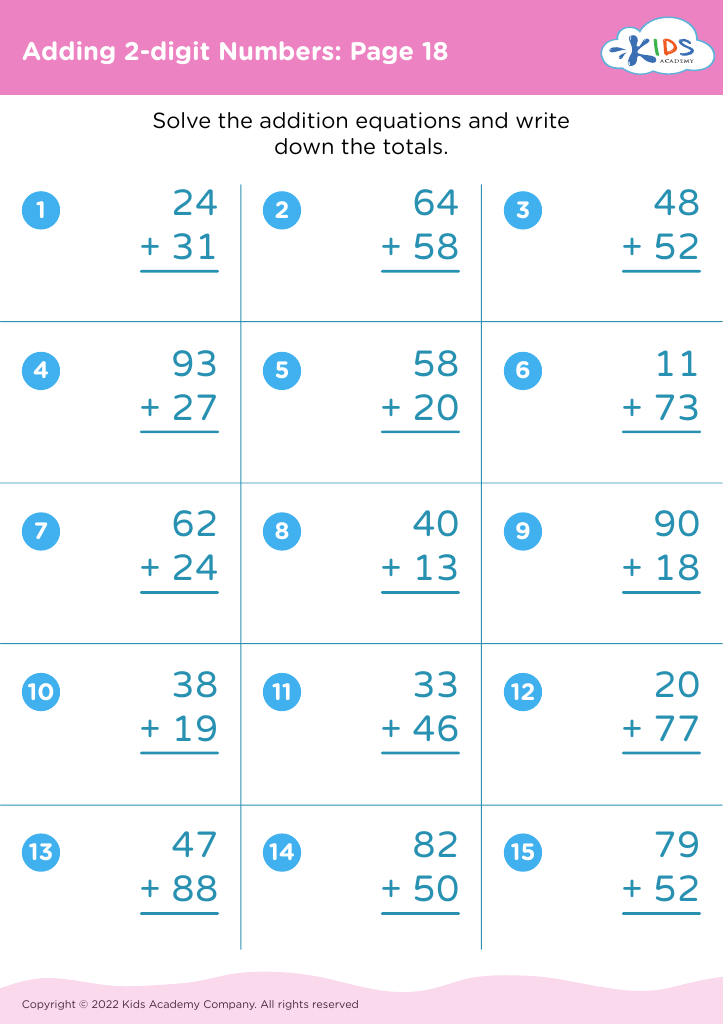
Adding 2-digit Numbers: Page 18

Adding 2-digit Numbers: Page 18

Adding 2-digit Numbers: Page 18
Worksheet
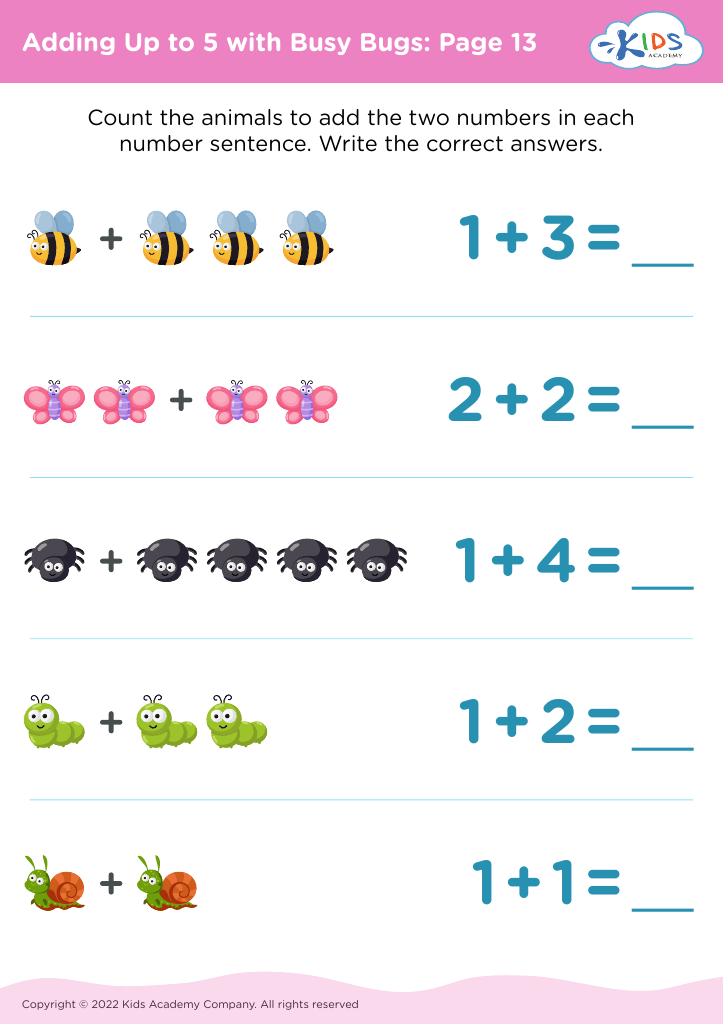
Adding Up to 5 with Busy Bugs: Page 13
Worksheet
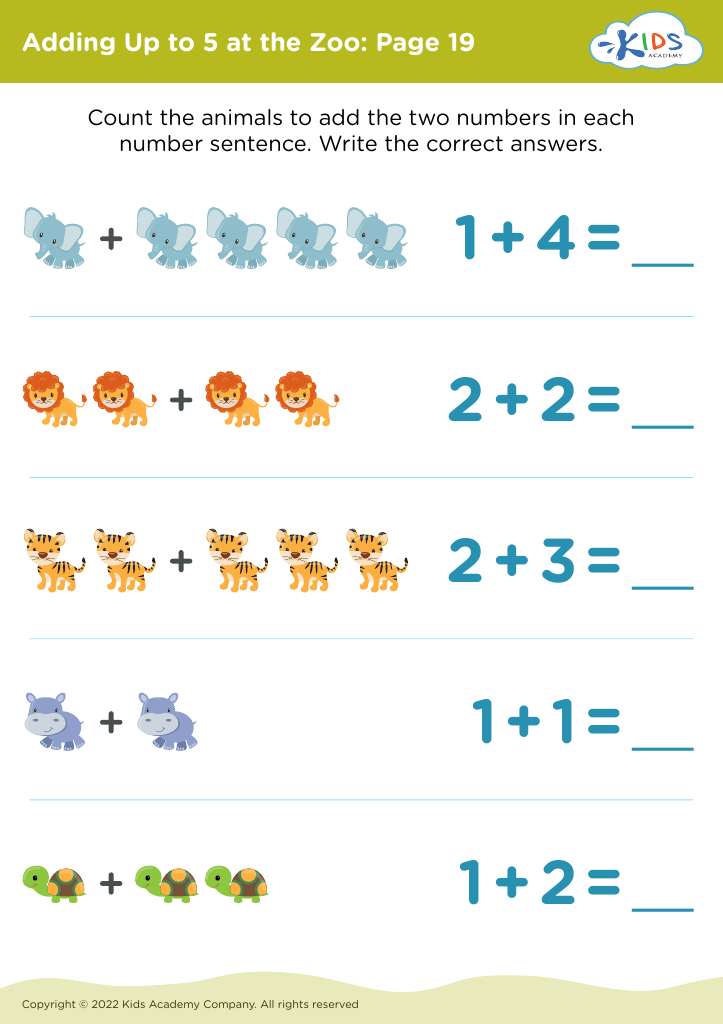
Adding Up to 5 at the Zoo: Page 19
Worksheet
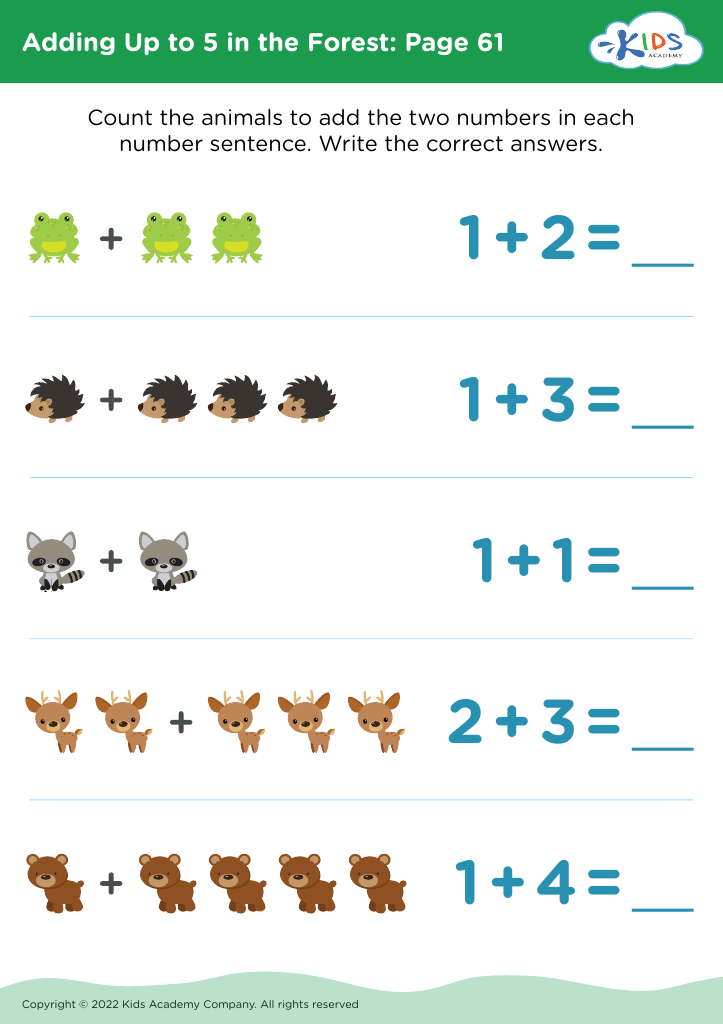
Adding Up to 5 in the Forest: Page 61
Worksheet
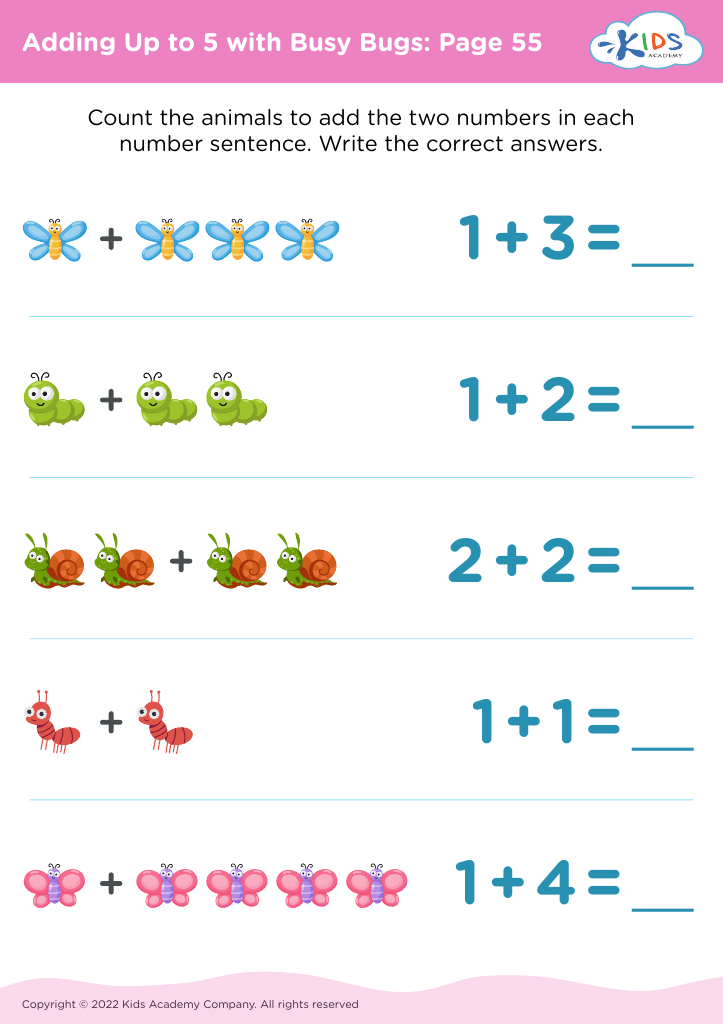
Adding Up to 5 with Busy Bugs: Page 55
Worksheet
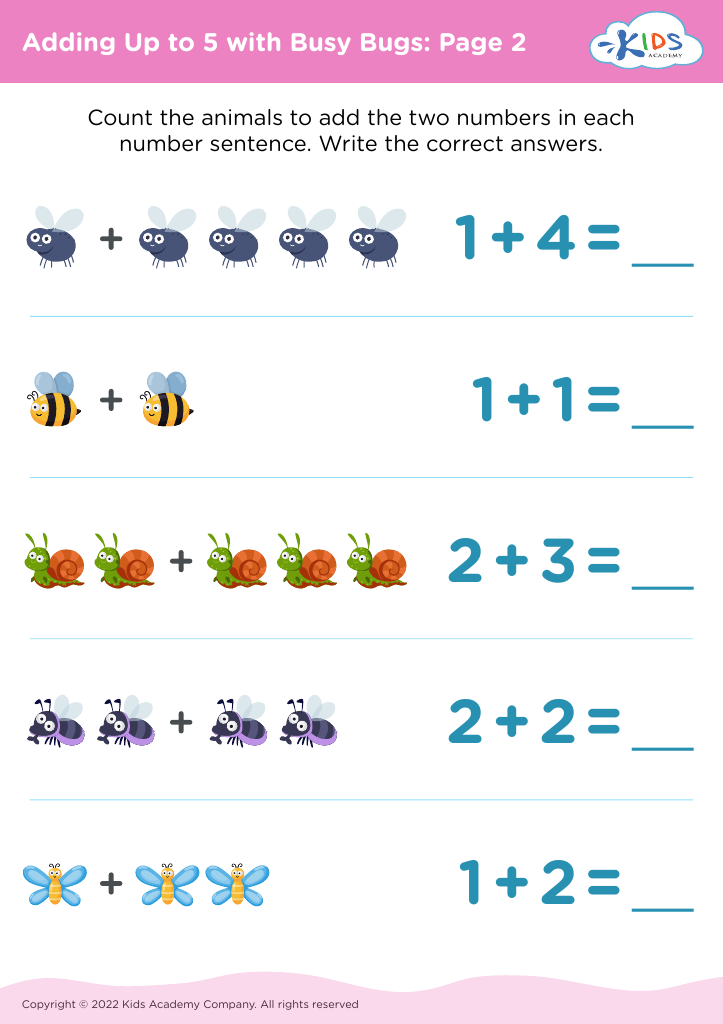
Adding Up to 5 with Busy Bugs: Page 2
Worksheet
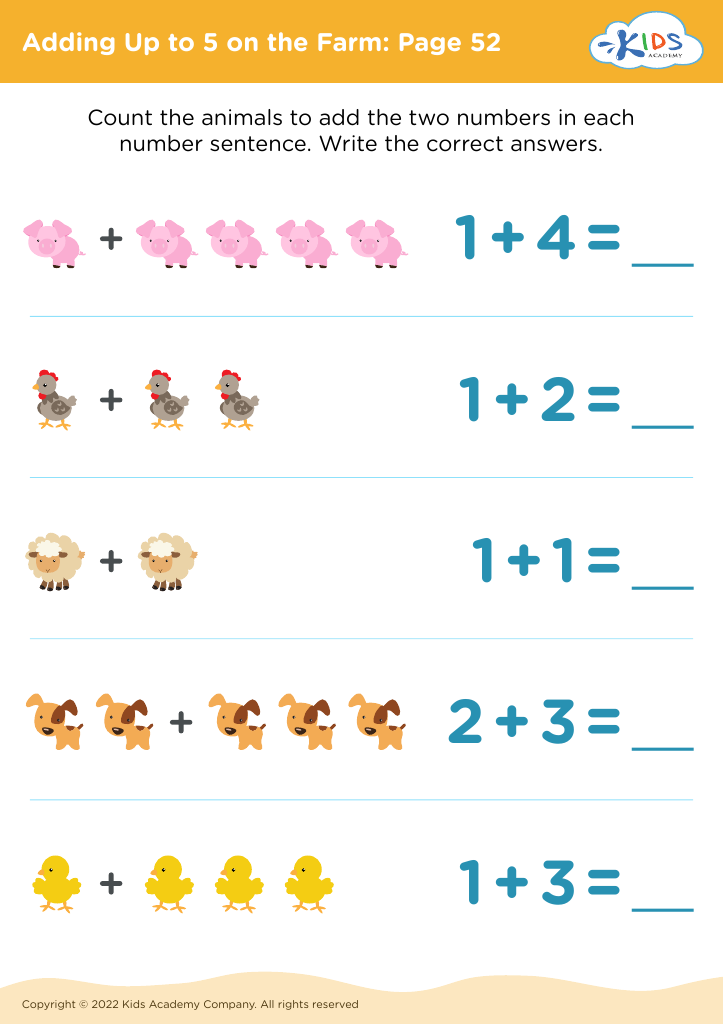
Adding Up to 5 on the Farm: Page 52
Worksheet
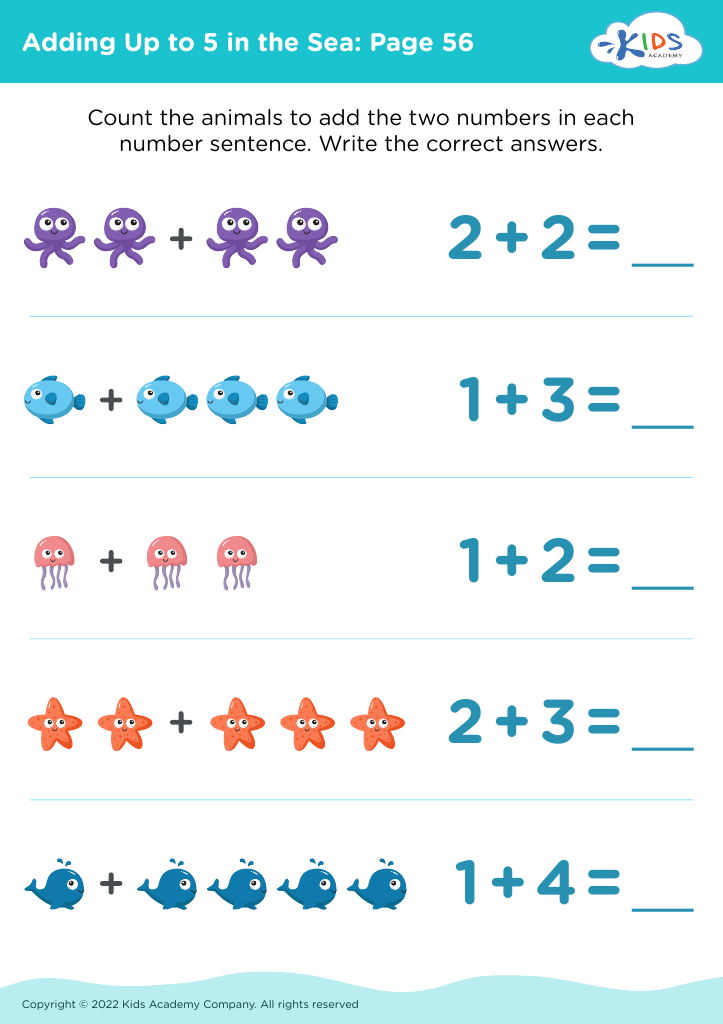
Adding Up to 5 in the Sea: Page 56
Worksheet
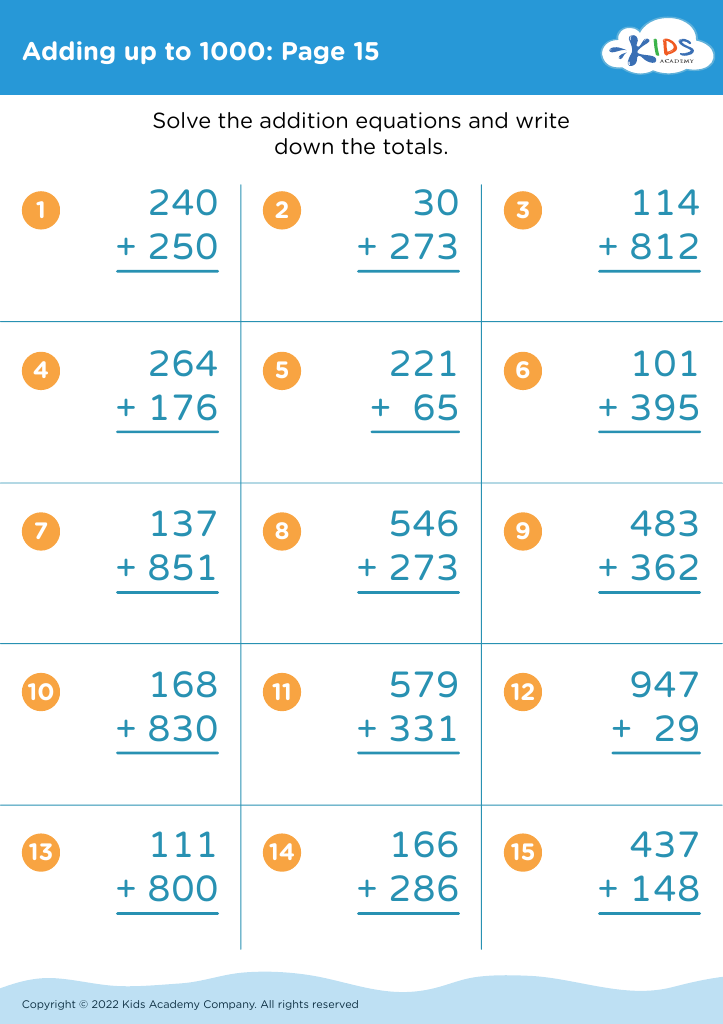
Adding up to 1000: Page 15

Adding up to 1000: Page 15

Adding up to 1000: Page 15
Worksheet
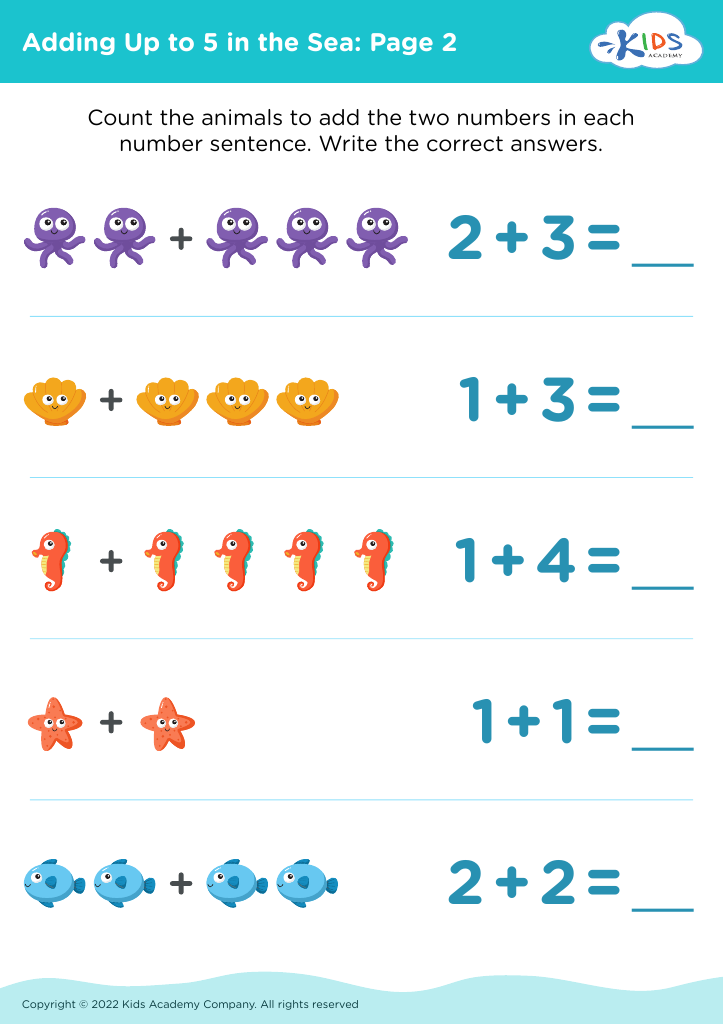
Adding Up to 5 in the Sea: Page 2

Adding Up to 5 in the Sea: Page 2

Adding Up to 5 in the Sea: Page 2
Worksheet
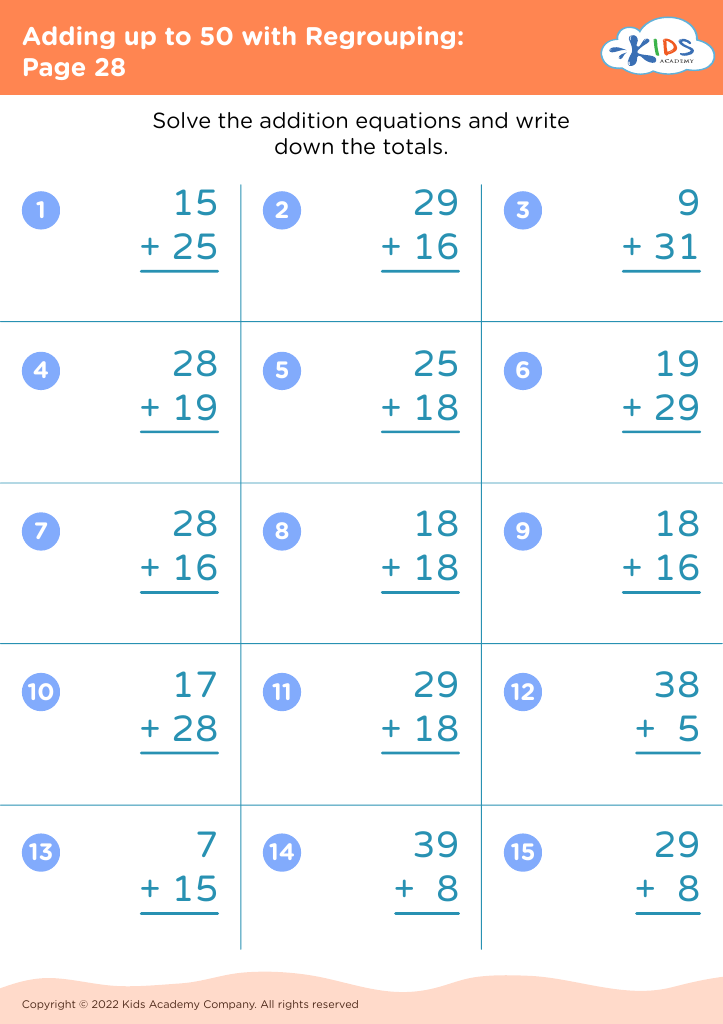
Adding up to 50 with Regrouping: Page 28
Worksheet
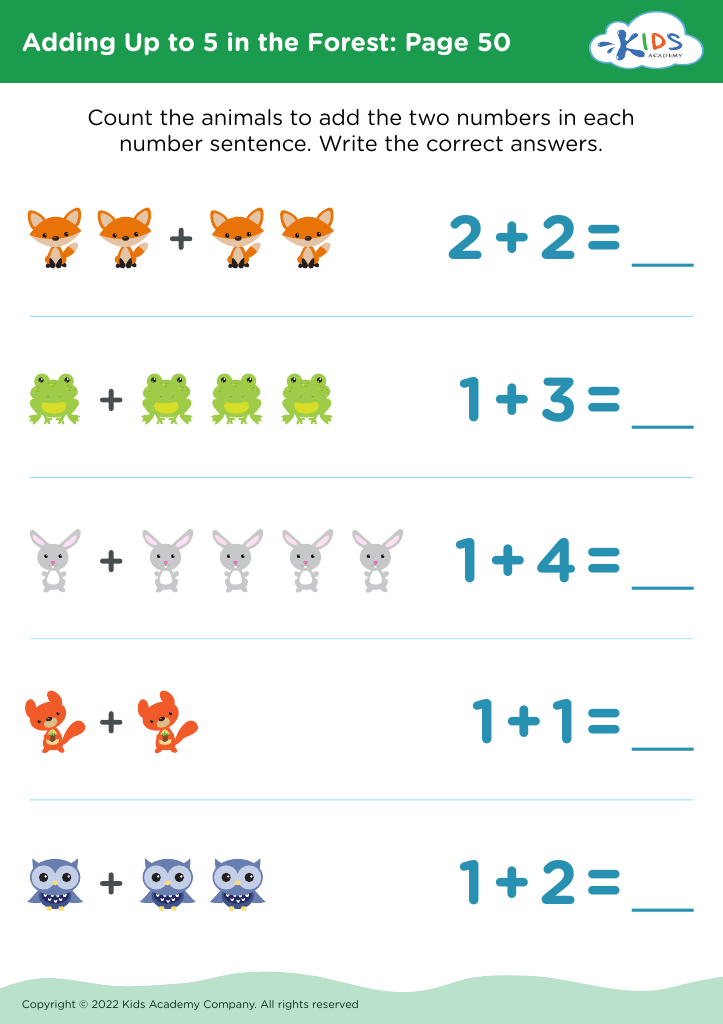
Adding Up to 5 in the Forest: Page 50
Worksheet
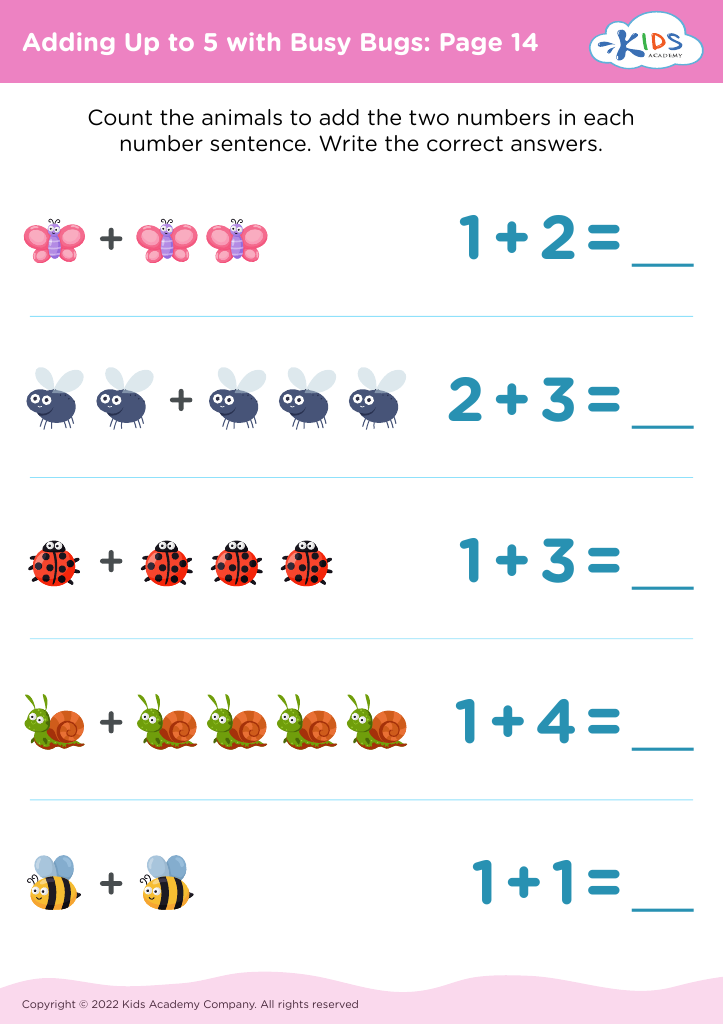
Adding Up to 5 with Busy Bugs: Page 14
Worksheet
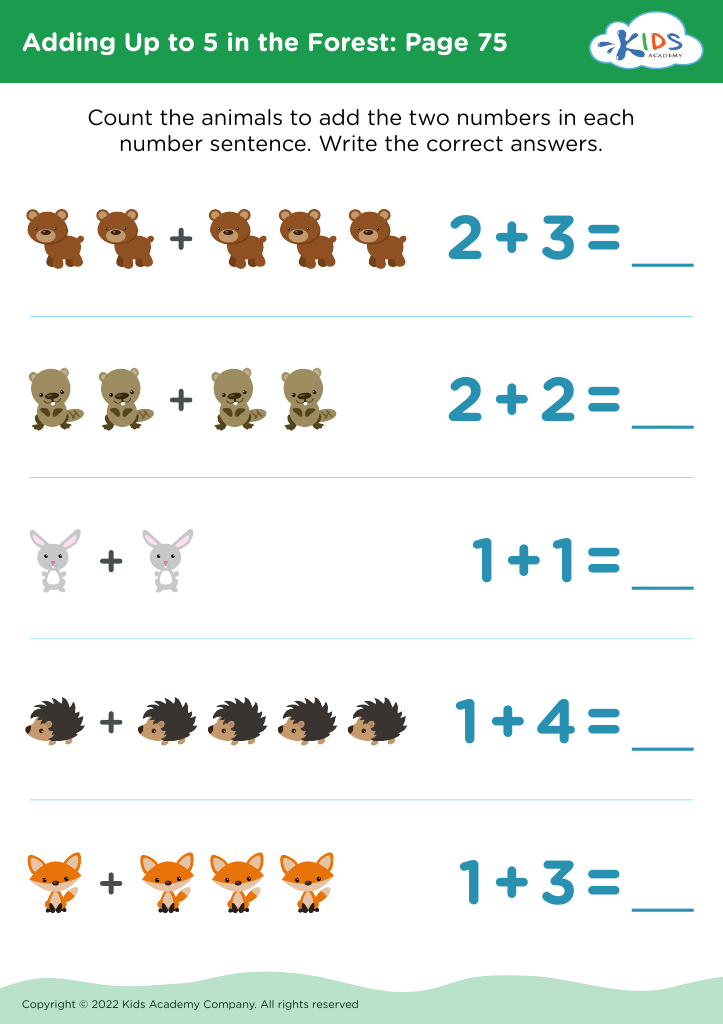
Adding Up to 5 in the Forest: Page 75
Worksheet
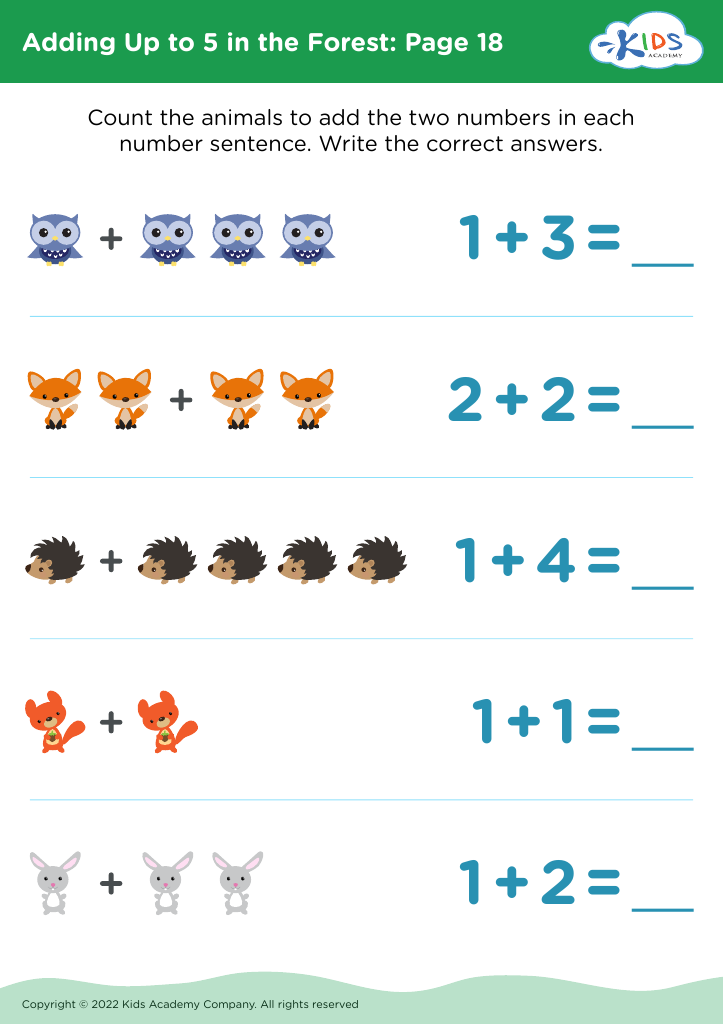
Adding Up to 5 in the Forest: Page 18
Worksheet
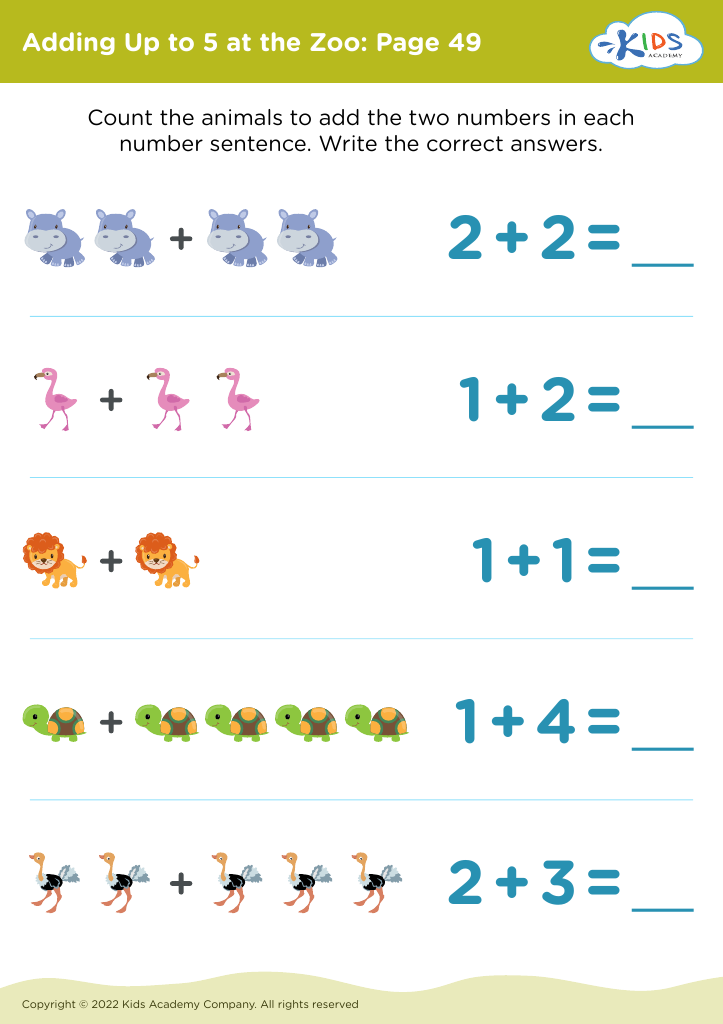
Adding Up to 5 at the Zoo: Page 49
Worksheet
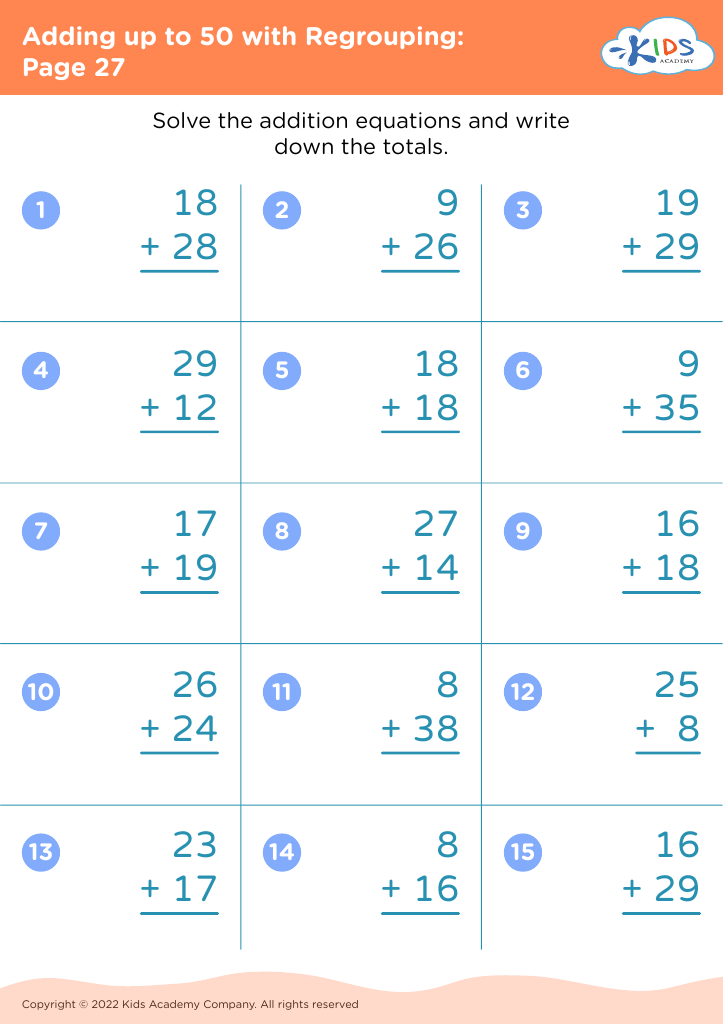
Adding up to 50 with Regrouping: Page 27
Worksheet
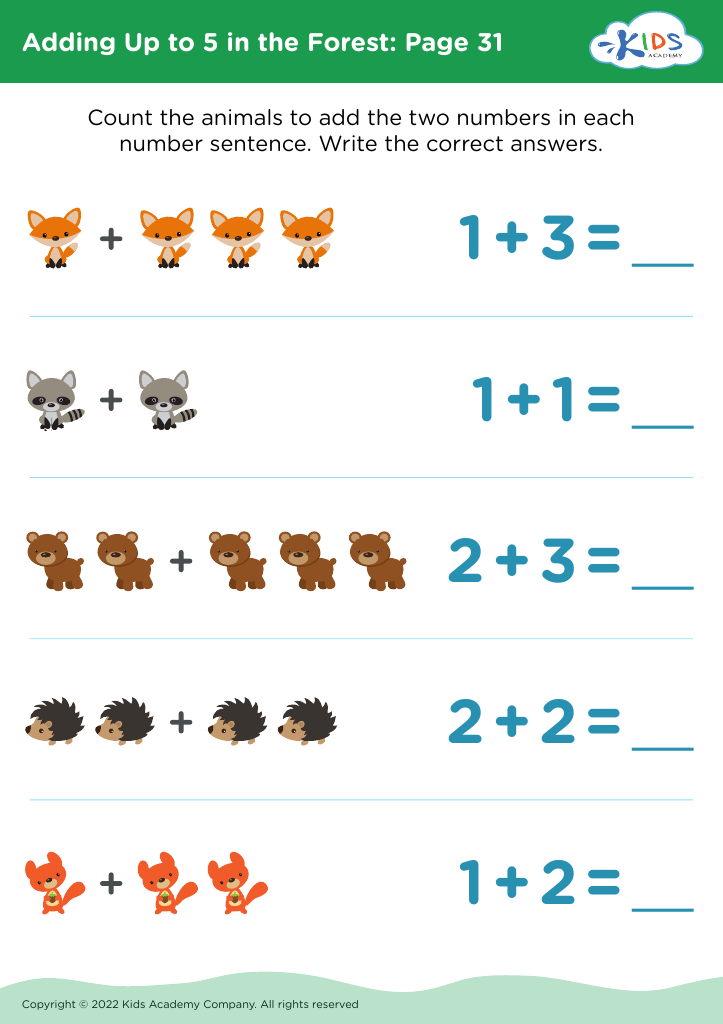
Adding Up to 5 in the Forest: Page 31
Worksheet
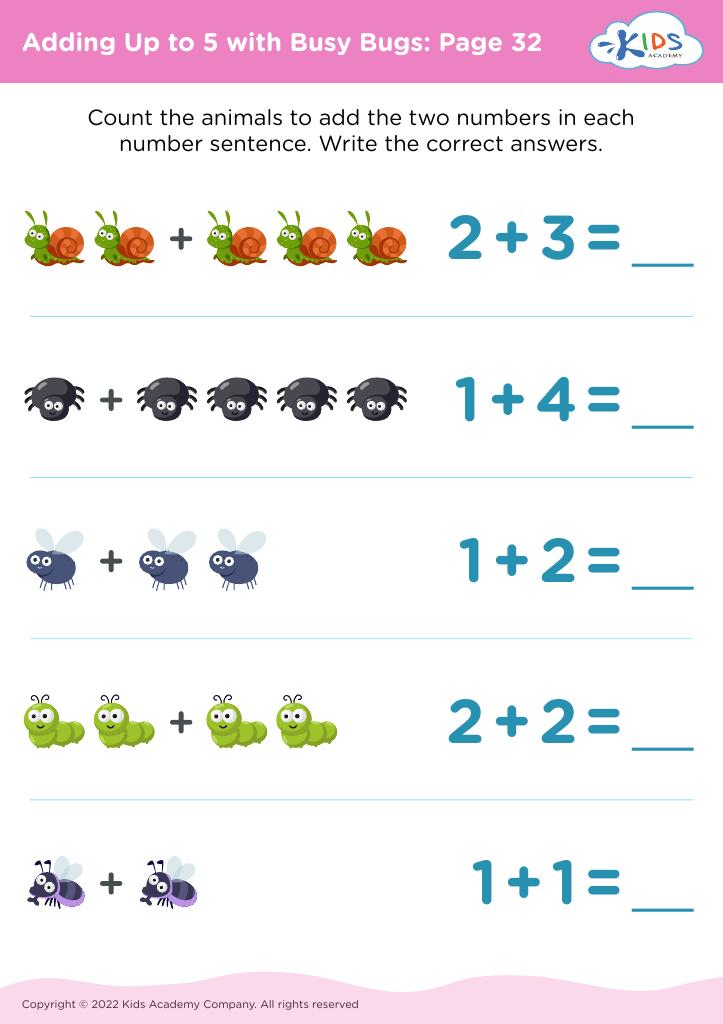
Adding Up to 5 with Busy Bugs: Page 32
Worksheet
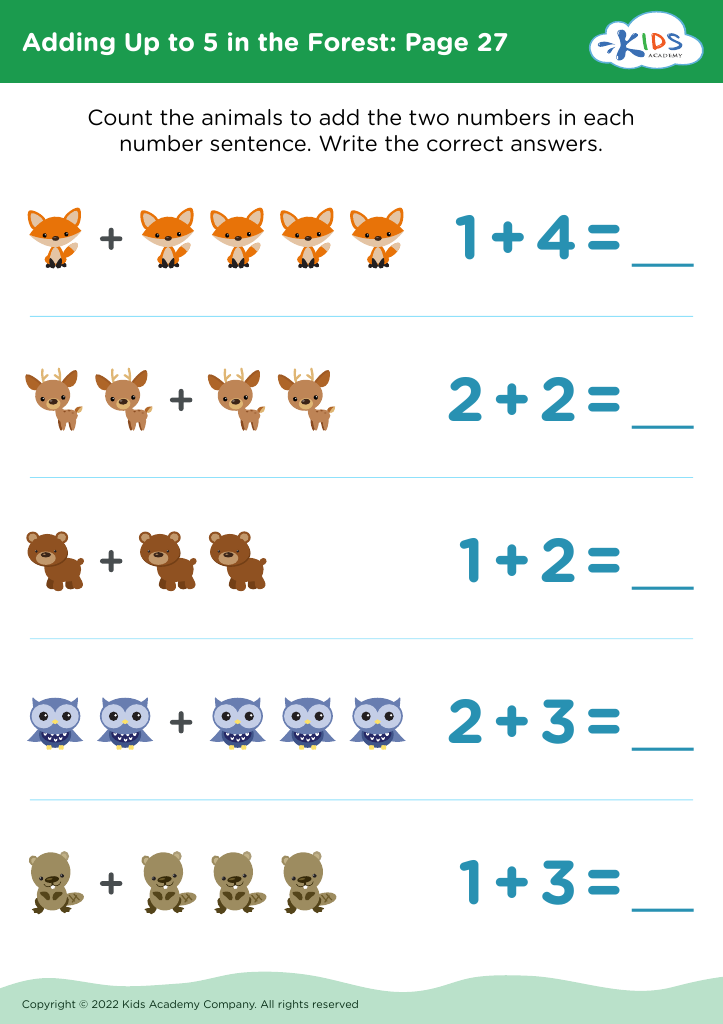
Adding Up to 5 in the Forest: Page 27
Worksheet
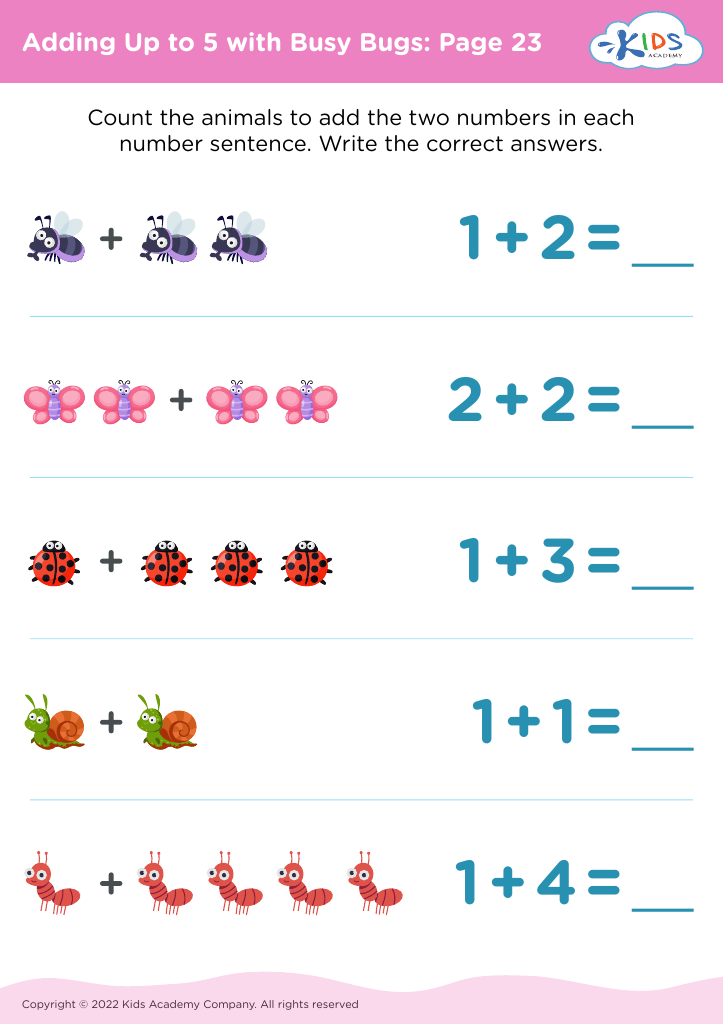
Adding Up to 5 with Busy Bugs: Page 23
Worksheet


Building a strong foundation in addition skills for children ages 4-7 is crucial for their overall cognitive and academic development. During these early years, children's brains are highly malleable, making it an optimal time for introducing basic mathematical concepts. Understanding addition not only aids in their math education but also boosts critical thinking and problem-solving skills, which are applicable in various life scenarios.

Learning addition helps young children grasp the concept of numbers and their relationships, enhancing their numerical literacy. This fundamental skill is the stepping stone for more complex mathematical operations, such as subtraction, multiplication, and division. Without a solid understanding of addition, children may struggle with more advanced math topics, affecting their confidence and performance in future academic settings.

Furthermore, mastering addition at an early age fosters a positive attitude towards mathematics. When children find success in using addition, their self-esteem grows, making them more likely to engage enthusiastically with other STEM (Science, Technology, Engineering, and Mathematics) subjects.

For parents and teachers, emphasizing the importance of addition in early childhood ensures that children are not left behind and are equipped with the skills they need to succeed. Interactive and fun learning methods, such as using physical objects, educational games, and visual aids, can make the learning process enjoyable and effective.