Addition up to 5 Addition Worksheets for Ages 4-7
4 filtered results
-
From - To
Explore our engaging "Addition up to 5 Worksheets" designed specifically for children aged 4-7. These interactive worksheets foster early math skills, helping young learners grasp the fundamentals of addition using numbers up to 5. Our colorful, age-appropriate activities make math fun and enjoyable, encouraging children to practice counting and addition confidently. Each worksheet features diverse and imaginative challenges that enhance cognitive development while keeping kids entertained. Perfect for classroom use or at-home learning, these resources provide the perfect starting point for a child's mathematical journey. Start their path to success in math with our carefully crafted addition worksheets today!
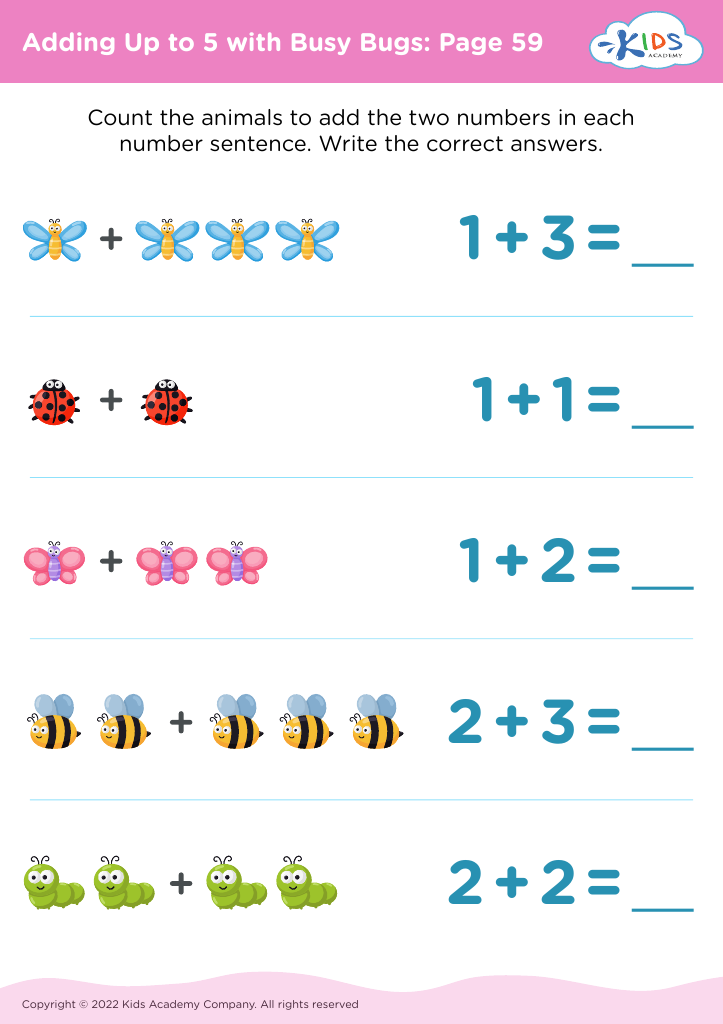
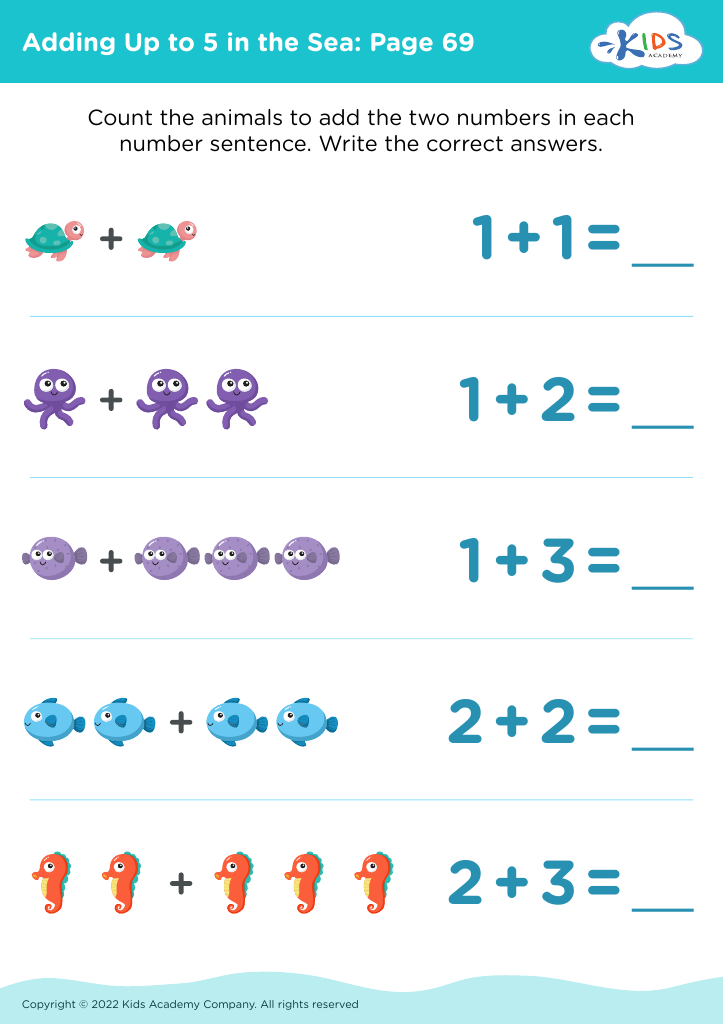
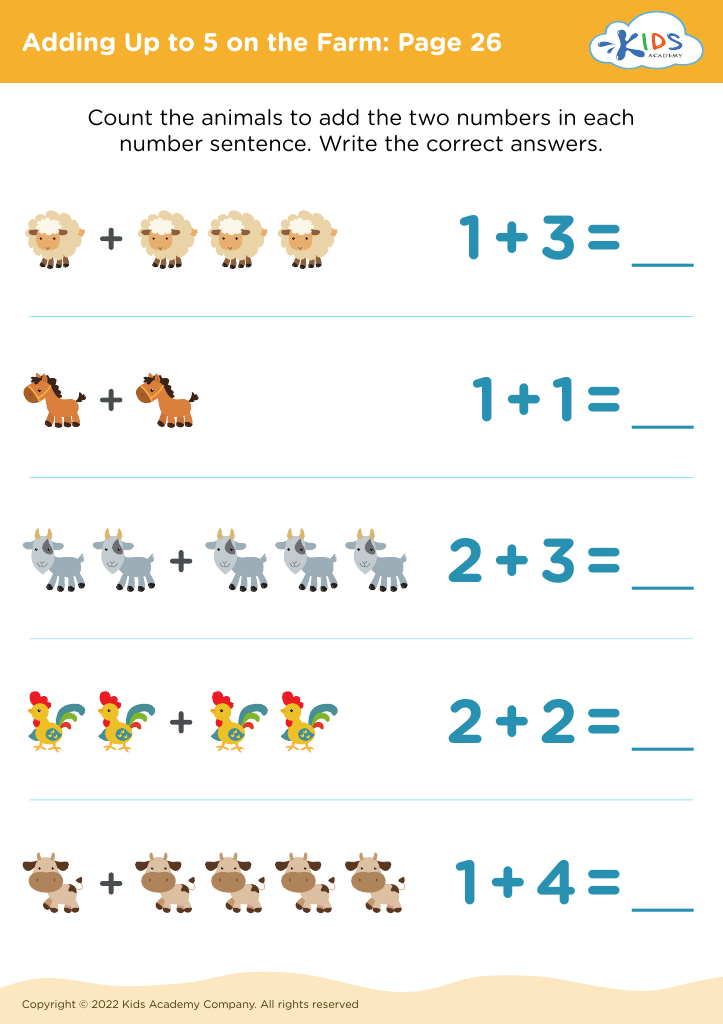
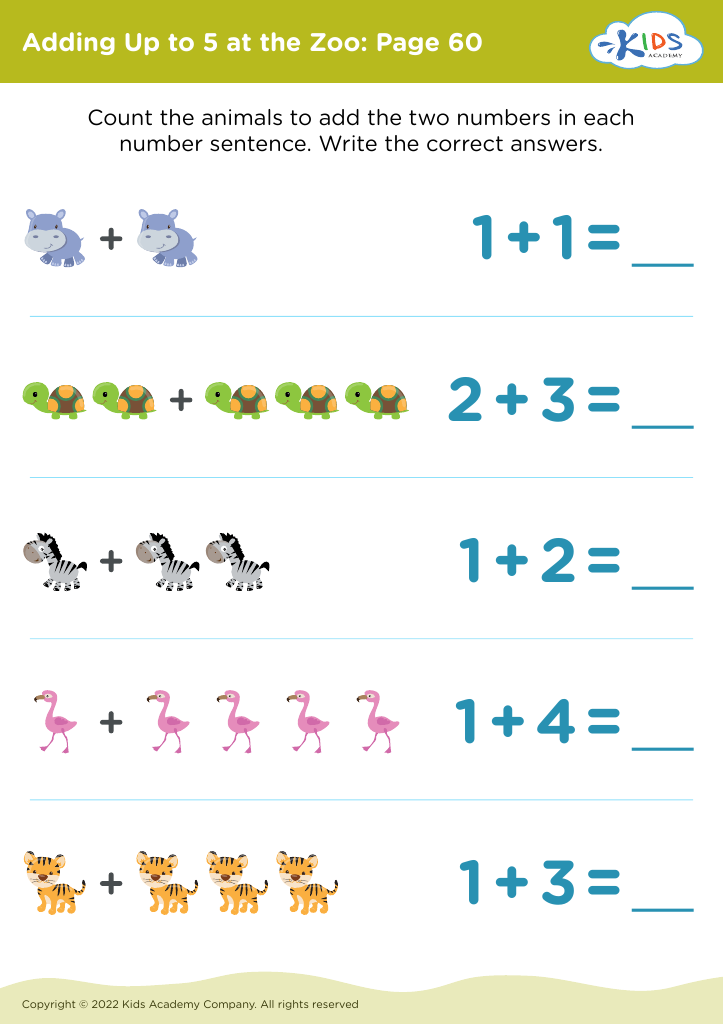








Addition up to 5 is a fundamental skill for children aged 4-7, laying the groundwork for future mathematical understanding. Parents and teachers should prioritize this learning for several reasons.
Firstly, mastering simple addition enhances a child's confidence in their mathematical abilities. It fosters a love for learning and encourages a positive attitude toward math as they see tangible progress. This foundational knowledge is crucial; if children struggle with basic addition, they may find future math concepts increasingly challenging, leading to a fear of the subject.
Additionally, learning to add simple numbers helps develop critical thinking and problem-solving skills. It allows young learners to engage in everyday scenarios, such as sharing snacks or arranging toys, where basic math is applicable. This connection between abstract concepts and real-life applications reinforces learning and retention.
Moreover, addition skills can enhance cognitive development. Engaging with numbers stimulates brain activity and promotes logical reasoning, which benefits overall intellectual growth.
Lastly, parental and teacher involvement in this early stage sets the tone for a supportive learning environment. By prioritizing addition up to 5, caregivers significantly contribute to children's lifelong success in academics and beyond. This fundamental skill is a stepping stone, opening doors to countless opportunities for learning and development.








