Filters

95 filtered results

Clear all filters
Favorites
With answer key
Interactive

95 filtered results

Difficulty Level

Grade


Check out this FREE Trial Lesson on Addition for age 4-7!

D

Favorites
With answer key
Interactive
  • 4-7
  • Animal recognition
  • Addition
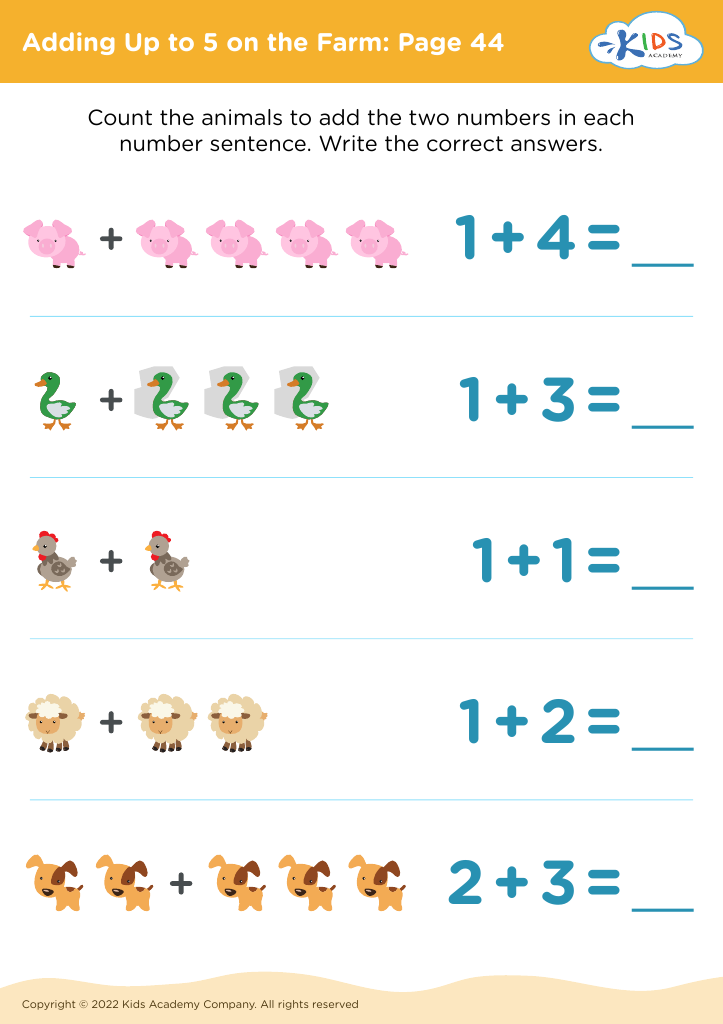
Adding Up to 5 on the Farm: Page 44
Worksheet
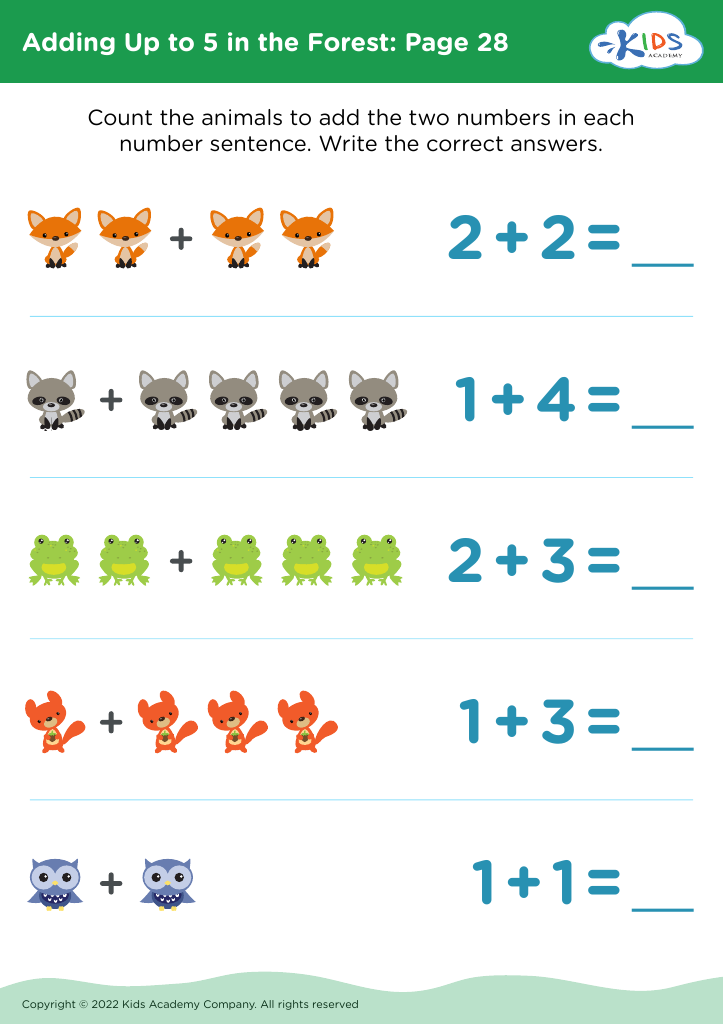
Adding Up to 5 in the Forest: Page 28
Worksheet
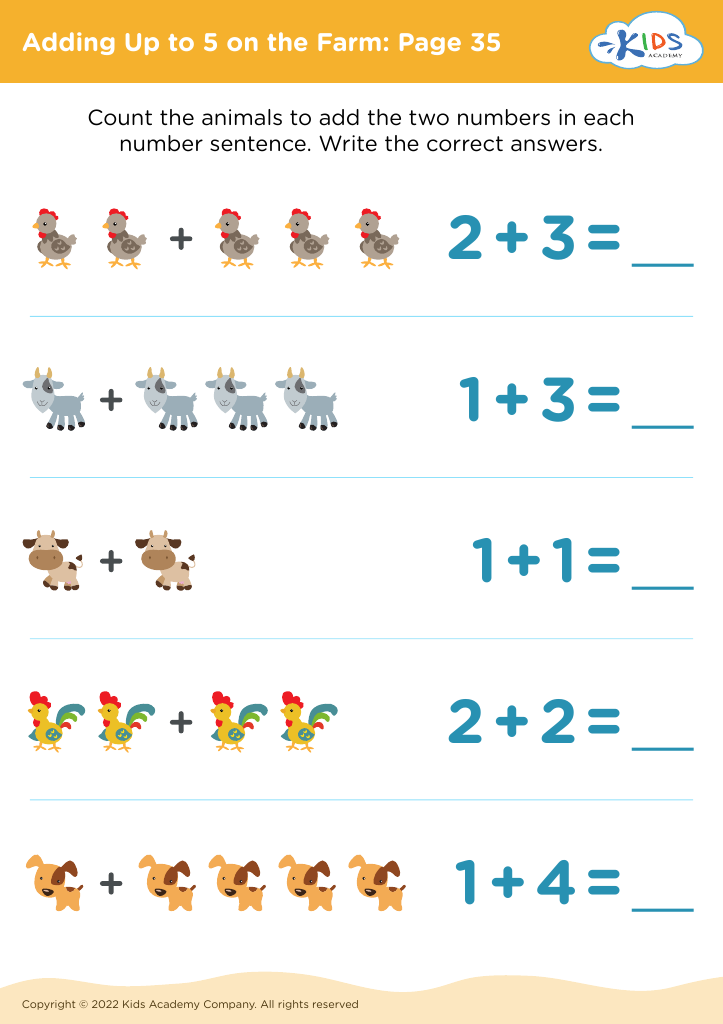
Adding Up to 5 on the Farm: Page 35
Worksheet
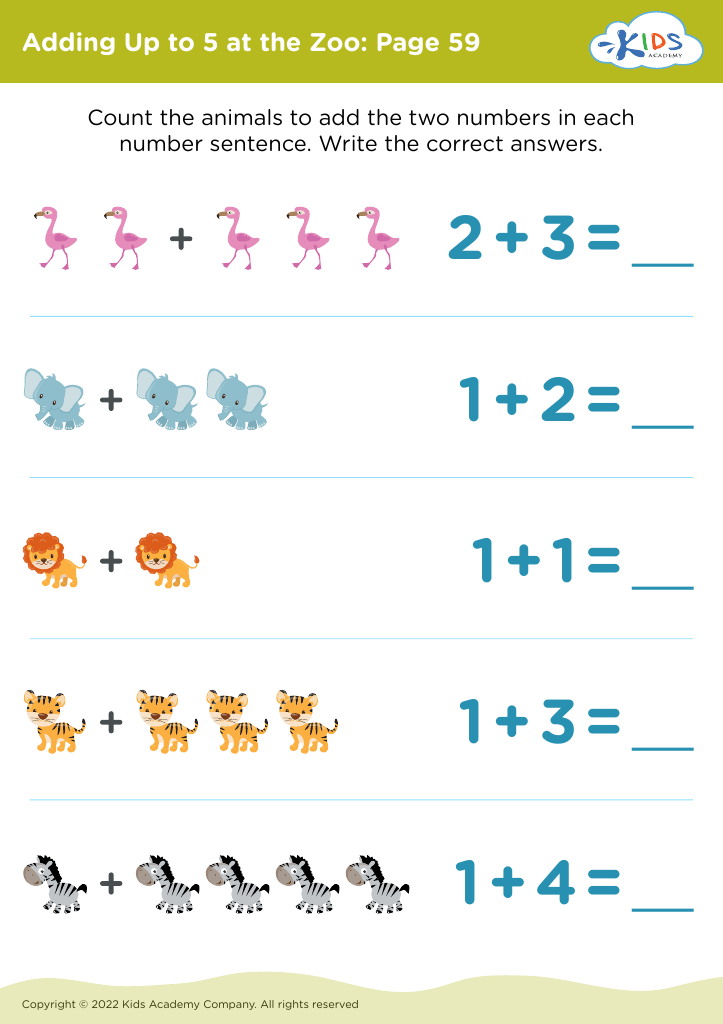
Adding Up to 5 at the Zoo: Page 59
Worksheet
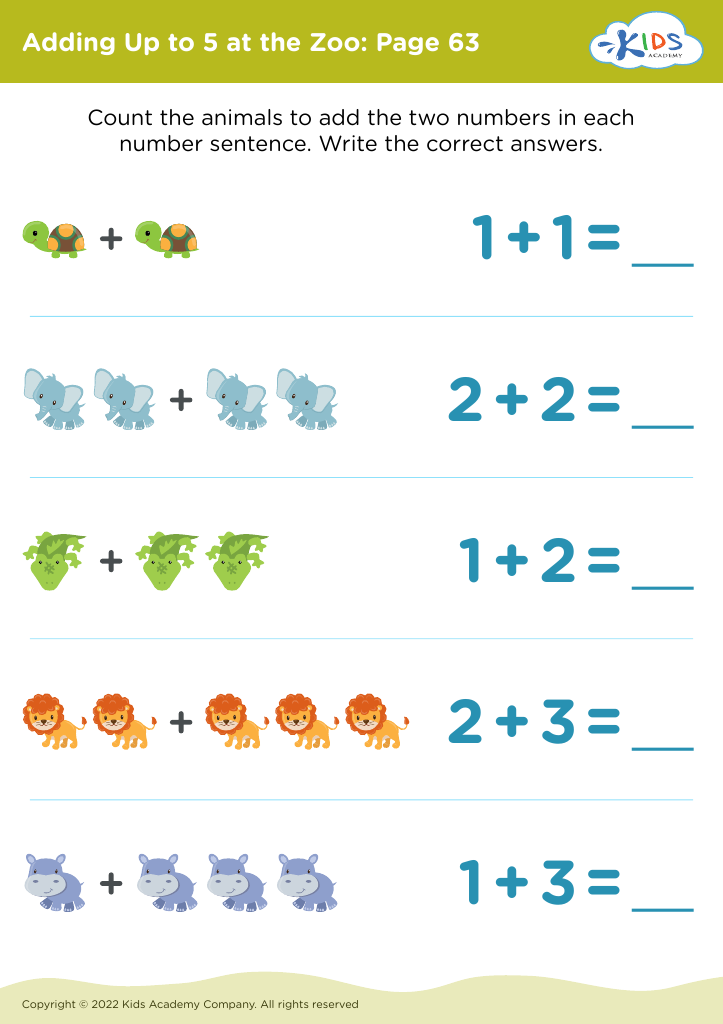
Adding Up to 5 at the Zoo: Page 63
Worksheet
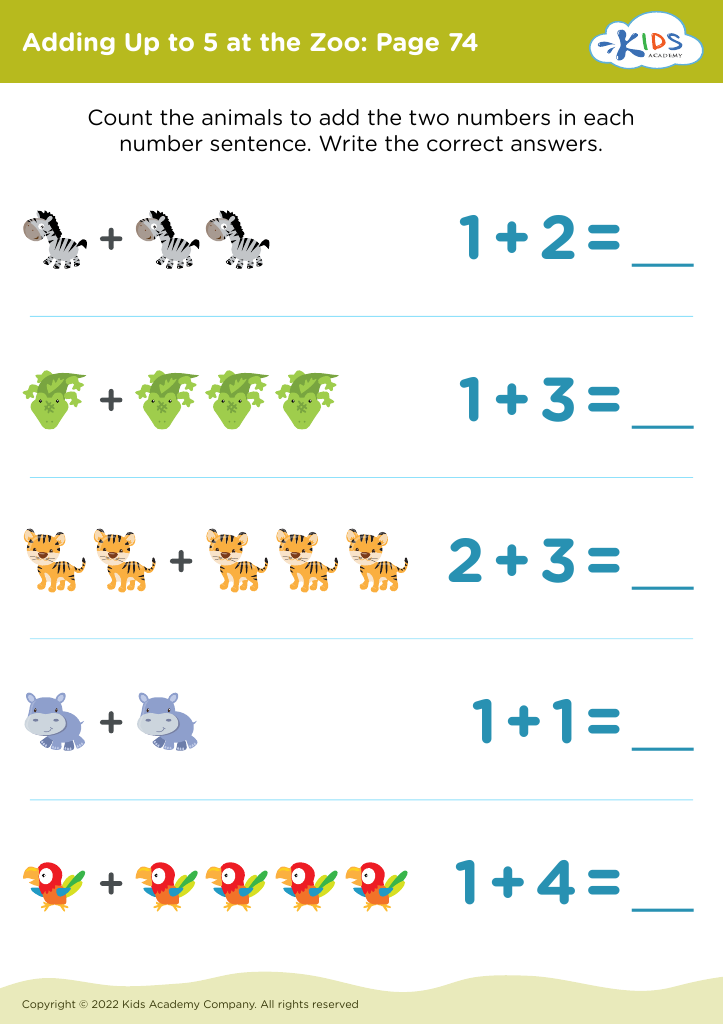
Adding Up to 5 at the Zoo: Page 74
Worksheet
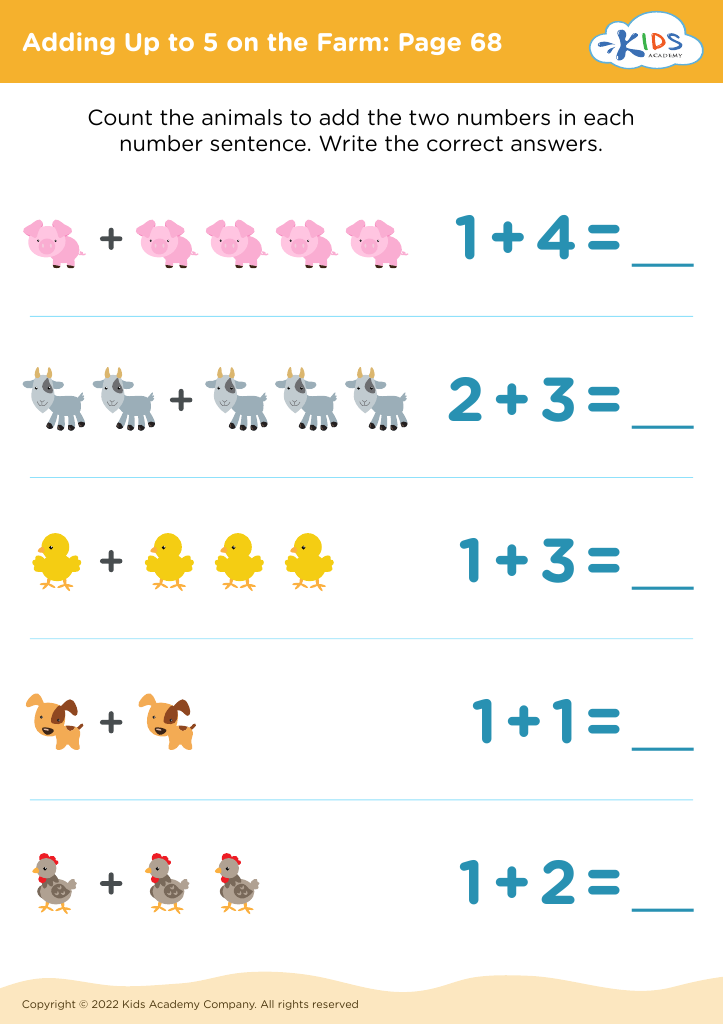
Adding Up to 5 on the Farm: Page 68
Worksheet
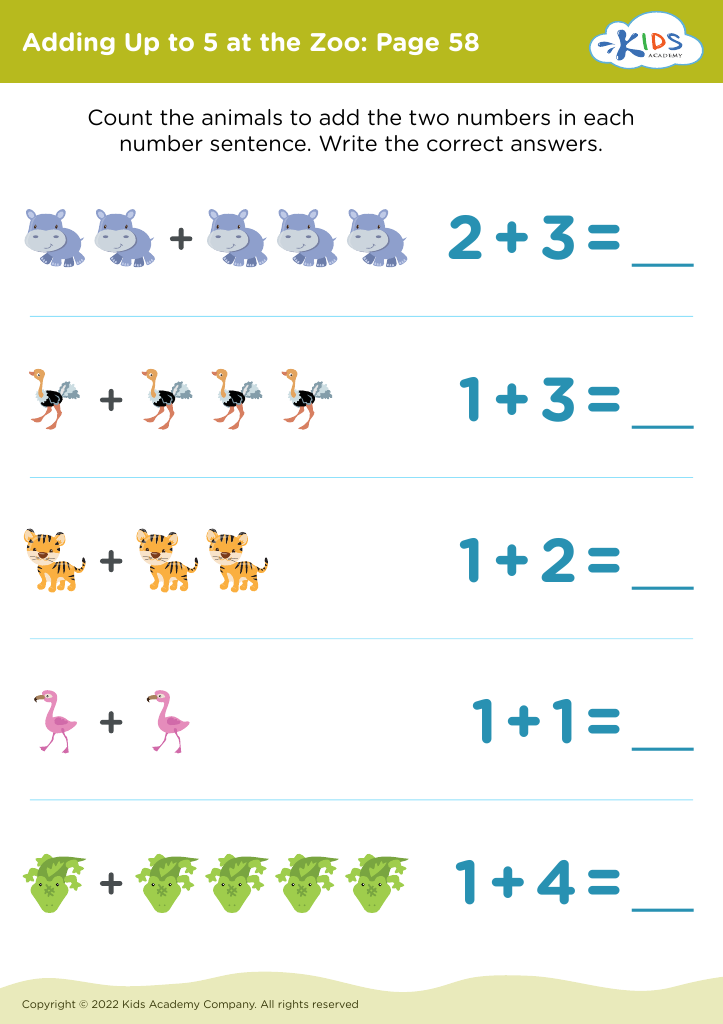
Adding Up to 5 at the Zoo: Page 58
Worksheet
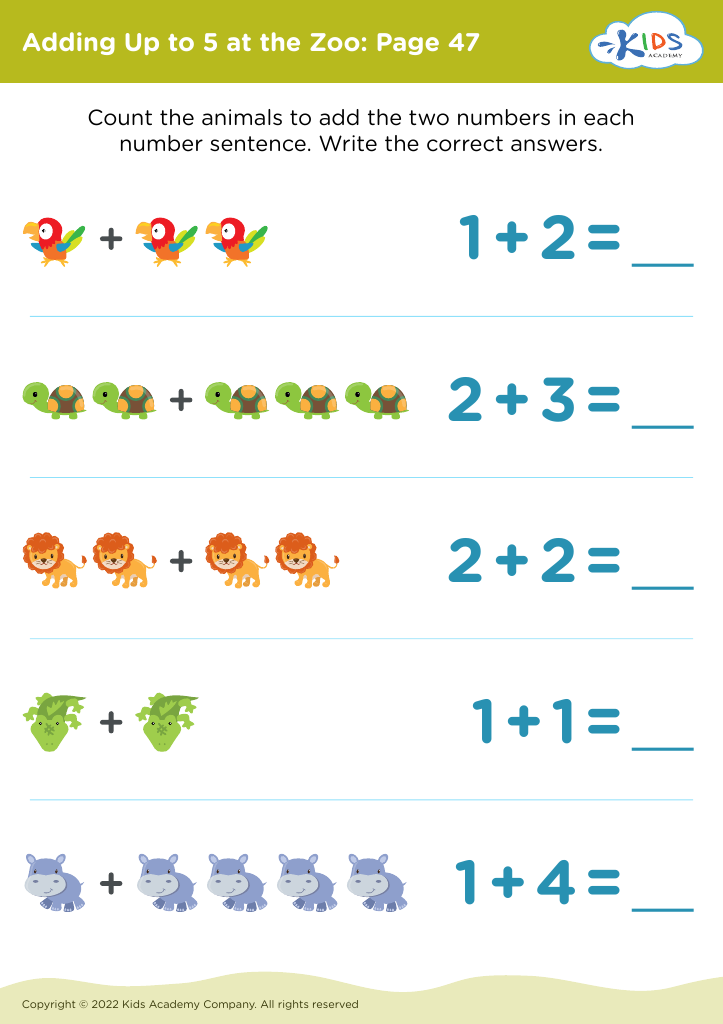
Adding Up to 5 at the Zoo: Page 47
Worksheet
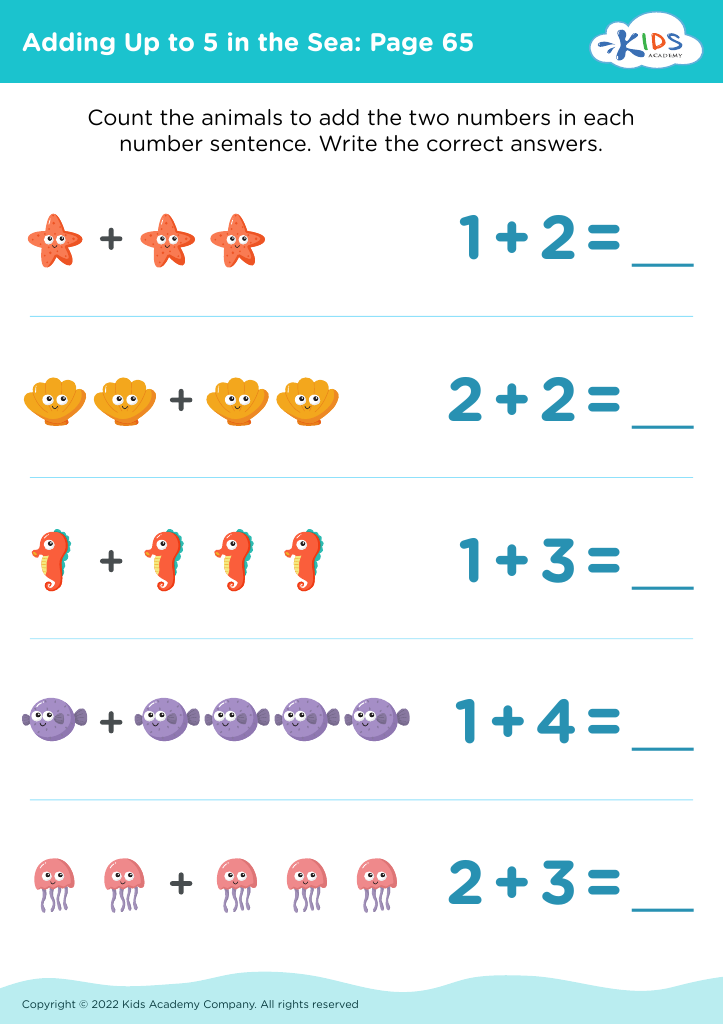
Adding Up to 5 in the Sea: Page 65
Worksheet
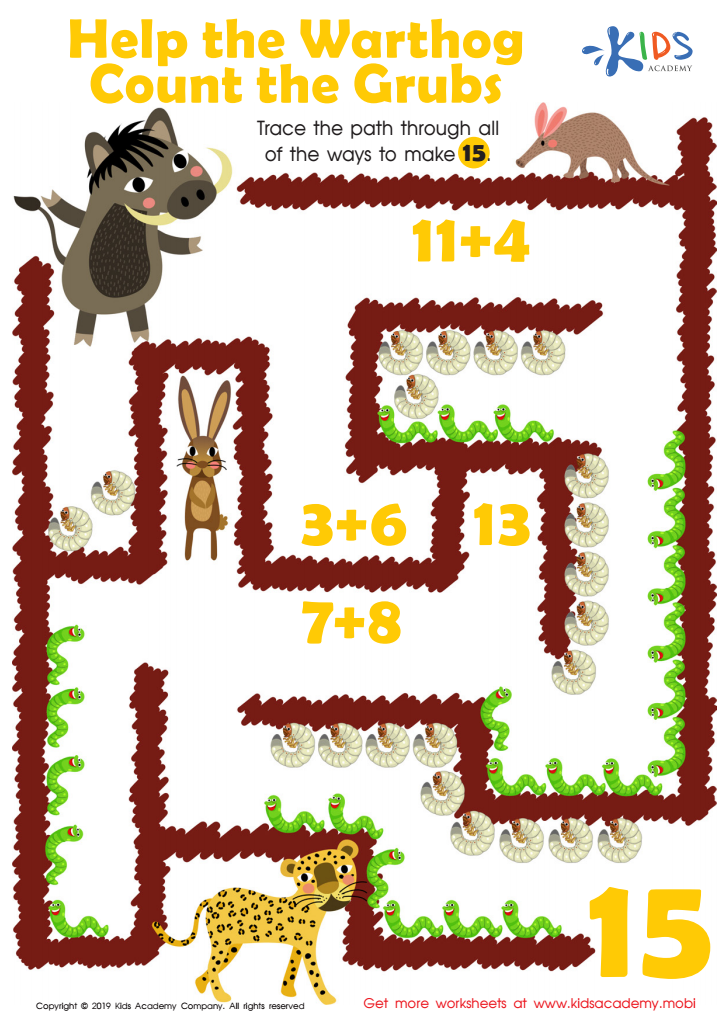
Help the Warthog Count the Grubs Worksheet

Help the Warthog Count the Grubs Worksheet

Test your kids' knowledge of wild animals. Ask them to name some they know, then have them identify the animals on this worksheet. If they can't, take the time to tell them the names. Finally, trace the warthog's path through the maze by solving the equations and going through paths that make 15.
Help the Warthog Count the Grubs Worksheet
Worksheet
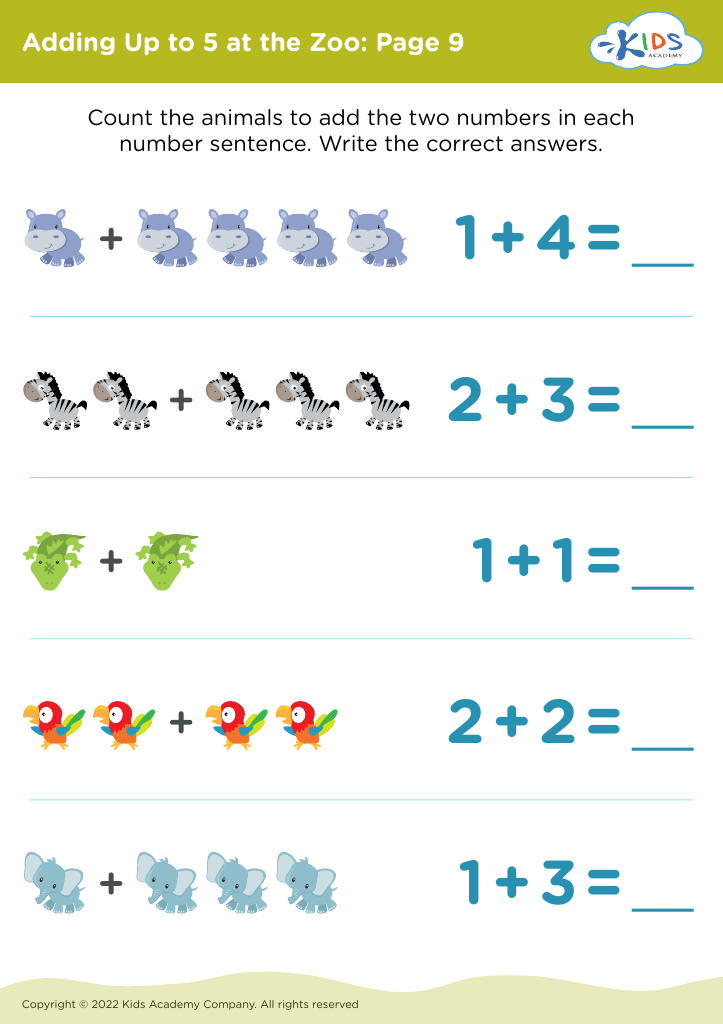
Adding Up to 5 at the Zoo: Page 9

Adding Up to 5 at the Zoo: Page 9

Adding Up to 5 at the Zoo: Page 9
Worksheet
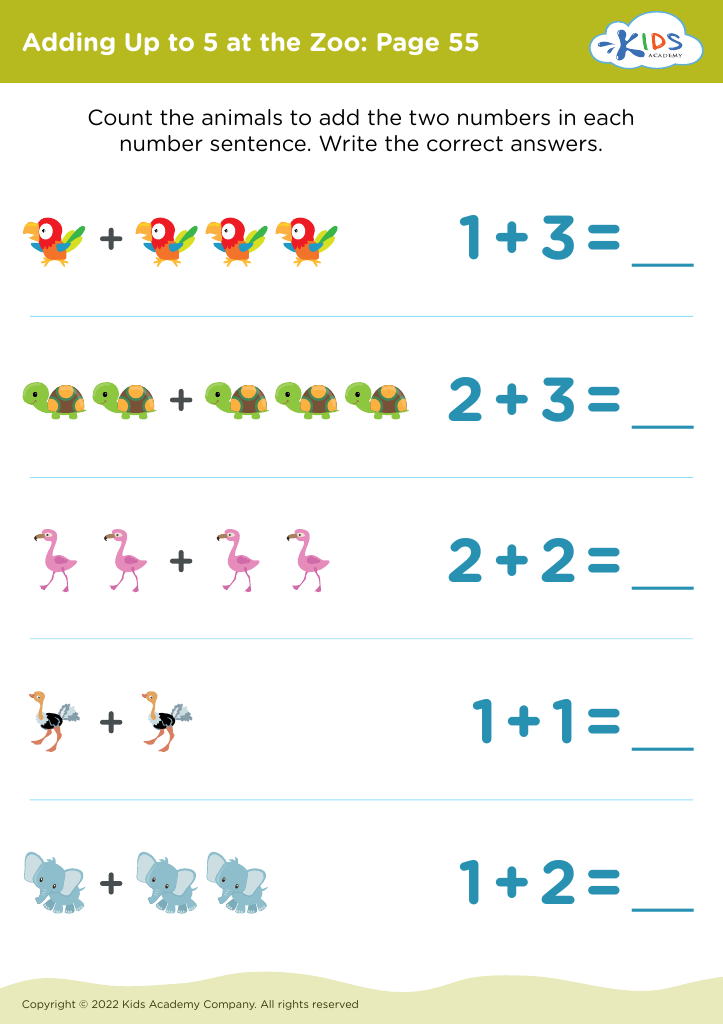
Adding Up to 5 at the Zoo: Page 55
Worksheet
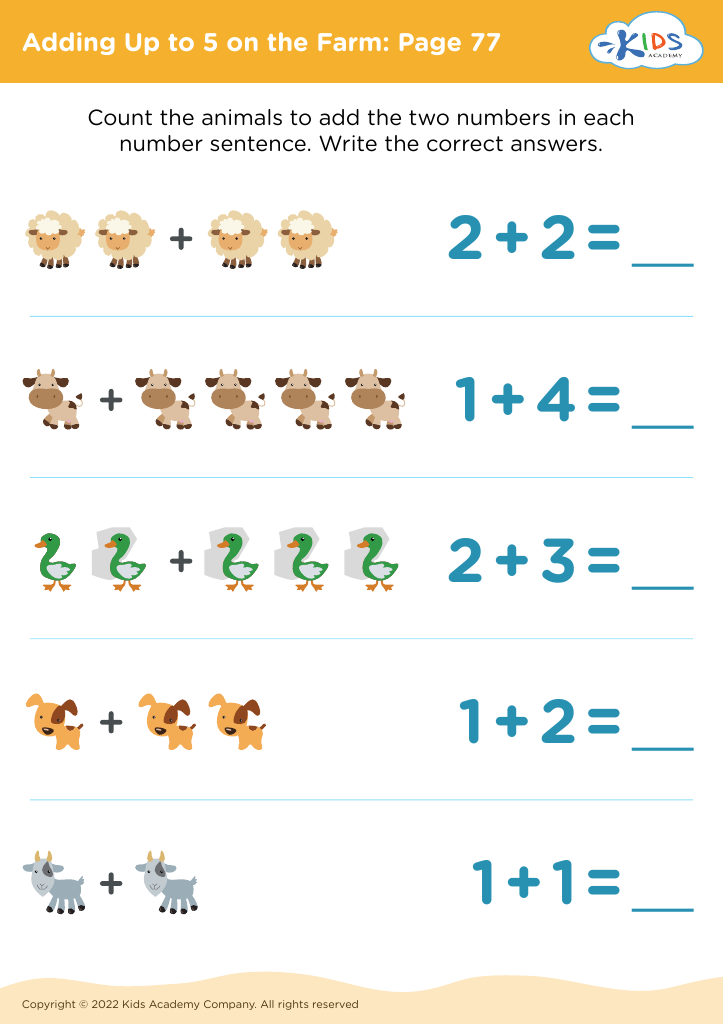
Adding Up to 5 on the Farm: Page 77
Worksheet
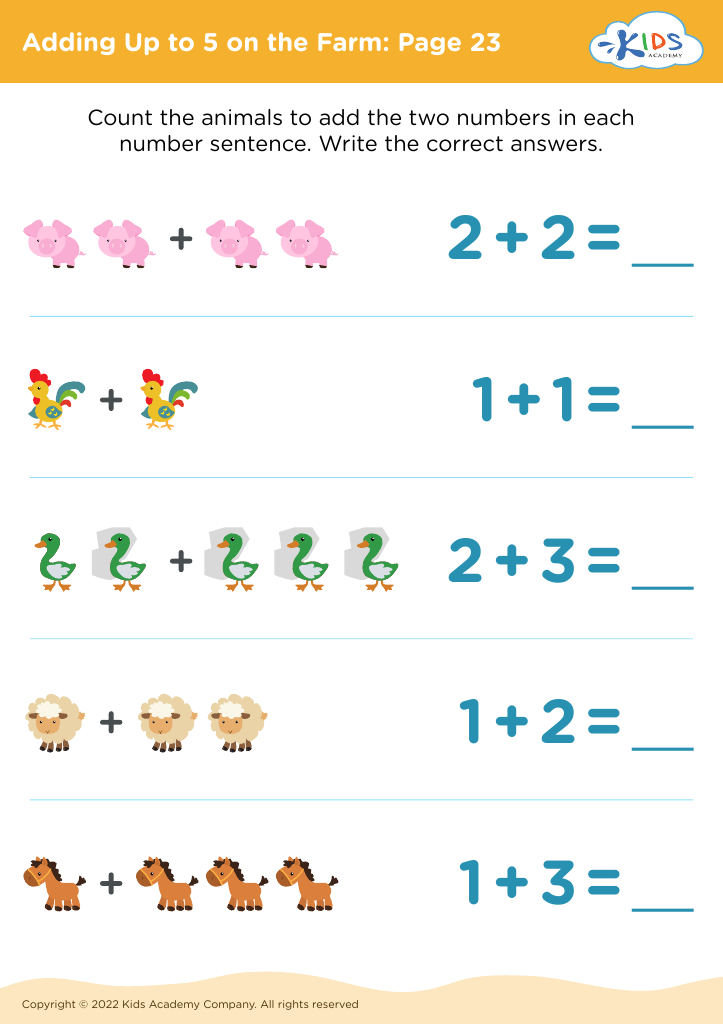
Adding Up to 5 on the Farm: Page 23
Worksheet
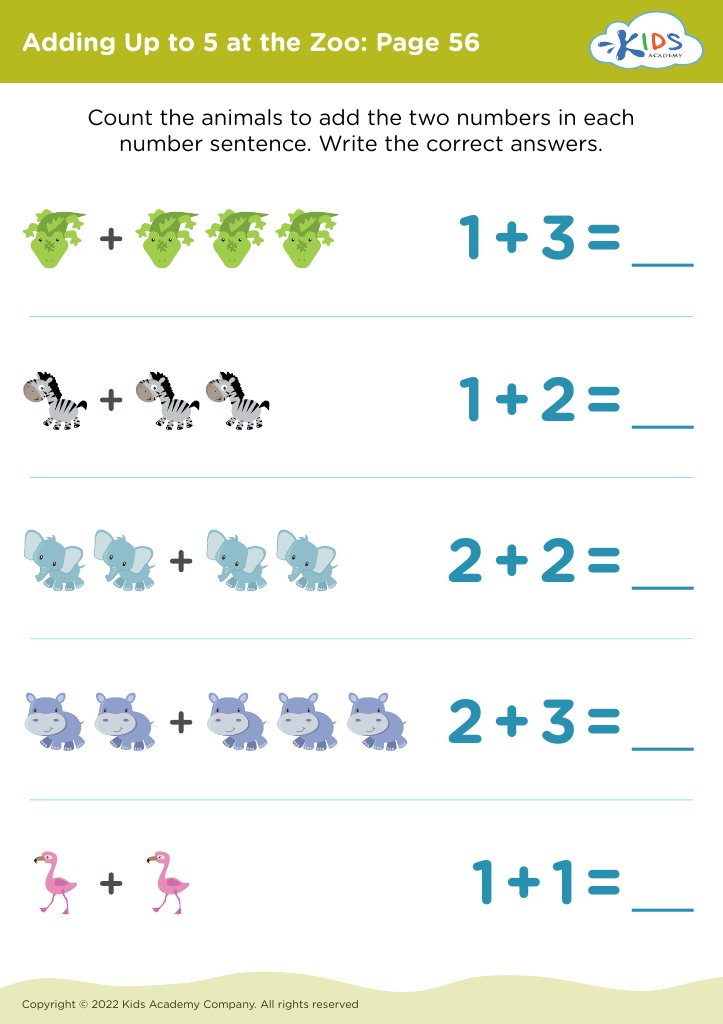
Adding Up to 5 at the Zoo: Page 56
Worksheet
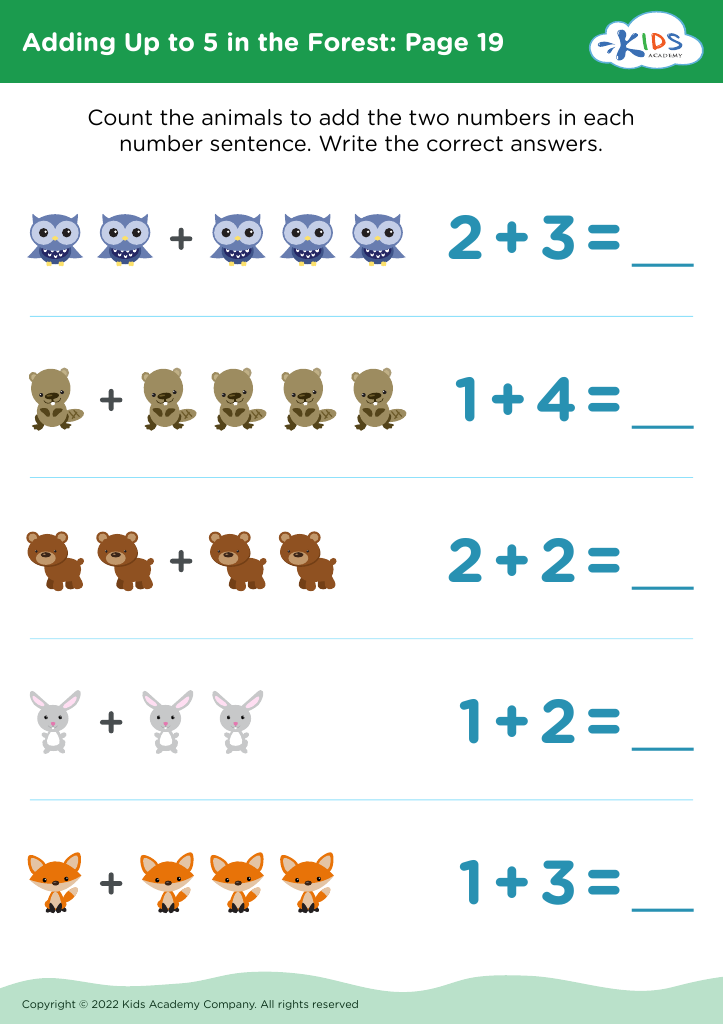
Adding Up to 5 in the Forest: Page 19
Worksheet
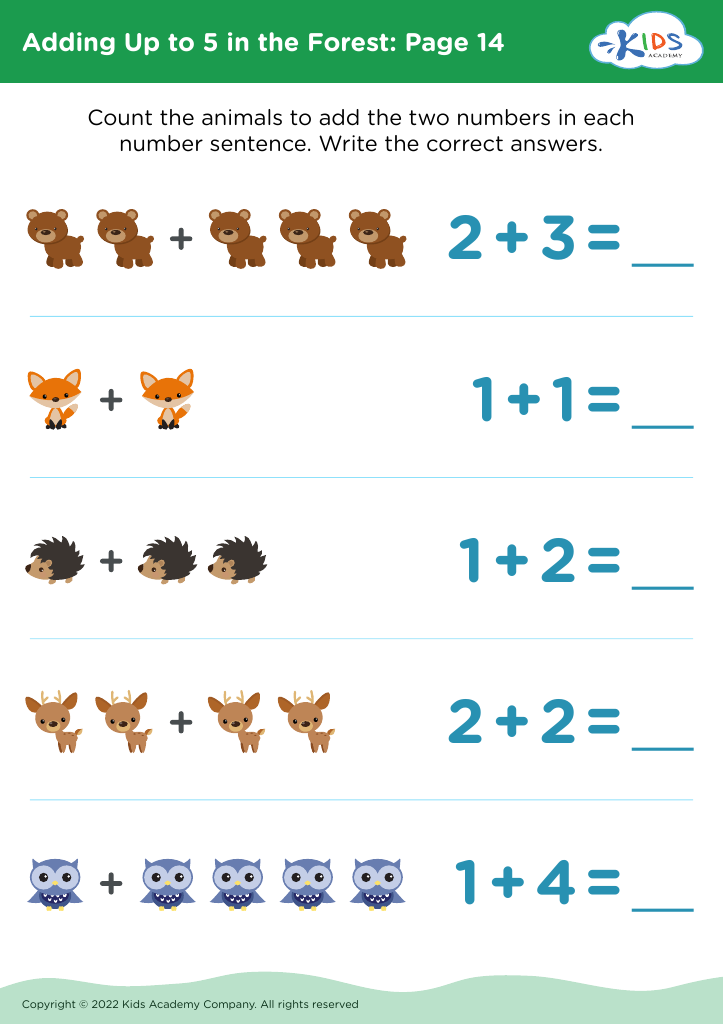
Adding Up to 5 in the Forest: Page 14
Worksheet
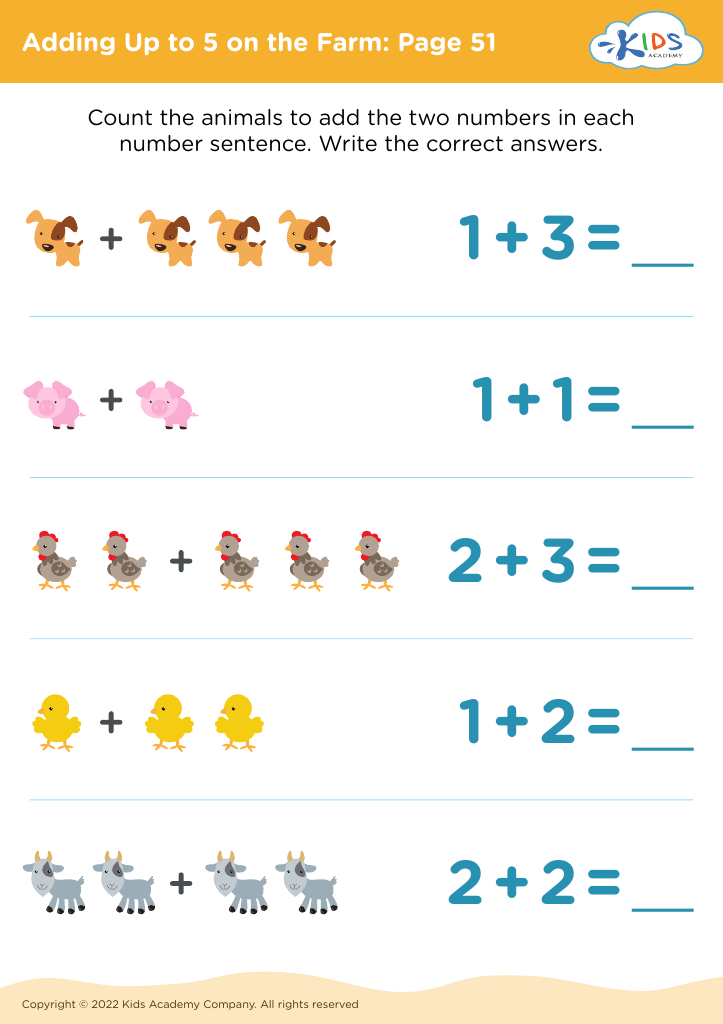
Adding Up to 5 on the Farm: Page 51
Worksheet
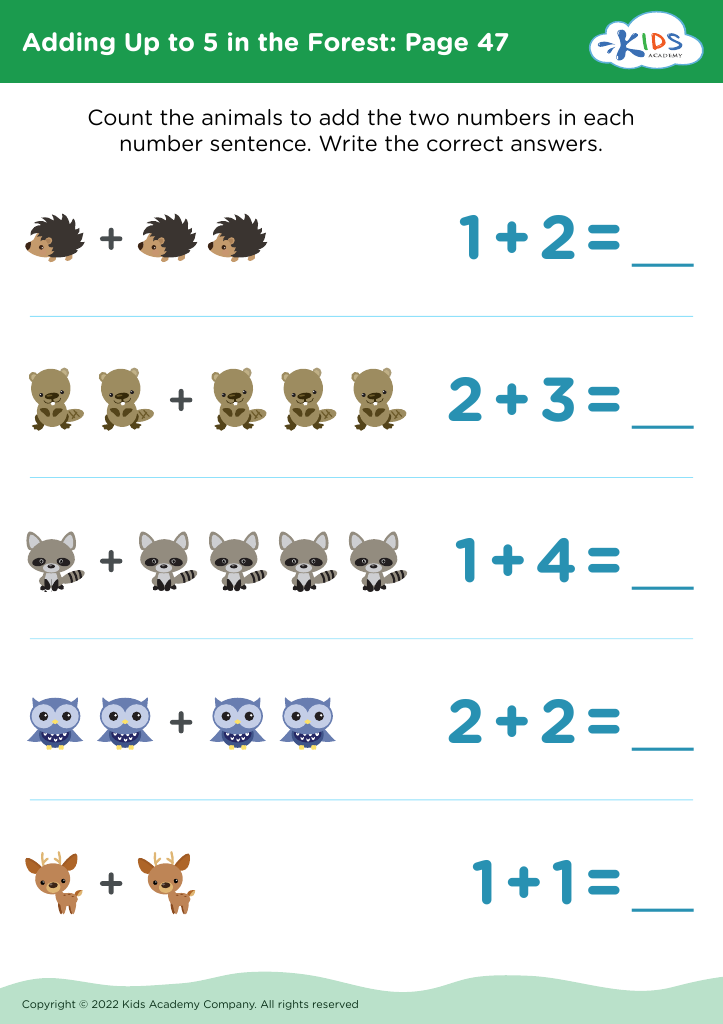
Adding Up to 5 in the Forest: Page 47
Worksheet
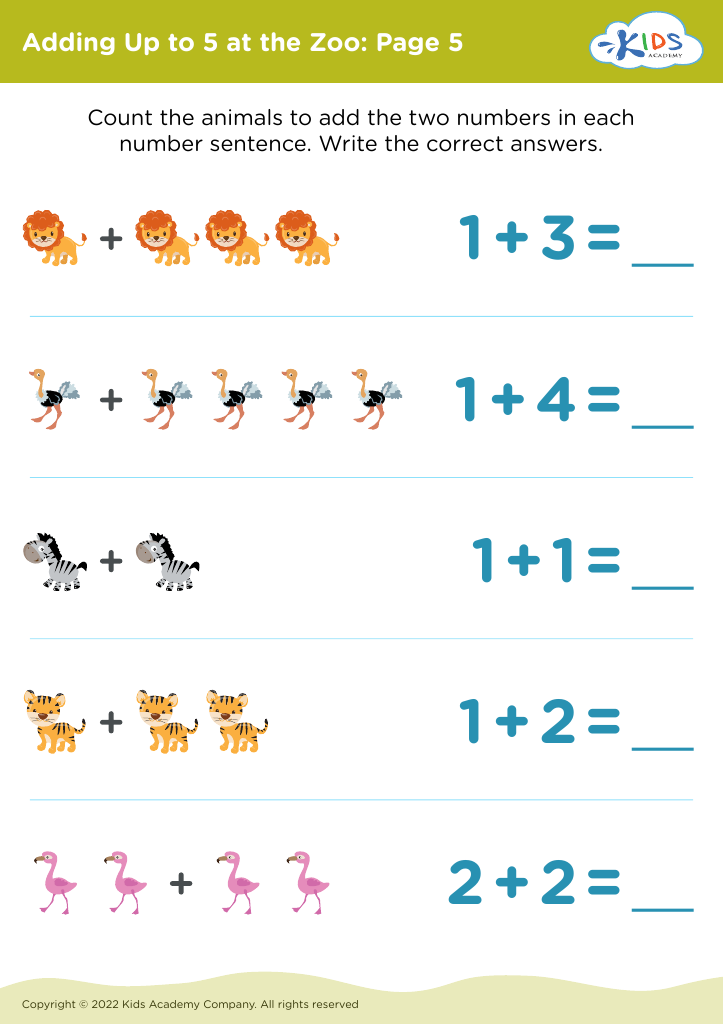
Adding Up to 5 at the Zoo: Page 5

Adding Up to 5 at the Zoo: Page 5

Adding Up to 5 at the Zoo: Page 5
Worksheet
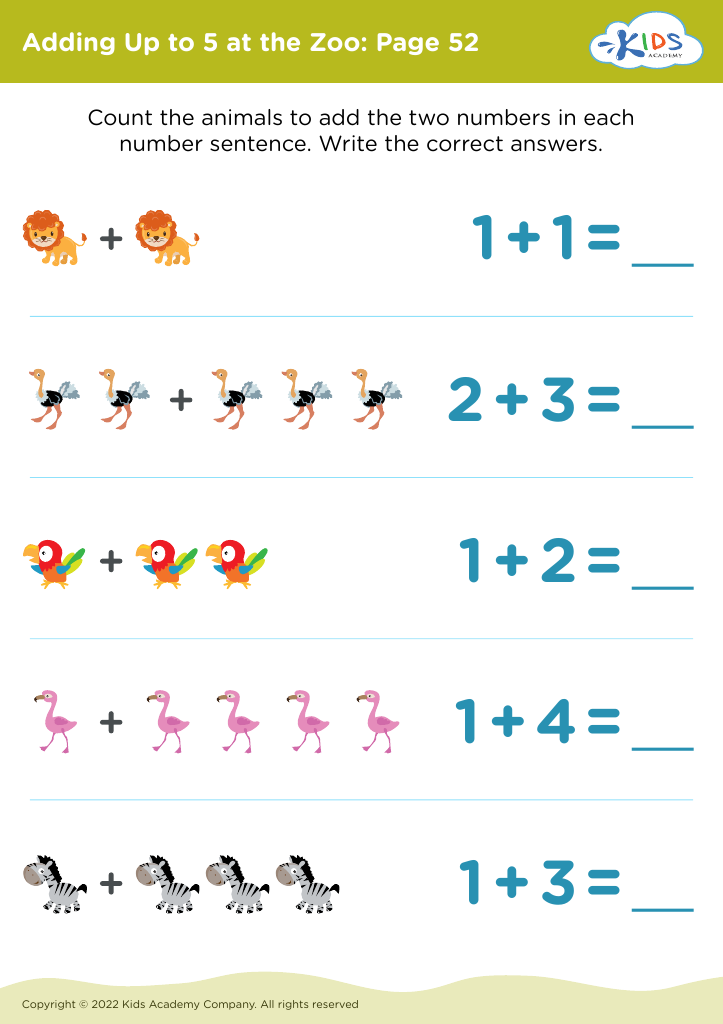
Adding Up to 5 at the Zoo: Page 52
Worksheet
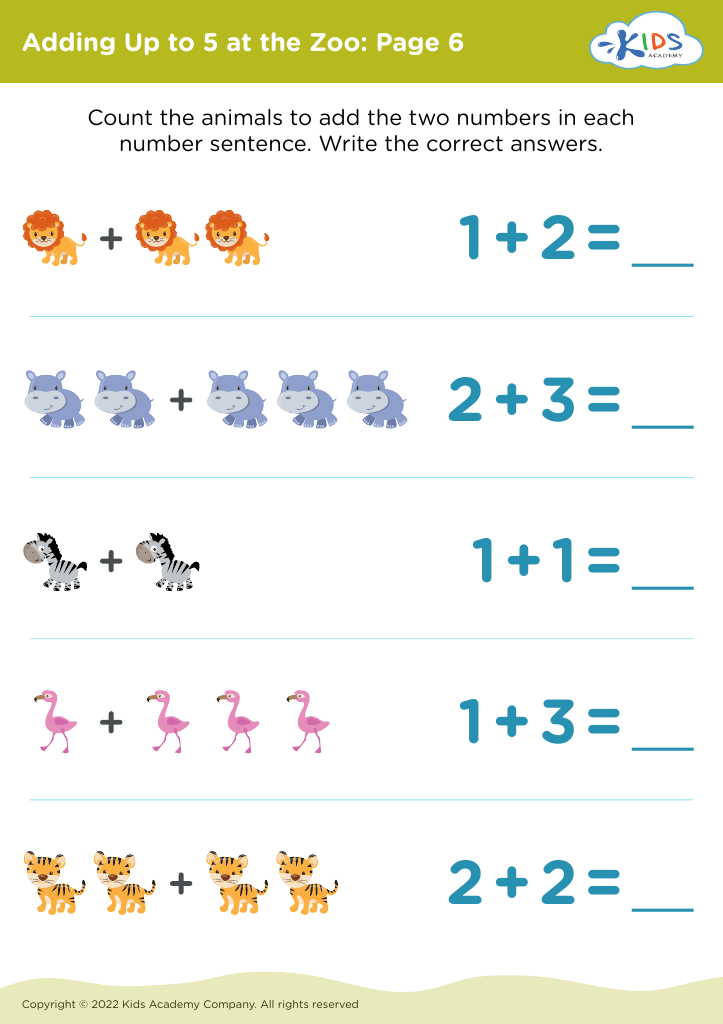
Adding Up to 5 at the Zoo: Page 6

Adding Up to 5 at the Zoo: Page 6

Adding Up to 5 at the Zoo: Page 6
Worksheet
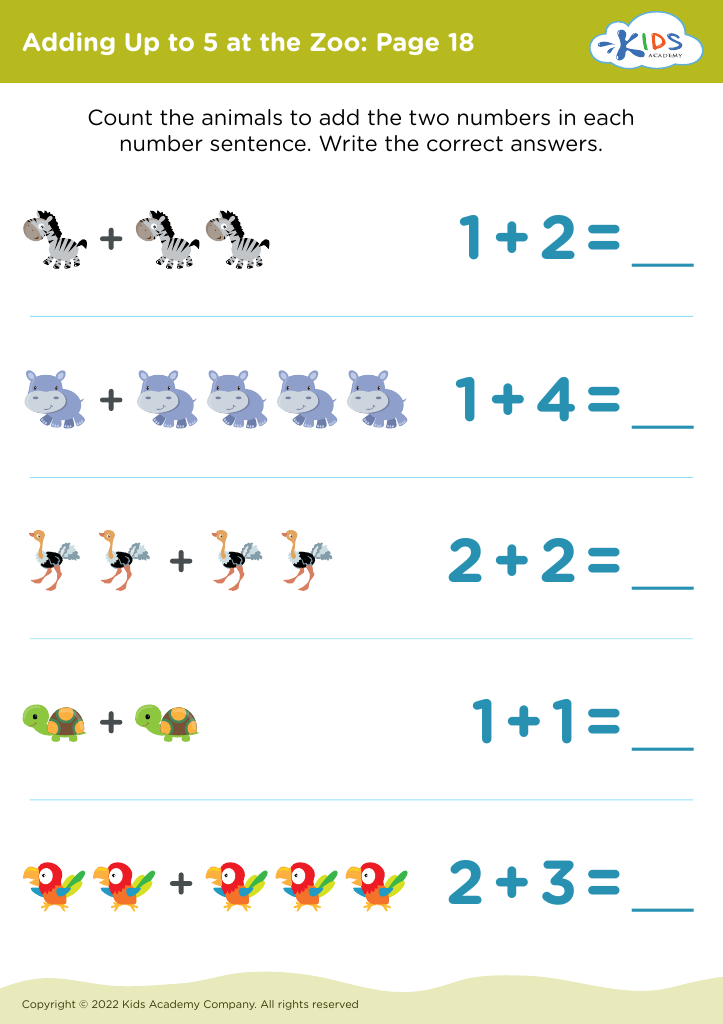
Adding Up to 5 at the Zoo: Page 18
Worksheet


Animal recognition addition is an engaging educational activity that combines early math skills with visual learning, making it an ideal tool for children aged 4-7. Parents and teachers should care about this approach because it fosters a variety of essential developmental skills.

First, it enhances mathematical understanding by introducing addition concepts in a fun and accessible way. By using animal images, children can easily grasp the idea of combining groups, such as counting the number of animals in two different pictures to find the total. This not only solidifies basic addition skills but also builds a strong foundation for future math learning.

Second, animal recognition addition stimulates cognitive development. Children learn to recognize various animals and associate quantities with them, enhancing their problem-solving and critical-thinking abilities. This process encourages them to make connections between numbers and real-world objects, making learning more relevant and engaging.

Finally, incorporating animals appeals to children's natural curiosity and love for nature, making learning enjoyable and less intimidating. By using interactive activities that capture their interest, parents and teachers can create a positive learning environment that encourages a love for both mathematics and the natural world, laying the groundwork for academic success.