
Basic Mathematics Addition Worksheets for Ages 4-7
3 filtered results
Difficulty Level
Grade
Age
-
From - To
Subject
Activity
Standards
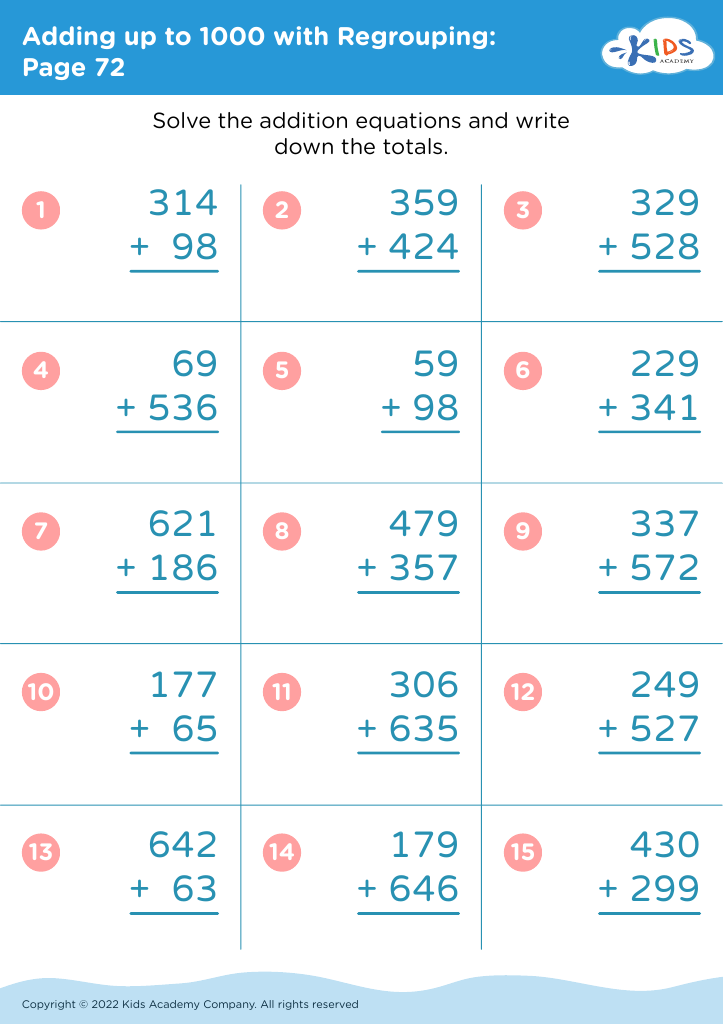
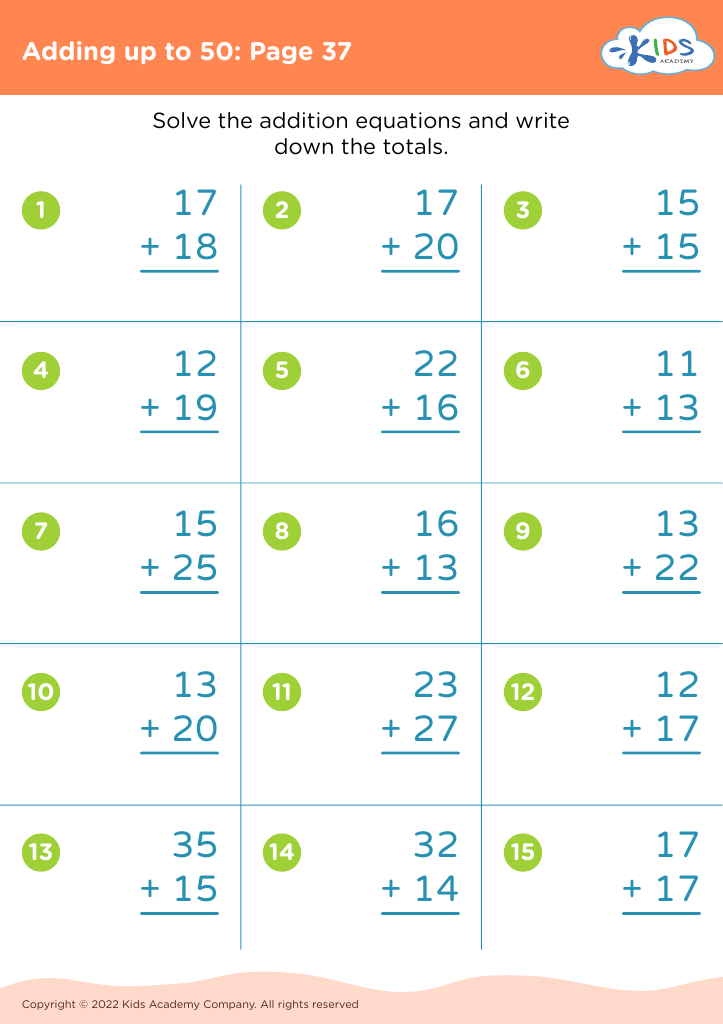
Welcome to our "Basic Mathematics Addition Worksheets" designed specifically for children aged 4-7! These engaging and interactive worksheets provide a fun way for young learners to build their foundational addition skills. Our carefully crafted activities promote number recognition, counting, and problem-solving abilities. With colorful illustrations and age-appropriate tasks, children can practice adding single-digit numbers in a playful manner. Perfect for both classroom and home use, these worksheets cater to diverse learning styles and help boost confidence in math. Download our free resources today and watch your child excel in basic addition while having fun along the way!
Favorites
With answer key
Interactive
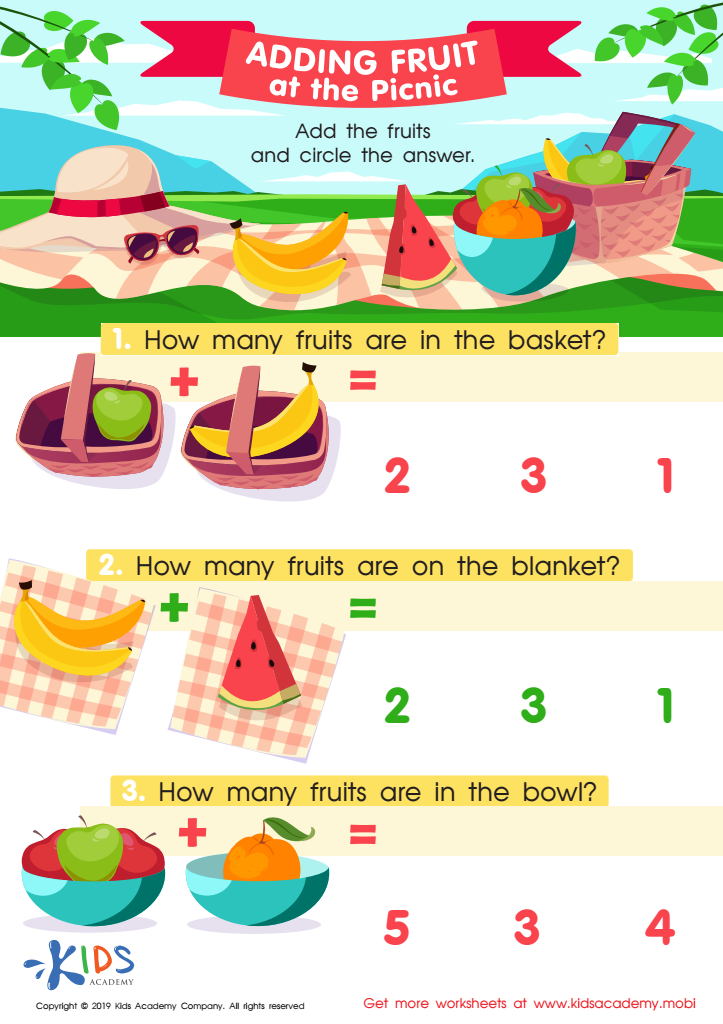
Adding Fruit at the Picnic Worksheet
Picnics are a great way for the family to enjoy a fun day in the sun! Get your kids involved by having them help load the picnic basket and do this worksheet to practice their math skills while they get ready. Identify the fruits in the picture, add them up, and circle the correct answer.
 Assign to My Students
Adding Fruit at the Picnic Worksheet
Worksheet
Join Kids Academy for Free
Who is primarily going to use this learning content?








Basic mathematics addition is foundational to a child's cognitive and academic development, particularly for ages 4-7. At this early stage, children are like sponges, absorbing concepts that will shape their future learning. Mastering addition builds a strong number sense, enabling kids to recognize quantities, understand relationships between numbers, and develop problem-solving skills.
Parents and teachers should prioritize teaching addition because it fosters critical thinking and logic. Engaging children in fun, interactive activities, such as counting objects or playing math-related games, makes learning enjoyable and enhances retention. Moreover, understanding addition promotes confidence in math, laying the groundwork for more complex calculations they will encounter later.
Socially, learning to add aids in developing teamwork and communication skills, as children often work together to solve problems, share strategies, and celebrate successes. Additionally, basic addition aids in everyday situations, making it a practical life skill for tasks like sharing snacks or counting toys.
In essence, focusing on addition at this critical age supports a child’s academic readiness and overall growth, ensuring they have the tools to navigate future educational challenges with confidence and enthusiasm. Thus, prioritizing basic mathematics addition is essential for parents and teachers alike.








