Filters

83 filtered results

Clear all filters
Favorites
With answer key
Interactive

83 filtered results

Difficulty Level

Grade


Check out this FREE Trial Lesson on Addition for age 4-7!

Z

Favorites
With answer key
Interactive
  • 4-7
  • Comparing Fractions
  • Addition
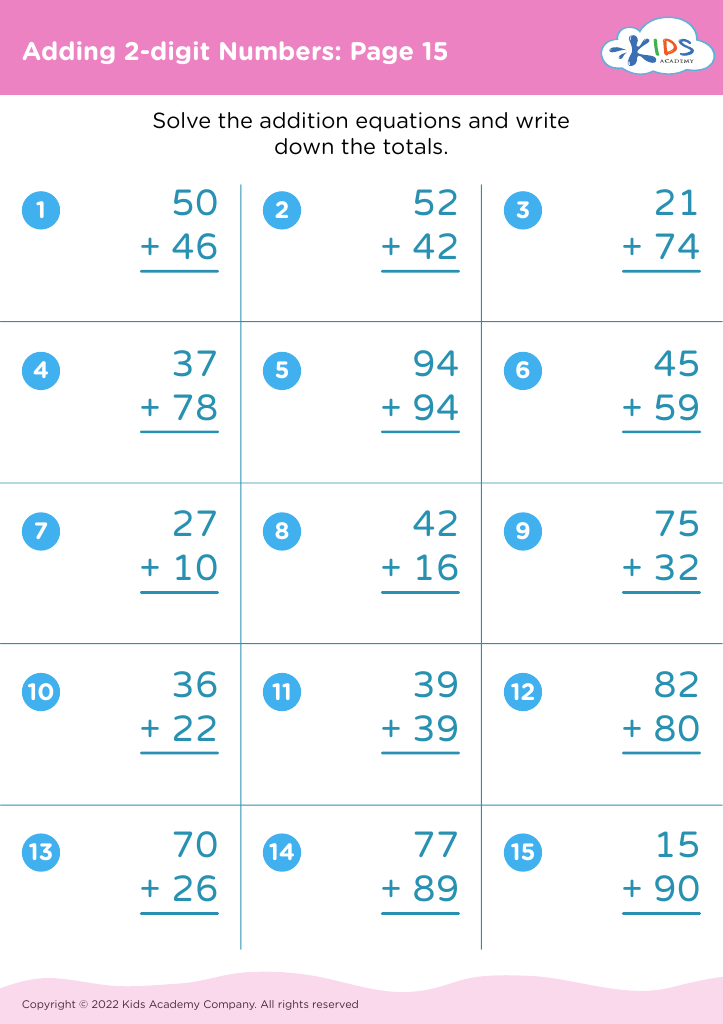
Adding 2-digit Numbers: Page 15

Adding 2-digit Numbers: Page 15

Adding 2-digit Numbers: Page 15
Worksheet
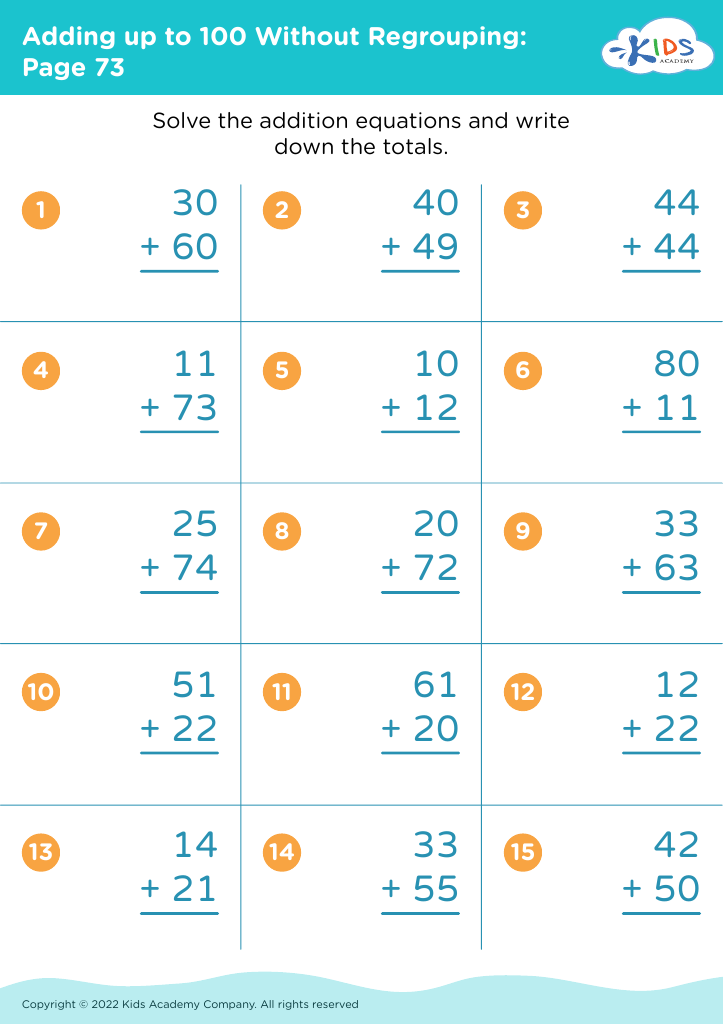
Adding up to 100 Without Regrouping: Page 73
Worksheet
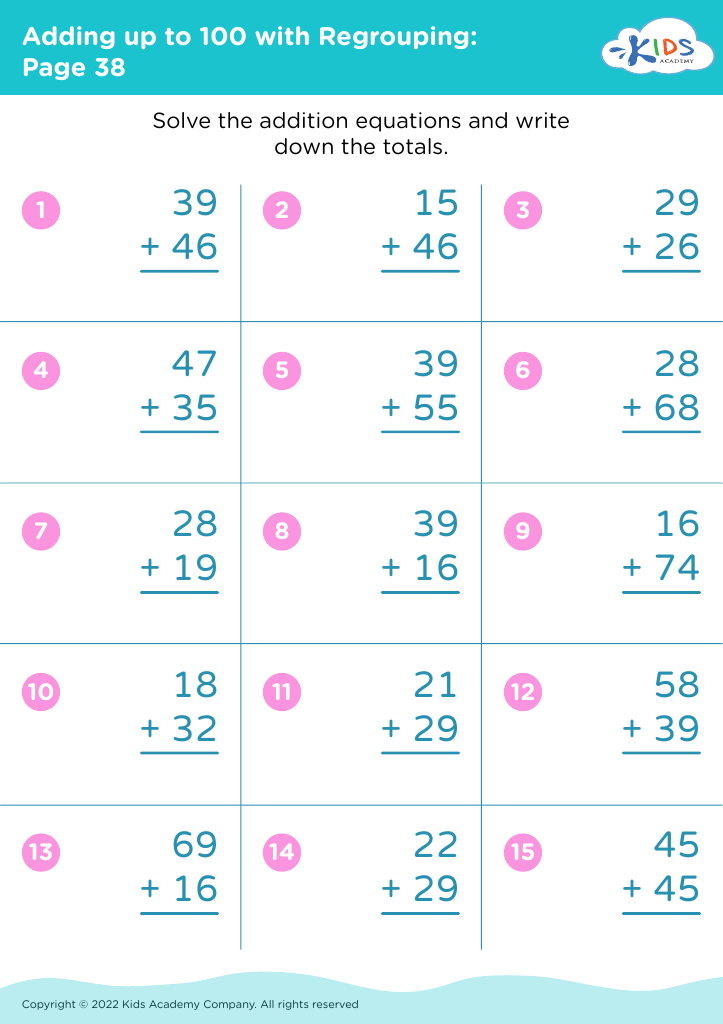
Adding up to 100 with Regrouping: Page 38
Worksheet
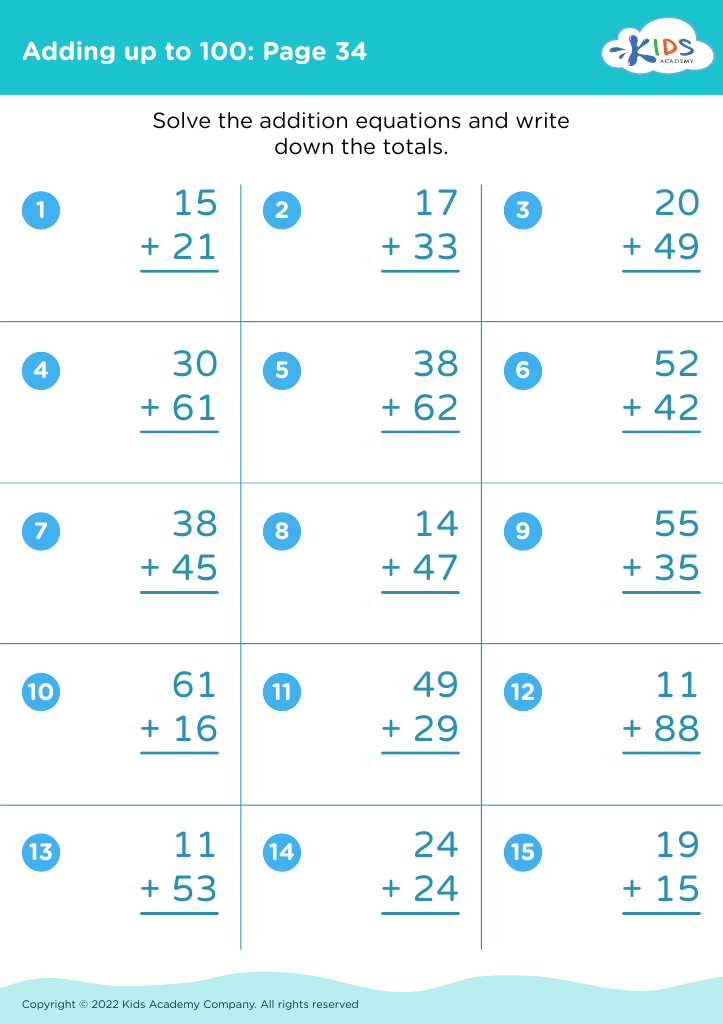
Adding up to 100: Page 34

Adding up to 100: Page 34

Adding up to 100: Page 34
Worksheet
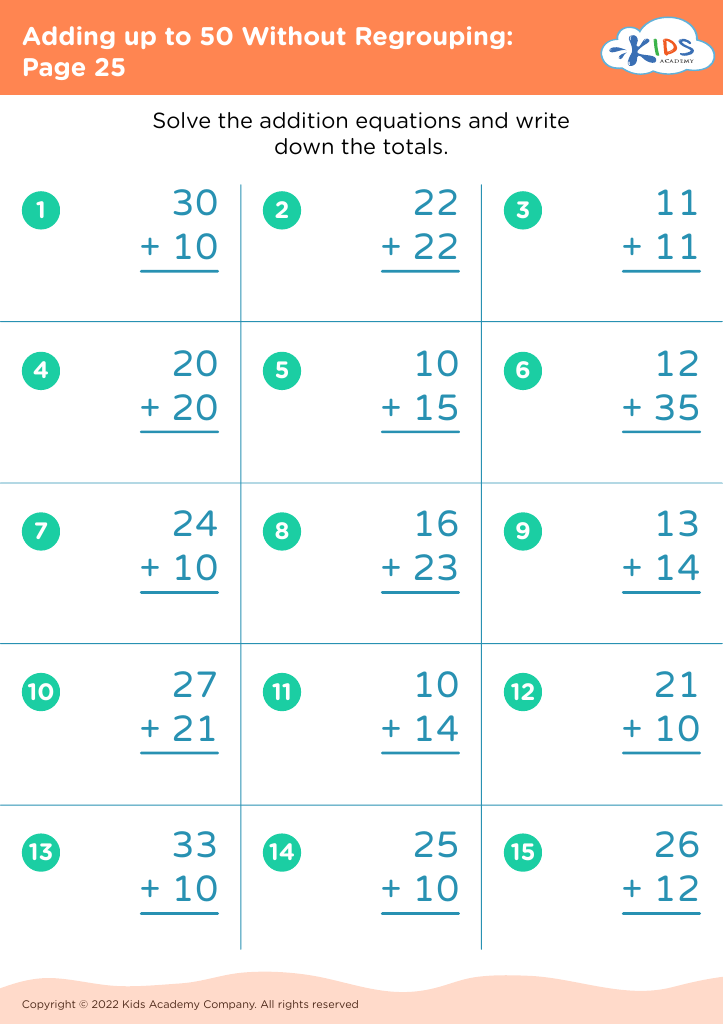
Adding up to 50 Without Regrouping: Page 25
Worksheet
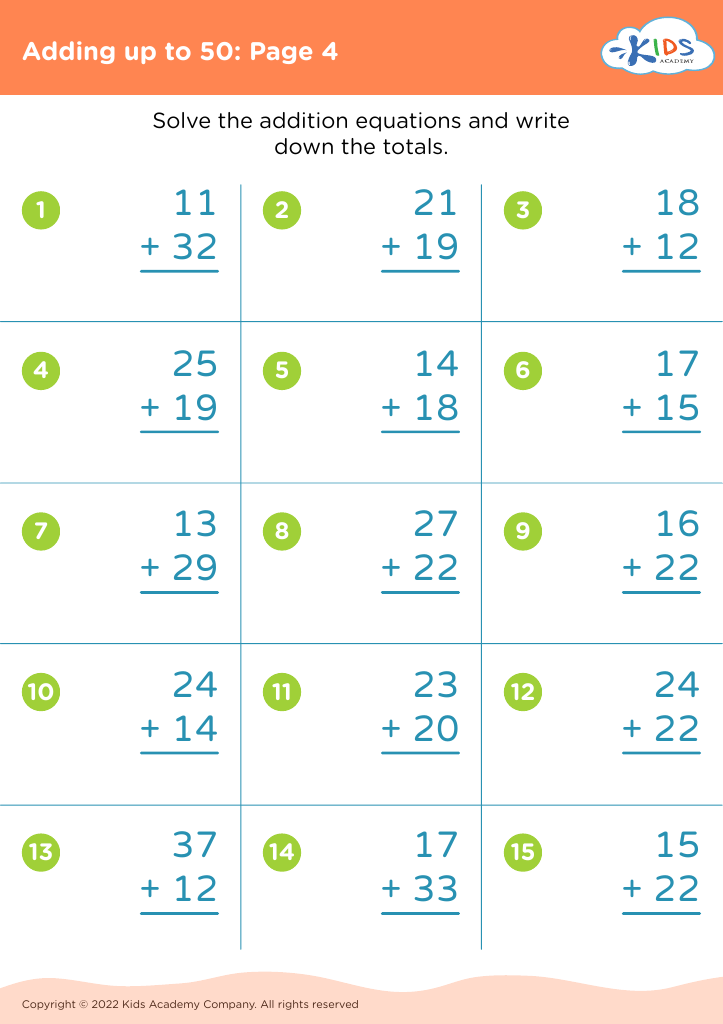
Adding up to 50: Page 4

Adding up to 50: Page 4

Adding up to 50: Page 4
Worksheet
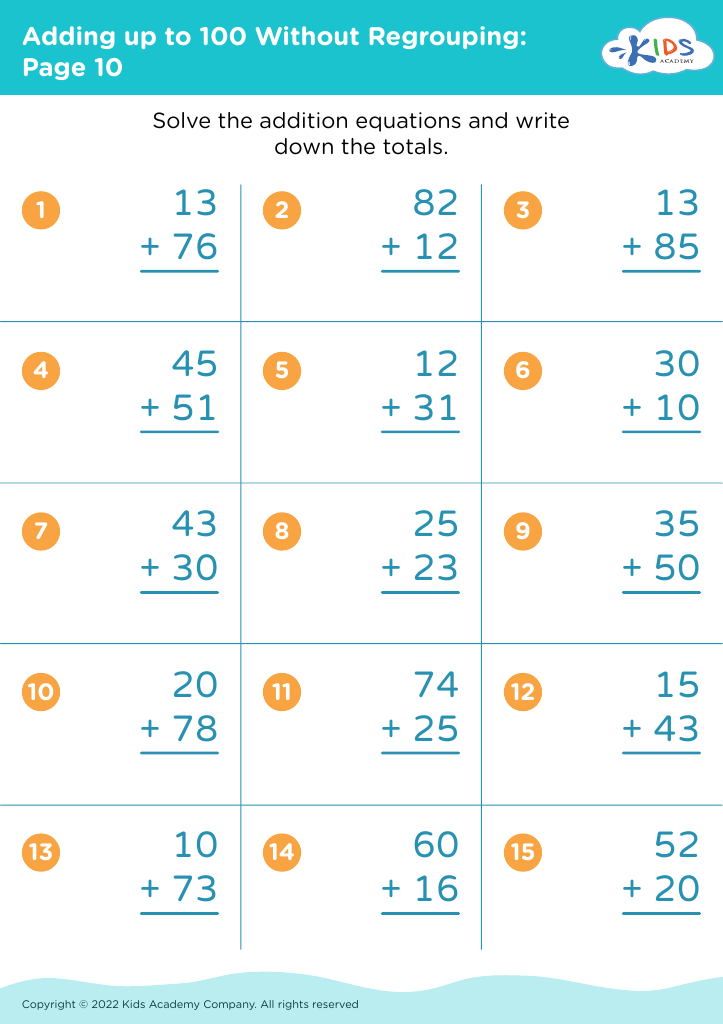
Adding up to 100 Without Regrouping: Page 10
Worksheet
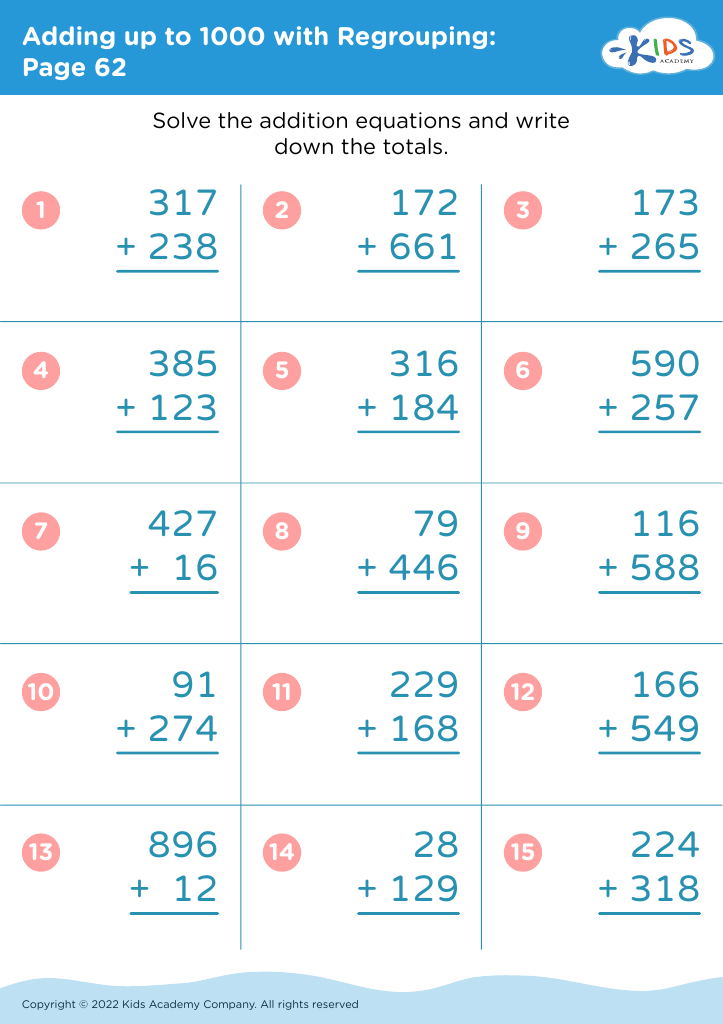
Adding up to 1000 with Regrouping: Page 62
Worksheet
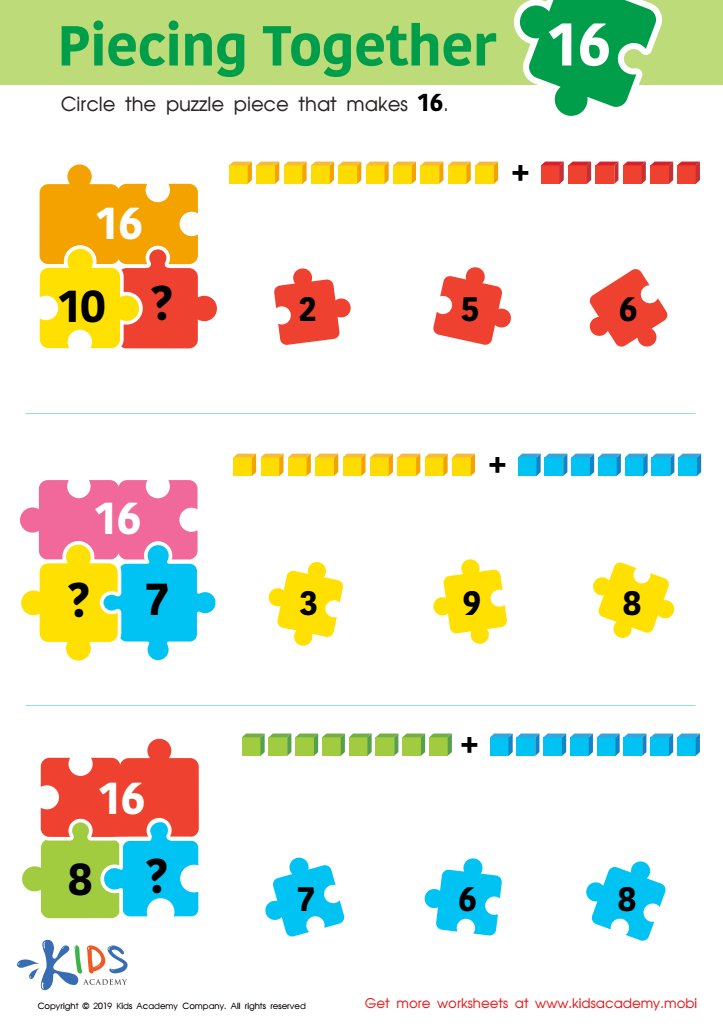
Piecing Together 16 Worksheet

Piecing Together 16 Worksheet

Combine learning with fun using this colorful worksheet! Ask your preschoolers what they see in the picture, then help them solve the mathematical equations on the puzzle pieces. One equation is missing on each; have them circle the piece that will make the bottom puzzle piece numbers equal 16. Use puzzles and bright colors to teach - it's one of the best ways your kids can learn!
Piecing Together 16 Worksheet
Worksheet
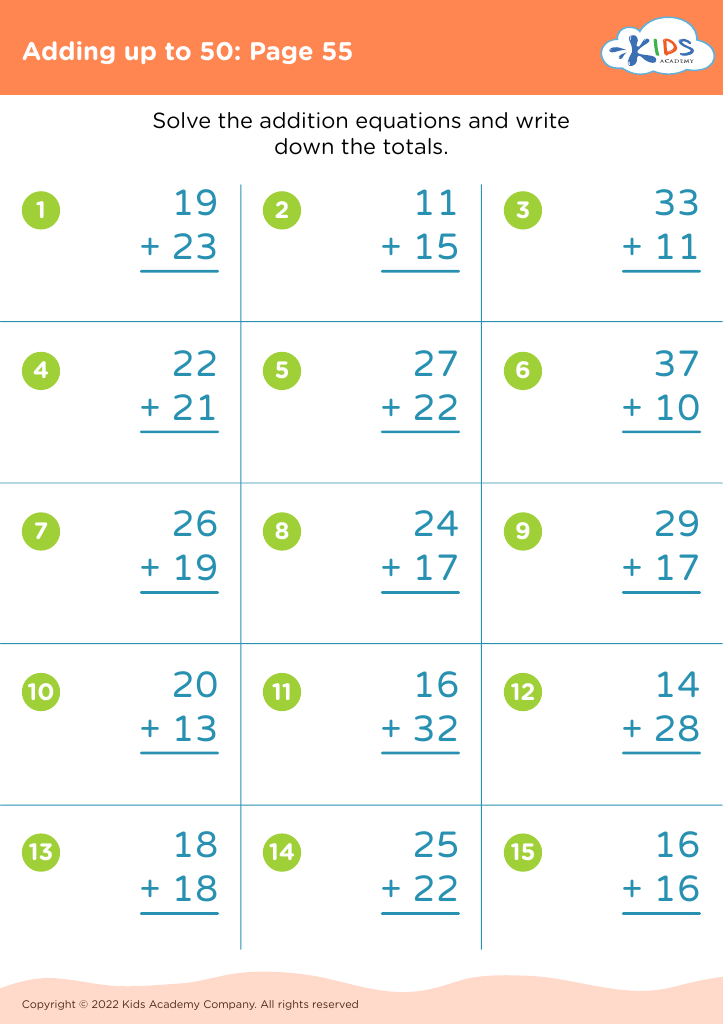
Adding up to 50: Page 55

Adding up to 50: Page 55

Adding up to 50: Page 55
Worksheet
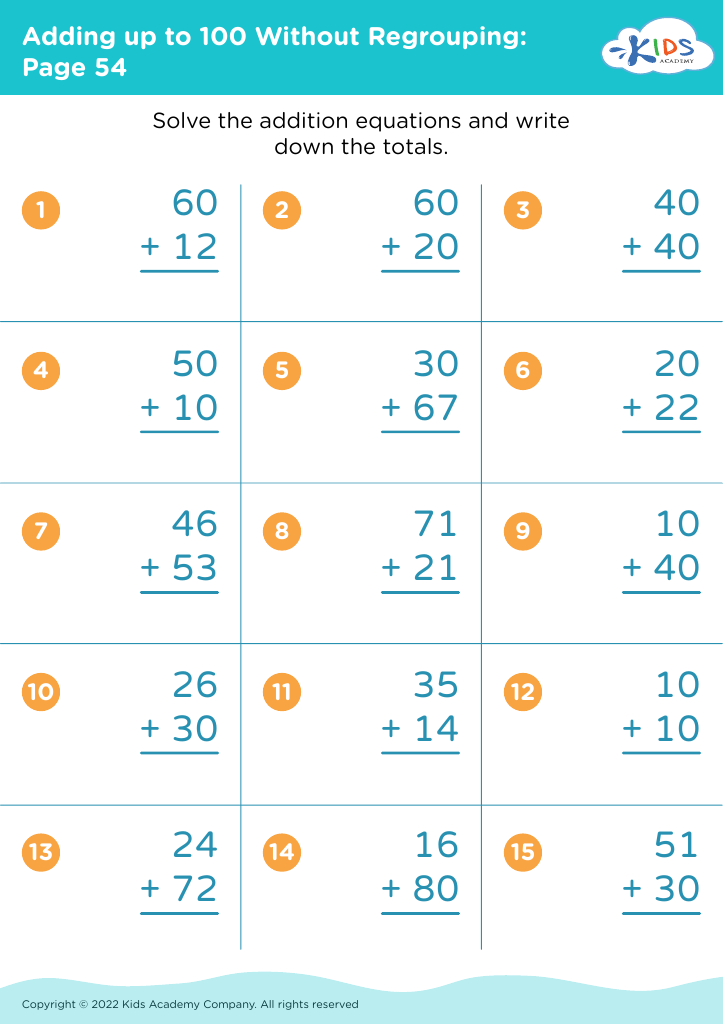
Adding up to 100 Without Regrouping: Page 54
Worksheet
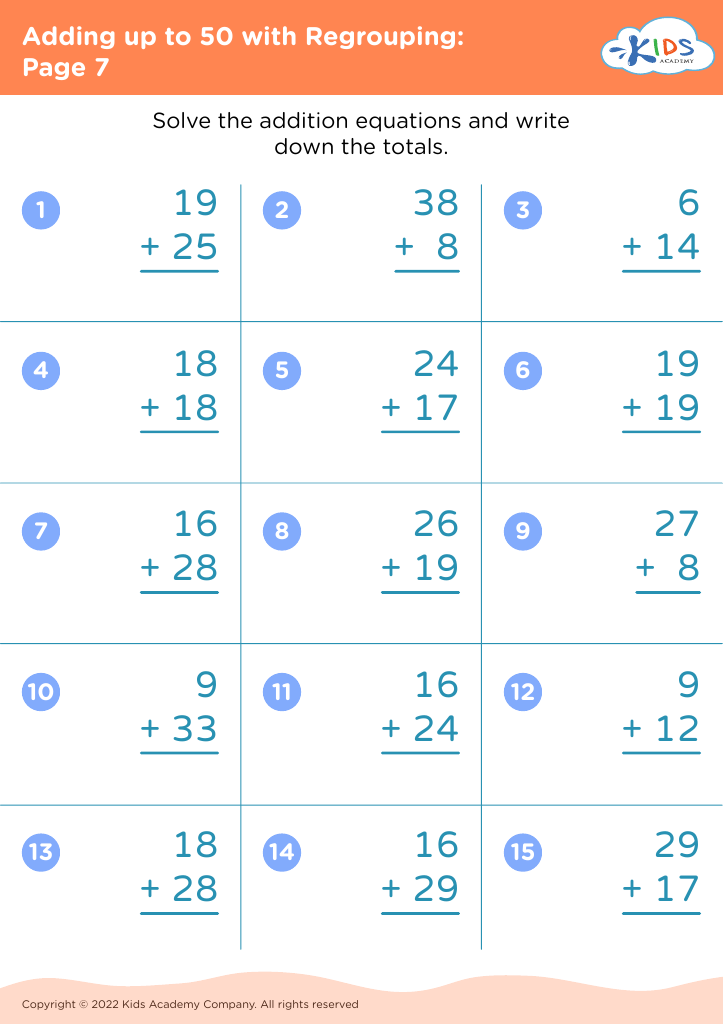
Adding up to 50 with Regrouping: Page 7
Worksheet
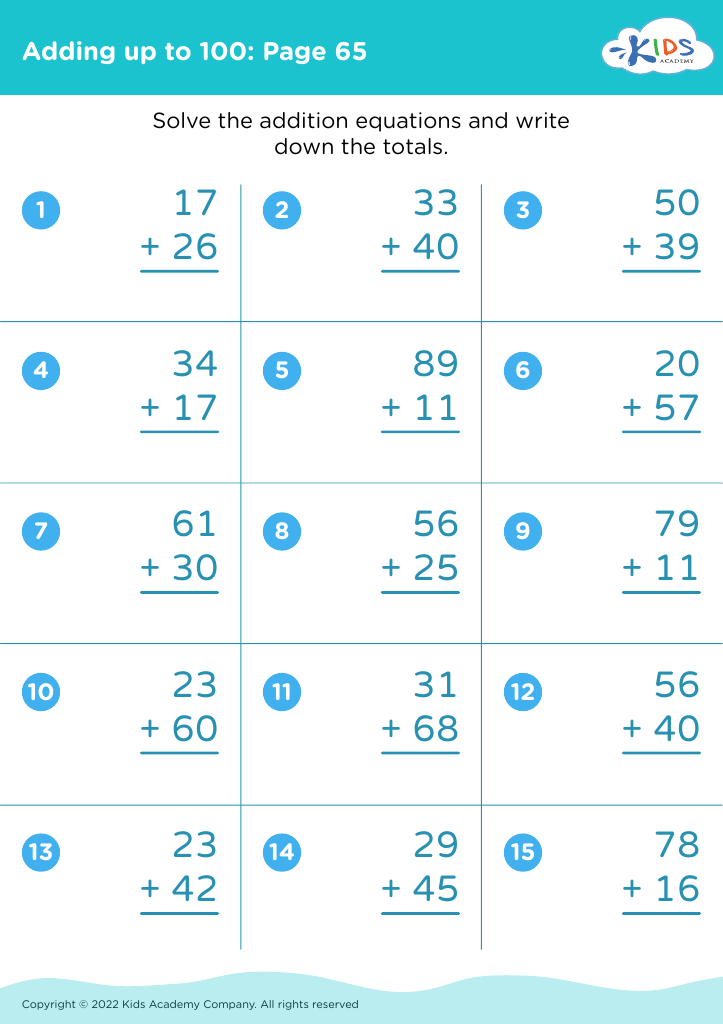
Adding up to 100: Page 65

Adding up to 100: Page 65

Adding up to 100: Page 65
Worksheet
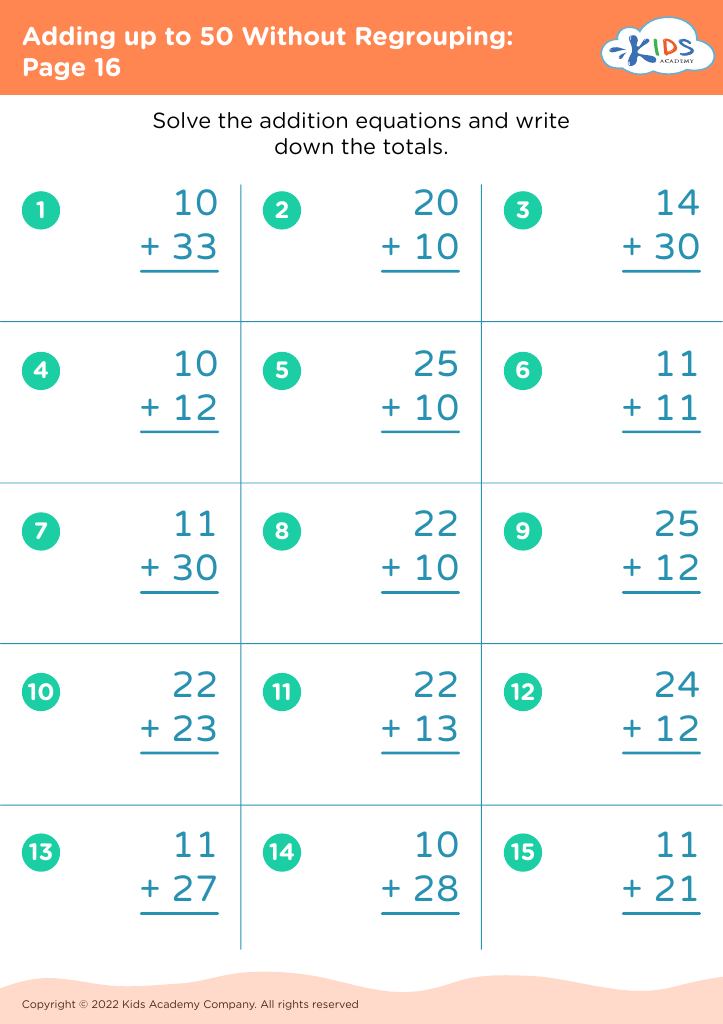
Adding up to 50 Without Regrouping: Page 16
Worksheet
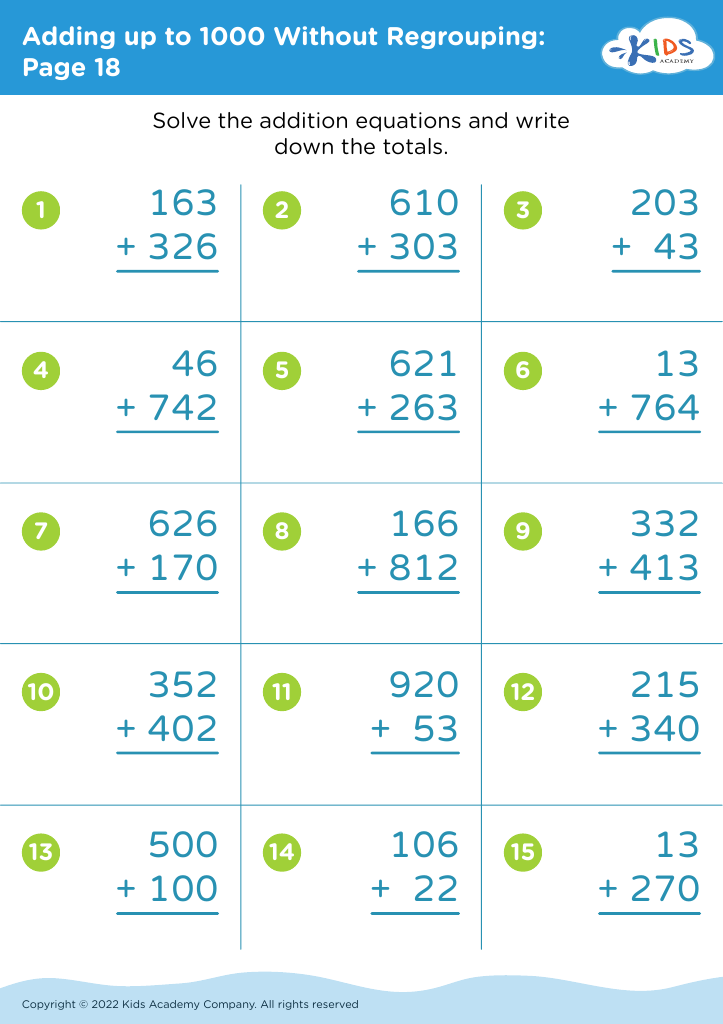
Adding up to 1000 Without Regrouping: Page 18
Worksheet
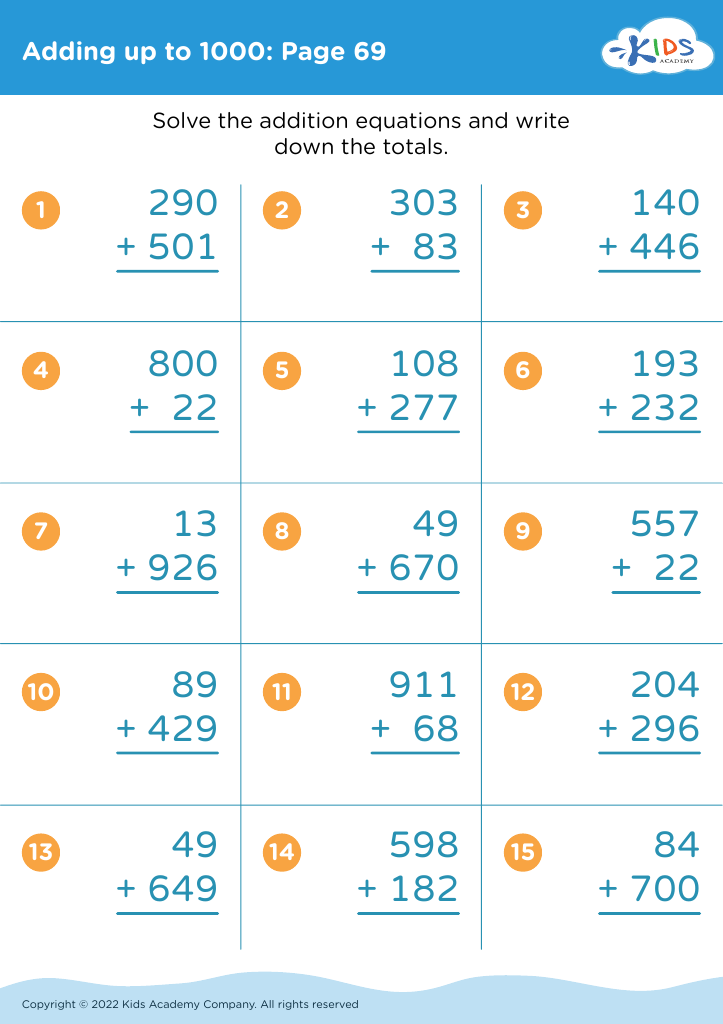
Adding up to 1000: Page 69

Adding up to 1000: Page 69

Adding up to 1000: Page 69
Worksheet
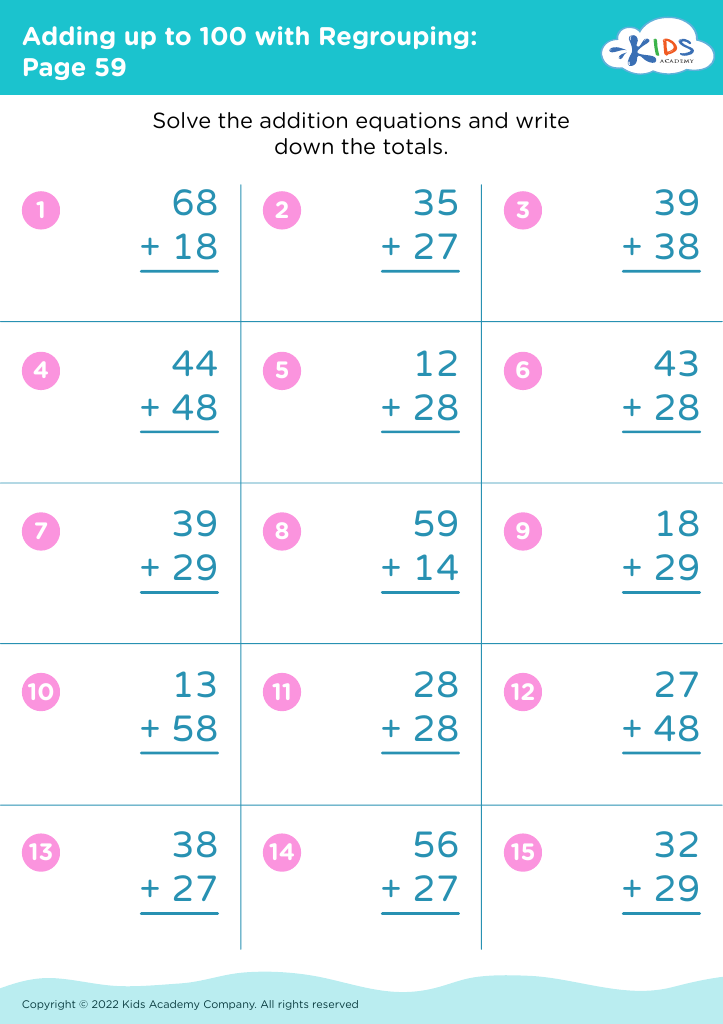
Adding up to 100 with Regrouping: Page 59
Worksheet
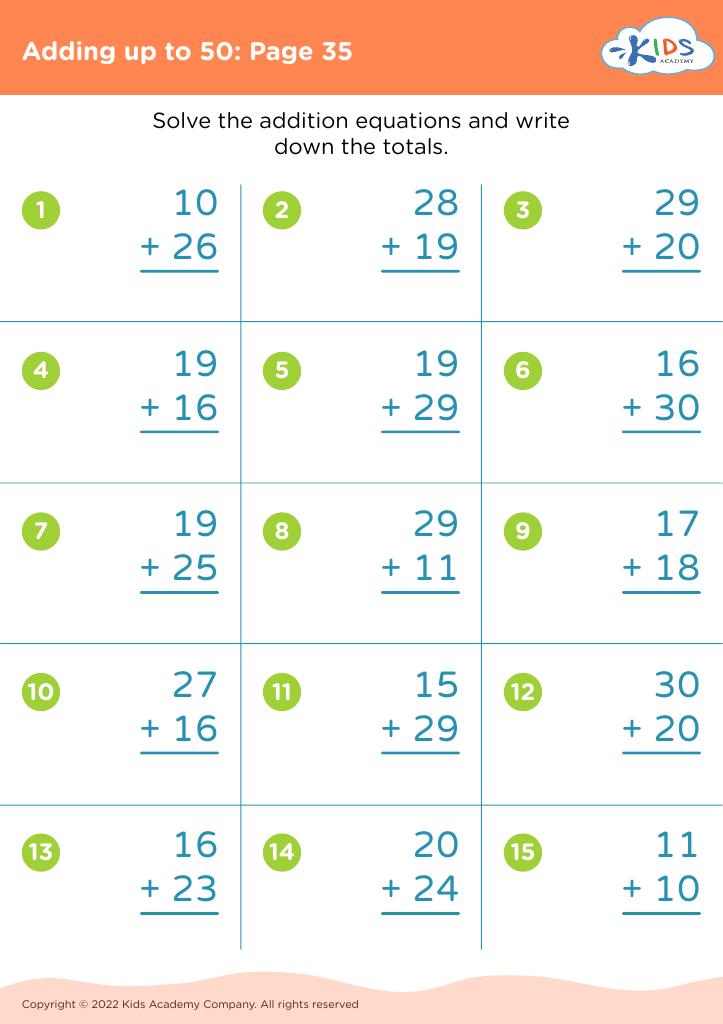
Adding up to 50: Page 35

Adding up to 50: Page 35

Adding up to 50: Page 35
Worksheet
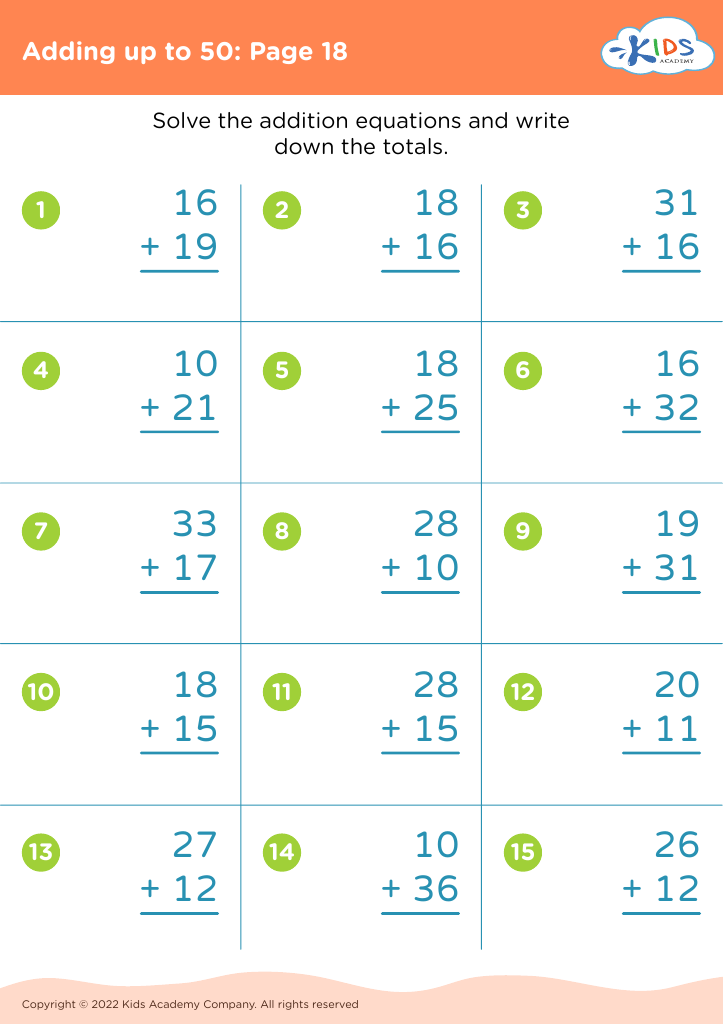
Adding up to 50: Page 18

Adding up to 50: Page 18

Adding up to 50: Page 18
Worksheet
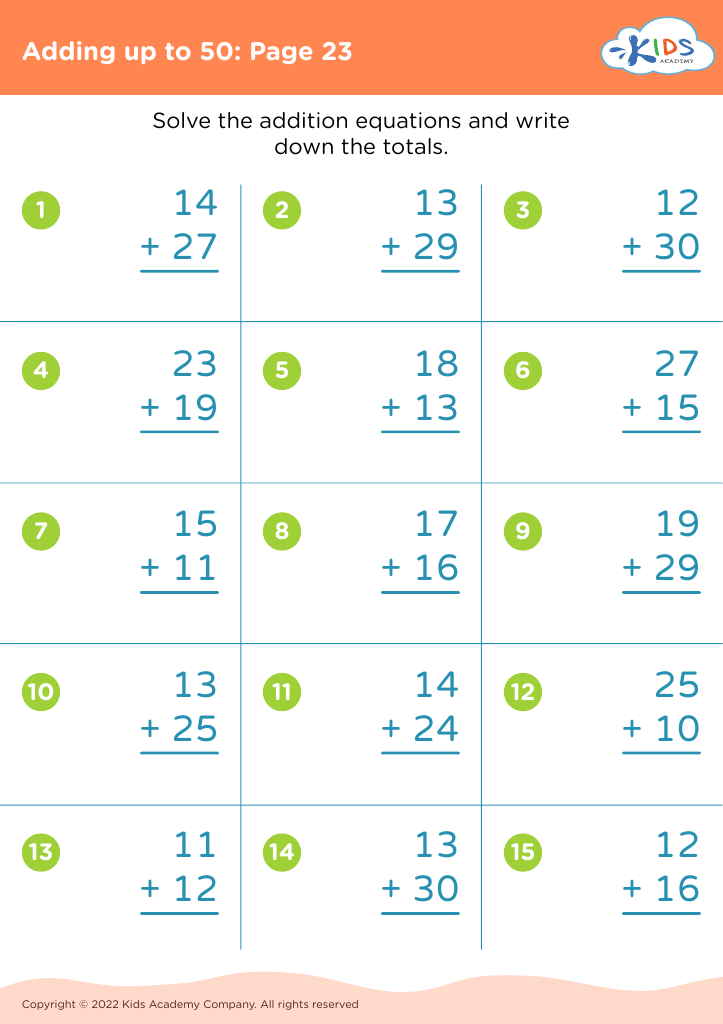
Adding up to 50: Page 23

Adding up to 50: Page 23

Adding up to 50: Page 23
Worksheet
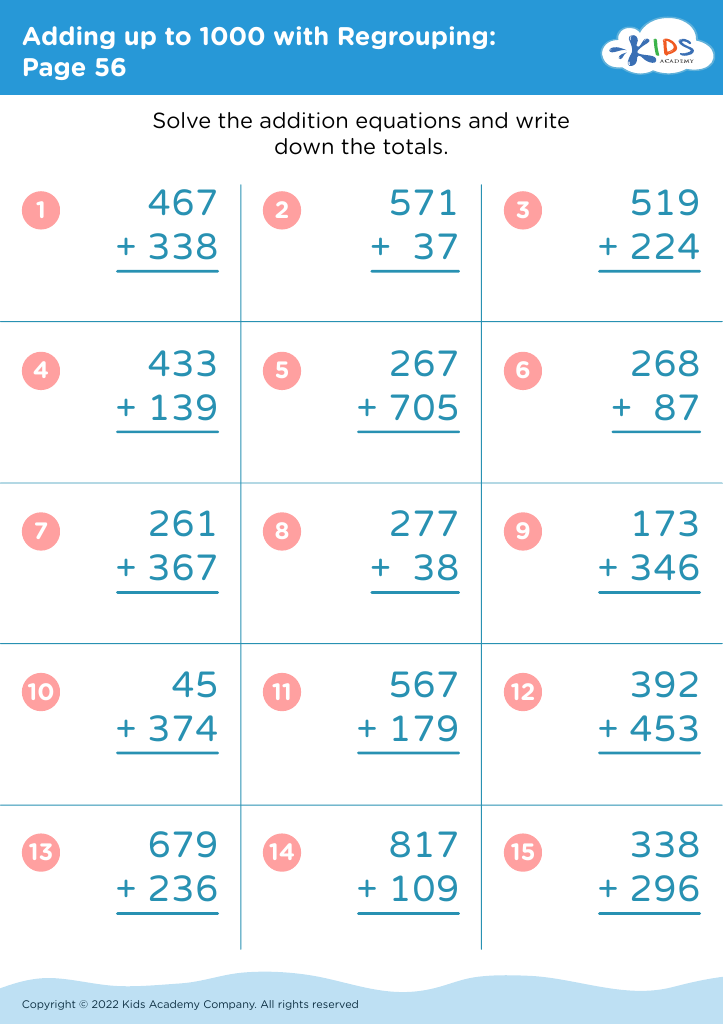
Adding up to 1000 with Regrouping: Page 56
Worksheet
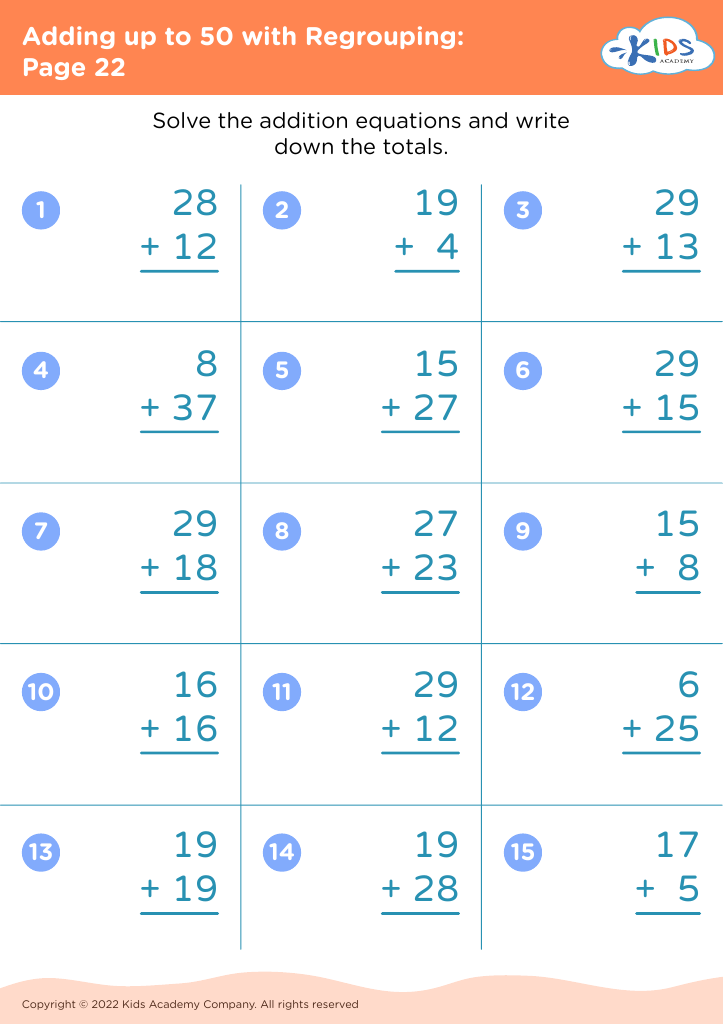
Adding up to 50 with Regrouping: Page 22
Worksheet
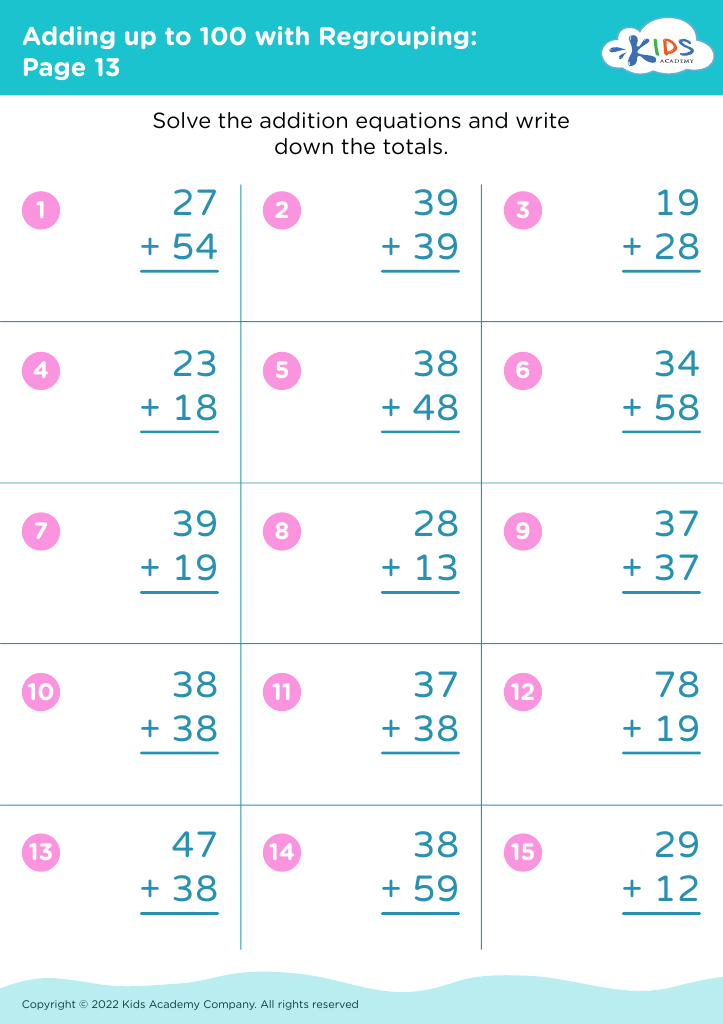
Adding up to 100 with Regrouping: Page 13
Worksheet
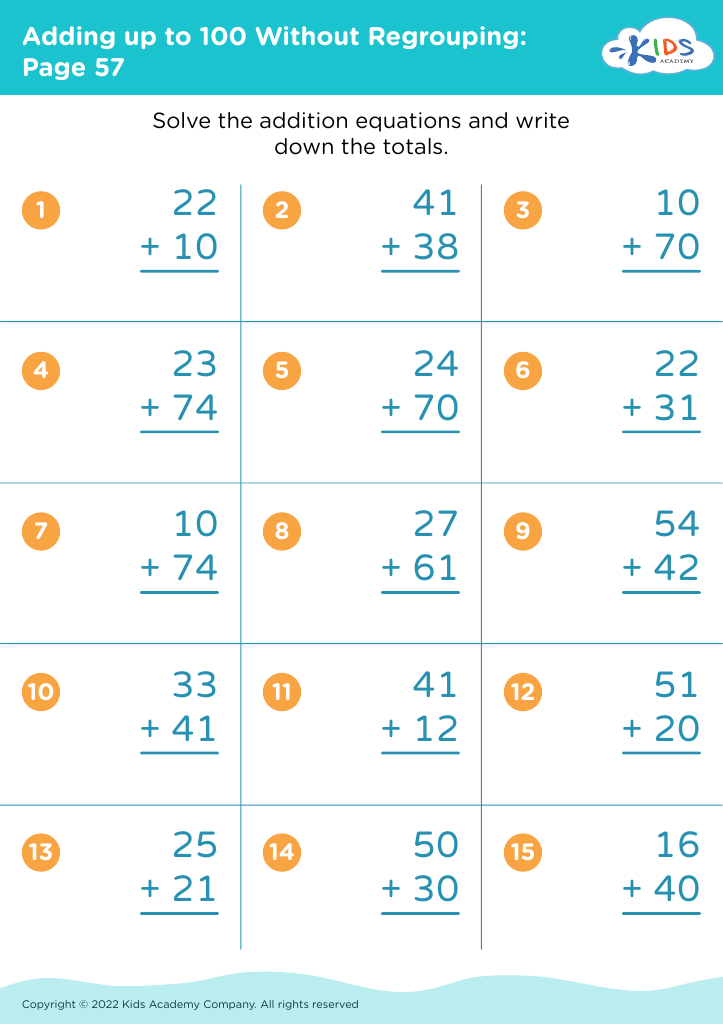
Adding up to 100 Without Regrouping: Page 57
Worksheet


Comparing fractions addition for ages 4-7 is vital as it lays the foundation for essential mathematical concepts and critical thinking skills. At this formative stage, children are highly receptive and can learn intuitive ways to grasp mathematical relationships. Early exposure to fractions ensures that children aren't intimidated by abstract concepts later in their academic journey.

Understanding how to compare and add fractions boosts number sense, helping children internalize how numbers work in parts and whole. This is crucial in everyday situations, such as dividing food or comparing portions. Developing these early skills also hones problem-solving and logical reasoning abilities, which have broad applications beyond math, such as in activities that require sequential thinking and analysis.

For parents and teachers, fostering a supportive learning environment where children can explore these concepts through engaging, hands-on activities can make math enjoyable and less daunting. Using visual aids, like pie charts or fraction bars, helps children see the practical and real-world application of fractions. This not only prepares them for more advanced math but also ingrains a positive mindset towards lifelong learning. Therefore, caring about comparing fractions addition isn’t just about mastering a part of math; it's about nurturing confident, capable learners prepared for future academic and life challenges.