Comparing numbers Addition Worksheets for Ages 4-7
4 filtered results
-
From - To
Discover our engaging "Comparing Numbers Addition Worksheets" designed for ages 4-7, perfect for young learners beginning their math journey. These educational worksheets blend fun with fundamental math skills, helping children understand the concept of comparing numbers through addition. Each worksheet is crafted to develop critical thinking and problem-solving abilities, ensuring kids stay excited about learning. With a variety of activities and colorful illustrations, your child will easily grasp comparing sums and building a strong foundation in math. Foster confidence and curiosity in your little ones today with our delightful and effective math addition resources!
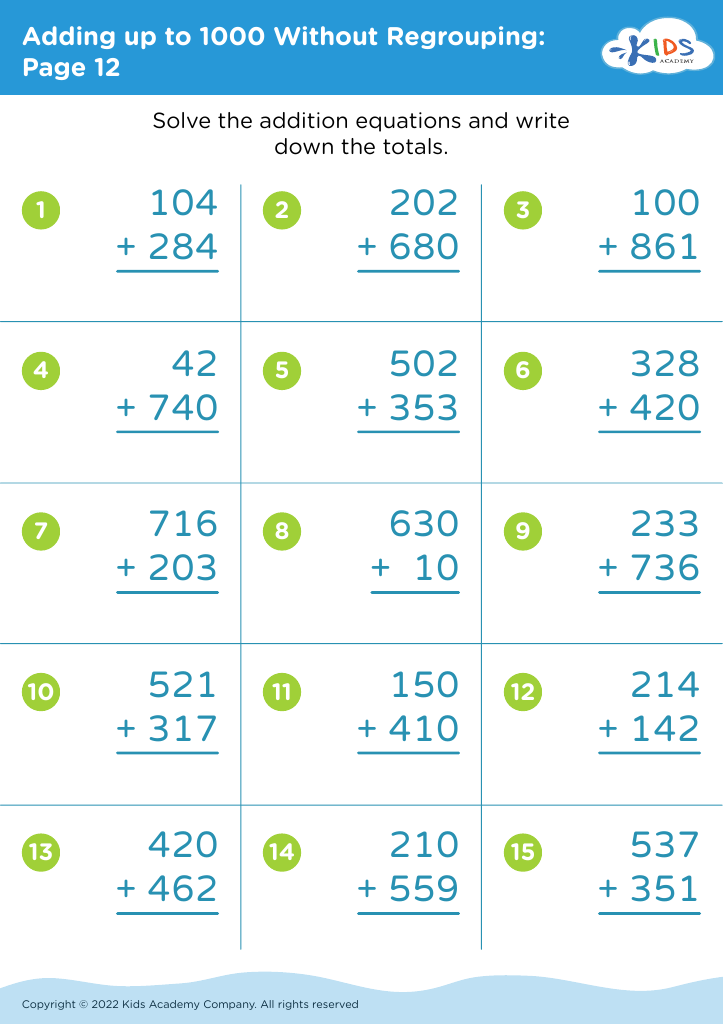
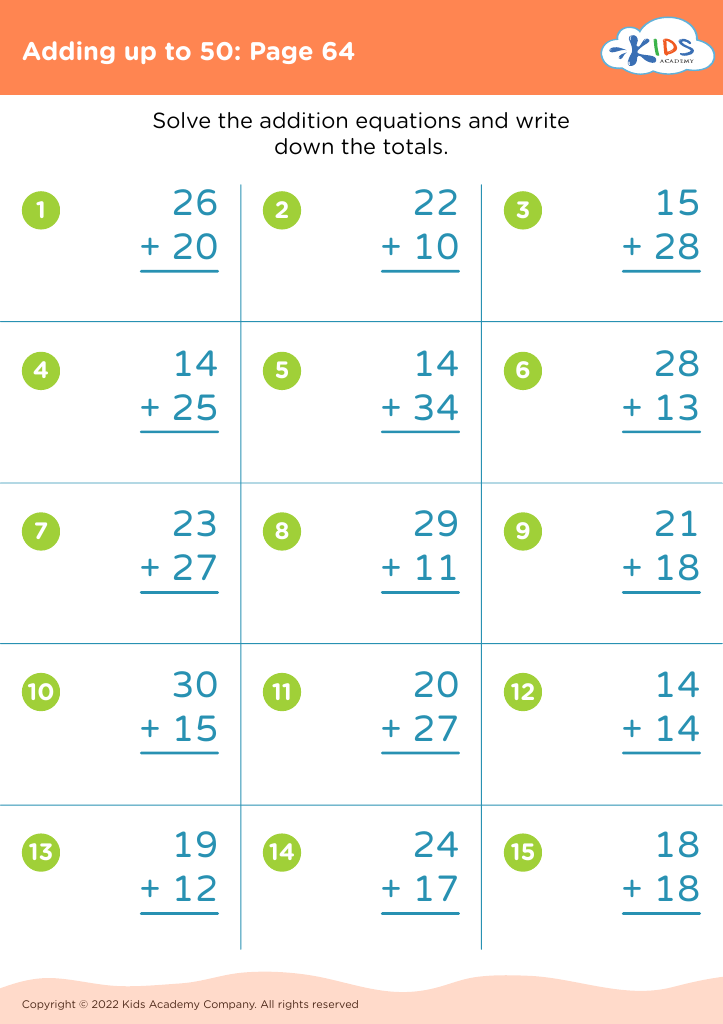
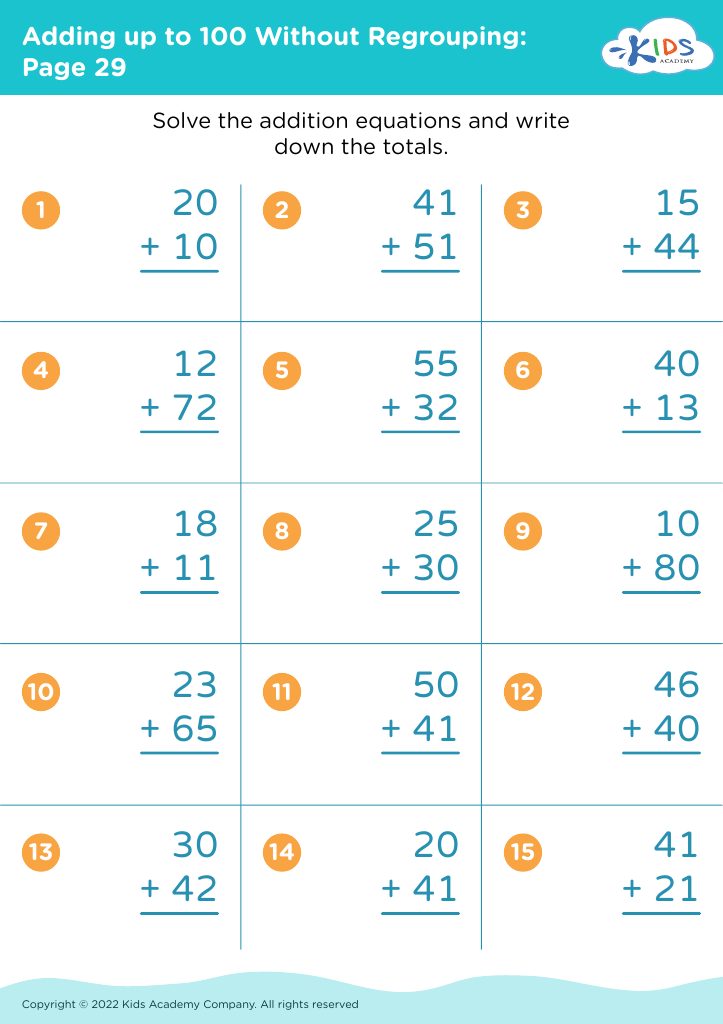
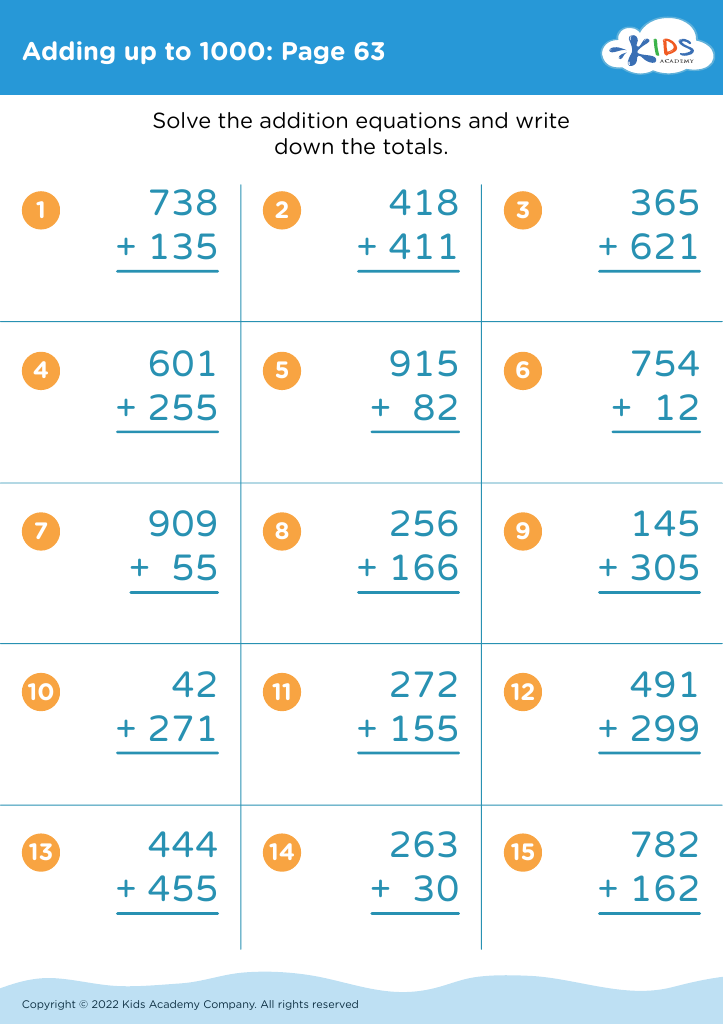








Developing an understanding of comparing numbers and addition for children aged 4-7 is foundational for their mathematical growth and cognitive development. At this tender age, children are naturally curious and begin to make sense of the world numerically. When parents and teachers focus on comparing numbers, children learn to discern differences in quantities, which sharpens their observation skills and promotes critical thinking.
Introducing addition complements this learning by providing children with tools to manipulate numbers to achieve a specific outcome. This sets the stage for problem-solving, as children learn how combining numbers produces new quantities. Early exposure to these concepts demystifies mathematics and builds confidence, making math less intimidating as they grow older.
Moreover, these basic skills are often applied in everyday situations, such as sharing toys or understanding time, helping children see the relevance of math in real life. Encouraging positive math learning experiences within these formative years ensures that children develop strong number sense, better preparing them for more complex mathematical tasks ahead.
Additionally, practicing these skills improves fine motor skills and hand-eye coordination, especially when activities involve writing or using manipulatives. Thus, parents and teachers play a critical role in nurturing a life-long appreciation and proficiency in mathematics by emphasizing comparing numbers and basic addition early on.








