Filters

17 filtered results

Clear all filters
Favorites
With answer key
Interactive

17 filtered results

Difficulty Level

Grade


Develop your child's problem-solving abilities with our "Critical Thinking Addition Worksheets for Ages 4-7". Specially designed by educational experts, these worksheets combine fun and learning to sharpen math skills. By integrating critical thinking exercises with addition practice, children enhance their cognitive skills while mastering basic arithmetic. Perfect for young learners, these engaging activities help foster logical reasoning and analytical thinking. Ideal for both classroom and home settings, these worksheets are printable and easy to use, encouraging independent learning. Equip your child with essential math skills and a strong foundation for future learning with our thoughtfully crafted resources.
Check out this FREE Trial Lesson on Addition for age 4-7!

More Word Problems

Favorites
With answer key
Interactive
  • 4-7
  • Critical Thinking
  • Addition
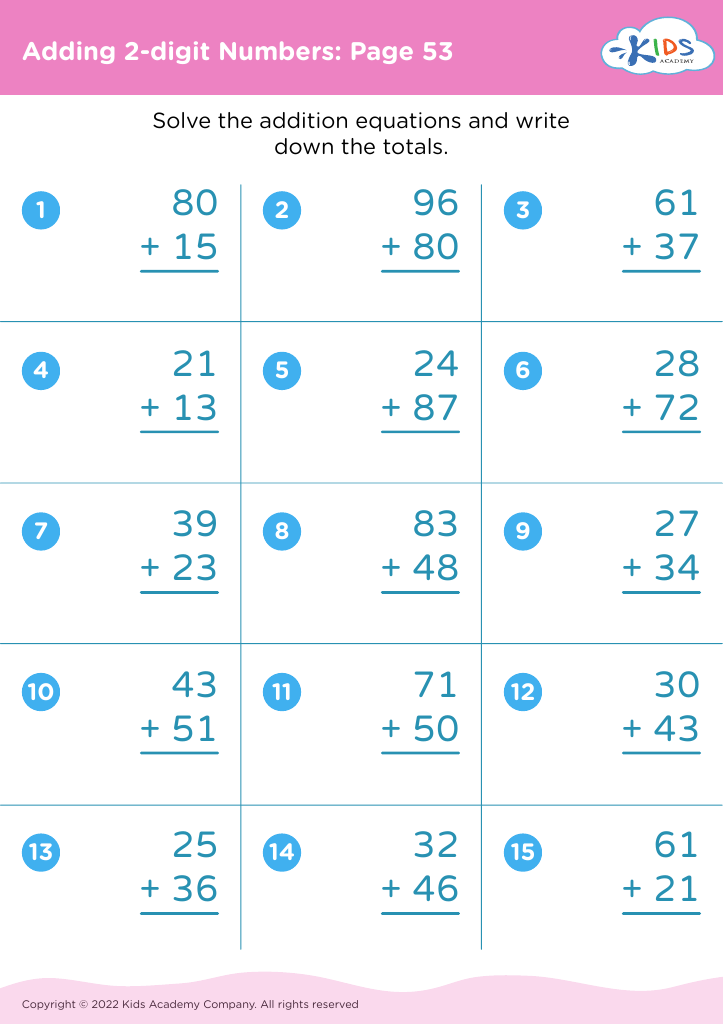
Adding 2-digit Numbers: Page 53

Adding 2-digit Numbers: Page 53

Adding 2-digit Numbers: Page 53
Worksheet
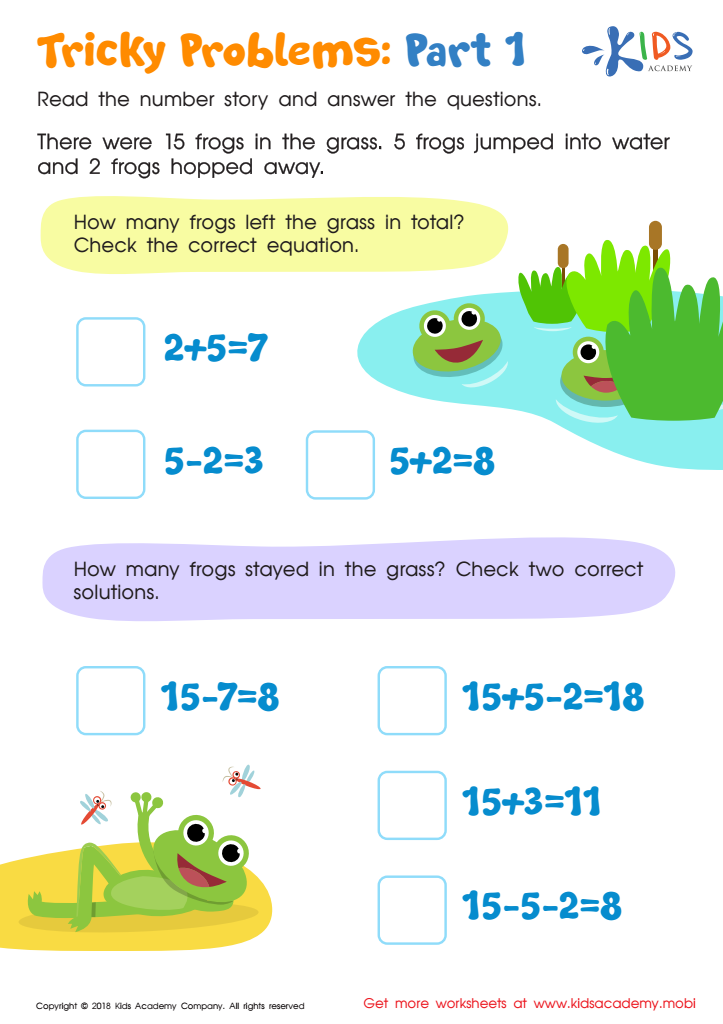
Tricky Problems Worksheet: Part 1

Tricky Problems Worksheet: Part 1

Visualizing word problems can help students solve them. This fun PDF worksheet encourages students to create mental images using math facts, then check boxes to match the equations for basic addition problems. It's a great way to build confidence in solving math.
Tricky Problems Worksheet: Part 1
Worksheet
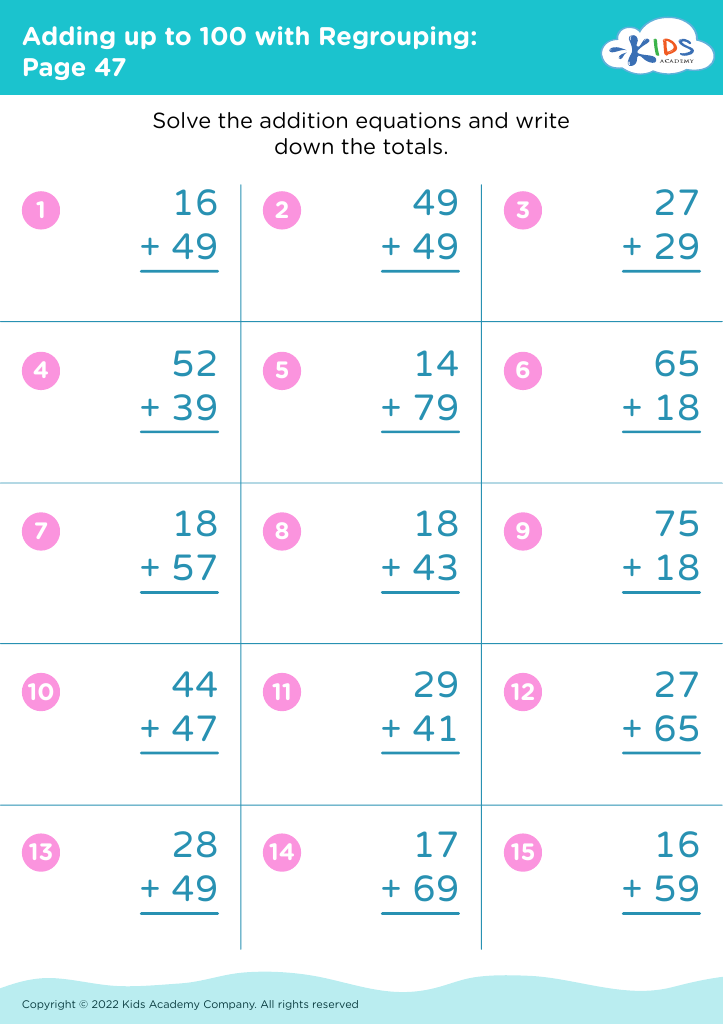
Adding up to 100 with Regrouping: Page 47
Worksheet
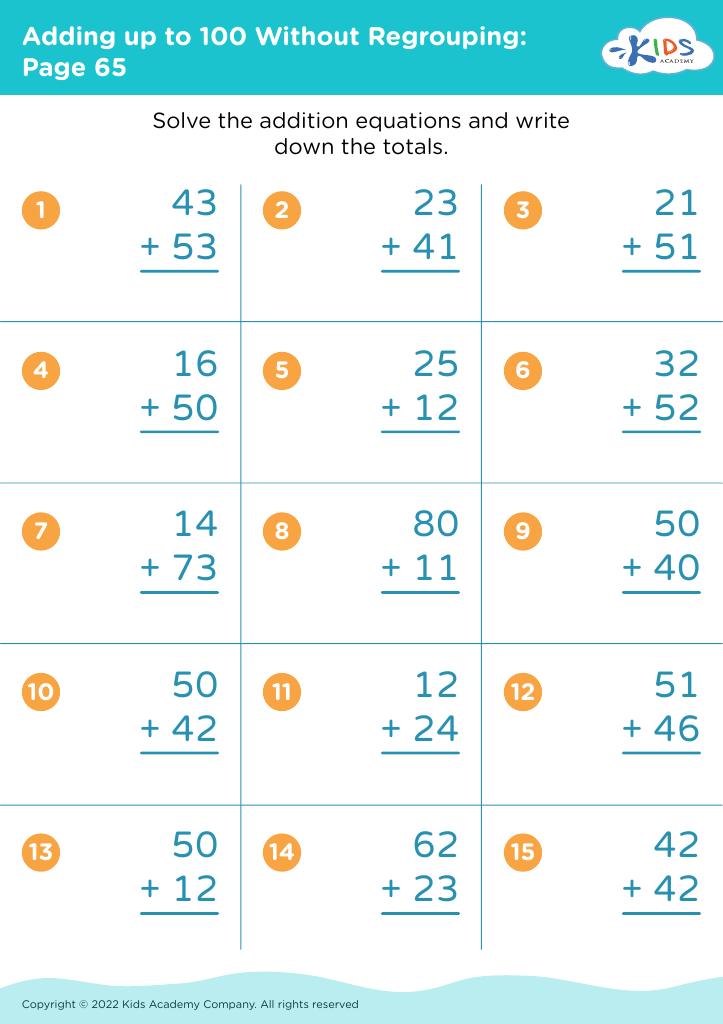
Adding up to 100 Without Regrouping: Page 65
Worksheet
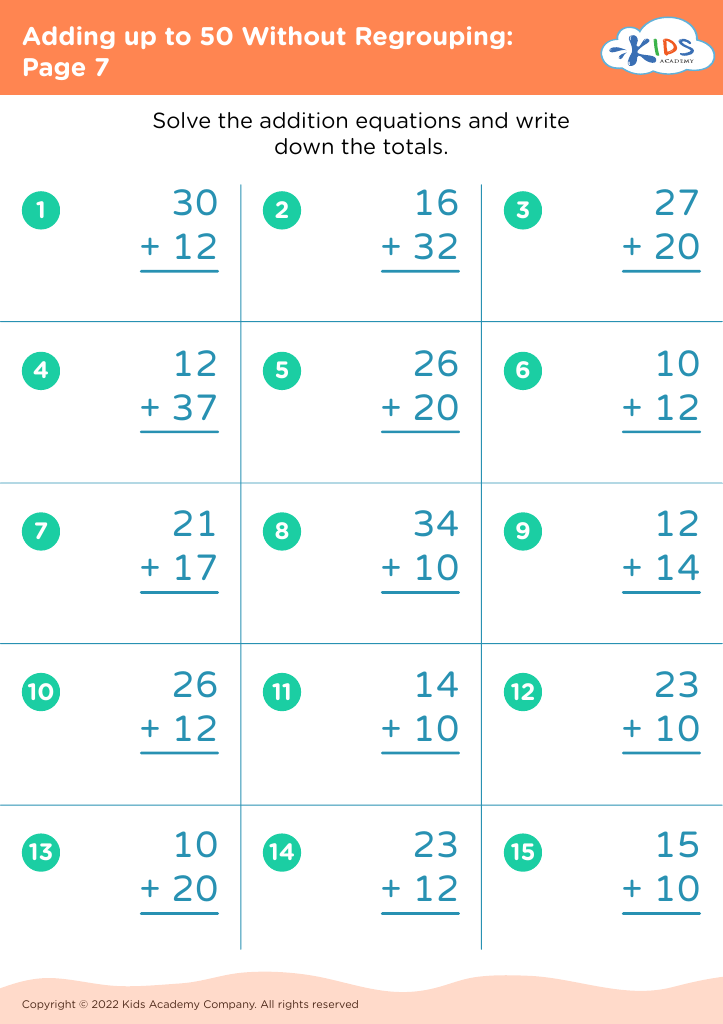
Adding up to 50 Without Regrouping: Page 7
Worksheet
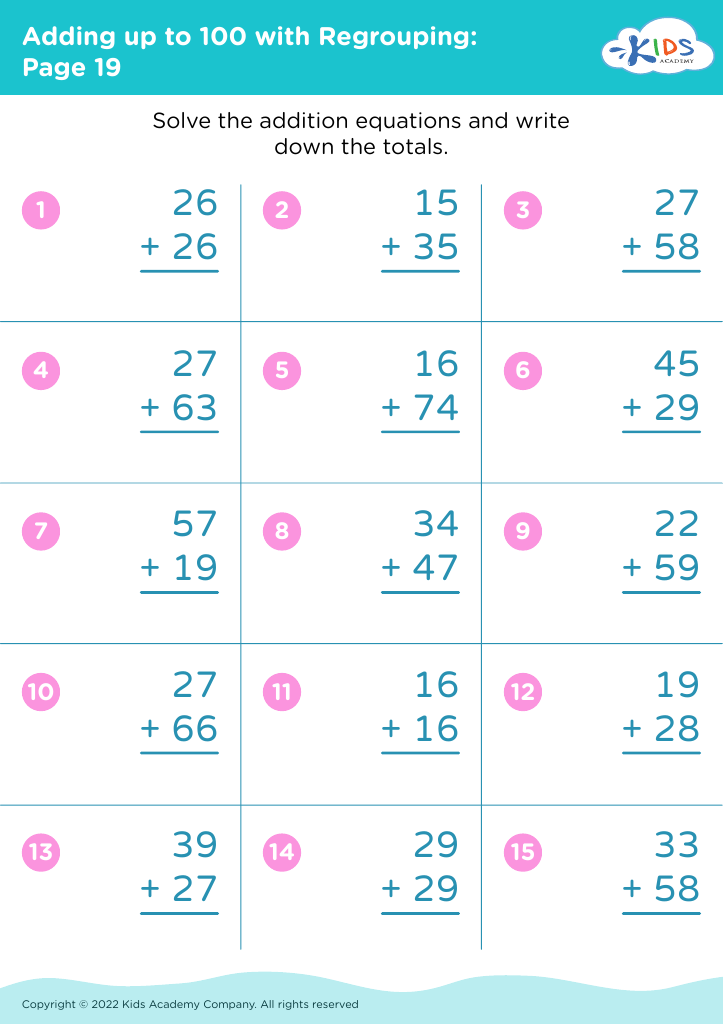
Adding up to 100 with Regrouping: Page 19
Worksheet
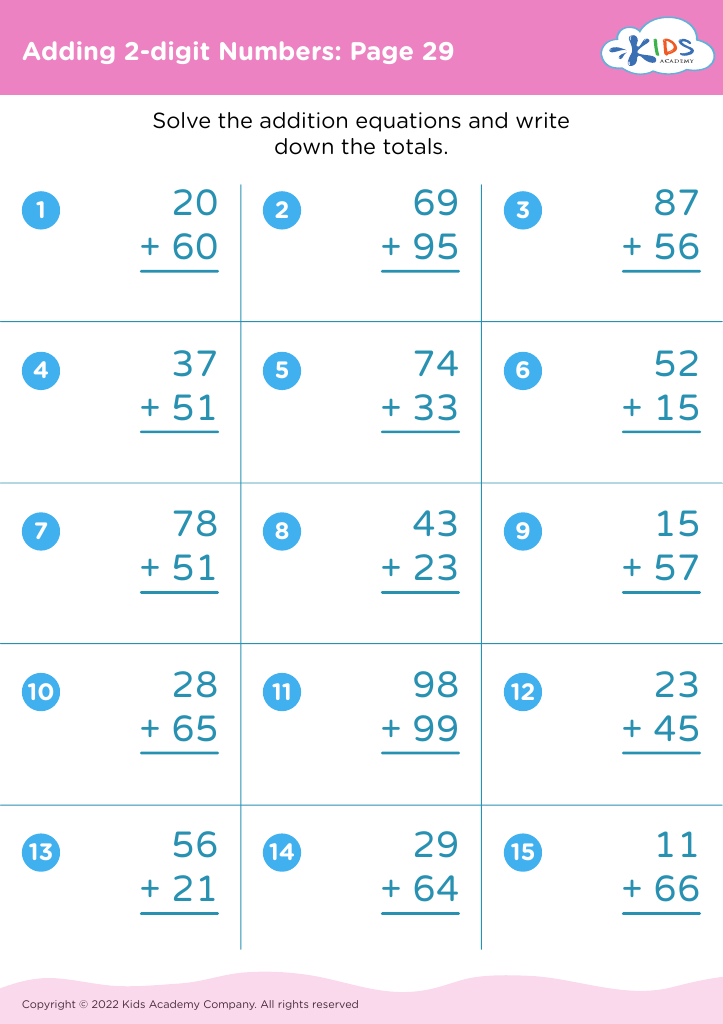
Adding 2-digit Numbers: Page 29

Adding 2-digit Numbers: Page 29

Adding 2-digit Numbers: Page 29
Worksheet
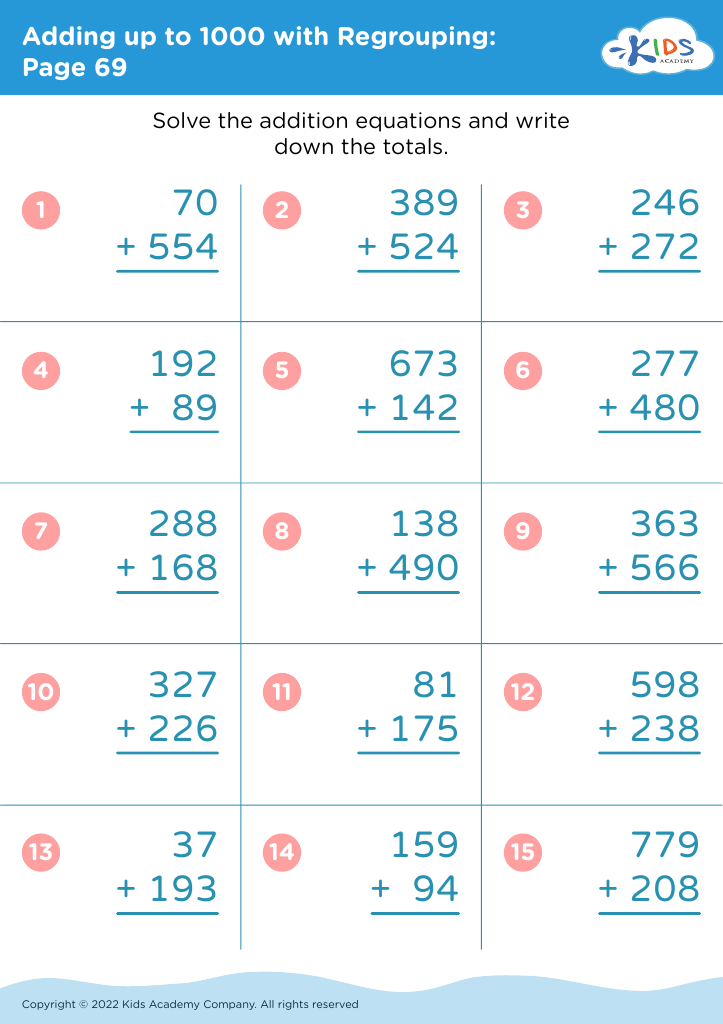
Adding up to 1000 with Regrouping: Page 69
Worksheet
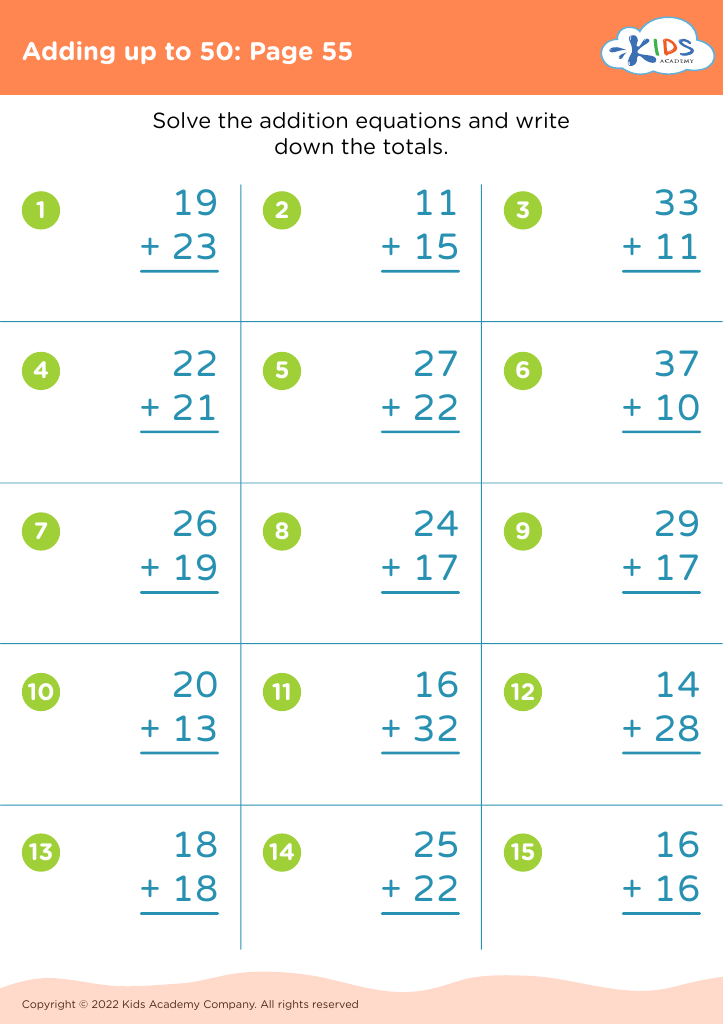
Adding up to 50: Page 55

Adding up to 50: Page 55

Adding up to 50: Page 55
Worksheet
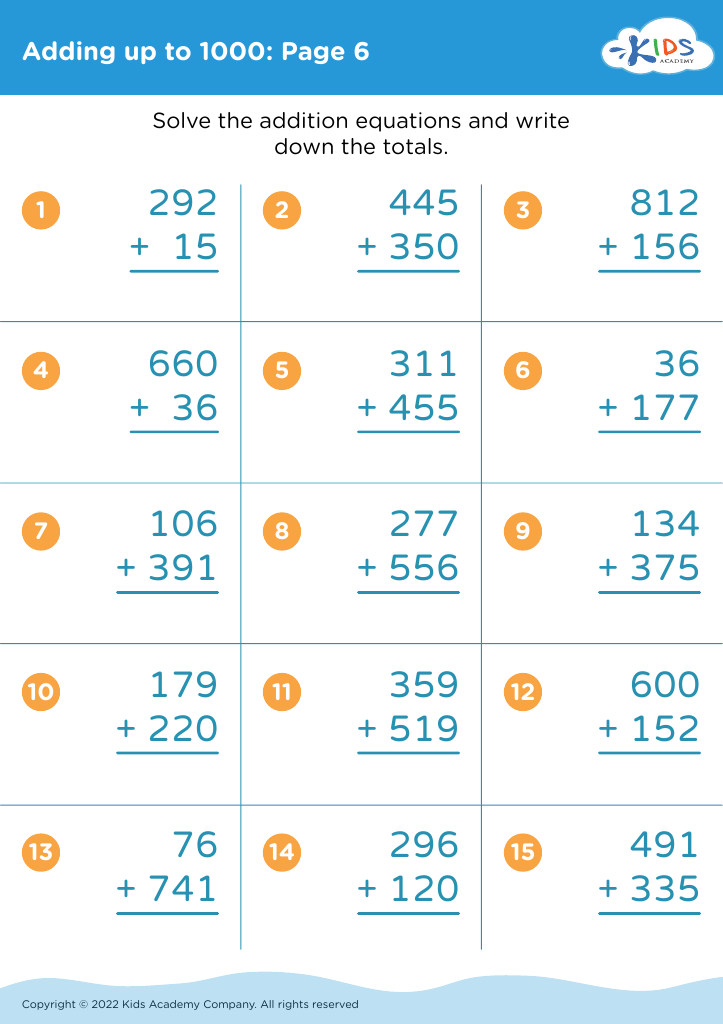
Adding up to 1000: Page 6

Adding up to 1000: Page 6

Adding up to 1000: Page 6
Worksheet
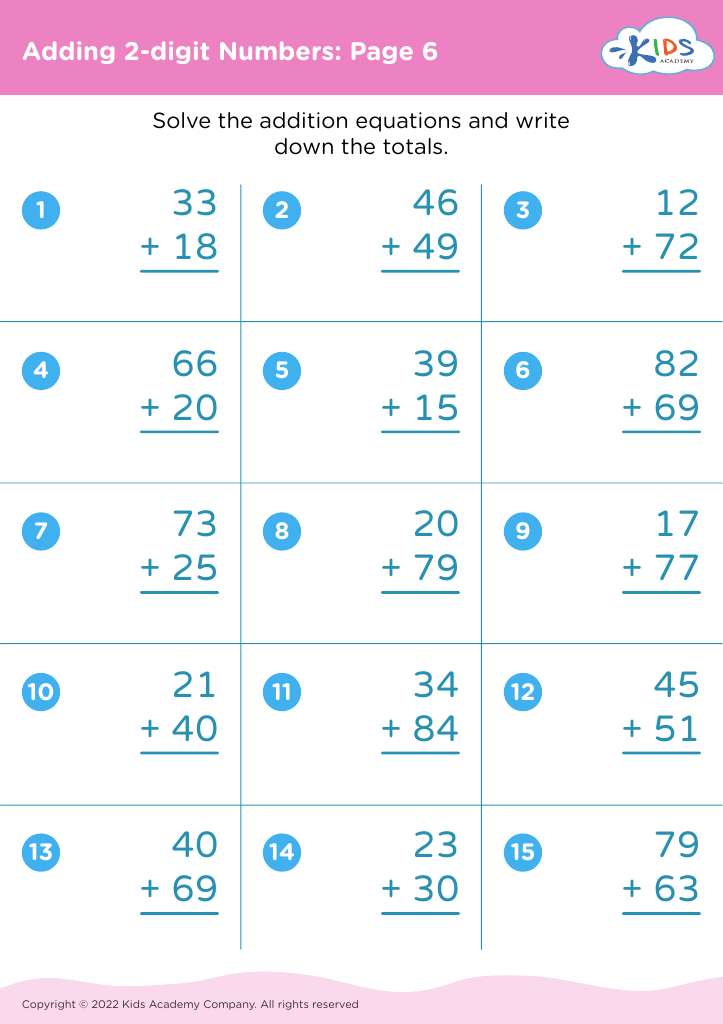
Adding 2-digit Numbers: Page 6

Adding 2-digit Numbers: Page 6

Adding 2-digit Numbers: Page 6
Worksheet
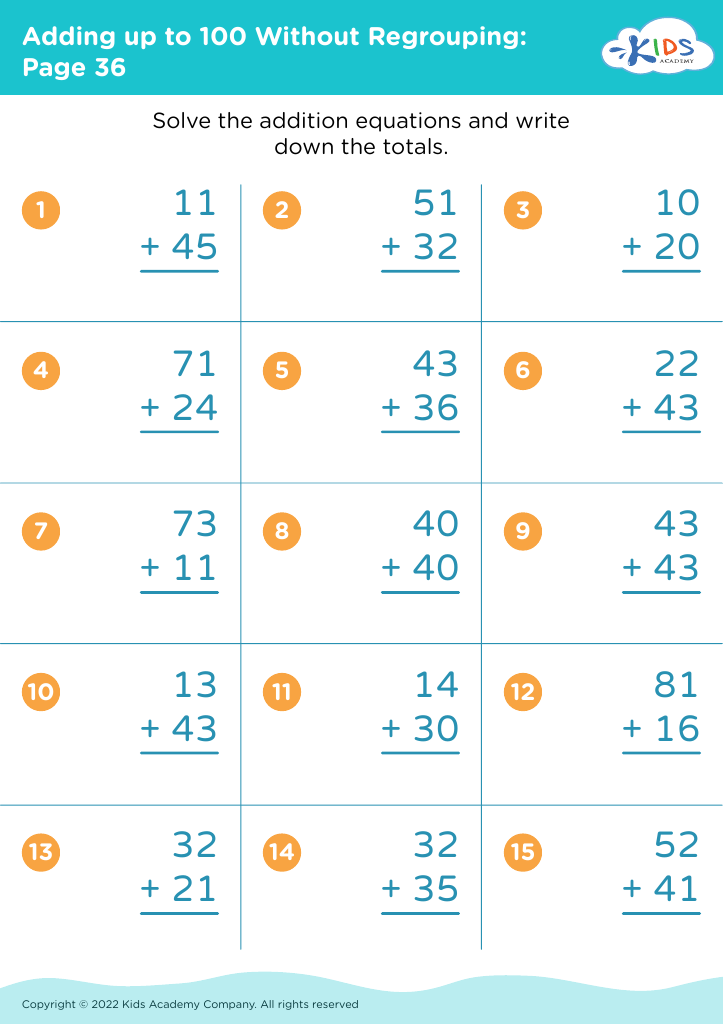
Adding up to 100 Without Regrouping: Page 36
Worksheet
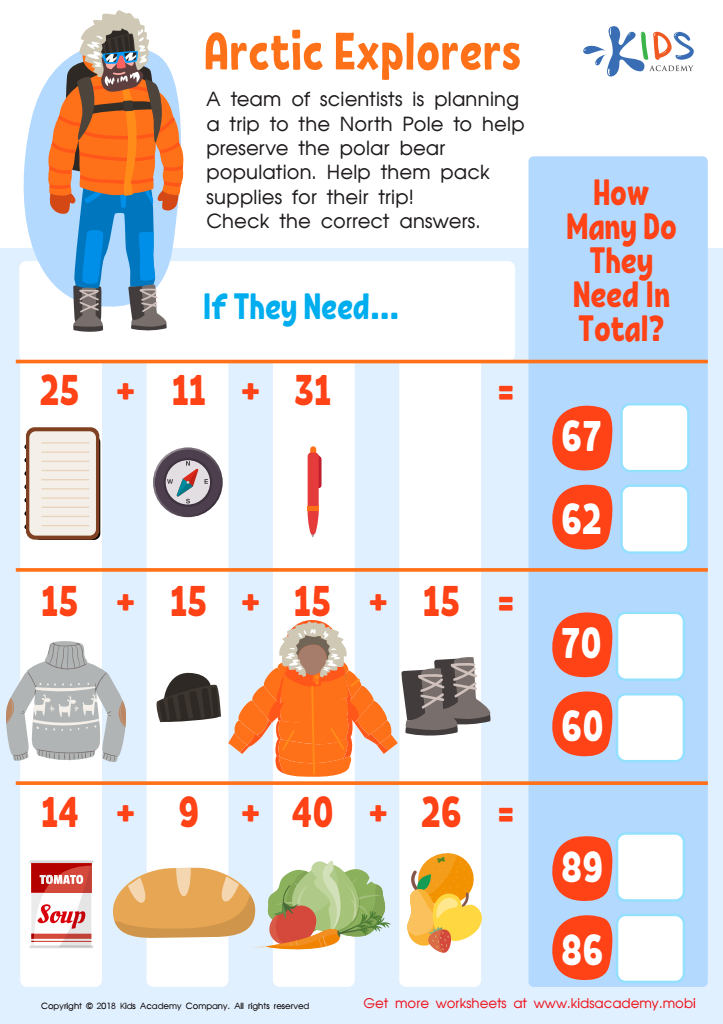
Arctic Explorers Worksheet
Arctic Explorers Worksheet
Help your child pack supplies for a team of scientists' trip to the North Pole! Before beginning, explain how efforts are needed to protect endangered animals like polar bears. Encourage them to check the correct clothing needed for the extremely cold region. For example, warm and protective clothing is essential.
Arctic Explorers Worksheet

Worksheet
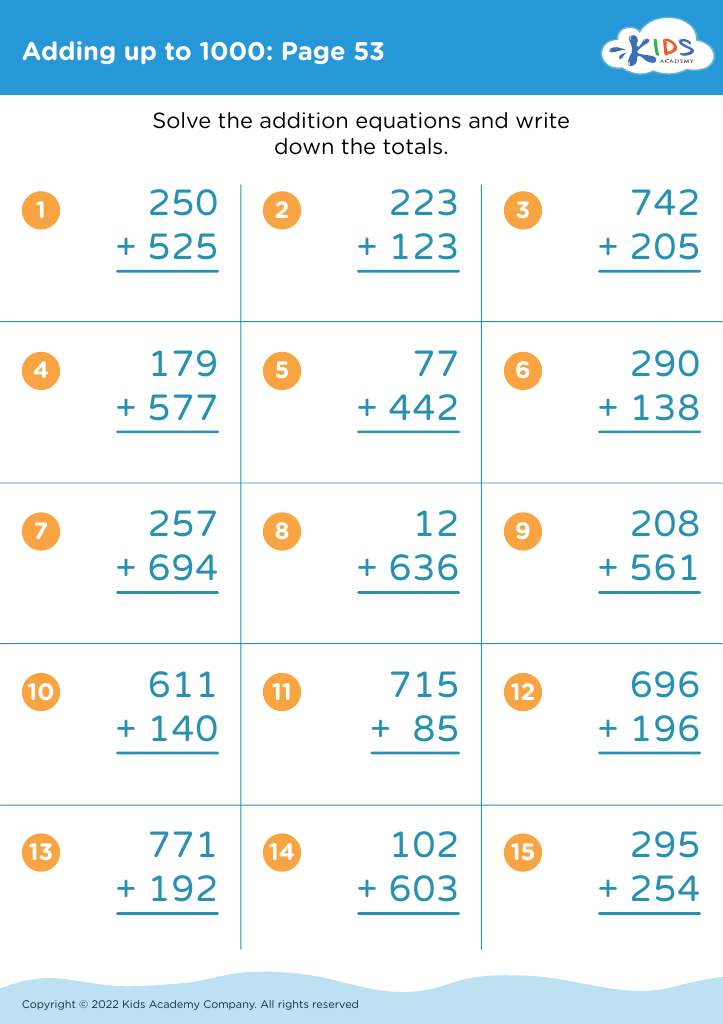
Adding up to 1000: Page 53

Adding up to 1000: Page 53

Adding up to 1000: Page 53
Worksheet
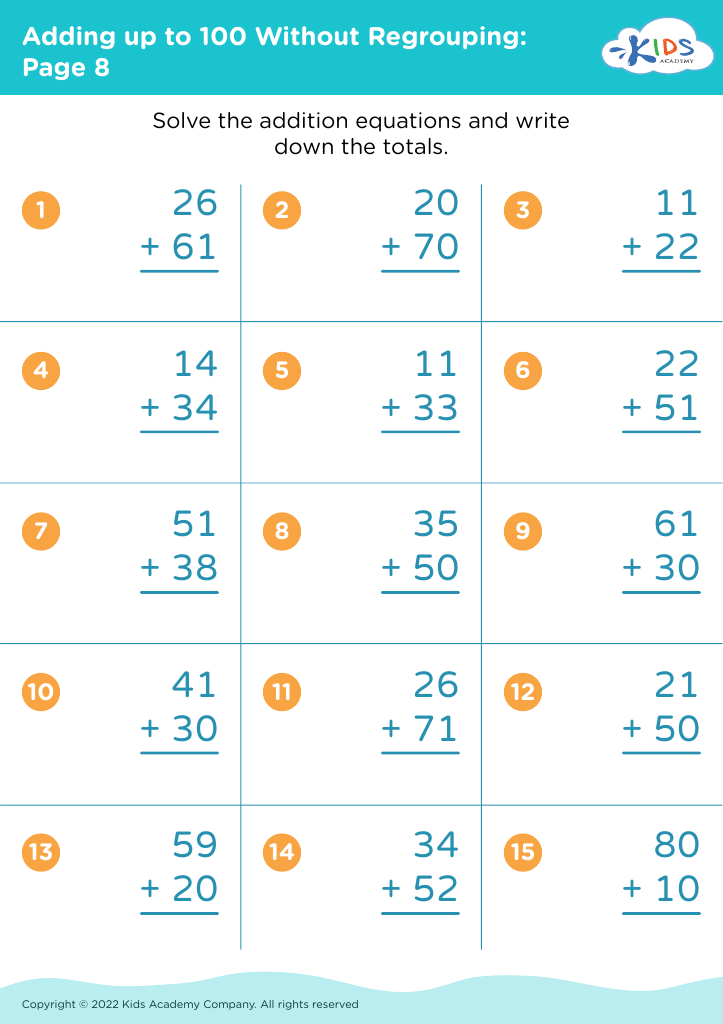
Adding up to 100 Without Regrouping: Page 8
Worksheet
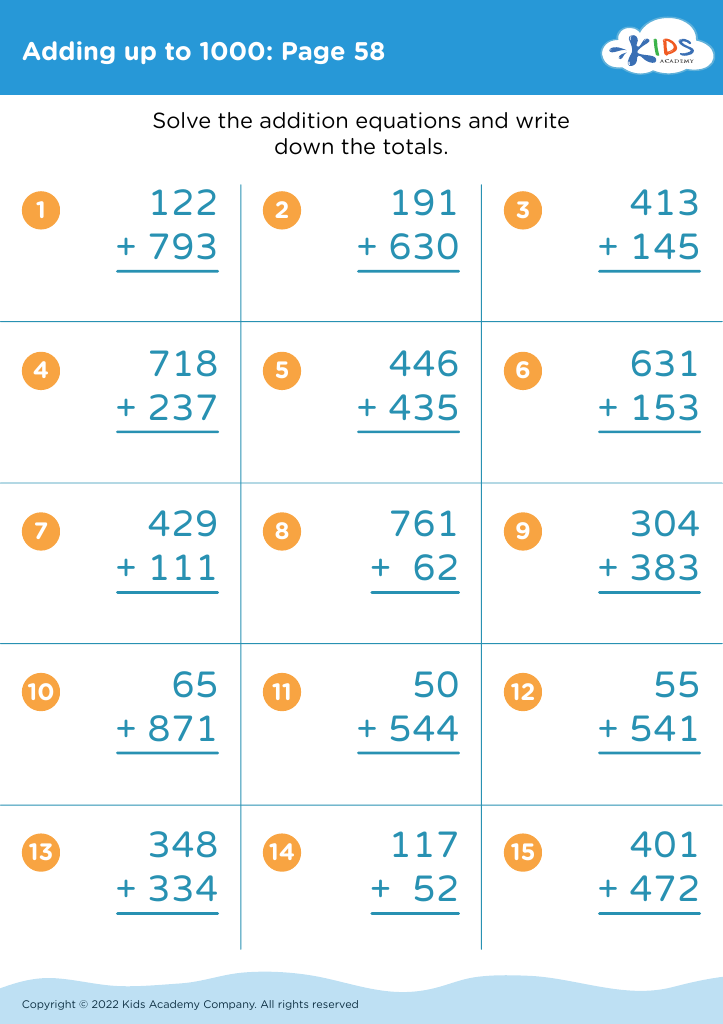
Adding up to 1000: Page 58

Adding up to 1000: Page 58

Adding up to 1000: Page 58
Worksheet
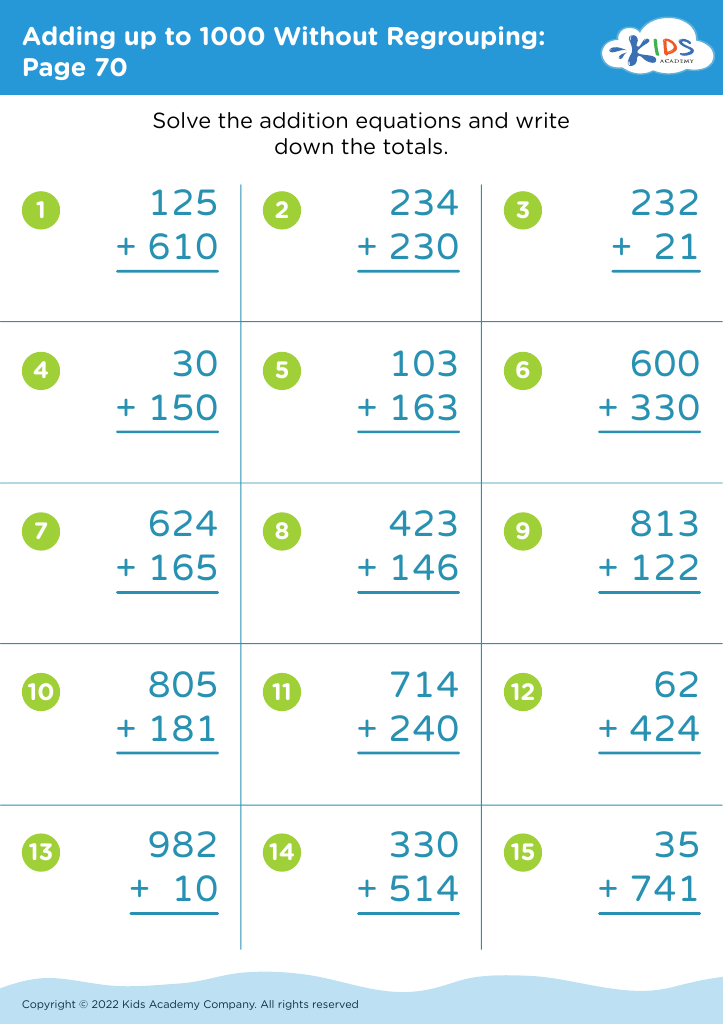
Adding up to 1000 Without Regrouping: Page 70
Worksheet


Critical thinking addition for ages 4-7 is essential for developing young minds because it lays the foundation for future problem-solving and analytical skills. At this formative stage, children’s brains are highly adaptable and capable of significant growth. Encouraging critical thinking helps them to not only learn arithmetic but to understand the "why" behind the "what." This deeper comprehension is crucial for fostering an intrinsic love for learning and intellectual curiosity.

Introducing critical thinking early helps children to develop cognitive skills such as pattern recognition, logical reasoning, and deductive thinking. These skills are vital not just for mathematics, but for all areas of learning including reading comprehension and scientific inquiry. By challenging their young brains with problems that require more than rote memorization, children become better equipped to handle complex problems in the future.

Furthermore, critical thinking addition promotes persistence and resilience. When children learn to tackle difficult problems and understand that they can find multiple ways to a solution, they build self-confidence and perseverance. These experiences teach them that effort leads to achievement and that mistakes are part of the learning process.

Parents and teachers who focus on developing critical thinking in early math education provide their children or students with valuable tools that will benefit them throughout their educational journey and beyond.