Develop fine motor skills Addition Worksheets for Ages 4-7
9 filtered results
-
From - To
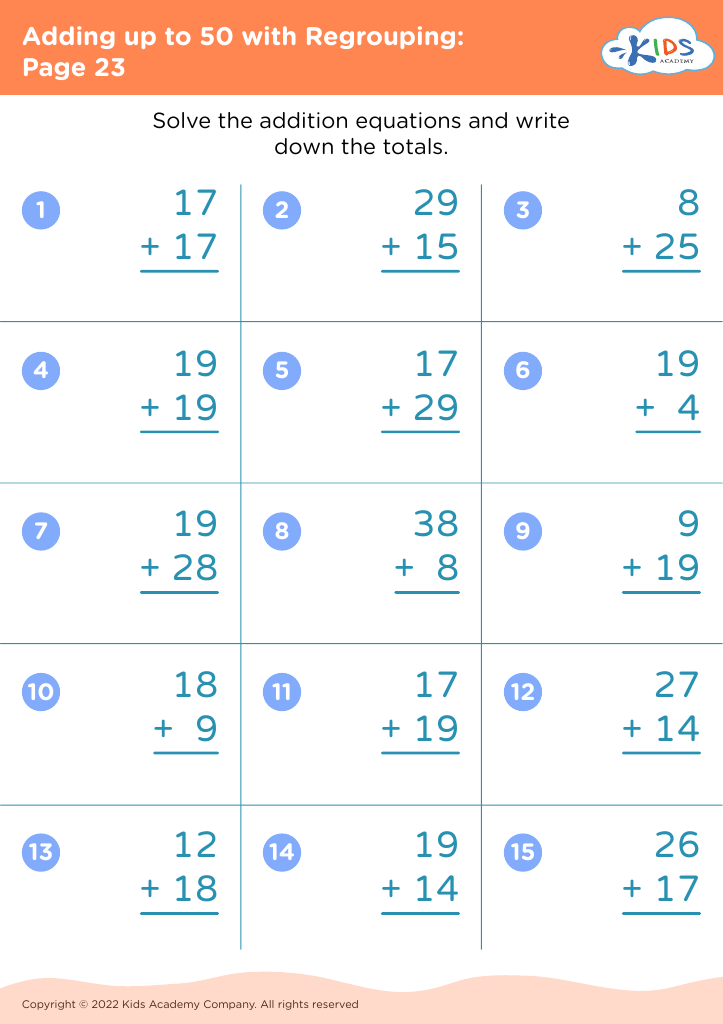
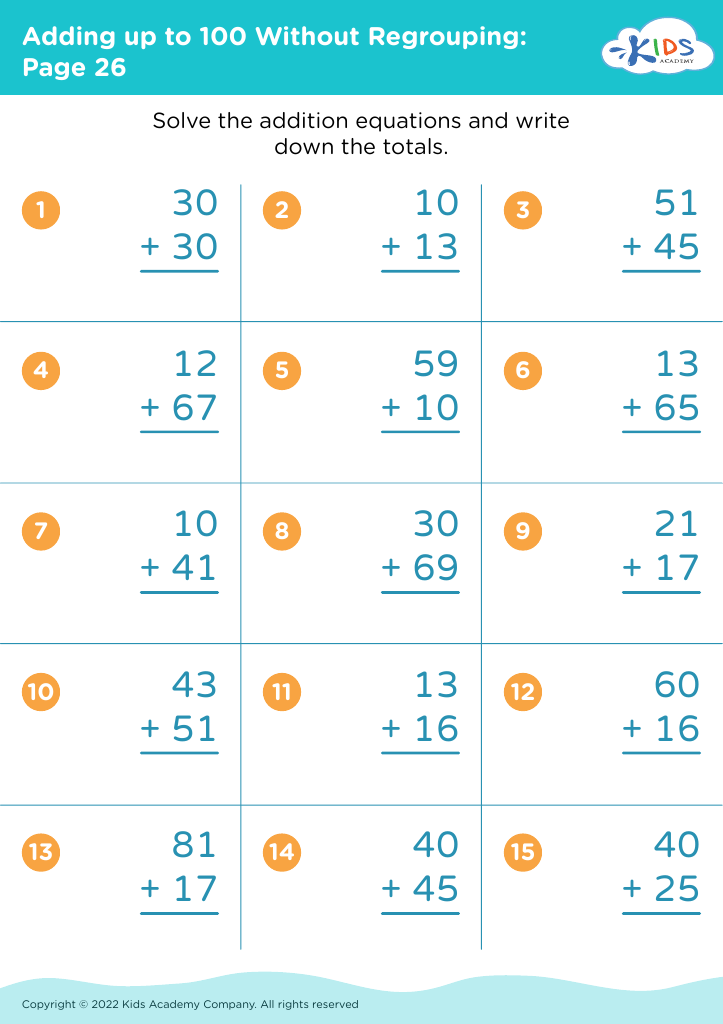
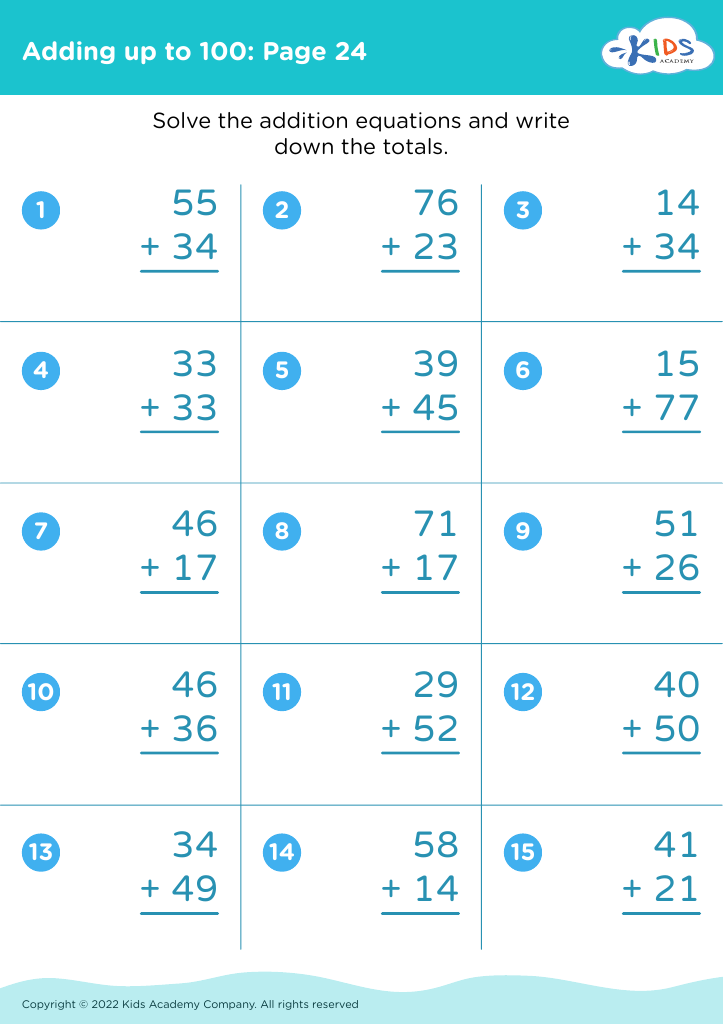
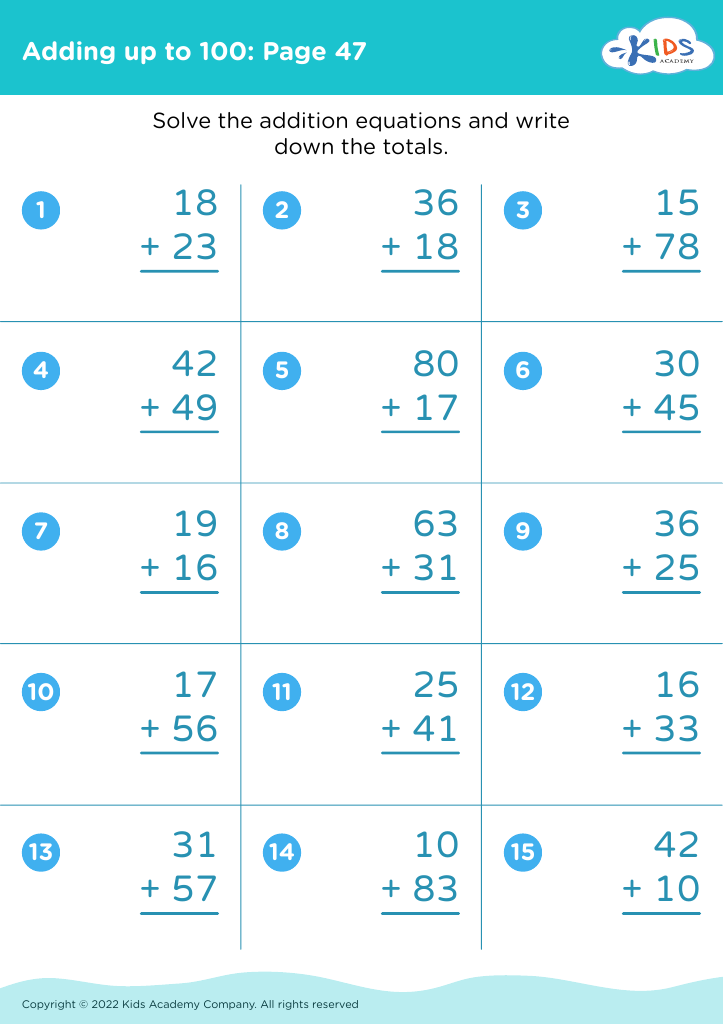
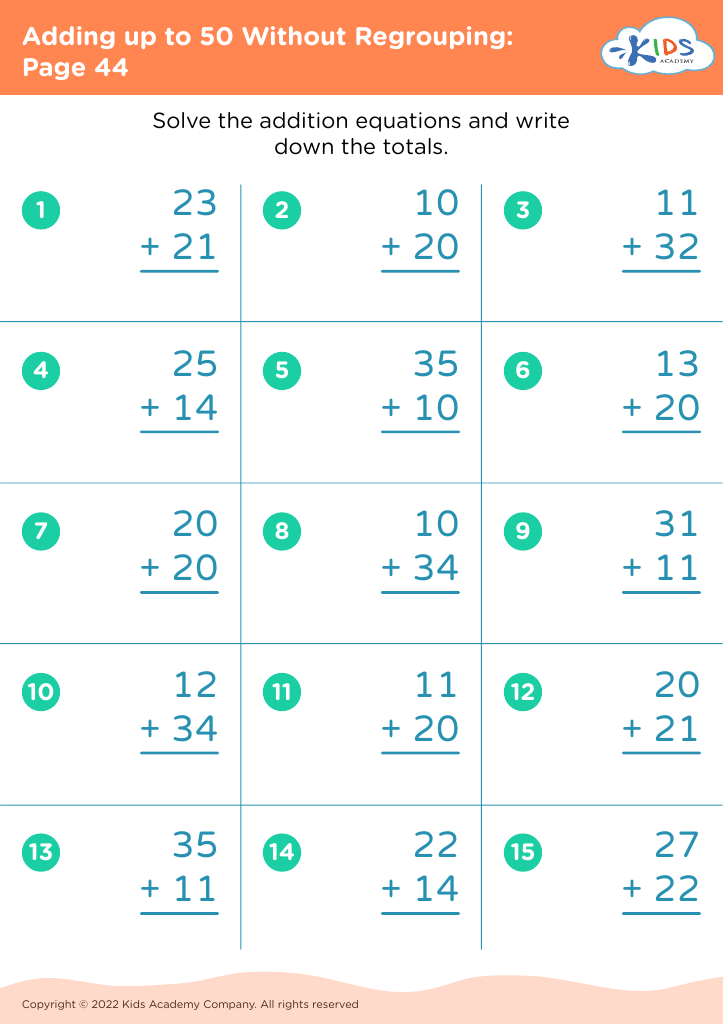
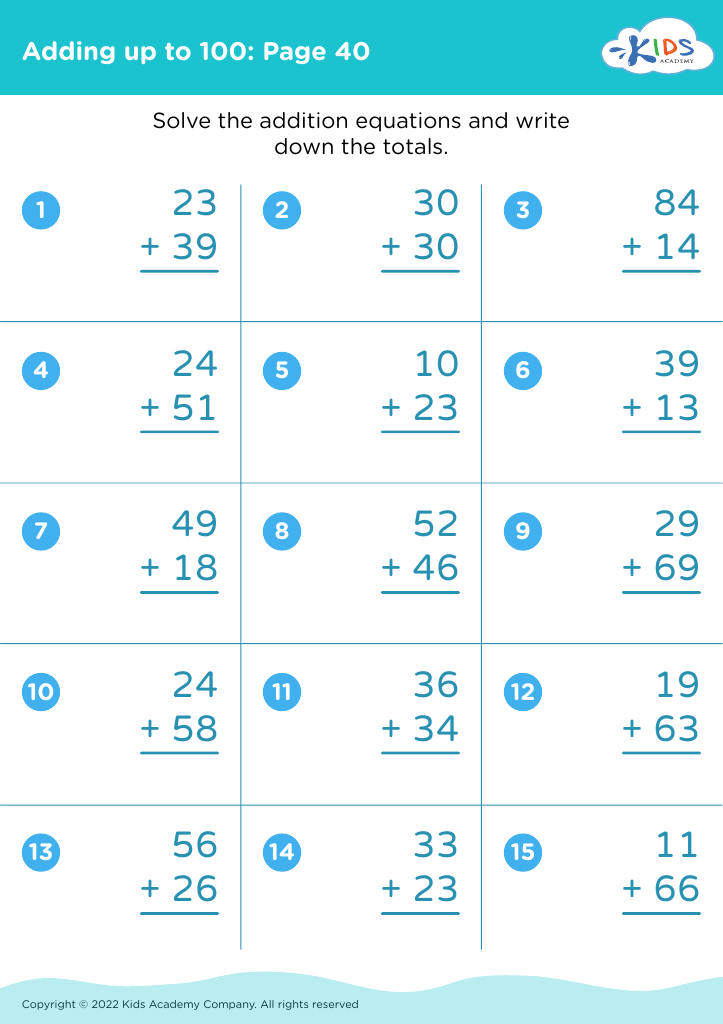
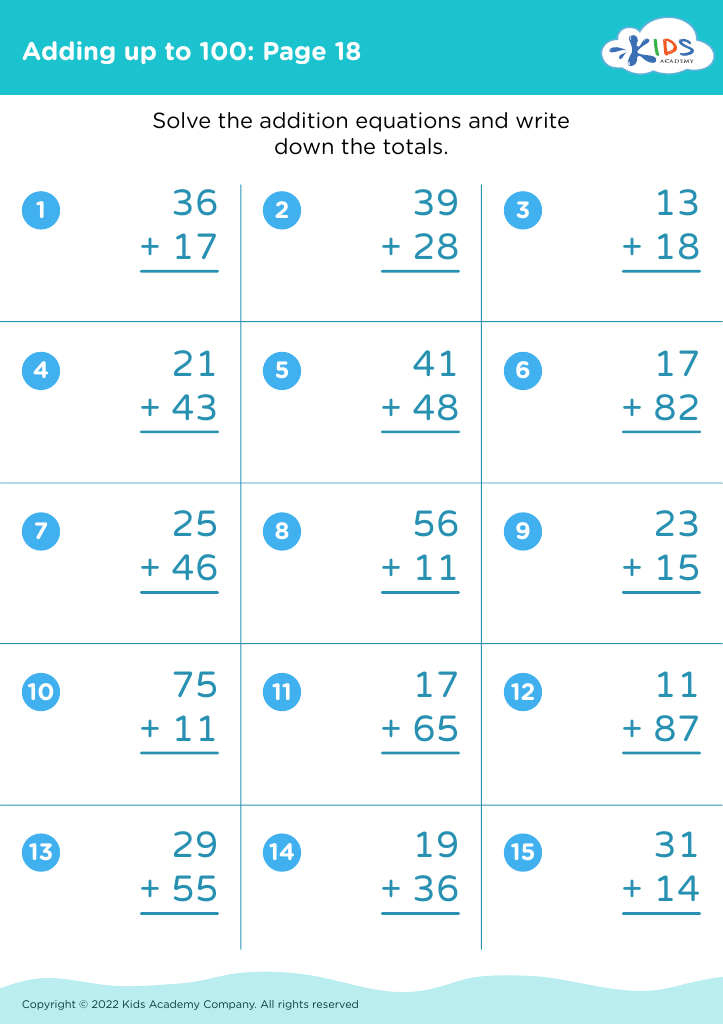
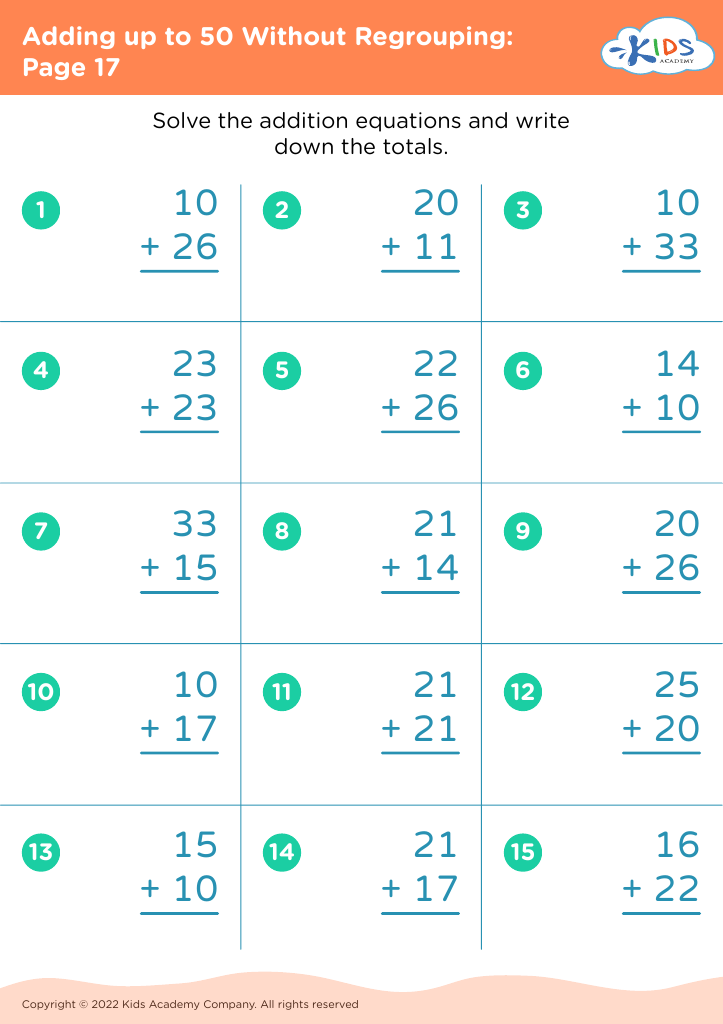
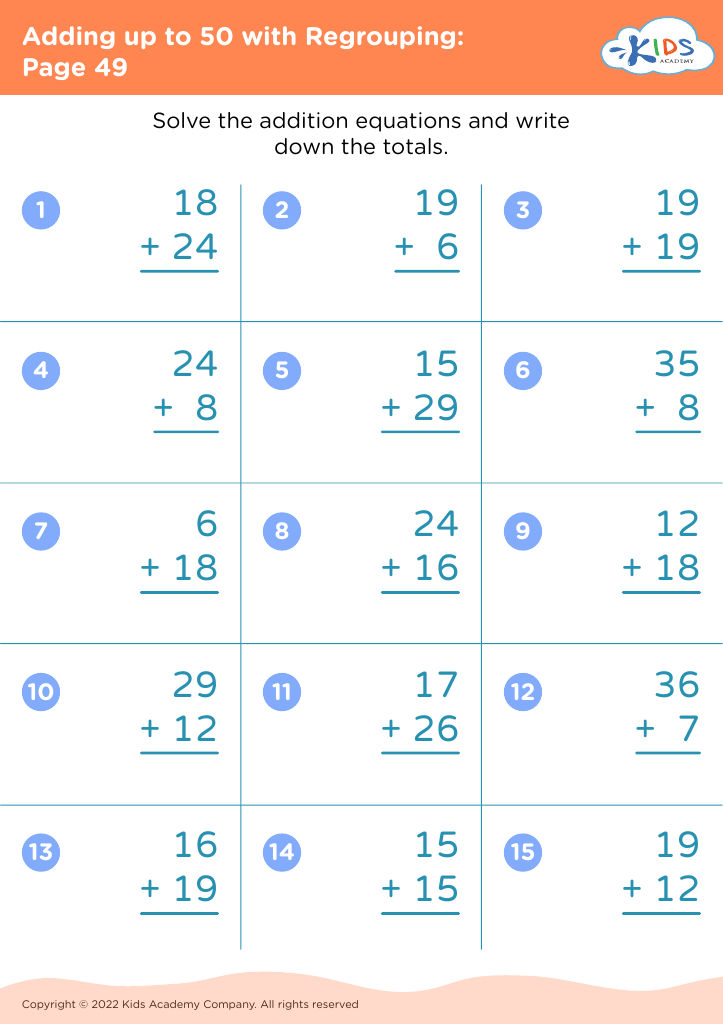
Enhance your child's fine motor skills with our engaging Addition Worksheets for ages 4-7 at Kids Academy. Designed to develop crucial early education skills, each worksheet integrates fun addition exercises with activities that improve hand-eye coordination, pencil grip, and precision. Perfect for young learners, these worksheets offer a blend of colorful illustrations and interactive tasks that make learning addition enjoyable and effective. Help your child build a strong mathematical foundation while honing their fine motor abilities in a playful and educational manner. Visit Kids Academy to access these valuable learning resources and watch your child thrive academically.








Developing fine motor skills in children aged 4-7 is crucial for their overall growth and academic success. Fine motor skills involve the use of small muscles in hands and fingers, enabling children to perform tasks like writing, buttoning a shirt, and tying shoelaces. Strong fine motor skills lay a foundation for essential everyday activities and independence.
At this age, children begin their educational journey and fine motor development directly impacts their ability to engage in classroom activities. For instance, the ability to hold a pencil correctly and control its movements is necessary for writing and drawing. Tasks such as these not only foster creativity but also enhance cognitive development by encouraging focus and problem-solving.
Furthermore, fine motor skills are linked to hand-eye coordination, essential for reading and interacting with their physical environment. Children with well-developed fine motor skills typically find it easier to perform self-care tasks like brushing teeth, eating with utensils, dressing, and participating in sports and games, thus boosting their self-esteem and social interactions.
Teachers and parents play a pivotal role in nurturing these skills. Activities such as threading beads, cutting shapes, and playing with clay can make learning enjoyable while developing vital fine motor skills. Overall, prioritizing the development of fine motor skills sets children up for academic achievement and life-long success.








