Developing logical thinking Addition Worksheets for Ages 4-7
4 filtered results
-
From - To
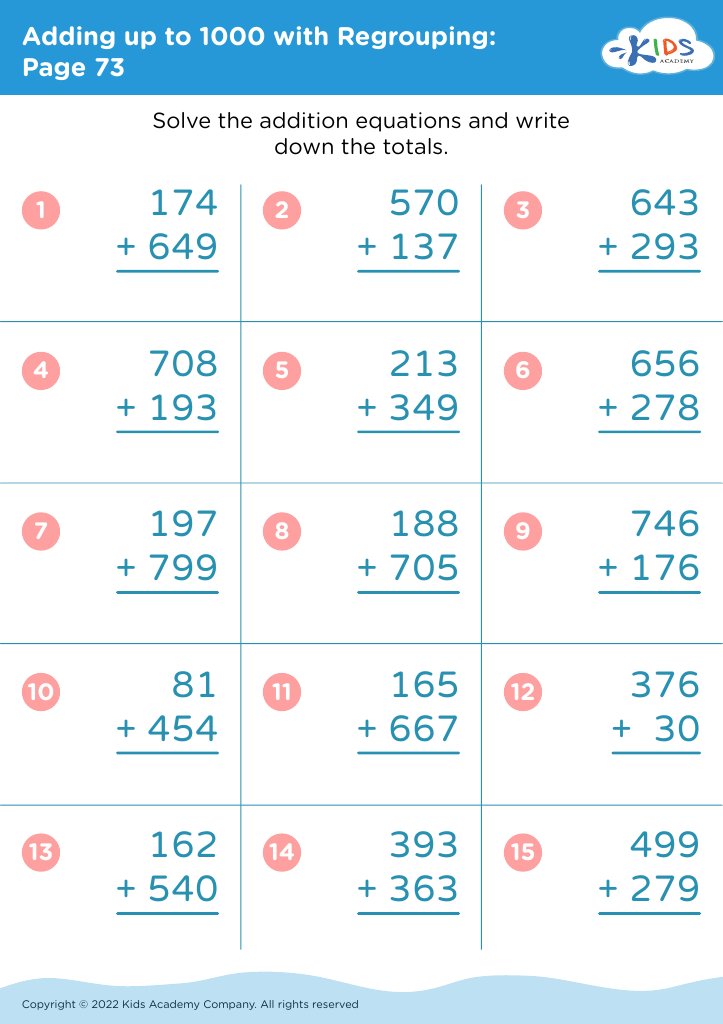
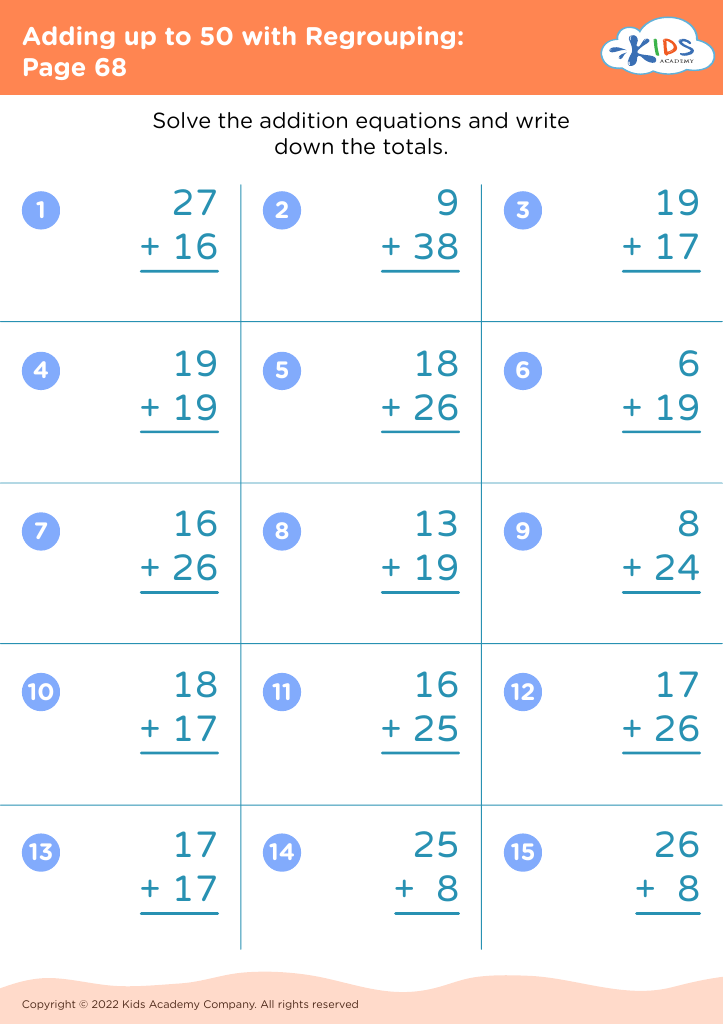
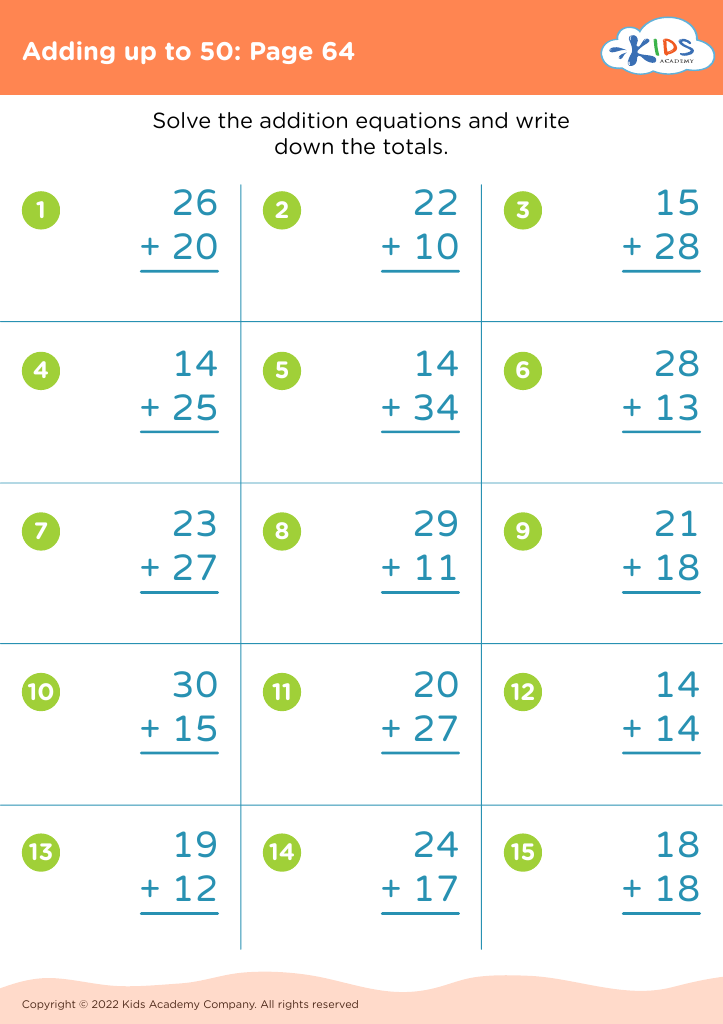
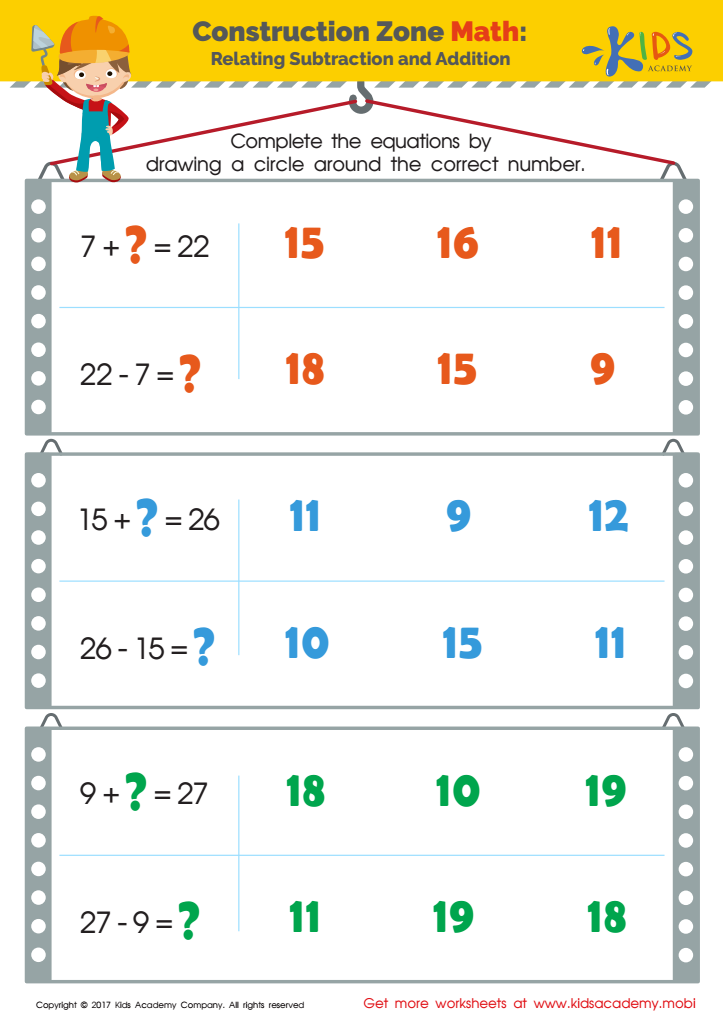
Unlock your child's potential with our "Developing Logical Thinking Addition Worksheets" designed specifically for ages 4-7. These engaging worksheets help young learners build foundational math skills through fun problem-solving activities. By focusing on addition concepts and logical reasoning, children enhance their critical thinking abilities while enjoying colorful illustrations and interactive exercises. Each worksheet encourages creative thinking, allowing kids to explore various ways to approach addition. Ideal for classroom settings or home practice, these resources make learning math an enjoyable adventure. Foster your child's confidence in mathematics and logical reasoning while laying the groundwork for future academic success with our thoughtfully crafted worksheets!
Related Addition and Subtraction Facts Worksheet
 Assign to My Students








Developing logical thinking in children aged 4-7 through addition is crucial for their cognitive and academic growth. At this age, children are forming foundational skills that will impact their future learning in mathematics and critical thinking. Logical thinking fosters problem-solving abilities; when children grasp addition, they learn to analyze situations, recognize patterns, and make connections between numbers, shaping their reasoning capabilities.
Moreover, early mastery of addition supports overall confidence in mathematics, reducing future anxiety around more complex concepts. Logical reasoning encourages children to understand not just the "how" but also the "why" behind mathematical operations, enabling them to approach challenges with curiosity and resilience.
Additionally, integrating playful activities related to addition, such as games and storytelling, turns learning into an enjoyable experience. This engagement can ignite a lifelong interest in mathematics. As logical thinking becomes ingrained at a young age, children cultivate the ability to think independently, create strategies for everyday problems, and enhance their communication and collaboration skills—all important traits for future academic and social success.
Therefore, both parents and teachers play a vital role in nurturing these skills, laying the groundwork for children's lifelong learning journey.








