Enhance fine motor skills Addition Worksheets for Ages 4-7
4 filtered results
-
From - To
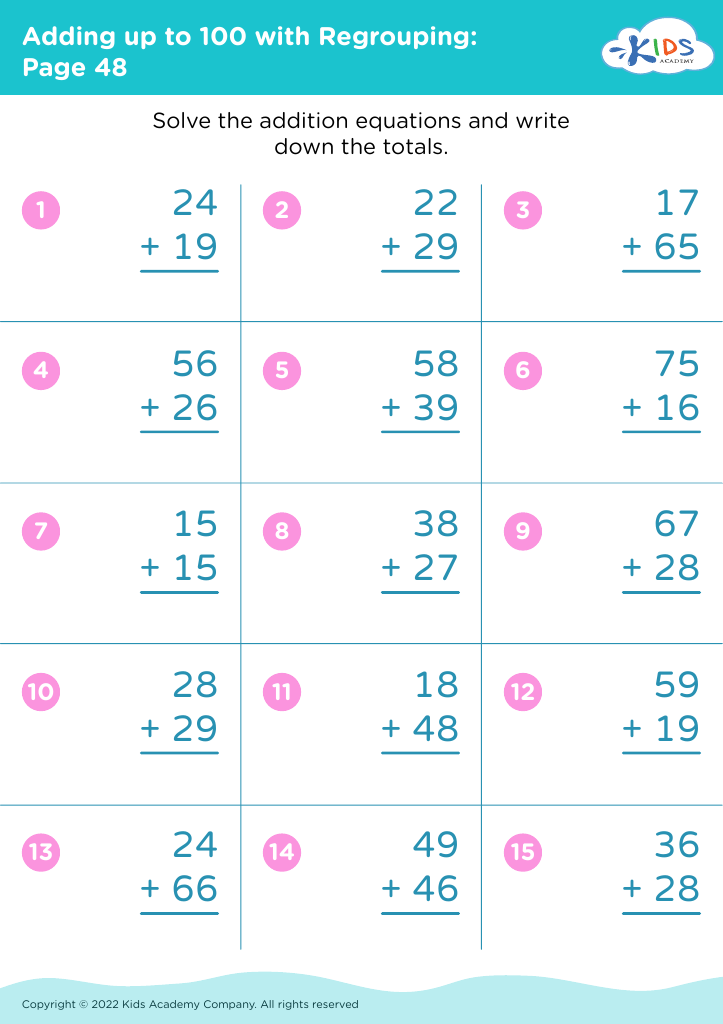
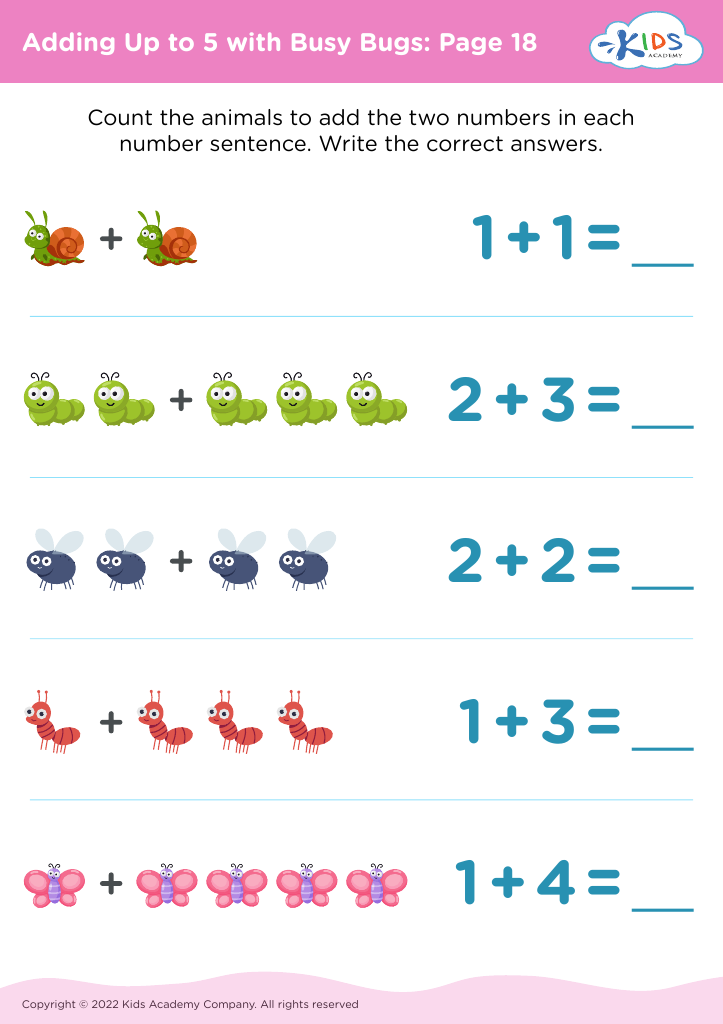
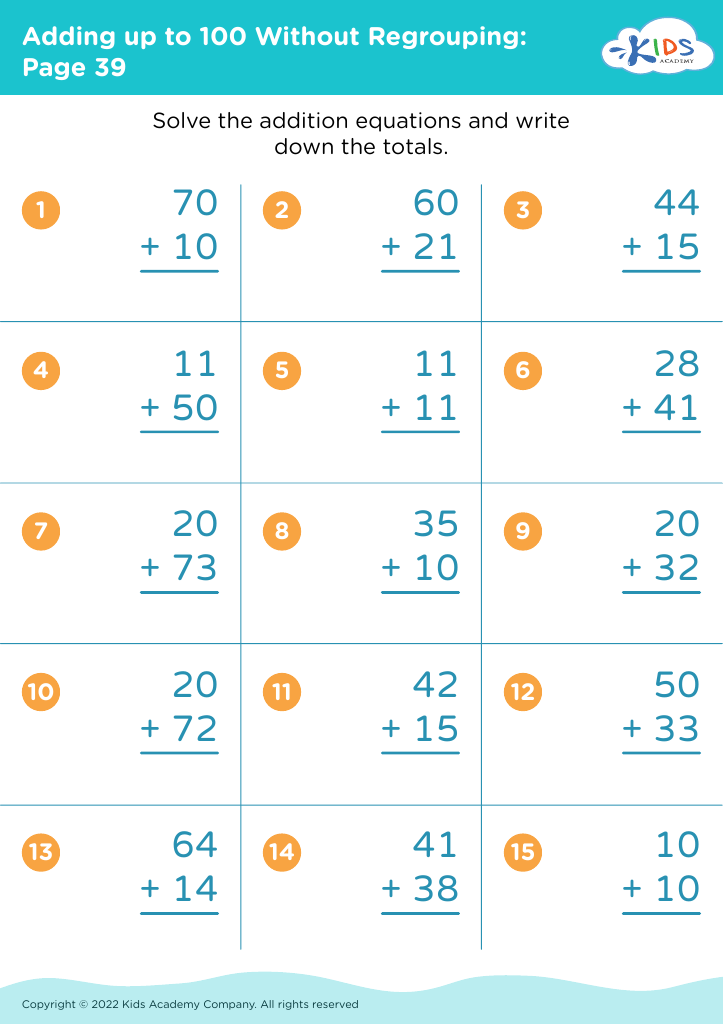
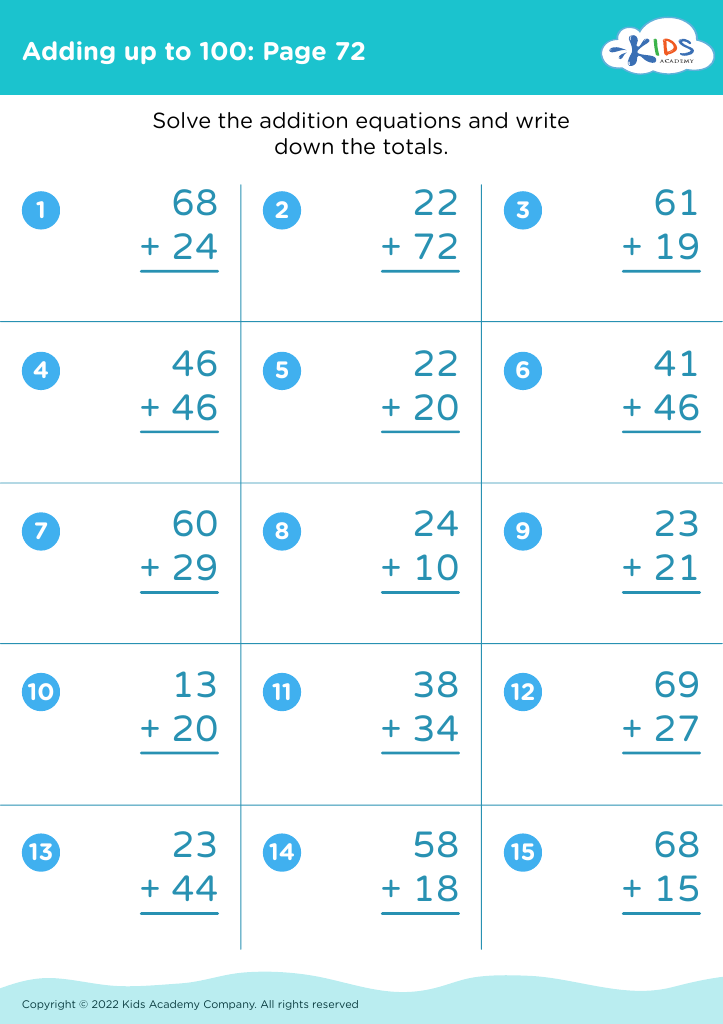
Discover our "Enhance Fine Motor Skills Addition Worksheets" designed specifically for children aged 4-7. These engaging and interactive worksheets not only teach essential addition concepts but also focus on developing fine motor skills crucial for young learners. Each worksheet includes fun exercises that require tracing, coloring, and manipulating various materials, making math enjoyable while strengthening hand-eye coordination and dexterity. Perfect for home or classroom use, our worksheets provide a hands-on approach to learning that keeps kids motivated and eager to practice. Foster a love for math and enhance fine motor abilities simultaneously with these thoughtfully crafted resources.








Enhancing fine motor skills in children aged 4-7 is crucial for their overall development and learning process, making it a priority for both parents and teachers. Fine motor skills refer to the ability to use small muscles in the hands and fingers for precise movements. This skill is foundational for important everyday tasks, such as writing, buttoning shirts, or handling small objects. By promoting activities that support fine motor development, adults can help children gain confidence in their ability to perform these tasks, ultimately boosting their self-esteem.
In the classroom, strong fine motor skills are integral to a child’s success in key subjects like math and literacy. For instance, the ability to hold a pencil or manipulate scissors directly impacts a child’s ability to write or engage in art projects. Moreover, enhanced fine motor skills contribute to better concentration and cognitive functioning, essential for problem-solving and critical thinking.
At home, parents can reinforce these skills through interactive play, such as crafting or puzzles, which creates an enjoyable learning environment. By investing time and resources into developing fine motor skills, parents and teachers can pave the way for smoother transitions into more complex tasks, fostering a lifelong love for learning and exploration.








