Filters

69 filtered results

Clear all filters
Favorites
With answer key
Interactive

69 filtered results

Difficulty Level

Grade


Subject

    Check out this FREE Trial Lesson on Addition for age 4-7!

    X

    Favorites
    With answer key
    Interactive
    • 4-7
    • Fine Motor Skills
    • Addition
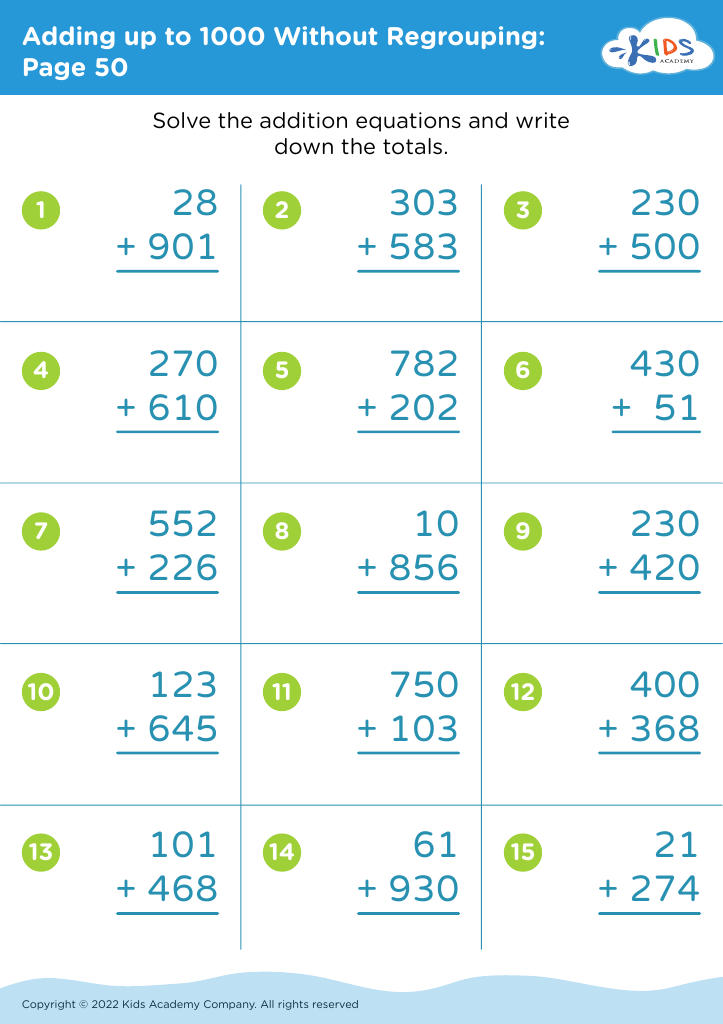
    Adding up to 1000 Without Regrouping: Page 50
    Adding up to 1000 Without Regrouping: Page 50
    Adding up to 1000 Without Regrouping: Page 50
    Worksheet
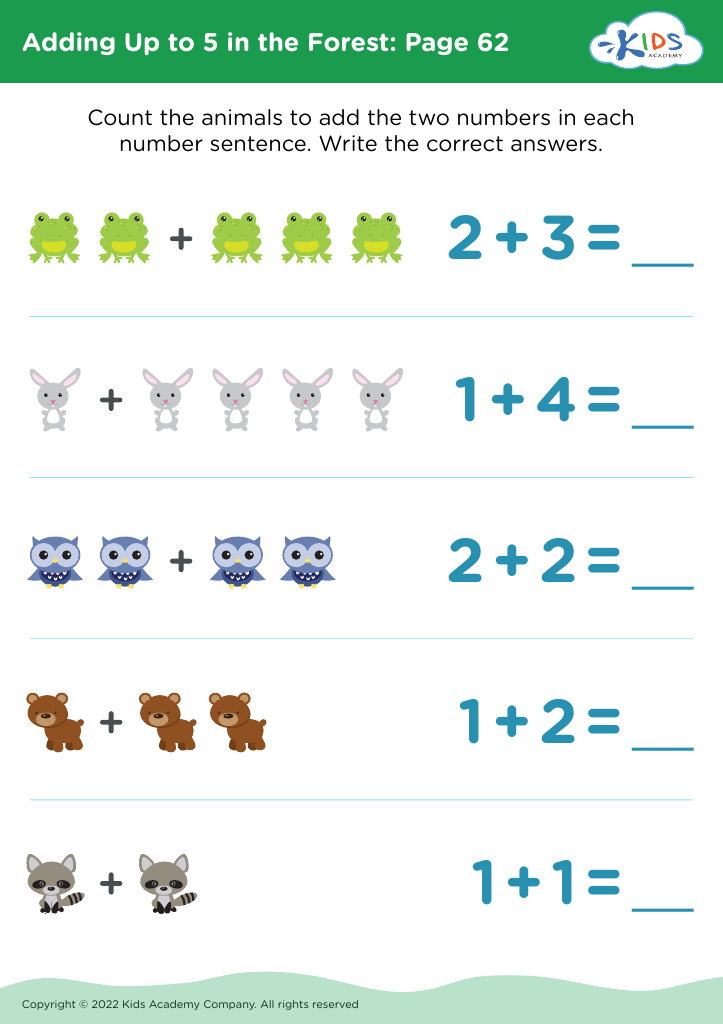
    Adding Up to 5 in the Forest: Page 62
    Adding Up to 5 in the Forest: Page 62
    Adding Up to 5 in the Forest: Page 62
    Worksheet
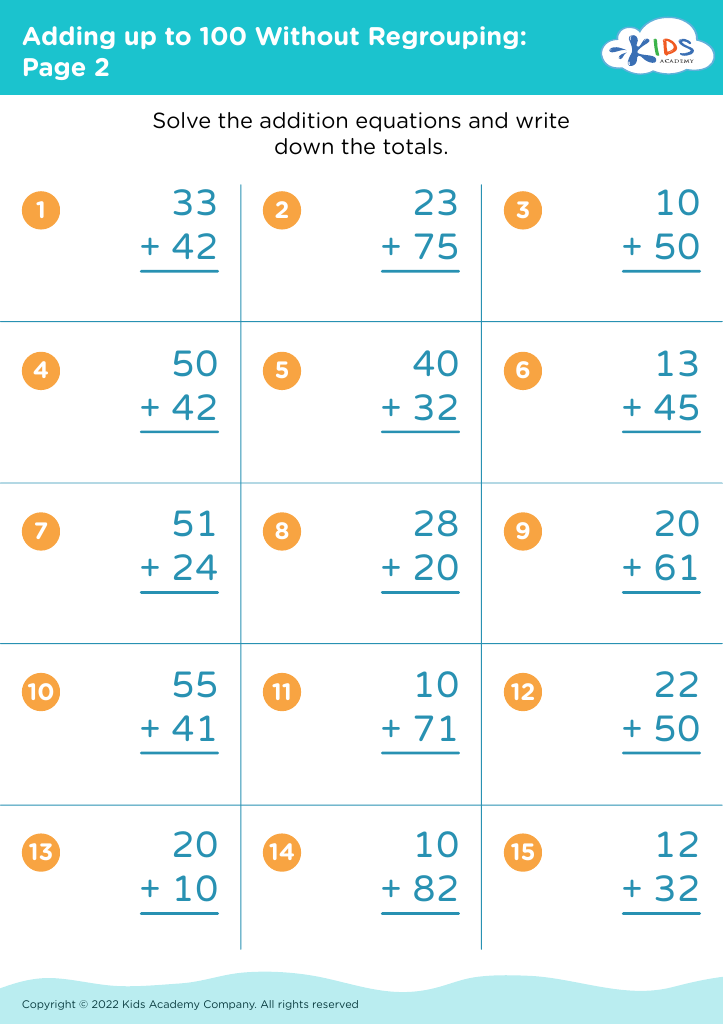
    Adding up to 100 Without Regrouping: Page 2
    Adding up to 100 Without Regrouping: Page 2
    Adding up to 100 Without Regrouping: Page 2
    Worksheet
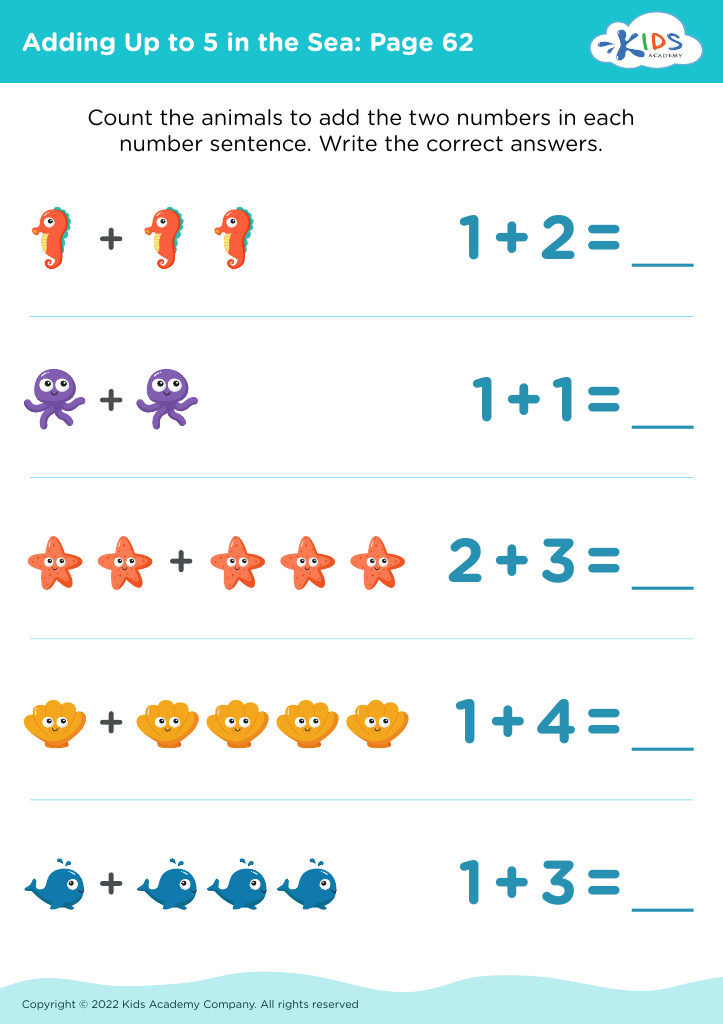
    Adding Up to 5 in the Sea: Page 62
    Adding Up to 5 in the Sea: Page 62
    Adding Up to 5 in the Sea: Page 62
    Worksheet
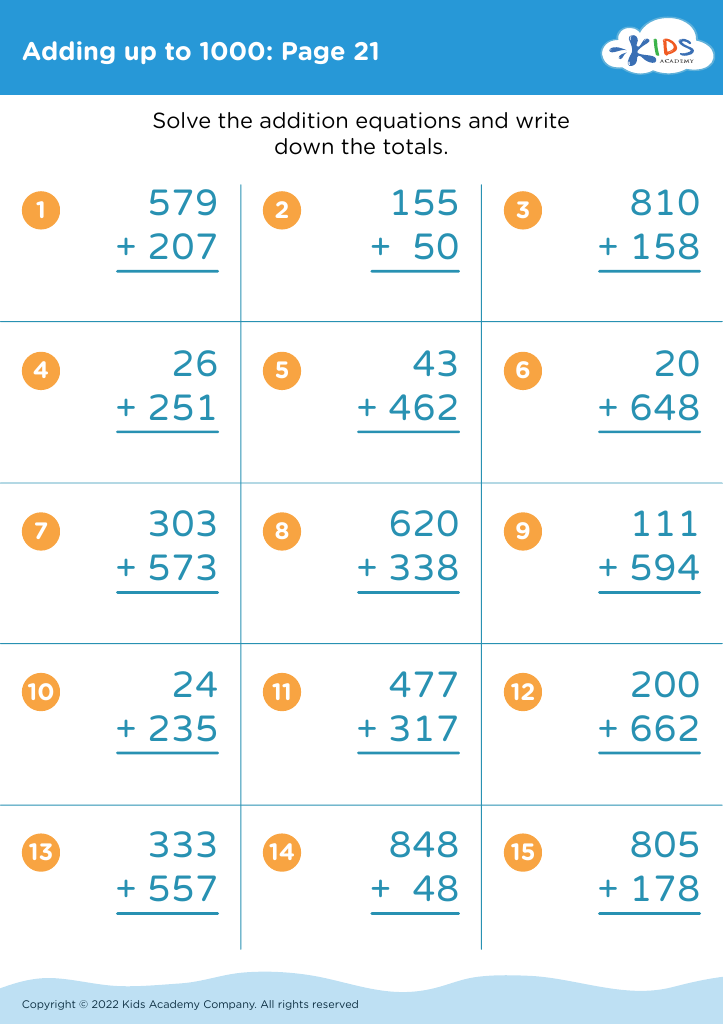
    Adding up to 1000: Page 21
    Adding up to 1000: Page 21

    Adding up to 1000: Page 21

    Adding up to 1000: Page 21
    Worksheet
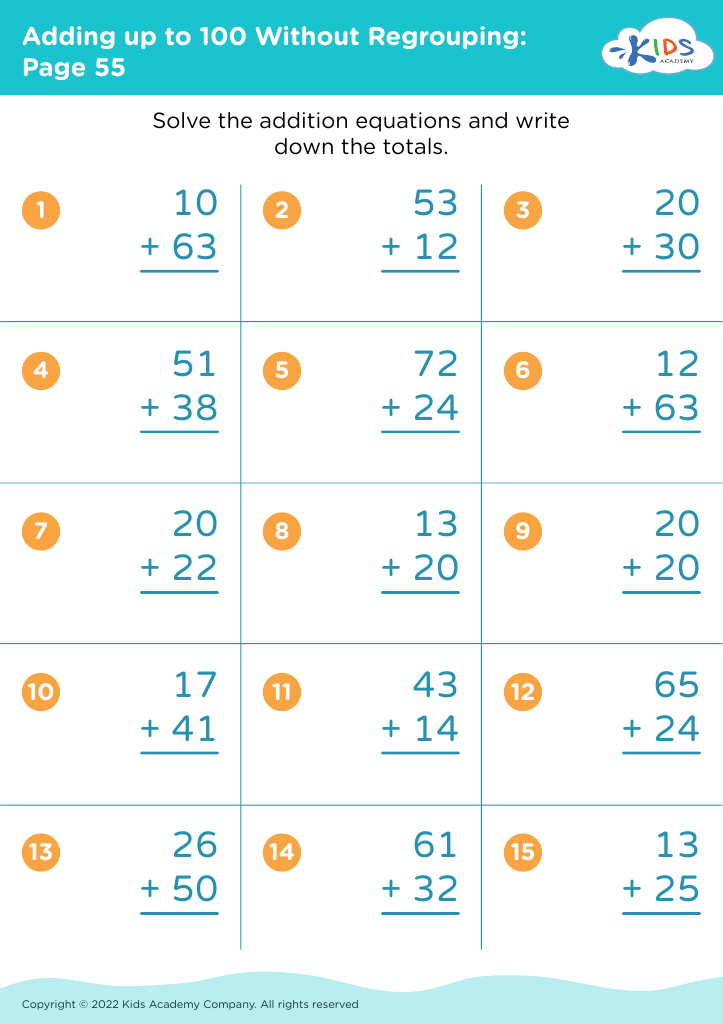
    Adding up to 100 Without Regrouping: Page 55
    Adding up to 100 Without Regrouping: Page 55
    Adding up to 100 Without Regrouping: Page 55
    Worksheet
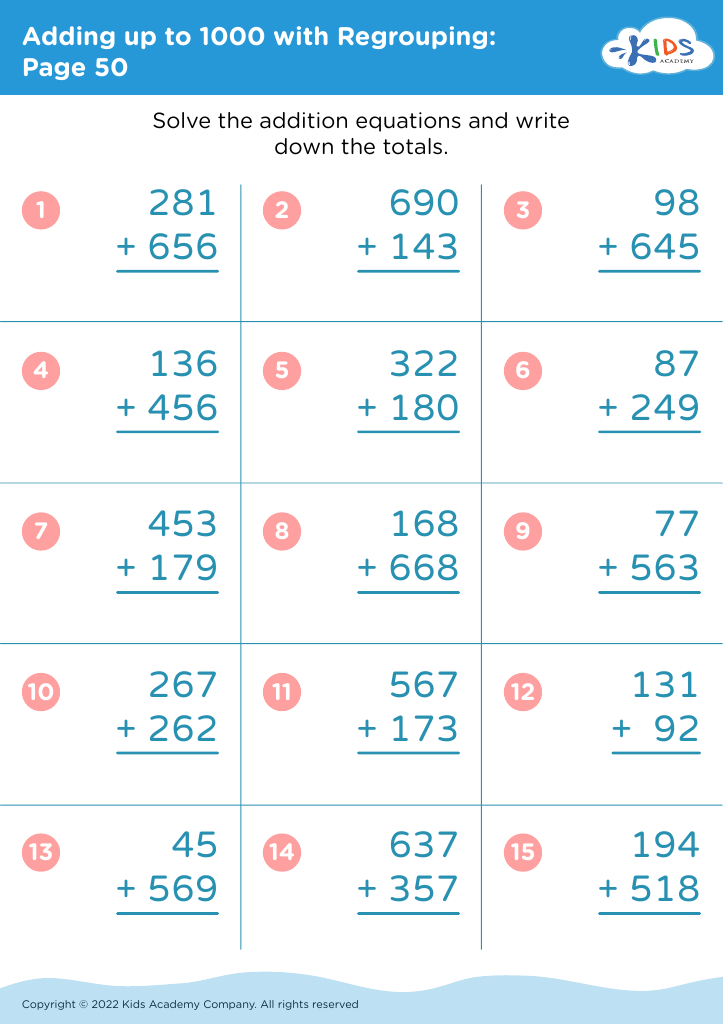
    Adding up to 1000 with Regrouping: Page 50
    Adding up to 1000 with Regrouping: Page 50
    Adding up to 1000 with Regrouping: Page 50
    Worksheet
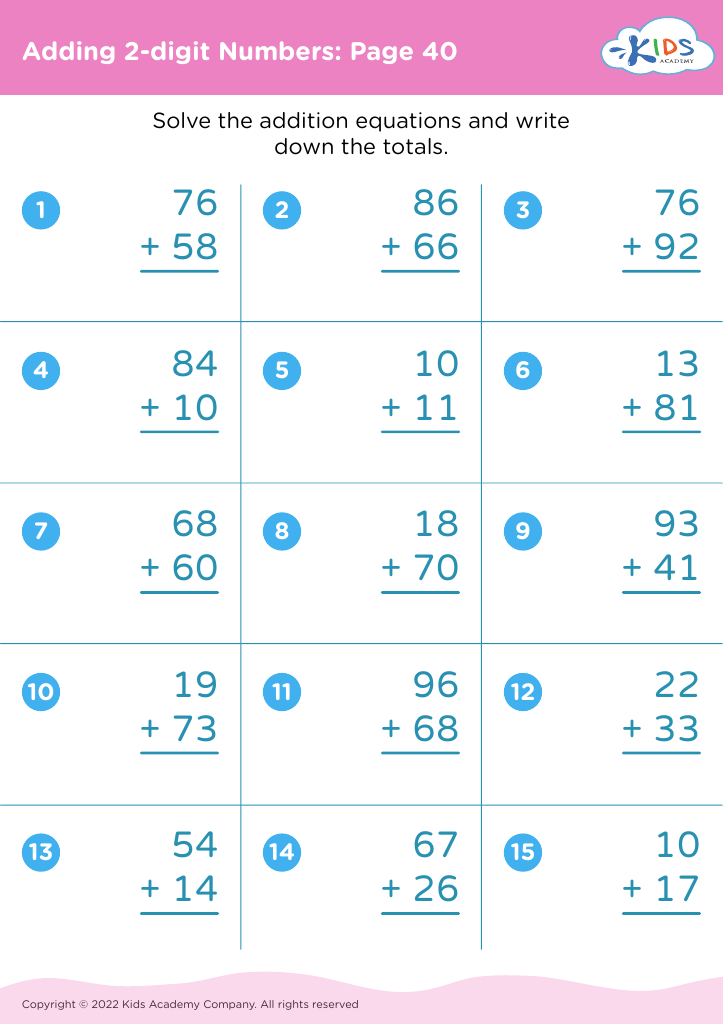
    Adding 2-digit Numbers: Page 40
    Adding 2-digit Numbers: Page 40

    Adding 2-digit Numbers: Page 40

    Adding 2-digit Numbers: Page 40
    Worksheet
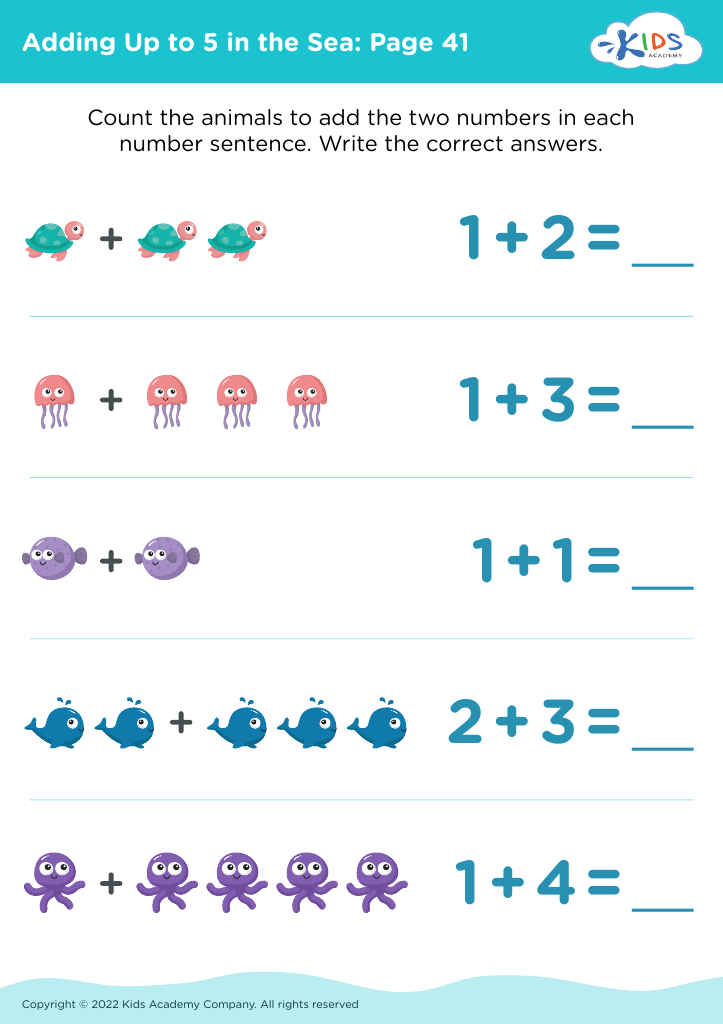
    Adding Up to 5 in the Sea: Page 41
    Adding Up to 5 in the Sea: Page 41
    Adding Up to 5 in the Sea: Page 41
    Worksheet
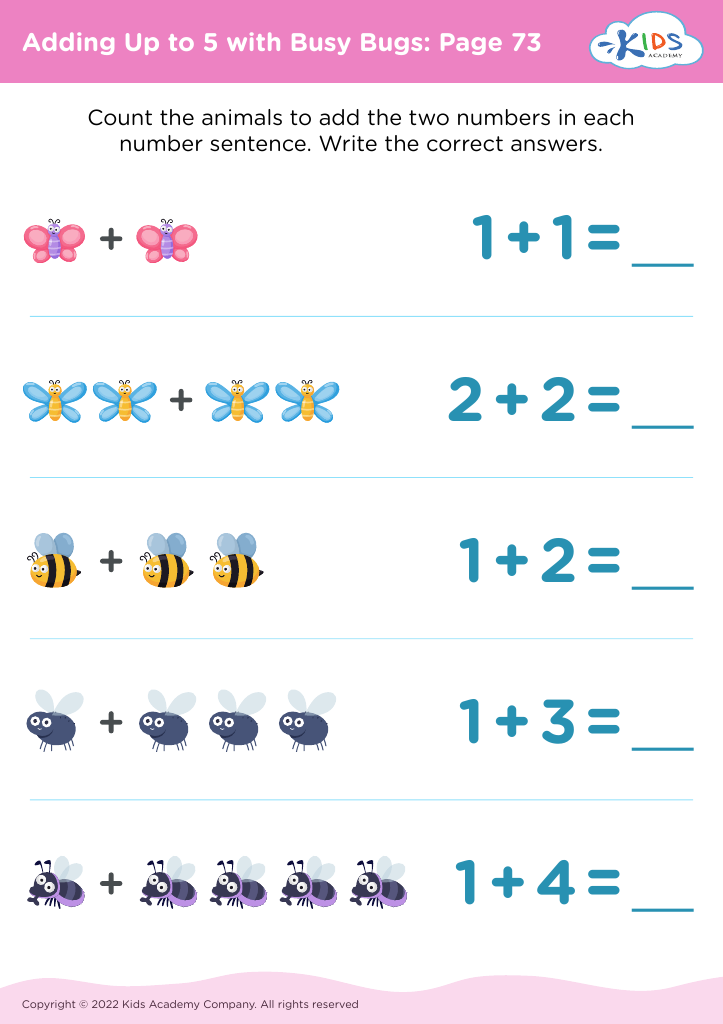
    Adding Up to 5 with Busy Bugs: Page 73
    Adding Up to 5 with Busy Bugs: Page 73
    Adding Up to 5 with Busy Bugs: Page 73
    Worksheet
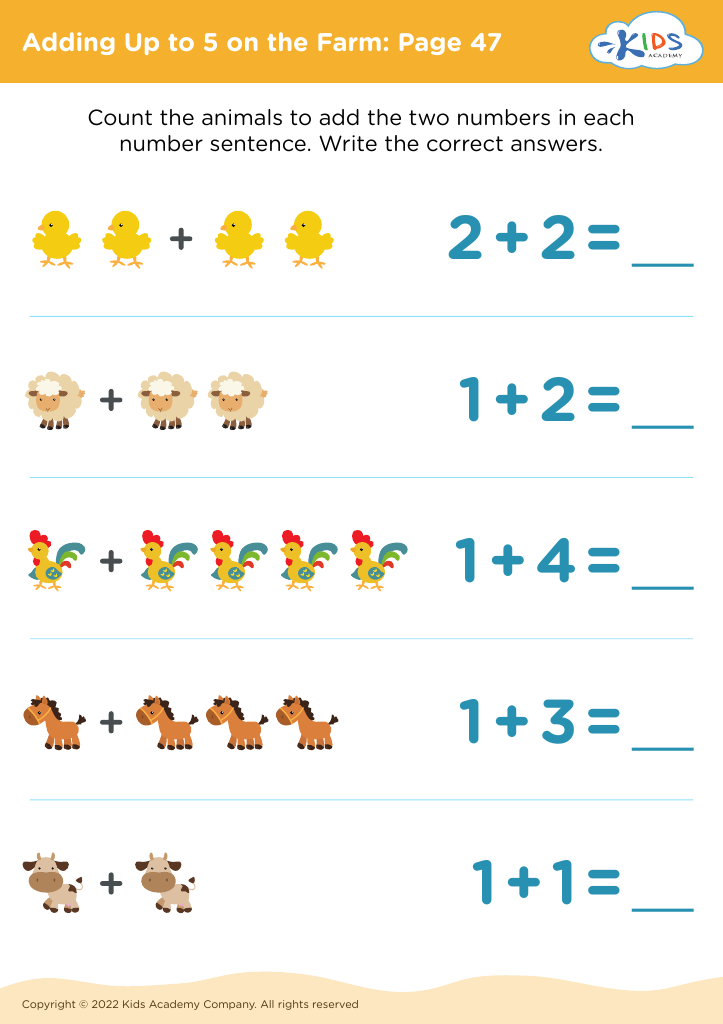
    Adding Up to 5 on the Farm: Page 47
    Adding Up to 5 on the Farm: Page 47
    Adding Up to 5 on the Farm: Page 47
    Worksheet
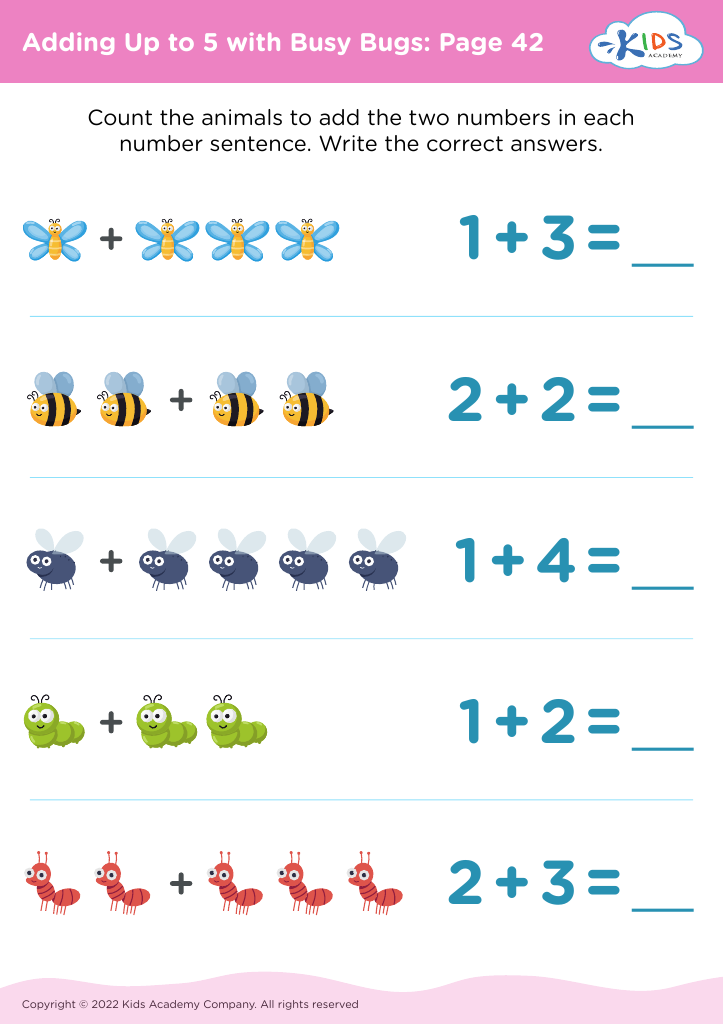
    Adding Up to 5 with Busy Bugs: Page 42
    Adding Up to 5 with Busy Bugs: Page 42
    Adding Up to 5 with Busy Bugs: Page 42
    Worksheet
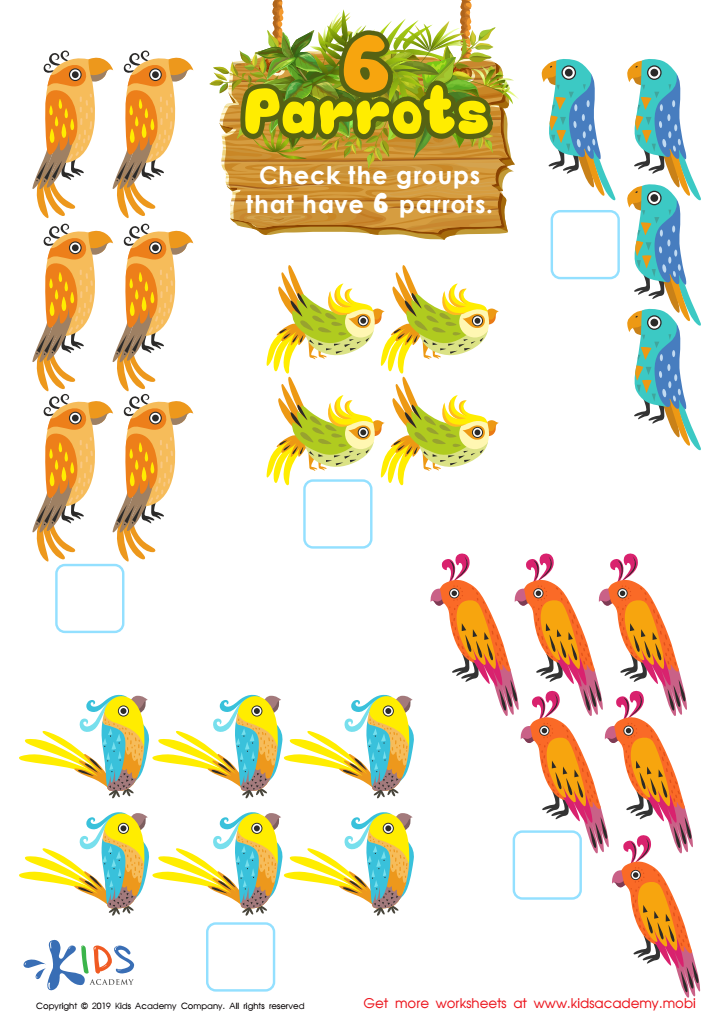
    6 Parrots Worksheet
    6 Parrots Worksheet

    6 Parrots Worksheet

    Love parrots? Here's a free worksheet to help your children practice counting to six with colorful parrot representations! Kids will adore counting the parrots and checking off groups of six - and it won't even feel like math! Just a fun way to make some new and exciting friends.
    6 Parrots Worksheet
    Worksheet
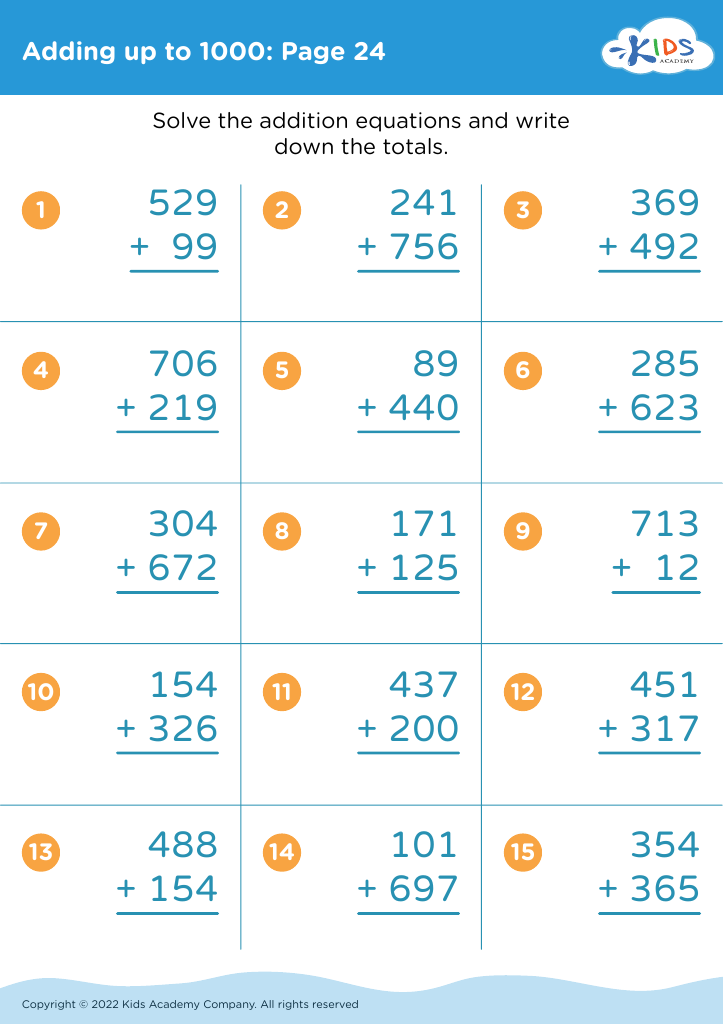
    Adding up to 1000: Page 24
    Adding up to 1000: Page 24

    Adding up to 1000: Page 24

    Adding up to 1000: Page 24
    Worksheet
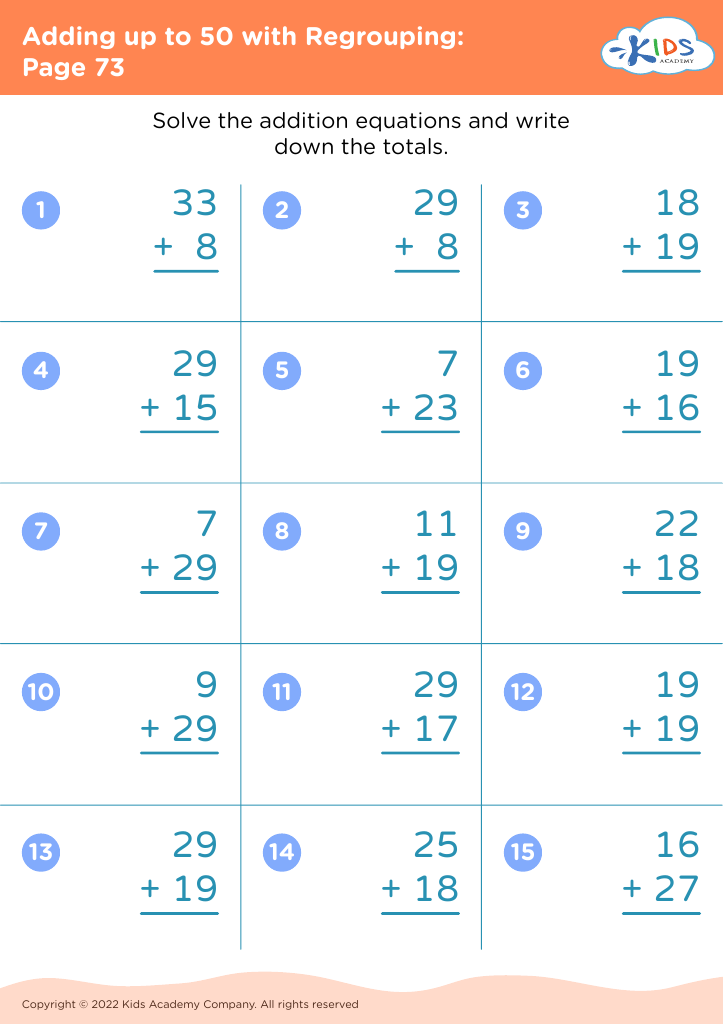
    Adding up to 50 with Regrouping: Page 73
    Adding up to 50 with Regrouping: Page 73
    Adding up to 50 with Regrouping: Page 73
    Worksheet
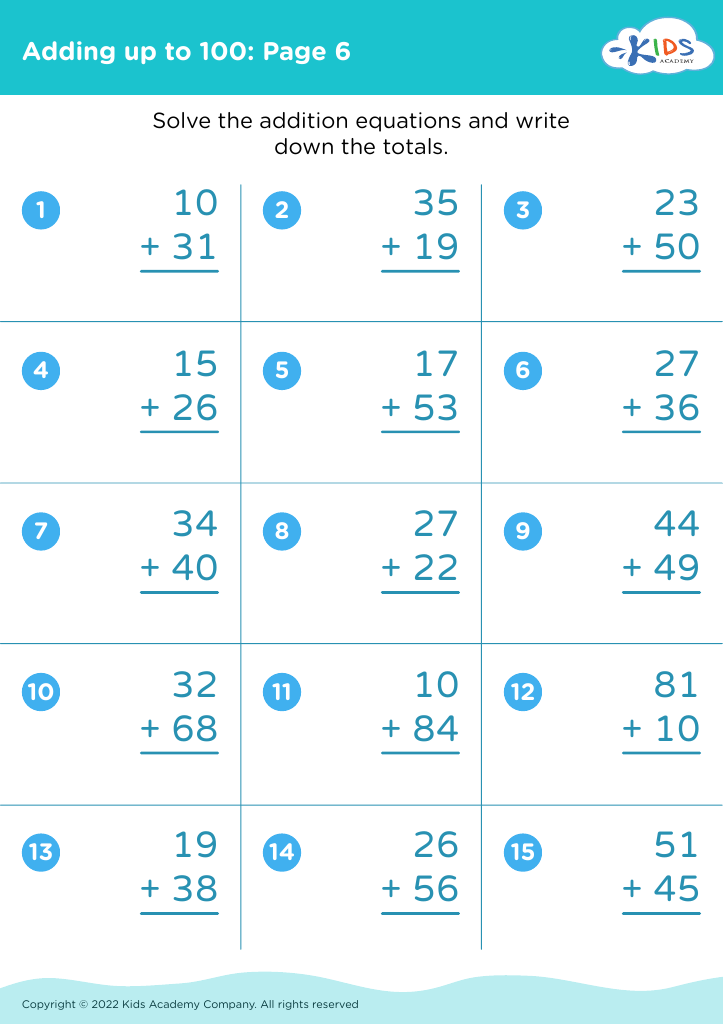
    Adding up to 100: Page 6
    Adding up to 100: Page 6

    Adding up to 100: Page 6

    Adding up to 100: Page 6
    Worksheet
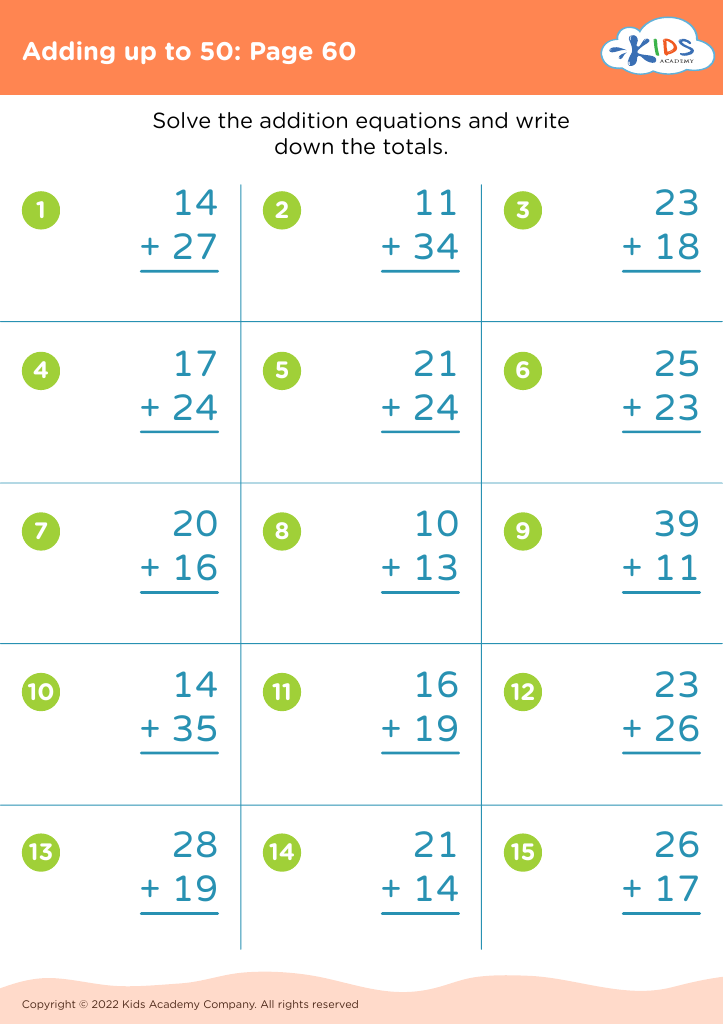
    Adding up to 50: Page 60
    Adding up to 50: Page 60

    Adding up to 50: Page 60

    Adding up to 50: Page 60
    Worksheet
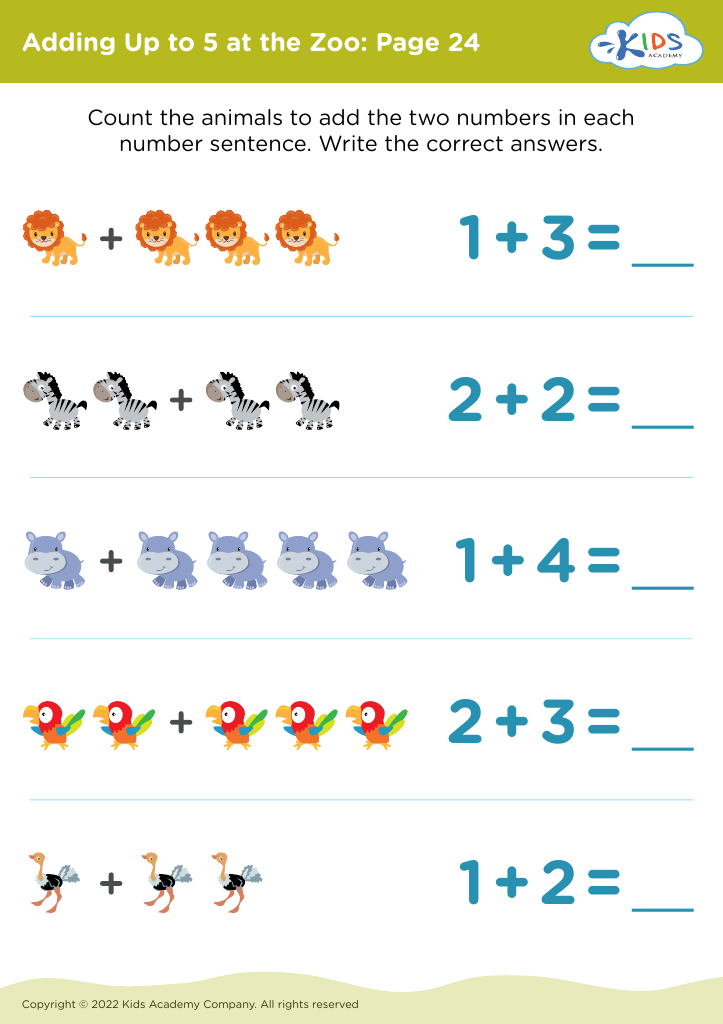
    Adding Up to 5 at the Zoo: Page 24
    Adding Up to 5 at the Zoo: Page 24
    Adding Up to 5 at the Zoo: Page 24
    Worksheet
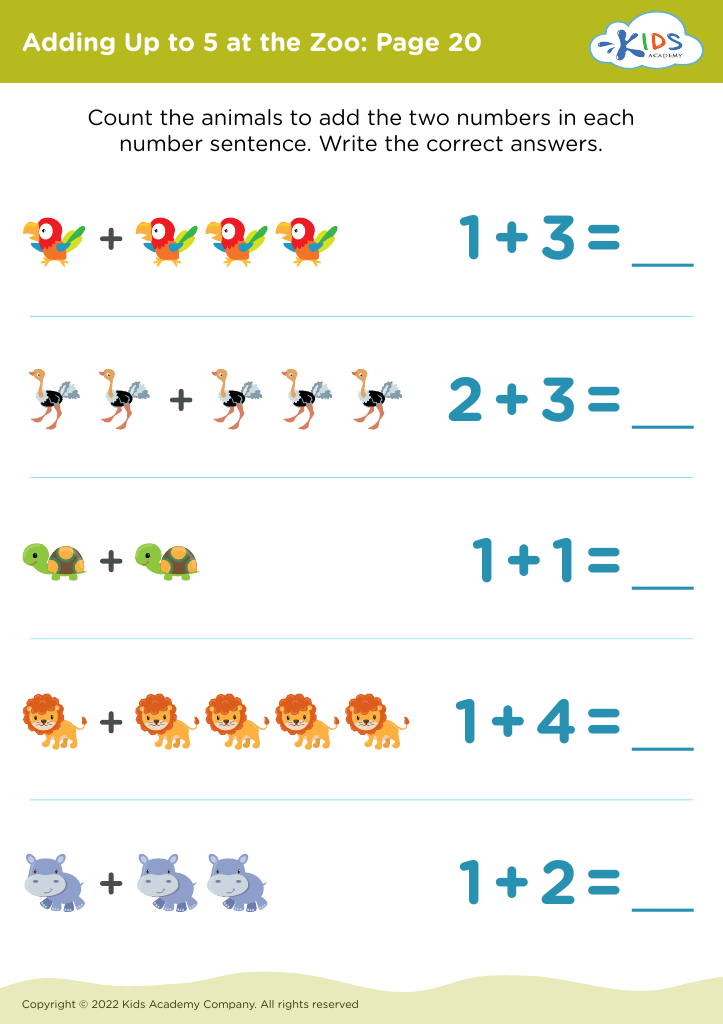
    Adding Up to 5 at the Zoo: Page 20
    Adding Up to 5 at the Zoo: Page 20
    Adding Up to 5 at the Zoo: Page 20
    Worksheet
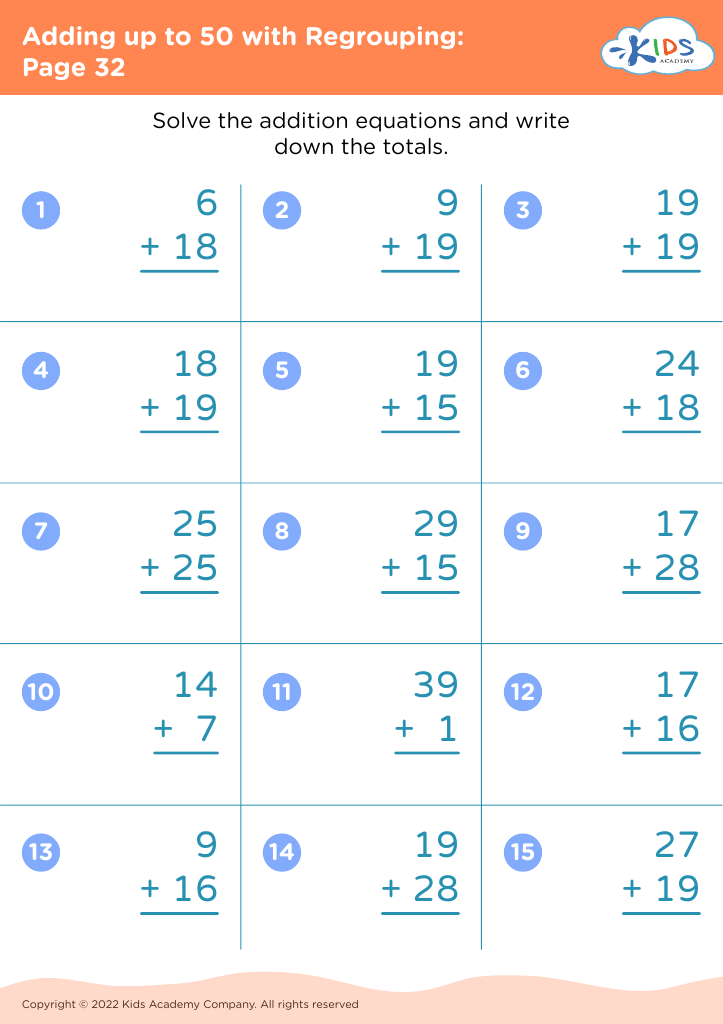
    Adding up to 50 with Regrouping: Page 32
    Adding up to 50 with Regrouping: Page 32
    Adding up to 50 with Regrouping: Page 32
    Worksheet
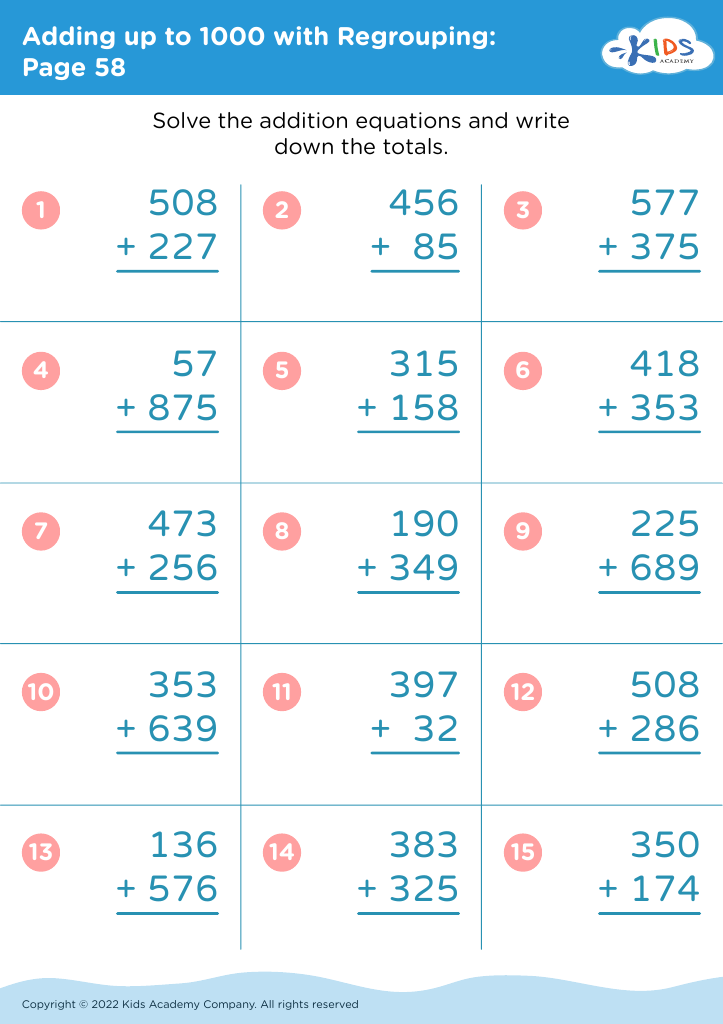
    Adding up to 1000 with Regrouping: Page 58
    Adding up to 1000 with Regrouping: Page 58
    Adding up to 1000 with Regrouping: Page 58
    Worksheet
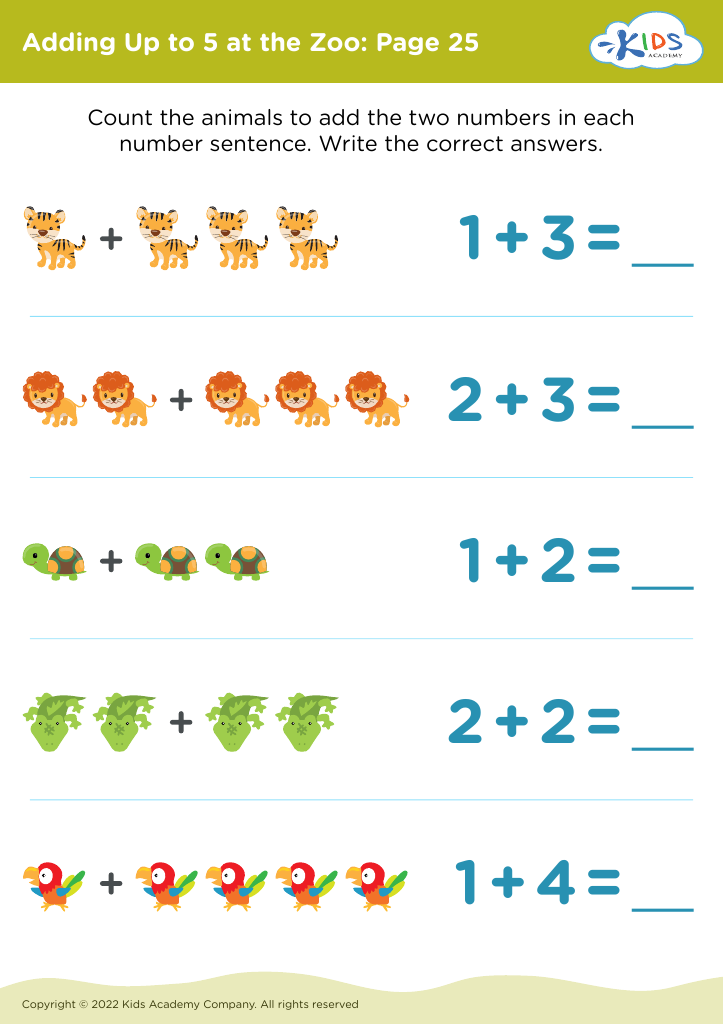
    Adding Up to 5 at the Zoo: Page 25
    Adding Up to 5 at the Zoo: Page 25
    Adding Up to 5 at the Zoo: Page 25
    Worksheet
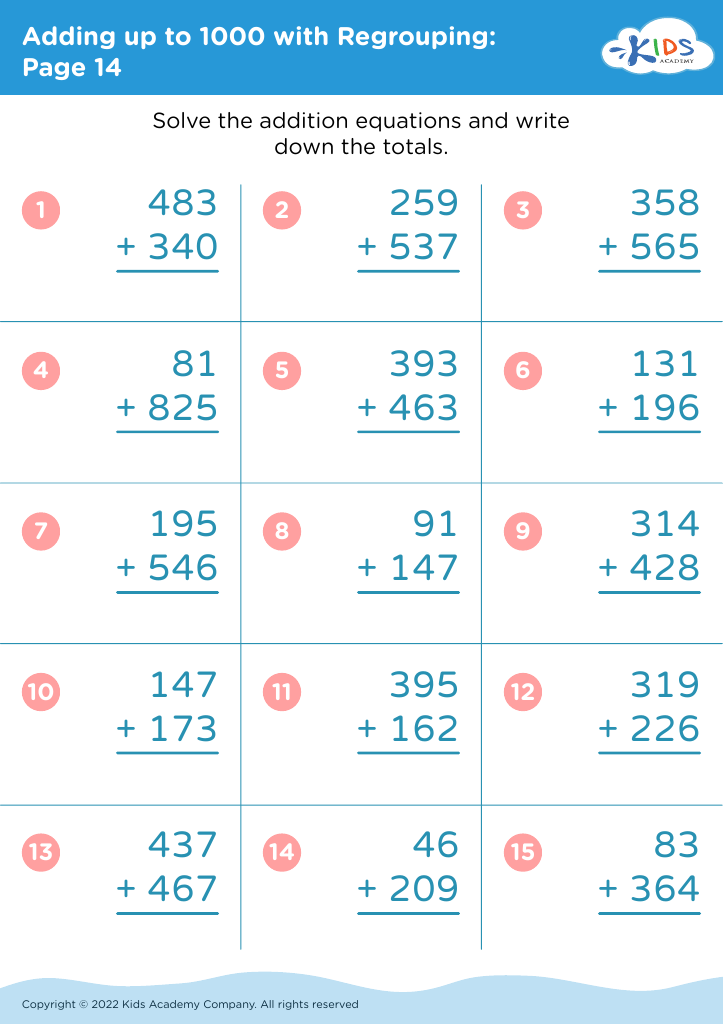
    Adding up to 1000 with Regrouping: Page 14
    Adding up to 1000 with Regrouping: Page 14
    Adding up to 1000 with Regrouping: Page 14
    Worksheet
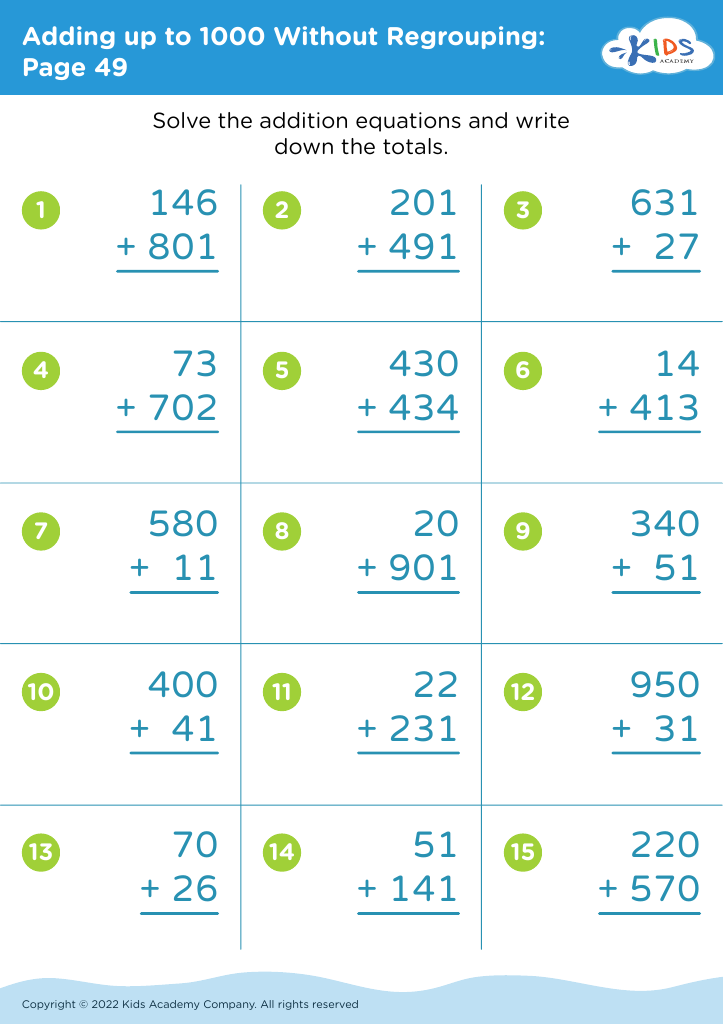
    Adding up to 1000 Without Regrouping: Page 49
    Adding up to 1000 Without Regrouping: Page 49
    Adding up to 1000 Without Regrouping: Page 49
    Worksheet


    Fine motor skills are vital for children’s overall development, especially between the ages of 4-7, a crucial period for honing these abilities. These skills involve the precise movements of the hands and fingers and are fundamental for performing everyday tasks like writing, buttoning clothes, cutting with scissors, and tying shoelaces.

    For parents and teachers, focusing on fine motor skills helps set the stage for academic success. At the early grade levels, children who have well-developed fine motor skills tend to write more legibly and efficiently; this supports learning activities from drawing shapes to forming letters and numbers, which are essential for literacy and numeracy development.

    Moreover, enhancing these skills fosters a child’s independence, self-esteem, and confidence. Performing tasks effectively means children can participate fully in classroom activities and become more self-sufficient at home.

    Additionally, fine motor skills are closely tied to cognitive development. Tasks that require these skills often encourage problem-solving, concentration, and hand-eye coordination, stimulating brain growth.

    Ignoring fine motor skills can lead to struggles with everyday tasks and hinder academic progress, making early intervention and support crucial. Therefore, focusing on fine motor skills in children aged 4-7 promotes a well-rounded developmental foundation, setting them up for success both academically and in daily life.