Hand-eye Coordination Addition Worksheets for Ages 4-7 - Page 2
25 filtered results
-
From - To
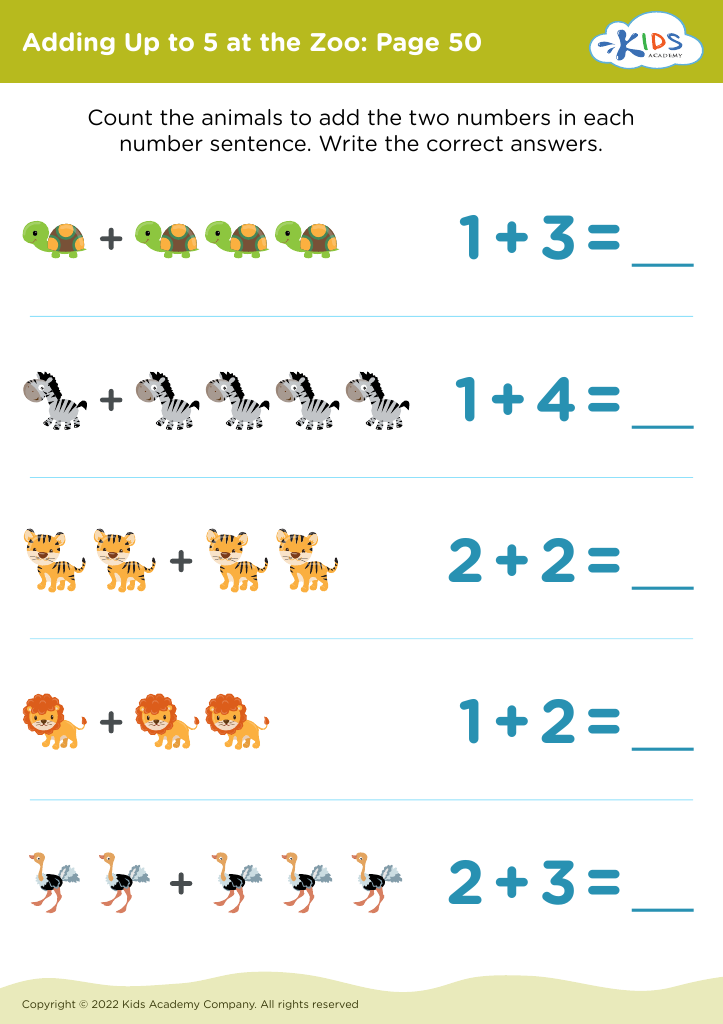








Hand-eye coordination is a crucial developmental skill for children aged 4-7, and parents and teachers should prioritize activities that enhance this ability. At this stage, children are rapidly developing their fine motor skills, which are essential not just for play but also for academic tasks like writing and drawing. Hand-eye coordination helps children learn to visualize and execute tasks, aiding in their ability to follow instructions and engage more effectively in both play and learning environment.
Furthermore, strong hand-eye coordination can impact a child's confidence and social interactions. Children who struggle with these skills may feel frustrated or discouraged, which can affect their willingness to participate in group activities or sports. By fostering hand-eye coordination through engaging games, art projects, or simple daily tasks, parents and teachers can provide positive opportunities for kids to develop these essential skills.
Additionally, activities enhancing hand-eye coordination can lay the groundwork for future learning in more complex subjects. This skill is fundamental not just for physical tasks, but also for cognitive activities involving problem-solving and critical thinking. Involvement and encouragement from adults can spark a child’s interest and set the stage for a lifelong enjoyment of learning and physical activity.








