
Handwriting practice Addition Worksheets for Ages 4-7
5 filtered results
Difficulty Level
Grade
Age
-
From - To
Subject
Activity
Standards
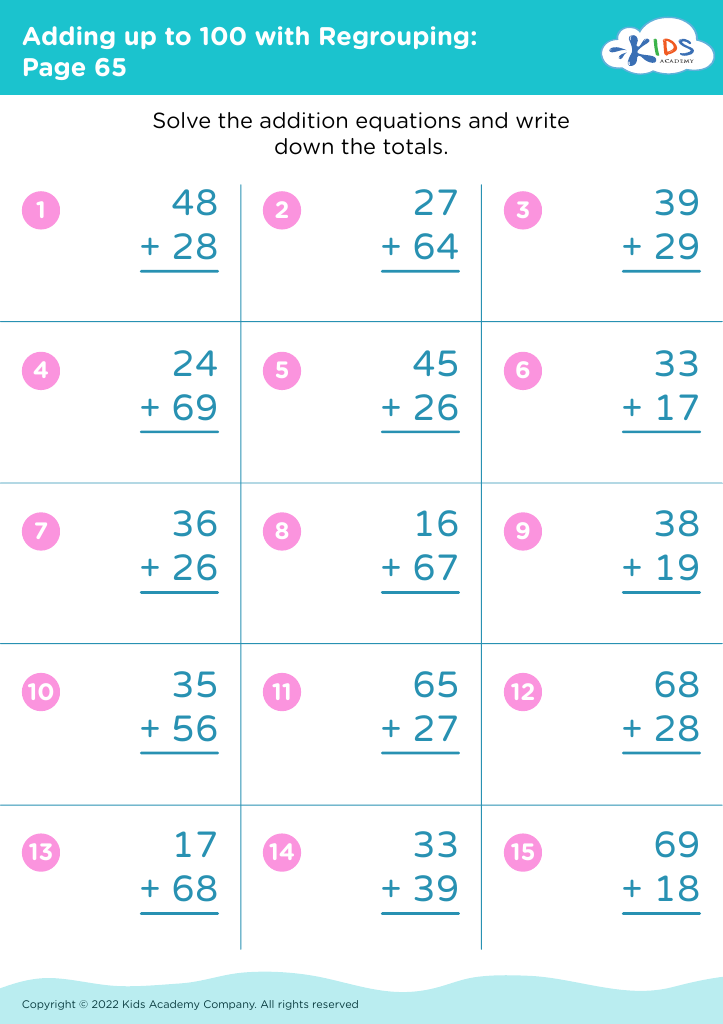
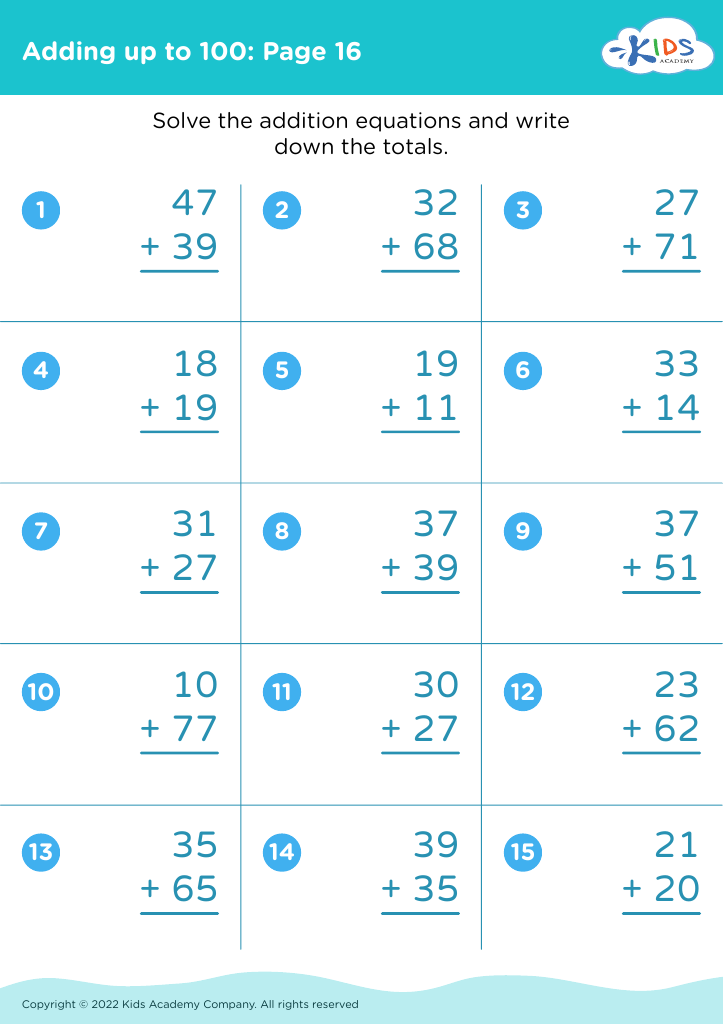
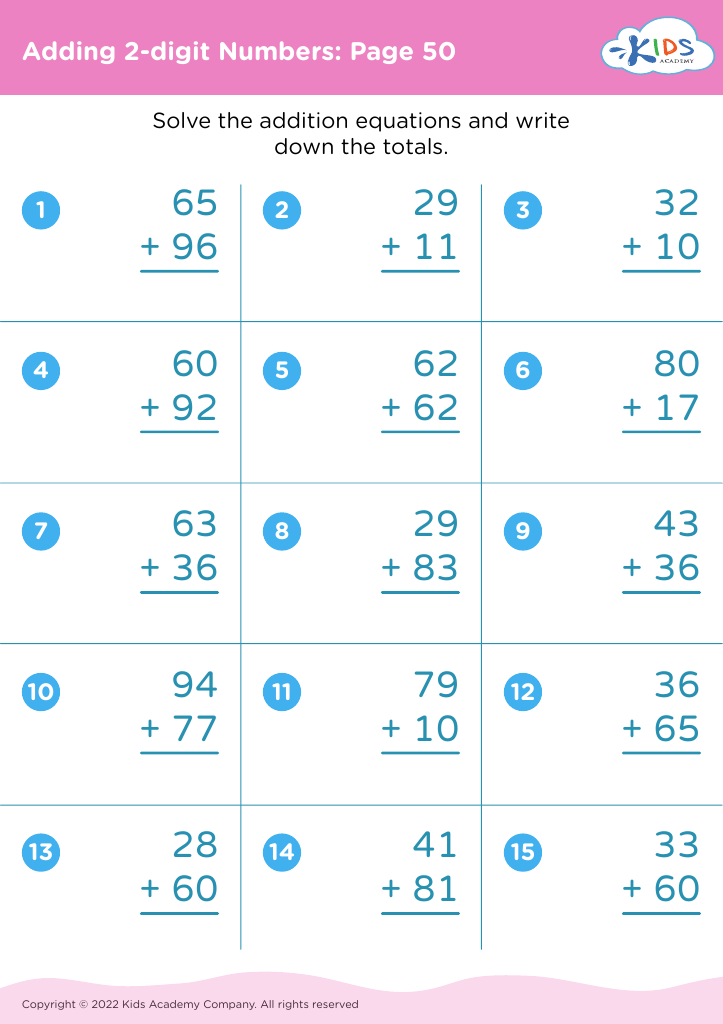
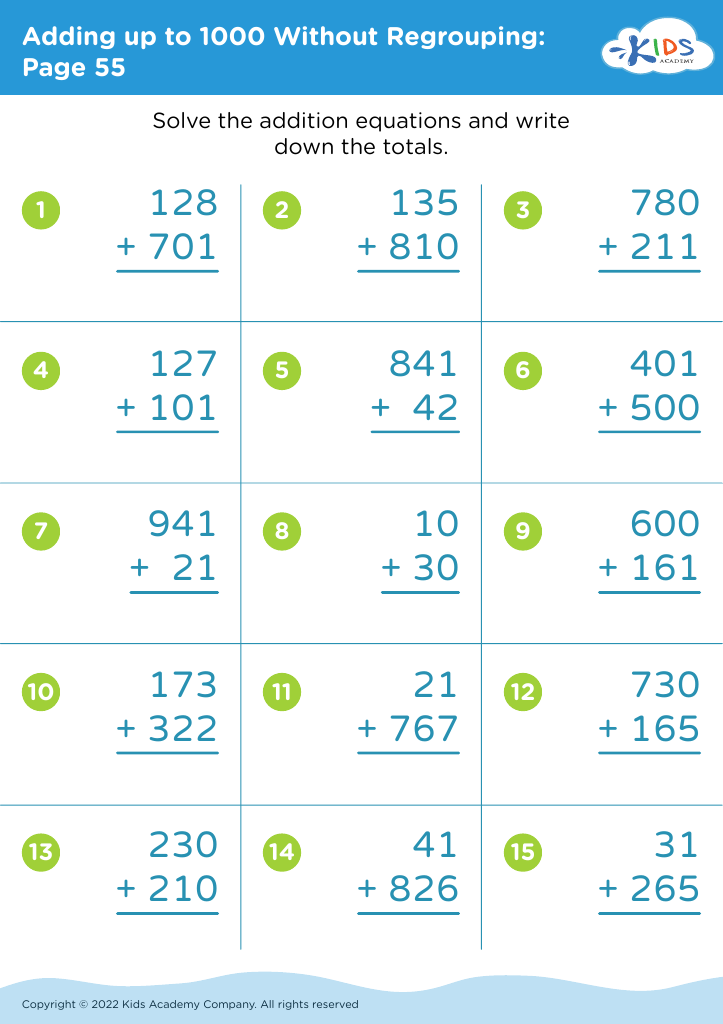
Discover our engaging Handwriting Practice Addition Worksheets for children ages 4-7! These printable worksheets combine early math skills with handwriting development, helping young learners master addition while enhancing their writing. Each worksheet features colorful designs and interactive activities, making math fun and motivating. Kids will practice writing numbers clearly as they solve simple addition problems, building both confidence and fine motor skills. Perfect for teachers and parents, our resources support foundational learning in a playful manner. Foster your child's academic growth and keep them excited about learning with our carefully crafted addition and handwriting practice worksheets today!
Favorites
With answer key
Interactive
Join Kids Academy for Free
Who is primarily going to use this learning content?








Handwriting practice, particularly in the formative ages of 4 to 7, is essential for a child's development for several reasons. First, it enhances fine motor skills, which are crucial in performing daily tasks and set the foundation for future academic skills. Properly developed handwriting helps children become more proficient in producing written work, allowing them to express their ideas clearly and confidently.
Moreover, handwriting practice reinforces letter recognition and phonemic awareness. As children trace letters and words, they strengthen their understanding of sounds and their associations with text, contributing significantly to early literacy. Additionally, through handwriting exercises, children learn about spacing, sizing, and the natural flow of writing, fostering better composition skills as they progress in their education.
Furthermore, consistent handwriting practice can bolster a child's self-esteem. Achievements in mastering writing skills provide positive reinforcement, motivating them to tackle more complex learning challenges.
Ultimately, parents and teachers should prioritize handwriting practice for young learners not only to develop these essential writing skills but also to ignite a love for learning and to support comprehensive cognitive and emotional development. Cultivating strong writing habits early on prepares children for future academic success long beyond the early years.








