Identifying shapes Addition Worksheets for Ages 4-7
24 filtered results
-
From - To
Discover the perfect blend of fun and learning with our "Identifying Shapes Addition Worksheets" designed for ages 4-7. This engaging resource helps young learners master addition skills while recognizing various shapes. By combining these fundamental math concepts, children develop critical thinking and problem-solving abilities. Our worksheets feature vibrant illustrations and interactive tasks to keep kids entertained and focused. Ideal for parents and teachers seeking effective learning materials that make math enjoyable. Encourage your child's early math success with these thoughtfully crafted worksheets from Kids Academy. Visit our website now to boost your child's confidence and understanding in math!
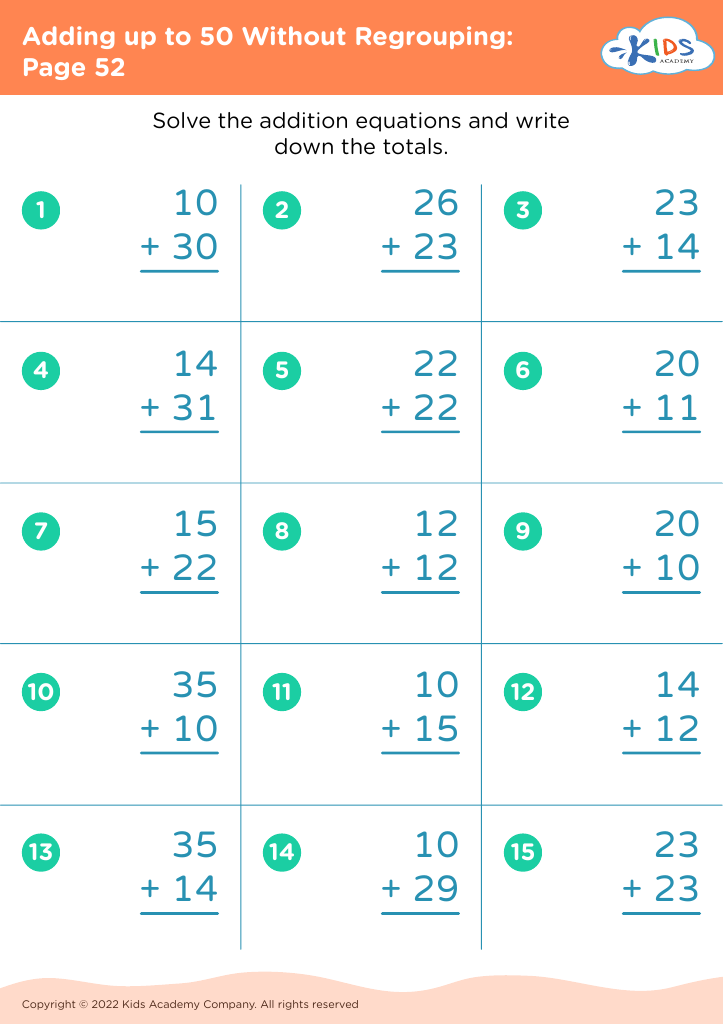
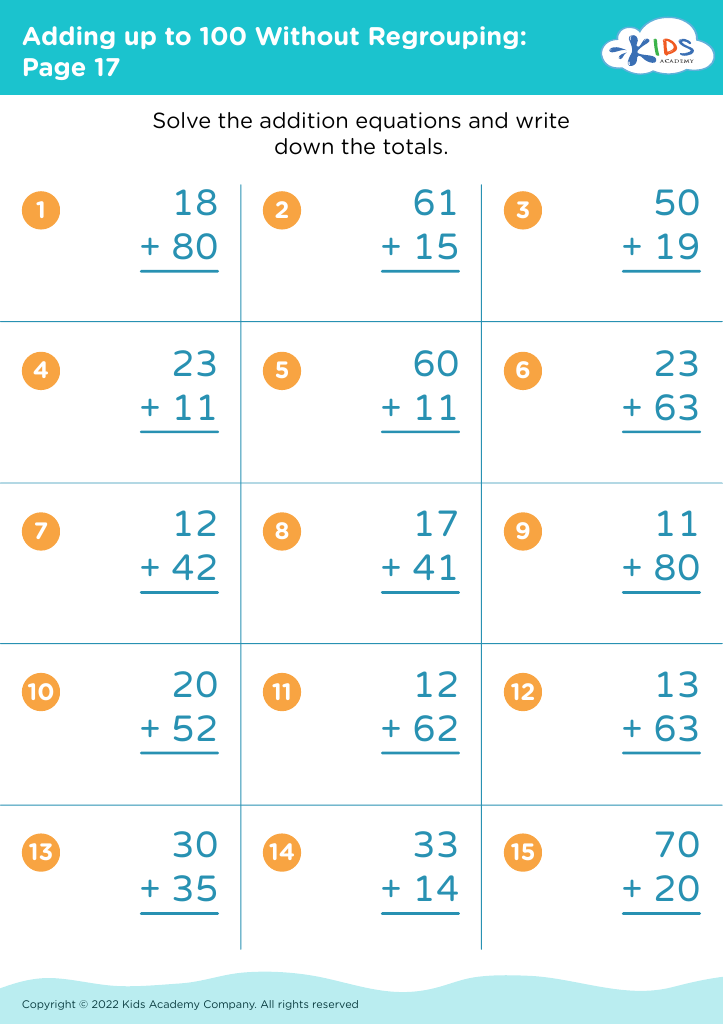
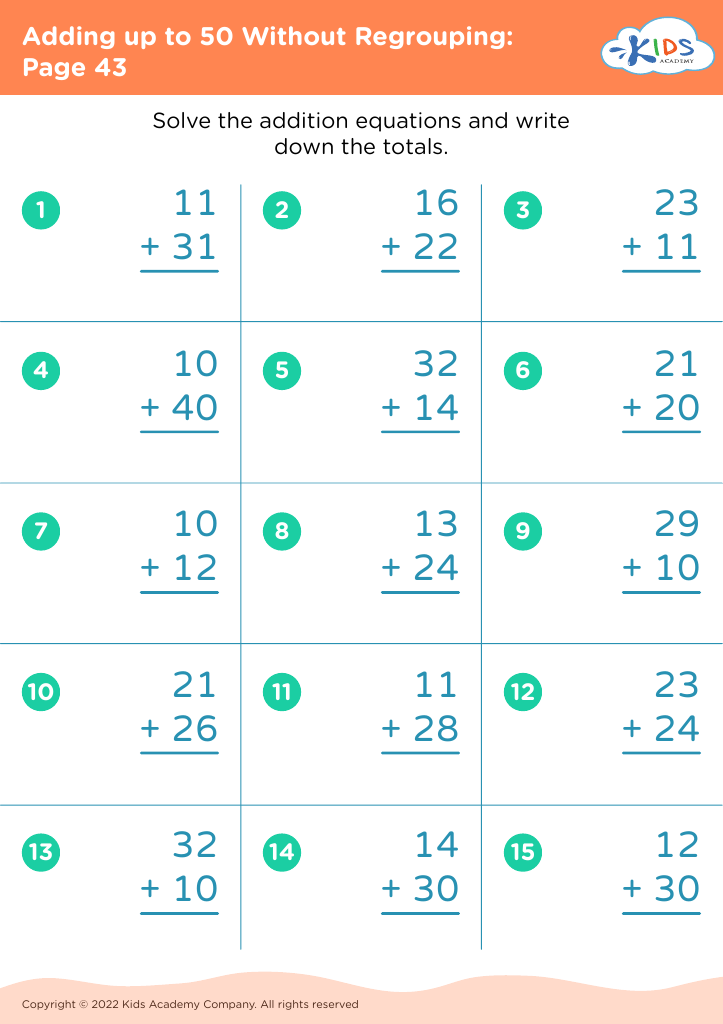
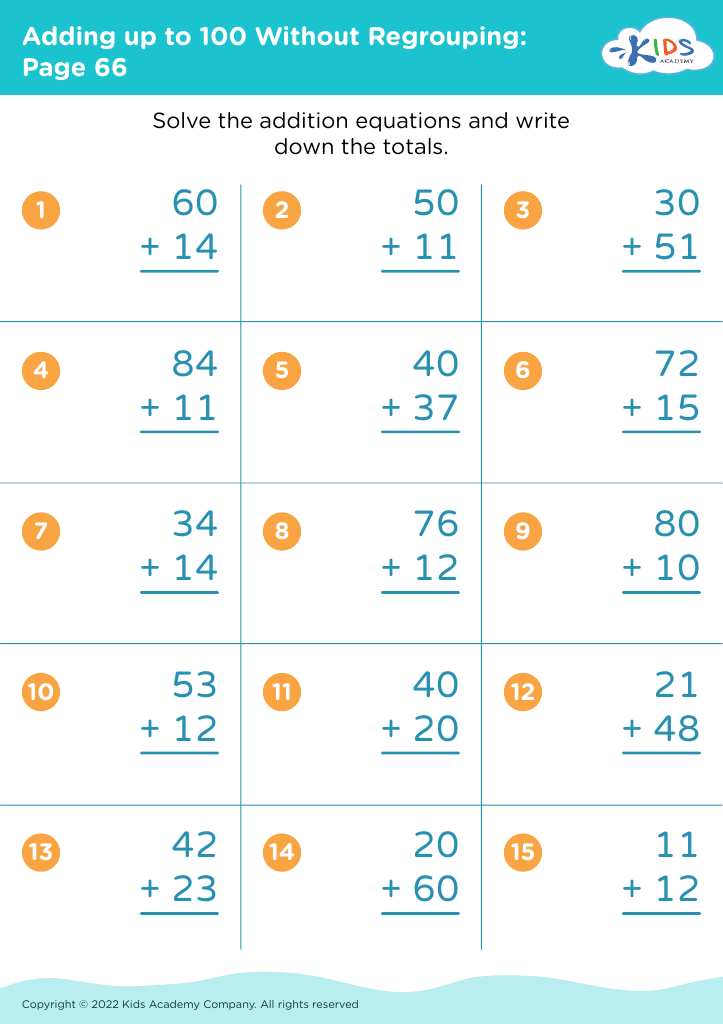
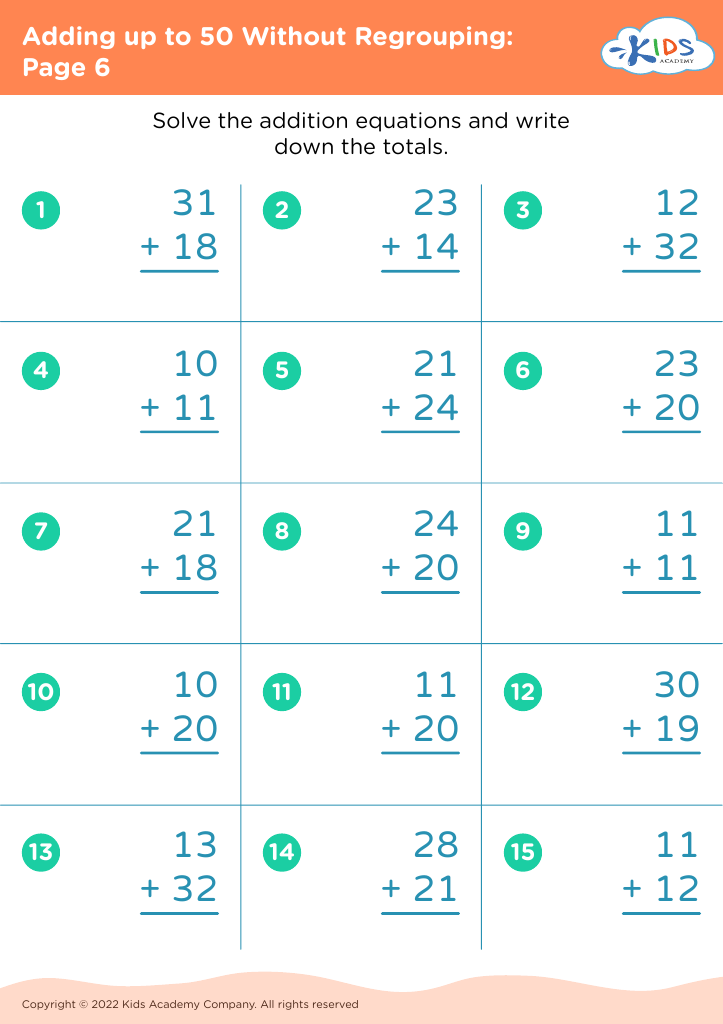
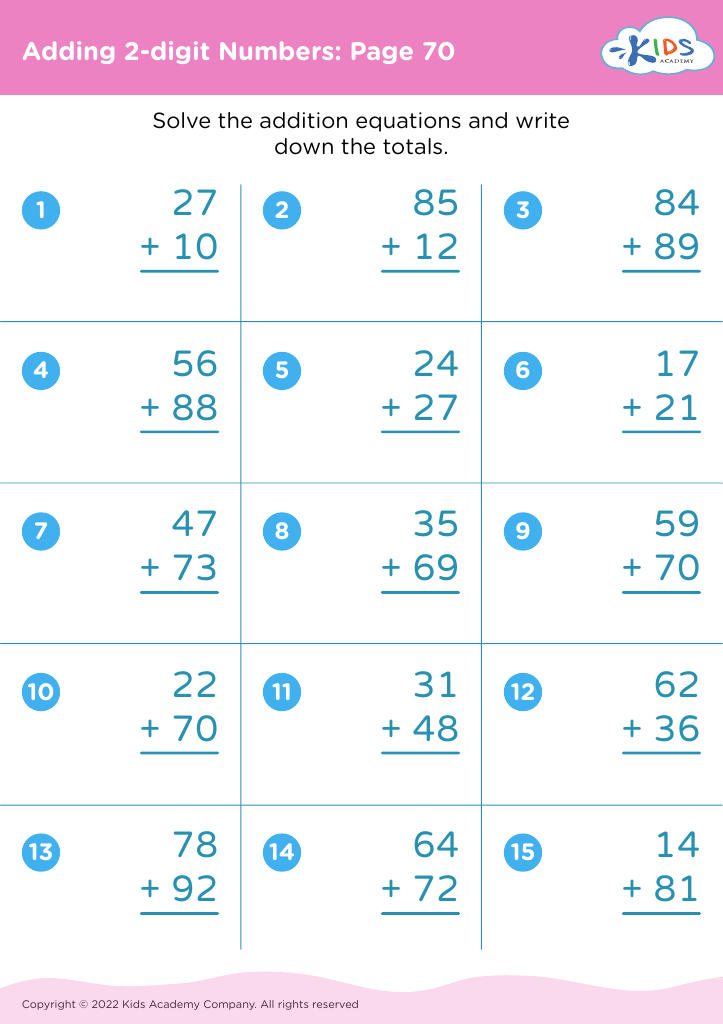
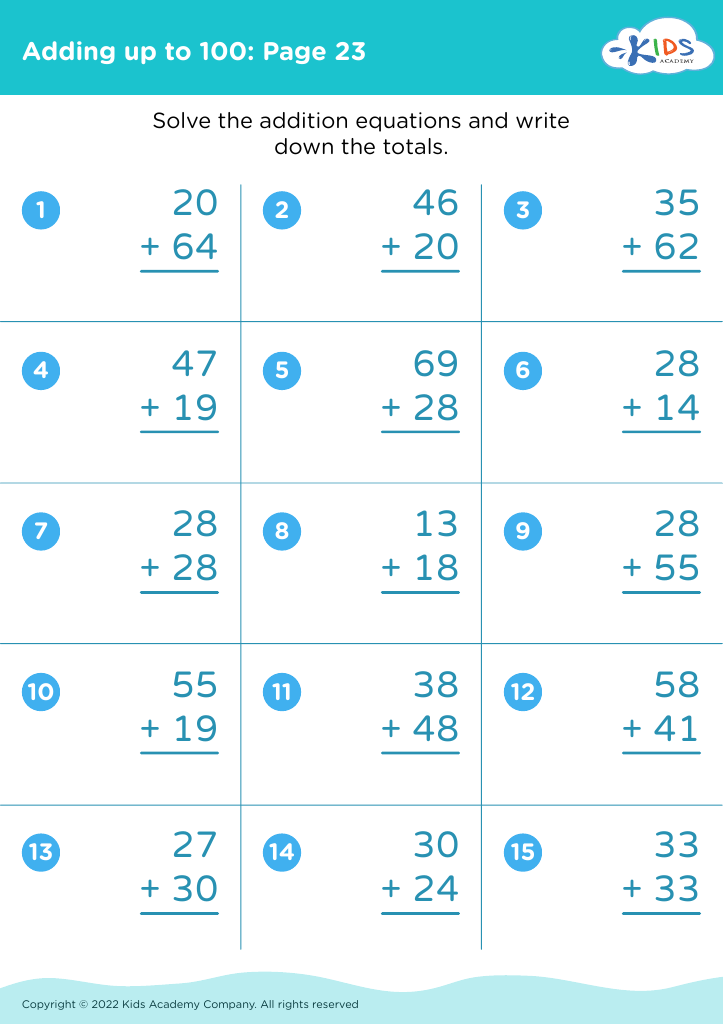
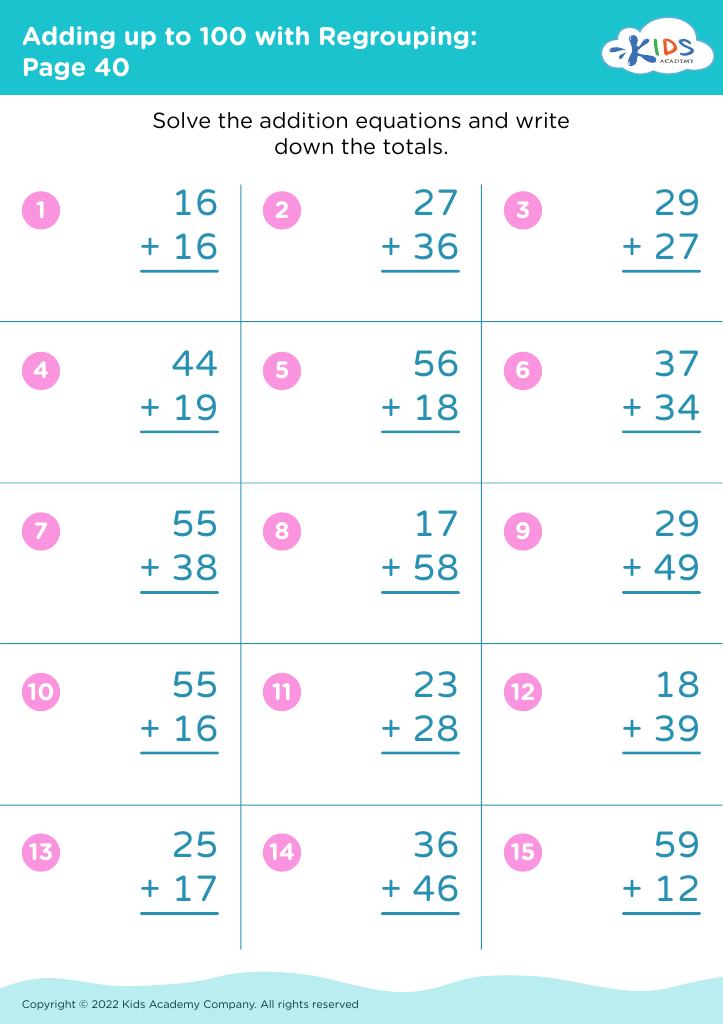
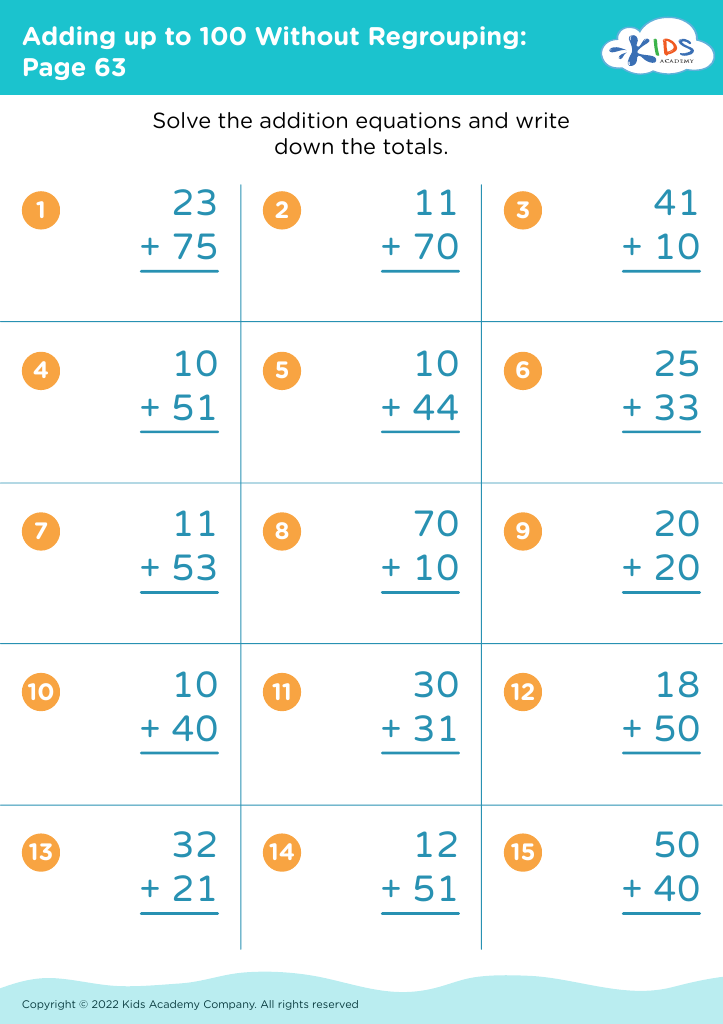
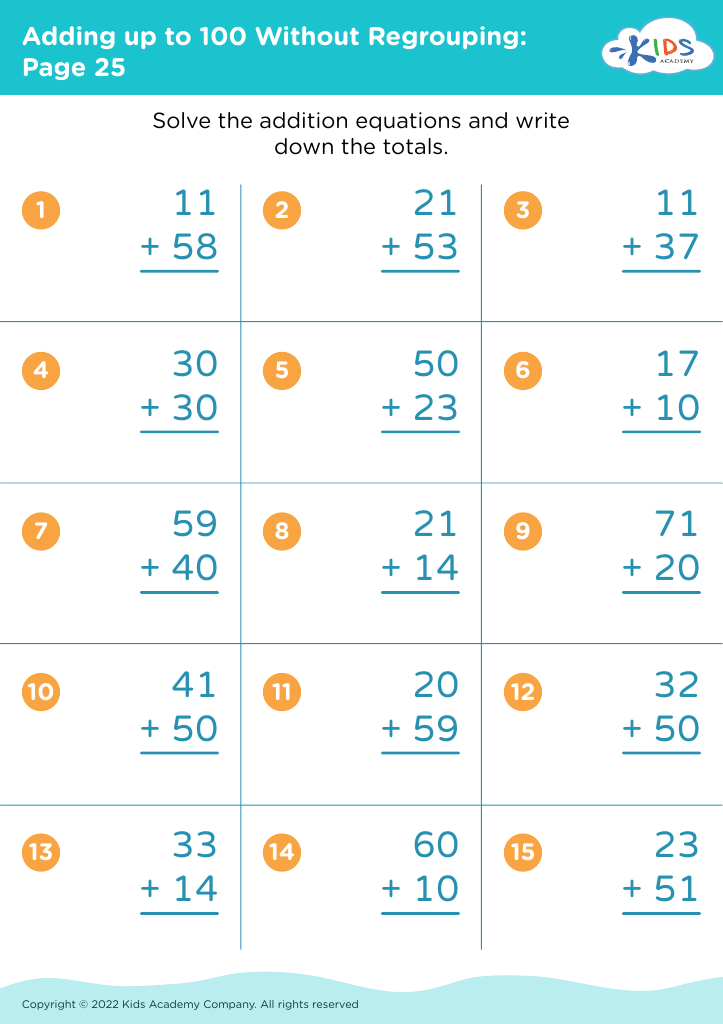
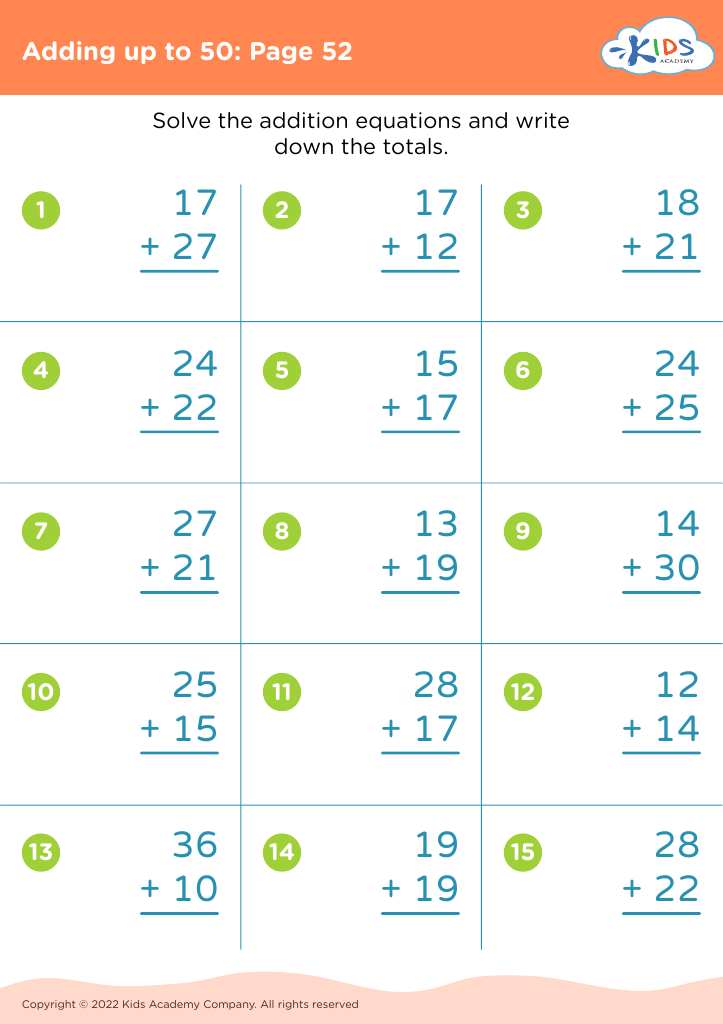
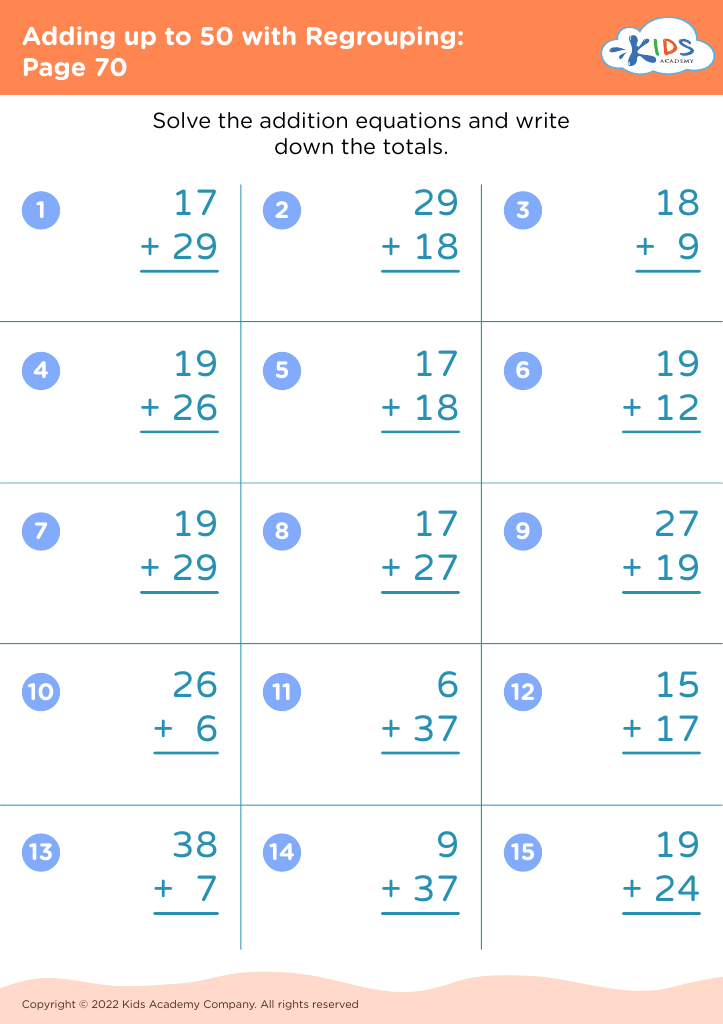
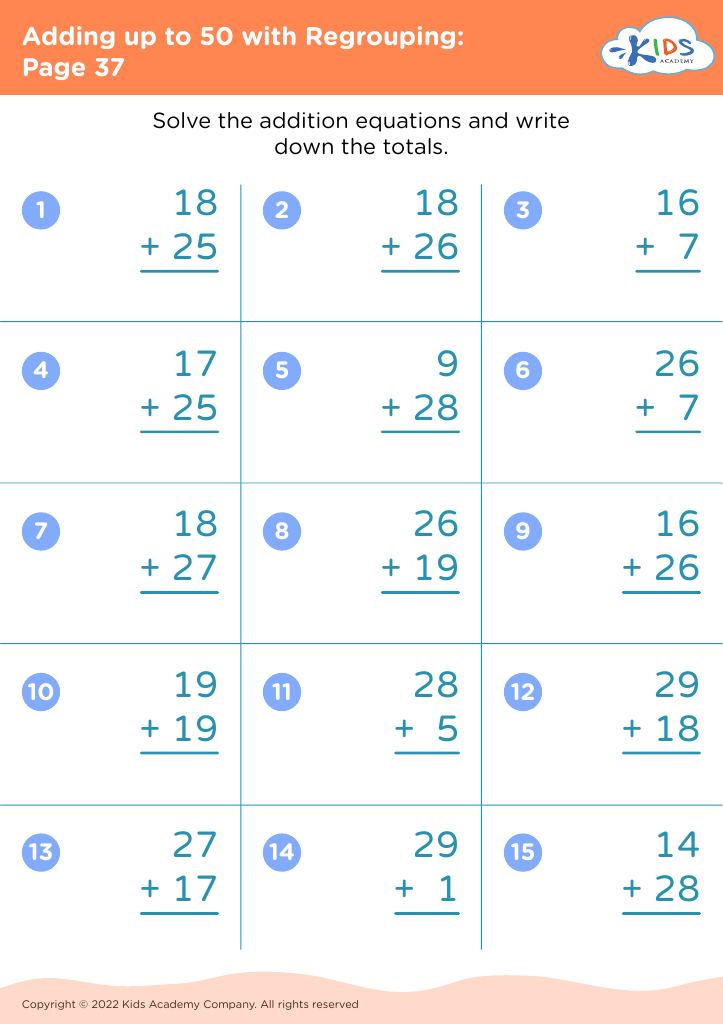
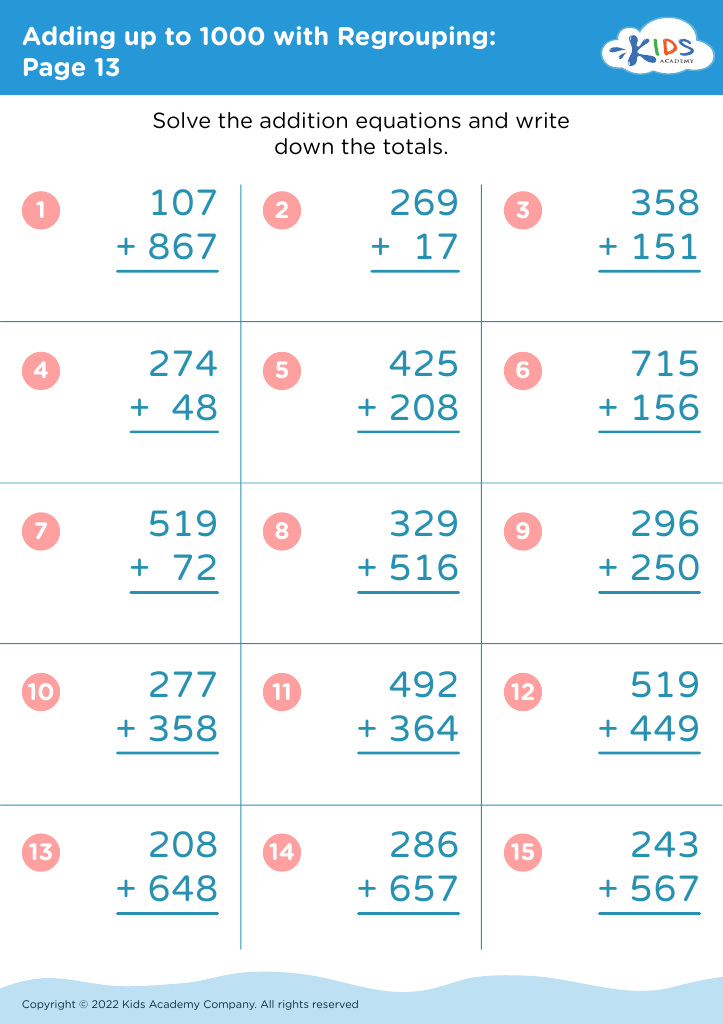
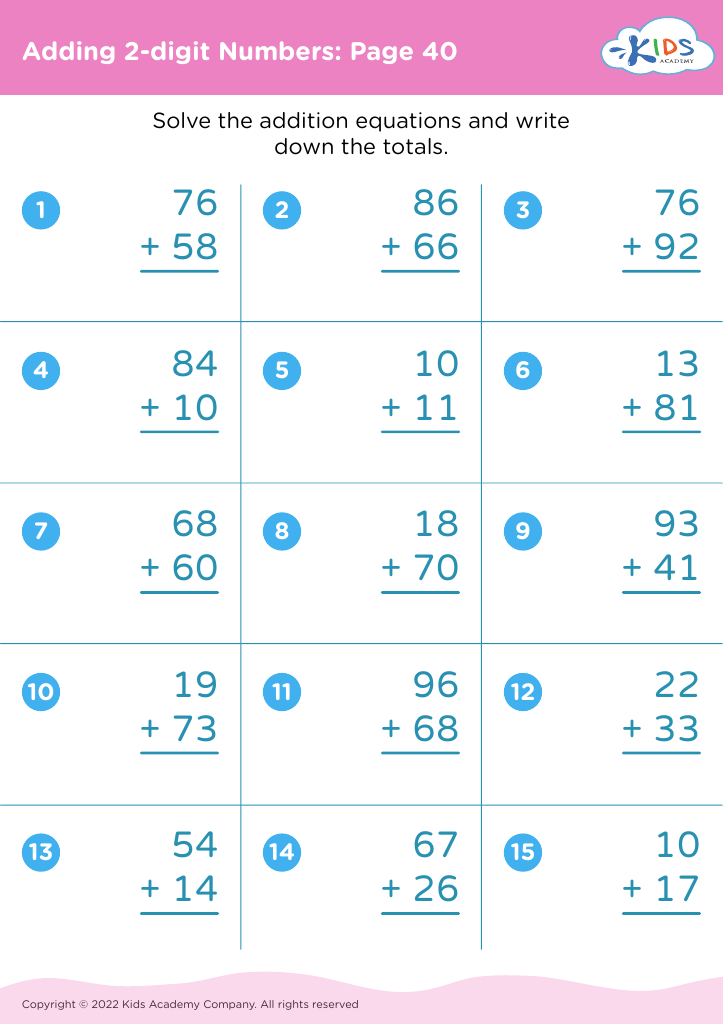
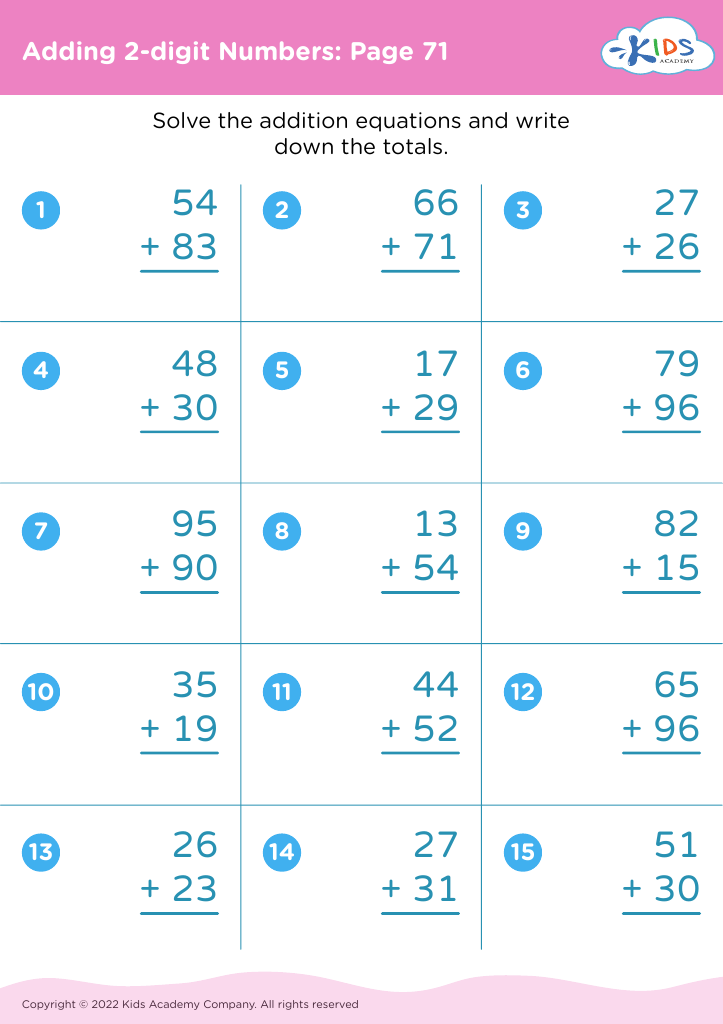
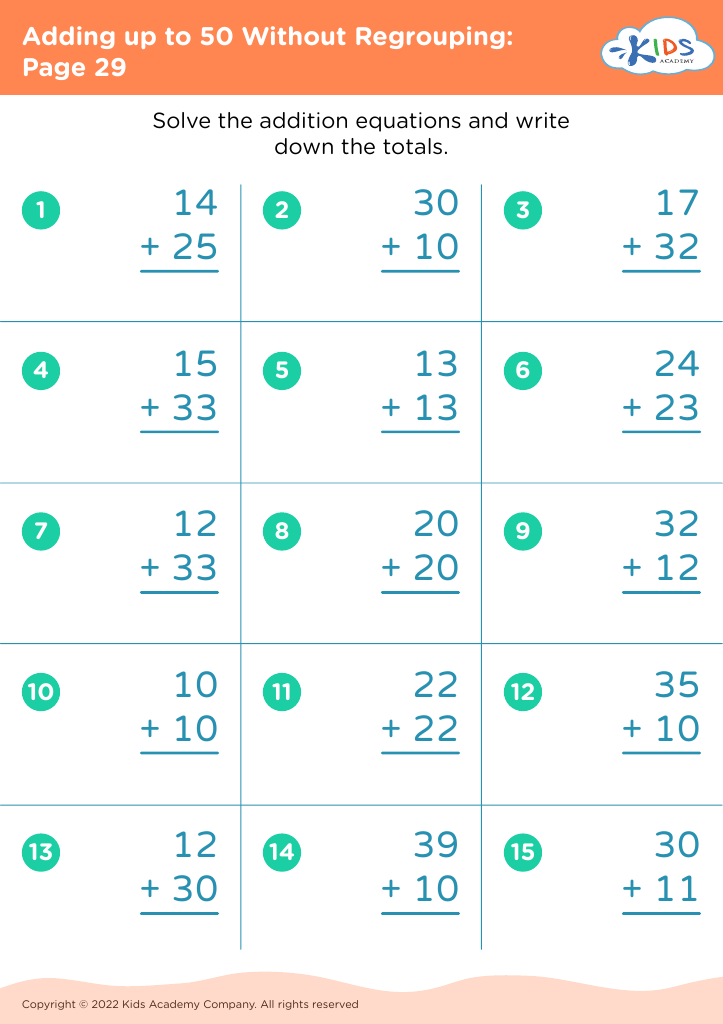
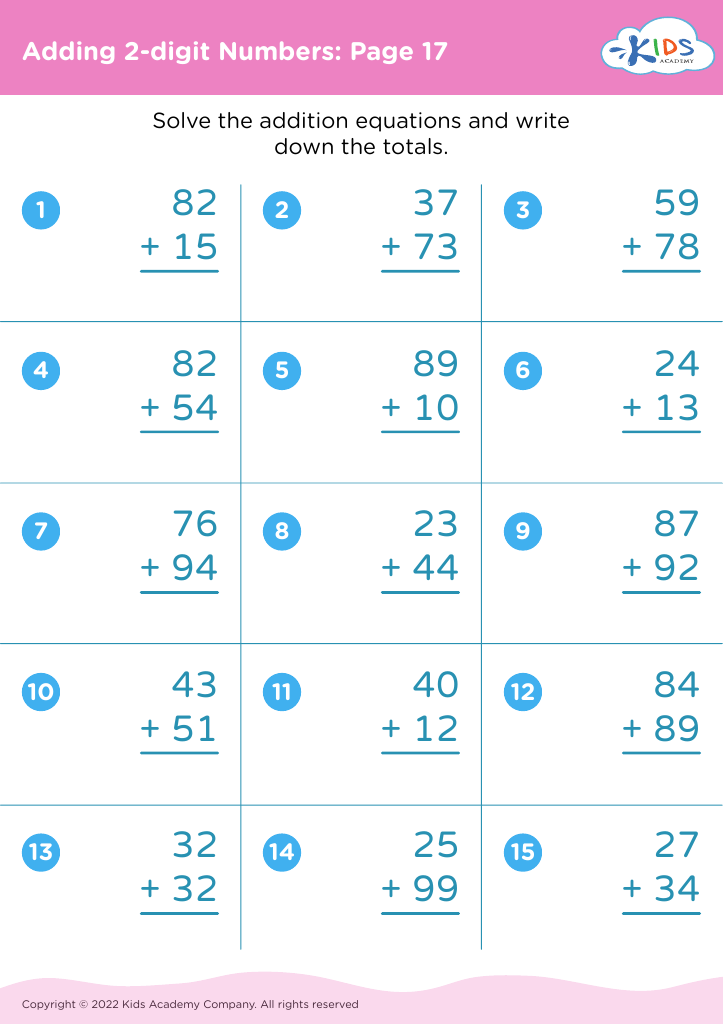
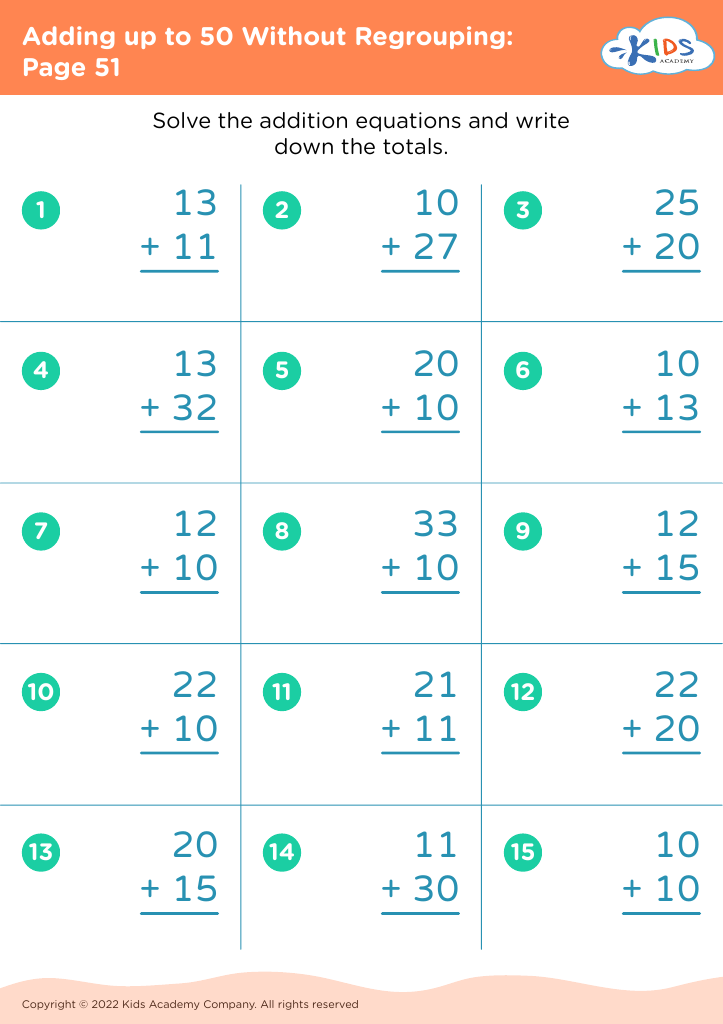
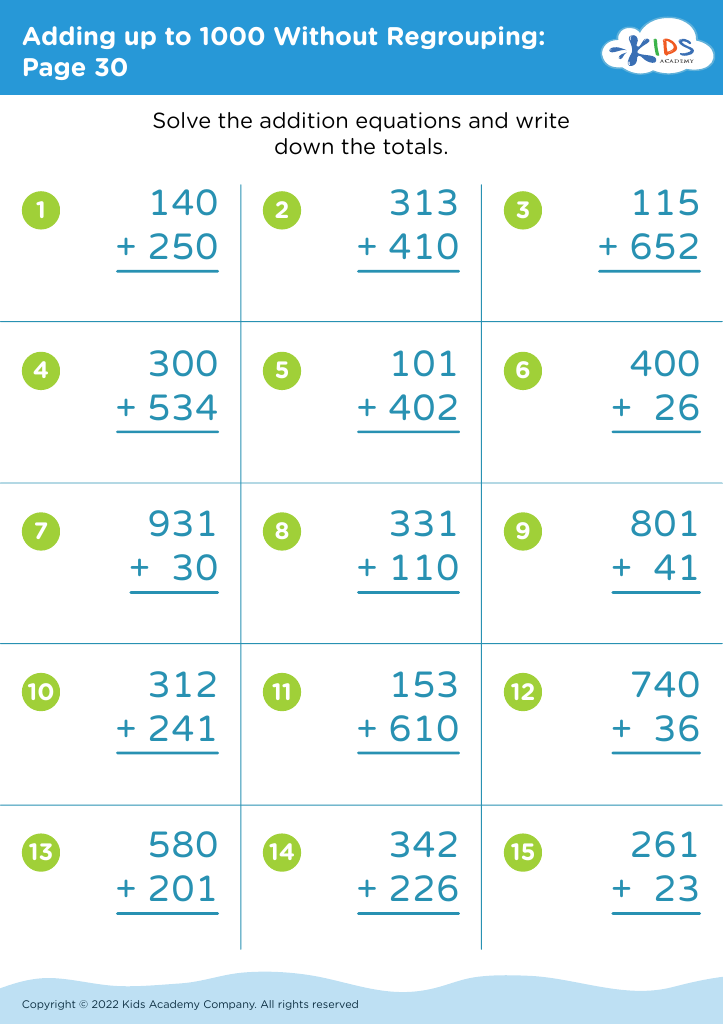
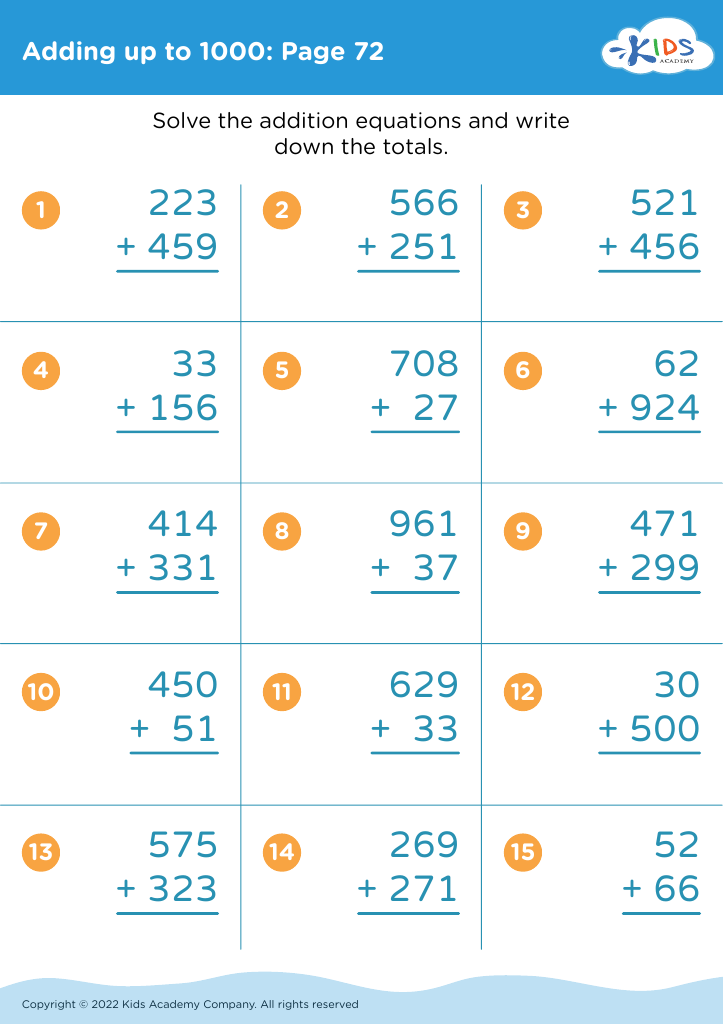
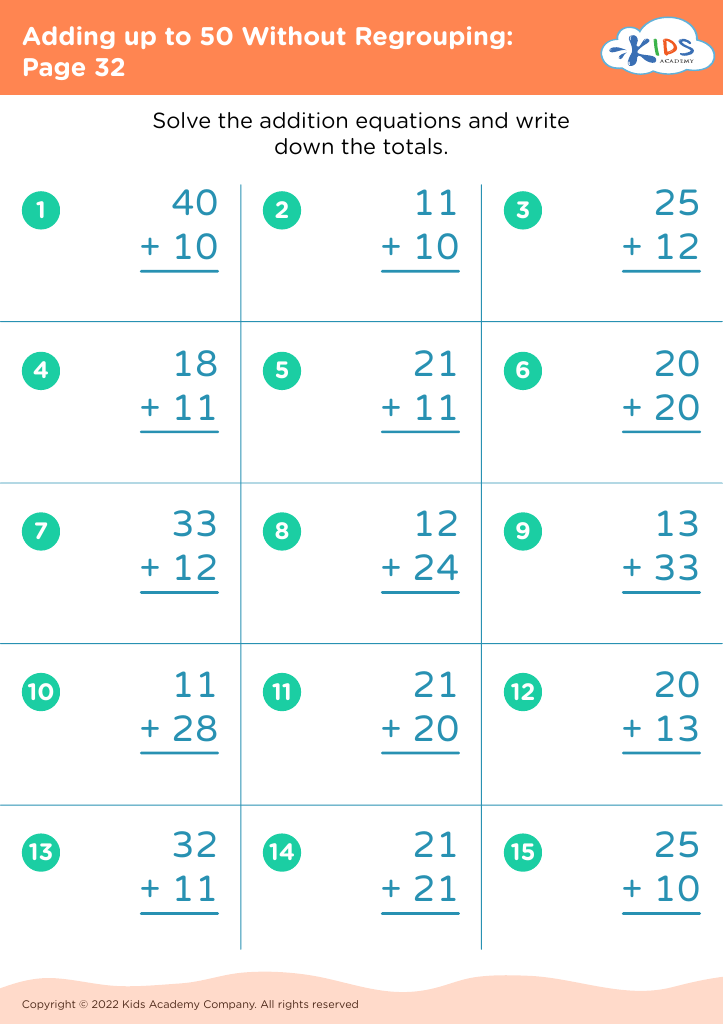
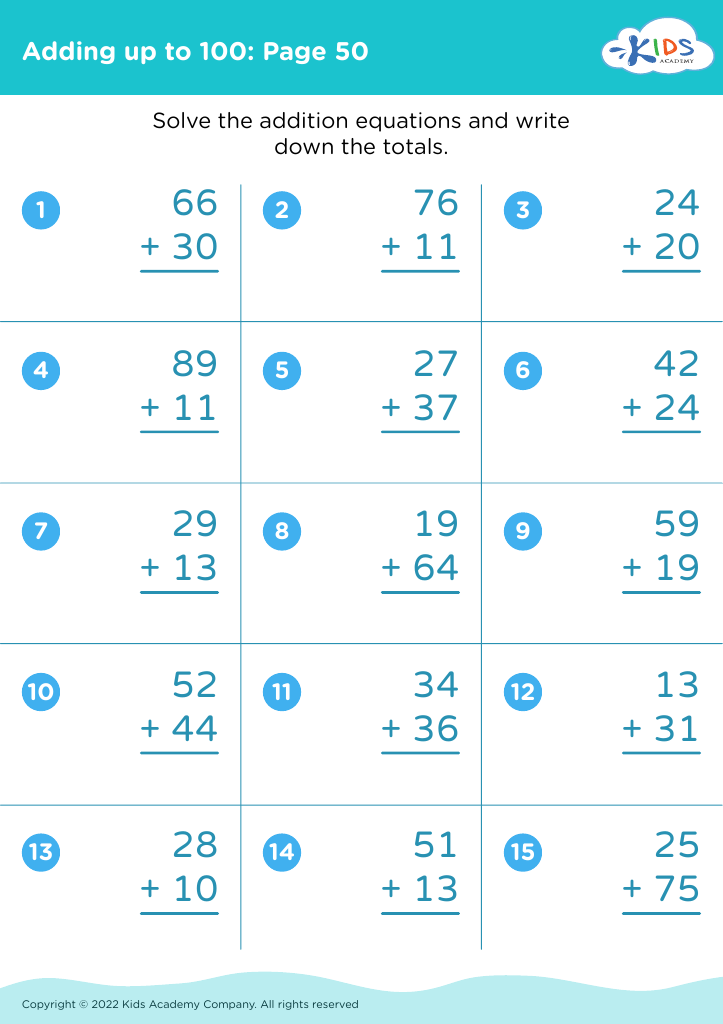
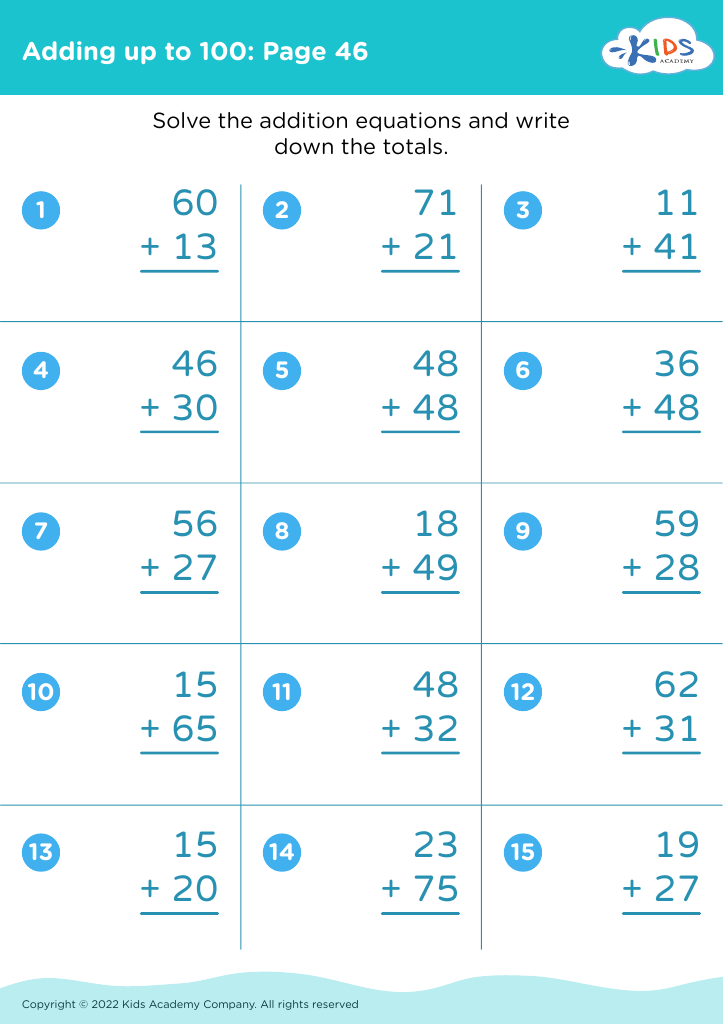








Identifying shapes and addition are foundational skills for young children, ages 4-7, that lay the groundwork for more advanced learning in mathematics and other subjects. Recognizing shapes helps children develop spatial awareness, which is crucial for understanding geometry, a key component of math, and for grasping concepts such as symmetry and dimension. Furthermore, distinguishing shapes enhances cognitive skills like pattern recognition and cognitive flexibility. This skill applies not only in math but also in interpreting graphs, maps, and even in everyday problem-solving.
Addition, on the other hand, is a basic arithmetic skill that introduces children to the world of numbers and mathematical operations. Mastery of addition supports the development of number sense, enabling children to understand quantities, make numerical comparisons, and eventually tackle more complex tasks like subtraction, multiplication, and division. Proficiency in addition is also linked to improved logical reasoning and analytical thinking abilities.
Together, these skills lay a strong educational foundation that primes children for future academic success, boosts their confidence in tackling mathematical tasks, and equips them with critical thinking skills useful for everyday life. Therefore, it’s essential that parents and teachers prioritize and foster an environment that encourages early learning of shapes and addition. Prompt intervention and targeted activities can make learning both engaging and effective.








