Improve calculation skills Addition Worksheets for Ages 4-7
4 filtered results
-
From - To
Boost your child's math abilities with our expertly designed Addition Worksheets for ages 4-7. These engaging and colorful resources make learning addition enjoyable and effective. Crafted by education specialists, each worksheet focuses on developing fundamental calculation skills in young learners, blending fun with academic growth. The progressive difficulty levels ensure continuous challenge and mastery. Perfect for classroom activities or at-home practice, these addition worksheets help students build confidence and excel in math. Download now to support your child's educational journey and lay a strong mathematical foundation with Kids Academy printables!
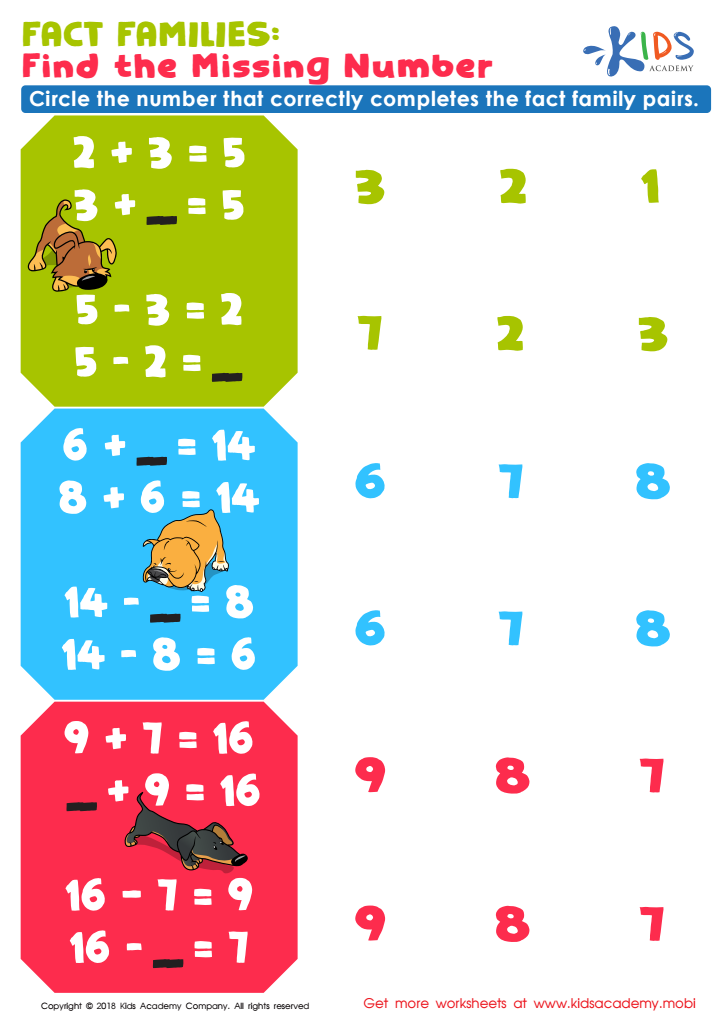
Fact Families: Find Missing Number Worksheet
 Assign to My Students
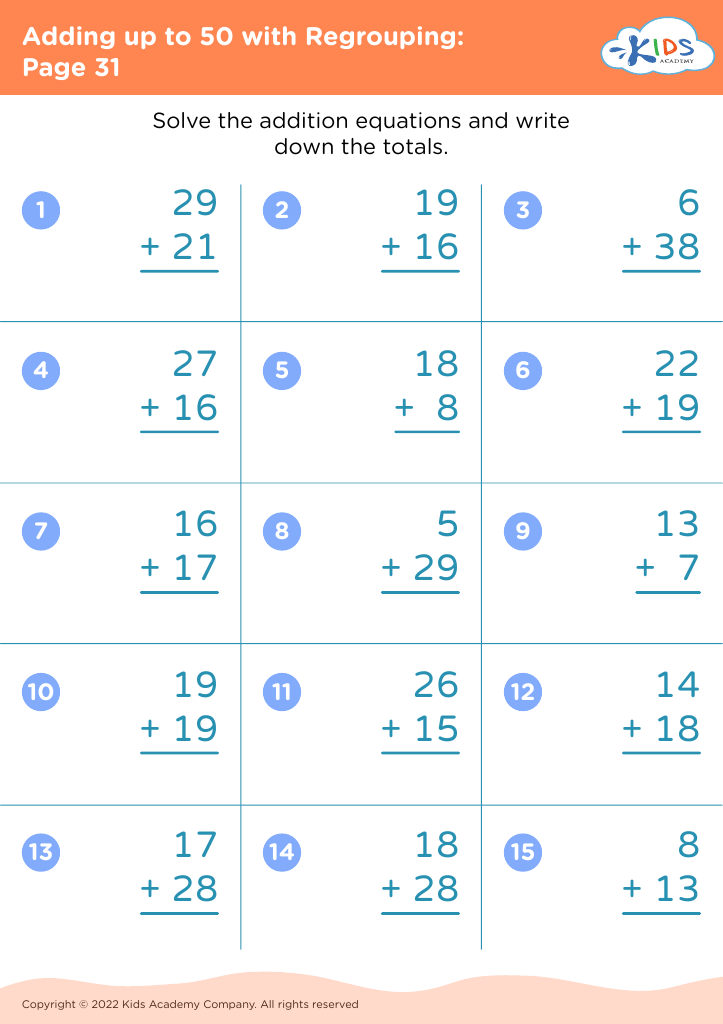
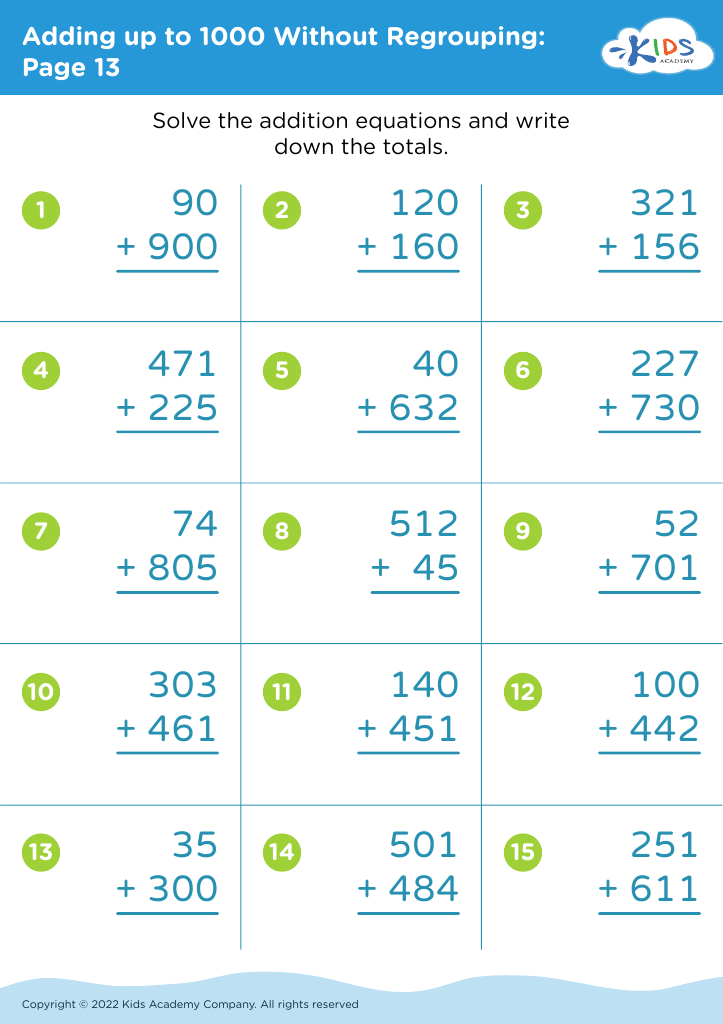
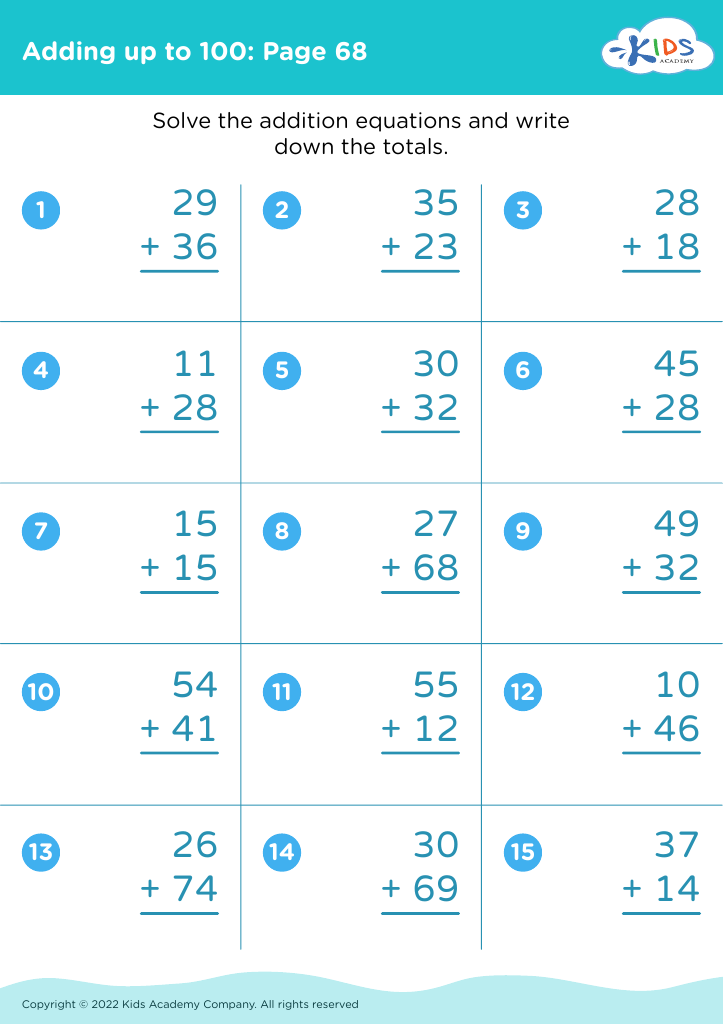








Parents and teachers should prioritize improving addition skills for children ages 4-7 because it establishes a crucial foundation for their future mathematical learning and cognitive development. During this formative period, children's brains are highly adaptable and primed for acquiring fundamental skills. Mastering addition not only strengthens their number sense but also boosts their confidence in handling more complex mathematical concepts later on, such as subtraction, multiplication, and division.
Introducing addition early enhances logical thinking and problem-solving abilities. As children learn to manipulate numbers and recognize patterns, they also develop critical thinking and analytical skills applicable across various subjects. Additionally, early exposure to math fosters a positive attitude towards the subject, counteracting potential math anxiety.
Moreover, developing strong calculation skills early on supports broader academic performance. Math proficiency is often associated with better outcomes in subjects like science and economics, which frequently rely on quantitative understanding.
In a social context, possessing essential math skills can boost a child’s confidence in group settings, facilitate interactions, and enable them to handle everyday tasks such as sharing and measuring. By engaging young children in fun and interactive addition activities, parents and teachers sow the seeds for lifelong numeracy and help mold independent, capable learners.








