Improving reading skills Addition Worksheets for Ages 4-7
4 filtered results
-
From - To
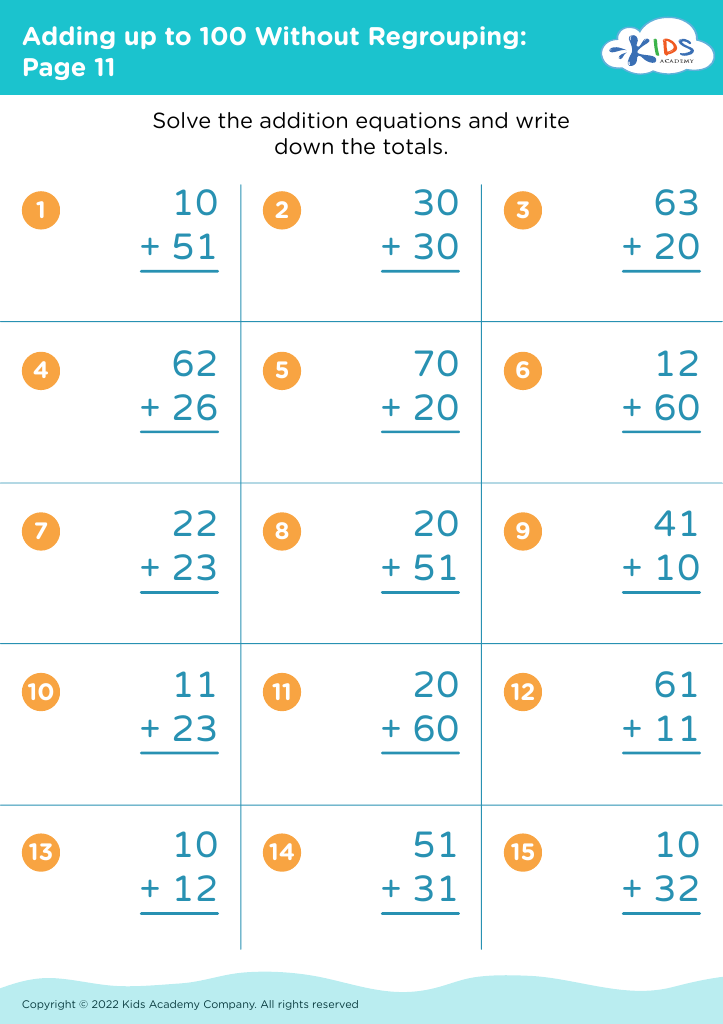
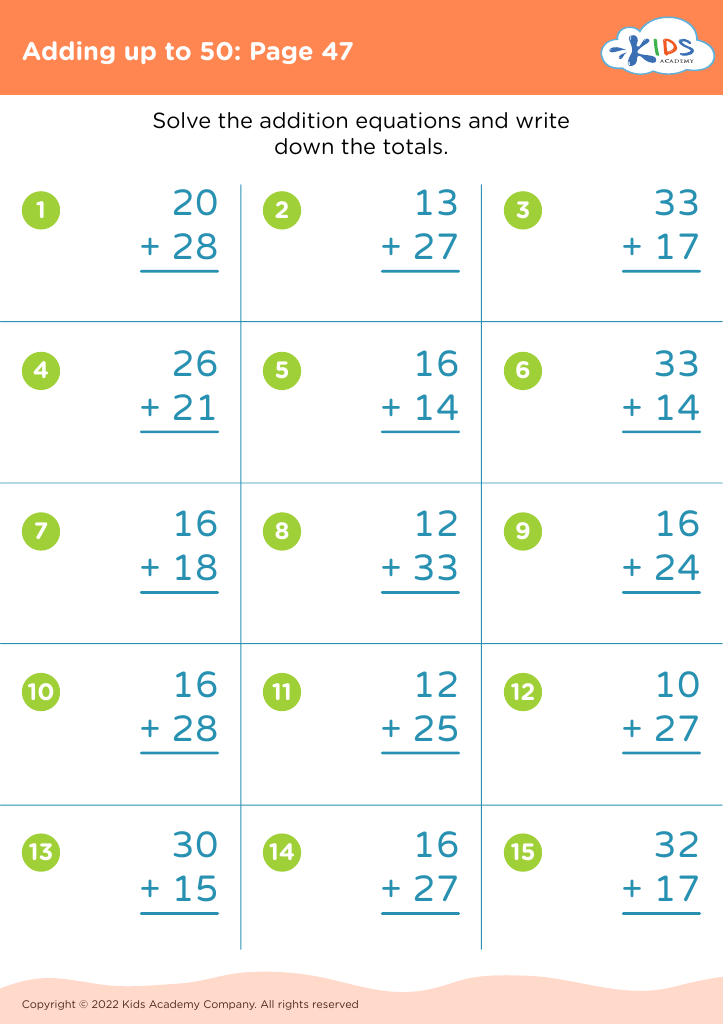
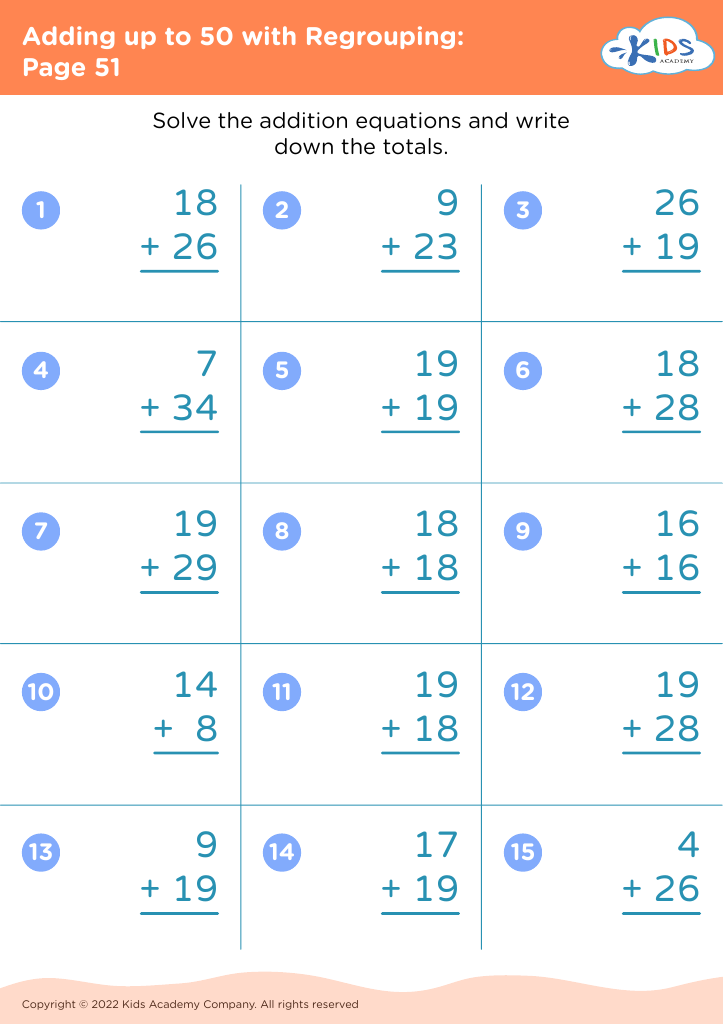
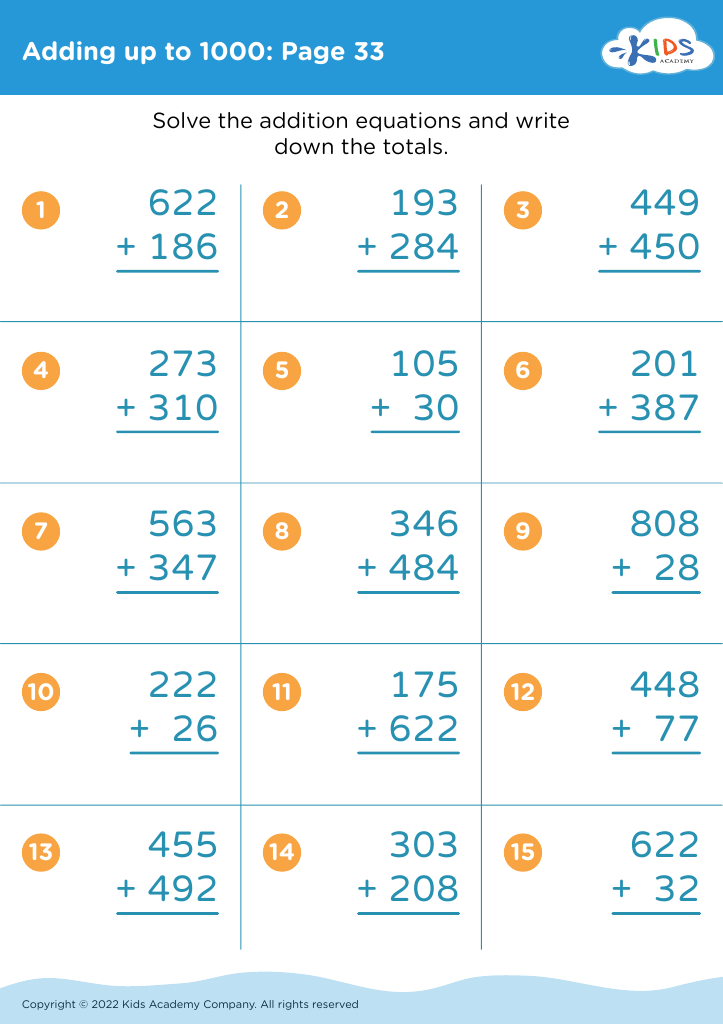
Enhance your child's reading skills with our engaging addition worksheets designed for ages 4-7! Our printable resources seamlessly blend math and reading exercises, helping young learners improve their comprehension while mastering addition. Each worksheet features colorful illustrations and age-appropriate content to keep kids motivated and excited about learning. Encourage critical thinking and problem-solving as children practice decoding numbers and words simultaneously. Ideal for both home and classroom use, these worksheets provide a fun and interactive approach to literacy and numeracy. Give your child the tools they need to succeed with our Improving Reading Skills Addition Worksheets today!


.jpg)





Improving reading skills in children aged 4-7 is crucial for their overall development and future learning success. This early stage is often referred to as a critical period for language acquisition, where foundational literacy skills are established. Strong reading skills not only enhance comprehension but also foster a love for books and learning, leading to greater academic success later on.
For parents and teachers, investing time and resources in boosting reading abilities can result in numerous benefits. Children who read proficiently at a young age are more likely to perform well in all subjects, as reading is integral to understanding curricula across disciplines. Furthermore, developing reading skills can build self-esteem and confidence. Children who struggle with reading may experience frustration that could lead to disengagement from school and learning activities.
Additionally, reading improves cognitive skills, including critical thinking and vocabulary development, equipping children with necessary tools for effective communication. By cultivating strong reading habits and skills early on, parents and teachers can create a solid foundation for lifelong learning, emotional wellbeing, and academic achievement, making their involvement essential in every child's educational journey.








