Introduction to mathematics Addition Worksheets for Ages 4-7
3 filtered results
-
From - To
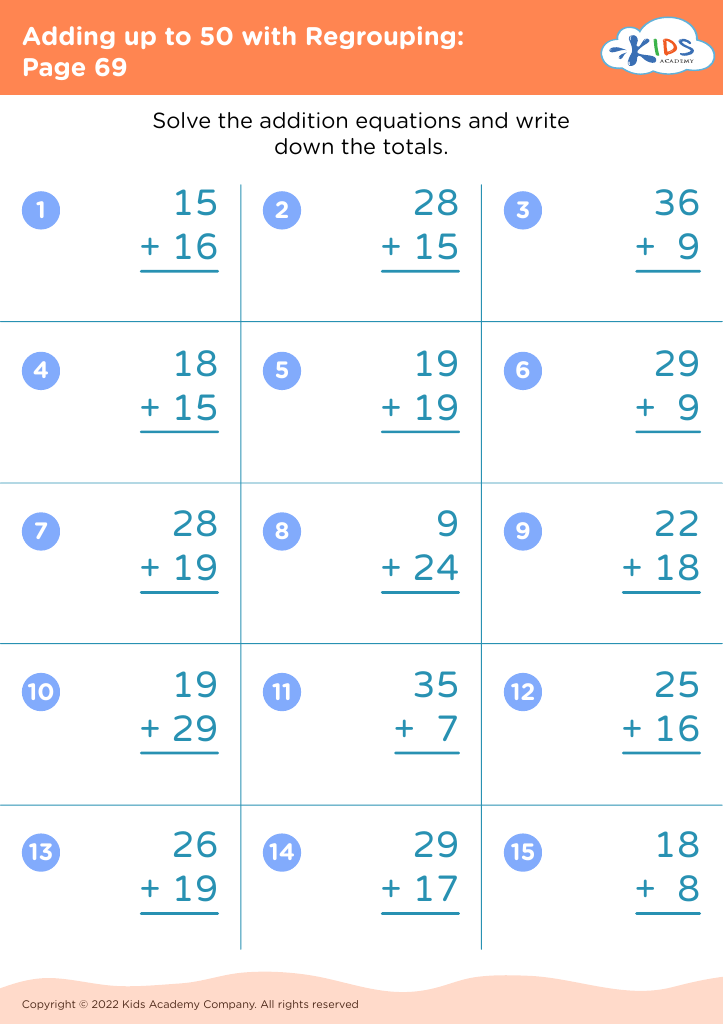
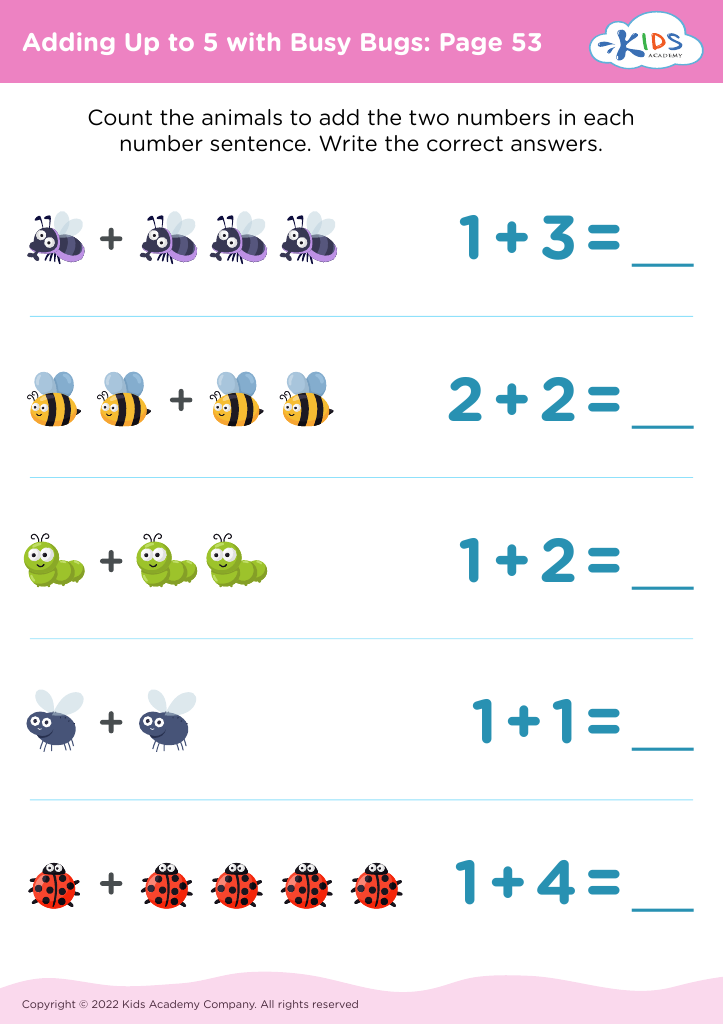
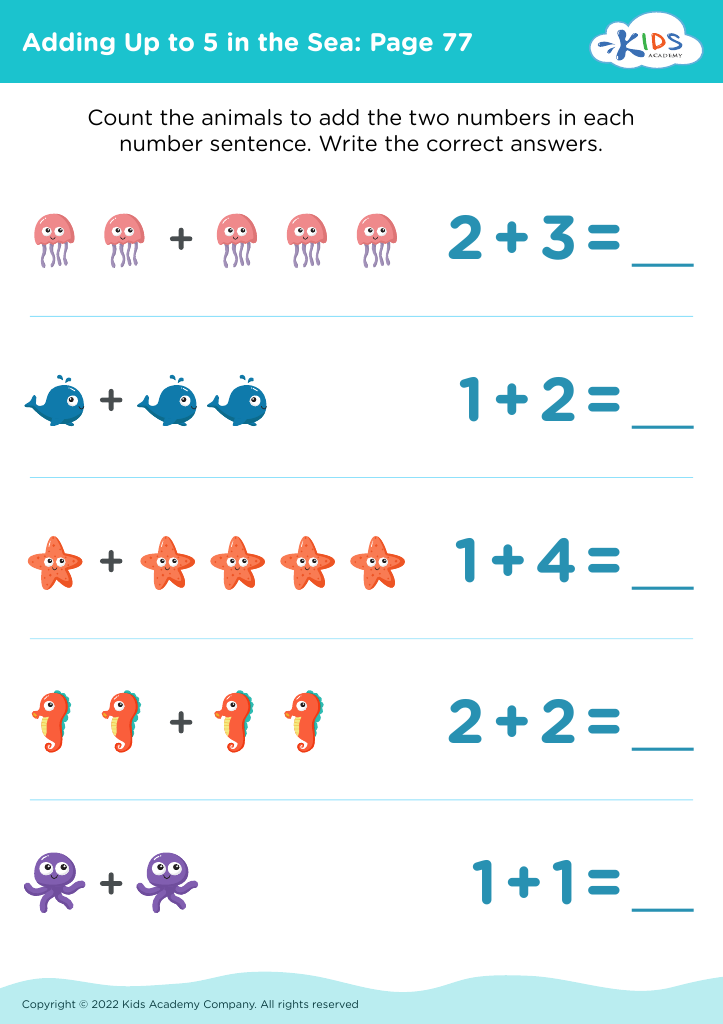
Discover exciting "Introduction to Mathematics Addition Worksheets" designed for children ages 4-7! These engaging worksheets provide a fun and interactive way for young learners to master basic addition skills. With colorful visuals and age-appropriate exercises, kids will enjoy learning to count and add with confidence. Our carefully curated resources help reinforce essential math concepts, making practice both enjoyable and effective. Perfect for homeschooling, classroom activities, or supplementary learning, these worksheets aim to build a strong foundation in mathematics. Start your child’s journey into the world of numbers today and watch their skills blossom with our easy-to-follow addition worksheets!








Introduction to mathematics, particularly addition, is a critical building block in early childhood education for children ages 4-7. During these formative years, children's cognitive abilities rapidly develop, and foundational math skills are crucial for their overall academic success. Parents and teachers should care about introducing addition because it fosters logical thinking, problem-solving, and critical reasoning skills. Mastering addition not only enhances numerical fluency but also builds confidence as children begin to engage with more complex mathematical concepts in later grades.
Moreover, understanding addition promotes a positive attitude toward math. Early exposure to enjoyable and engaging math activities helps to counteract common anxieties associated with math later in life. Through interactive games, rhythm, stories, and visual aids, parents and teachers can create a rich learning environment that resonates with young children.
Additionally, early math skills contribute to improved performance in school subjects beyond math, impacting literacy and science as well. By laying a solid foundation in addition, parents and teachers equip children with essential tools for life, encouraging them to think critically and approach challenges with a proactive mindset. Investing in early mathematics education ultimately cultivates curious, inspired learners eager to embrace lifelong learning.








