Learn addition Addition Worksheets for Ages 4-7
3 filtered results
-
From - To
Welcome to our "Learn Addition Worksheets" page, specifically designed for children ages 4-7! Our engaging and colorful worksheets cater to early learners, introducing them to the fundamentals of addition. With a variety of activities, including visual aids and interactive exercises, kids will develop their number recognition and problem-solving skills in a fun way. These worksheets not only reinforce basic addition concepts but also promote critical thinking and confidence in math. Perfect for home or classroom use, our resources will make learning addition enjoyable and effective. Jumpstart your child's math journey today with our comprehensive collection!
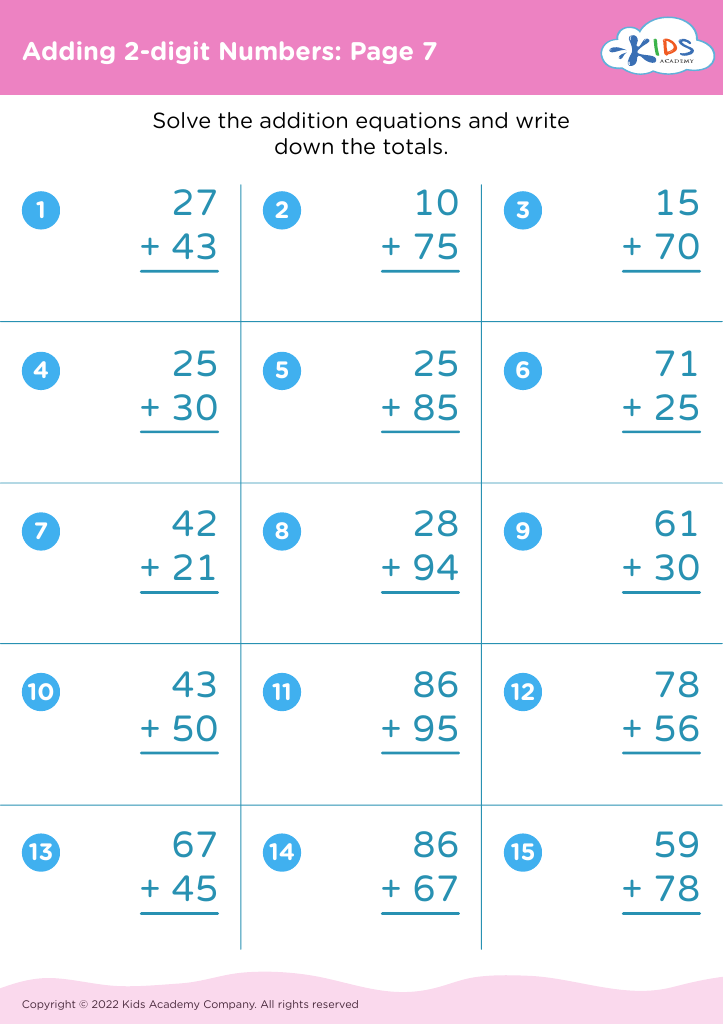
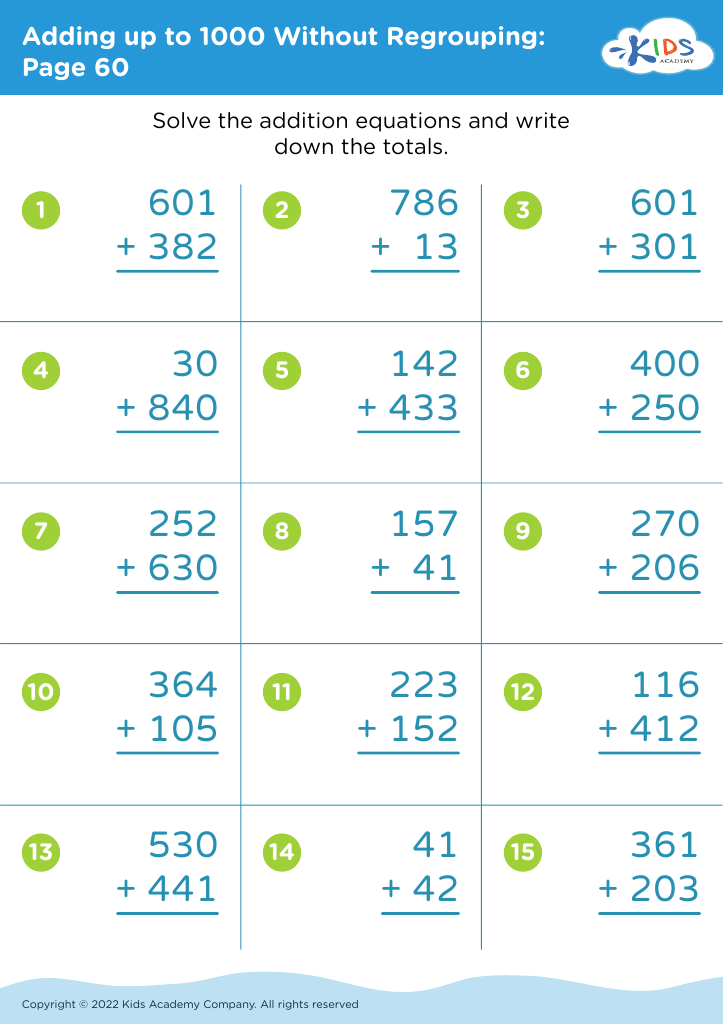
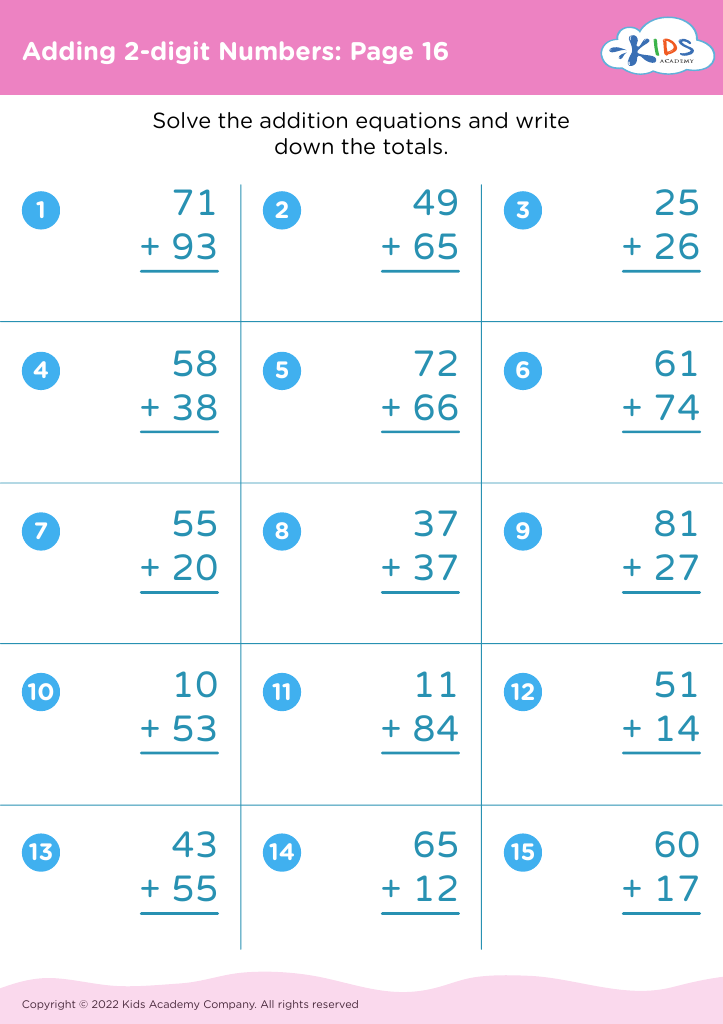








Learning addition is fundamental for children aged 4-7 as it lays the groundwork for their overall mathematical understanding and critical thinking skills. During this developmental stage, children are naturally curious and eager to explore concepts that shape their world. Introduction to addition not only helps them understand basic arithmetic but also nurtures their problem-solving abilities and cognitive development.
For parents and teachers, focusing on addition at this age encourages holistic learning. It promotes essential skills such as counting, number recognition, and the ability to follow sequential reasoning. Mastering addition gives children confidence in their abilities, leading them to embrace more complex mathematical concepts later on.
Moreover, engaging with addition fosters communication and social skills as children often work collaboratively during activities. This interactive learning process nurtures a love for education and makes mathematics more approachable.
In today’s information-driven society, arithmetic skills are crucial for navigating daily tasks, from shopping to budgeting. Therefore, instilling a solid foundation in addition not only ensures academic success but prepares children for lifelong skills necessary for their future personal and professional lives. Thus, prioritizing addition during these formative years is vital for setting children up for success.








