Learn subtraction Addition Worksheets for Ages 4-7
4 filtered results
-
From - To
Discover engaging and educational subtraction addition worksheets designed specifically for children aged 4-7! Our carefully crafted materials develop foundational math skills through fun and interactive activities. Encourage your child's learning with vibrant illustrations and age-appropriate exercises that simplify the concepts of addition and subtraction. Perfect for both home and classroom use, these worksheets help strengthen problem-solving abilities while making math enjoyable. Parents and teachers will appreciate the easy-to-follow instructions and the opportunity to track progress. Empower young learners to master essential math skills early on with our comprehensive, printable worksheets that make learning subtraction a breeze!
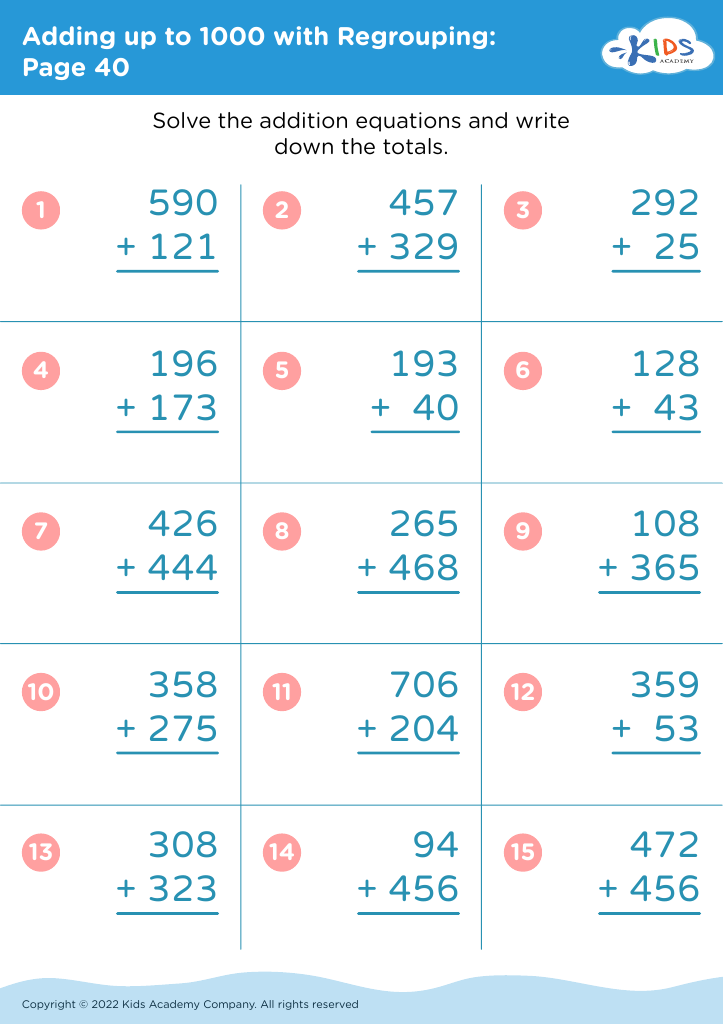
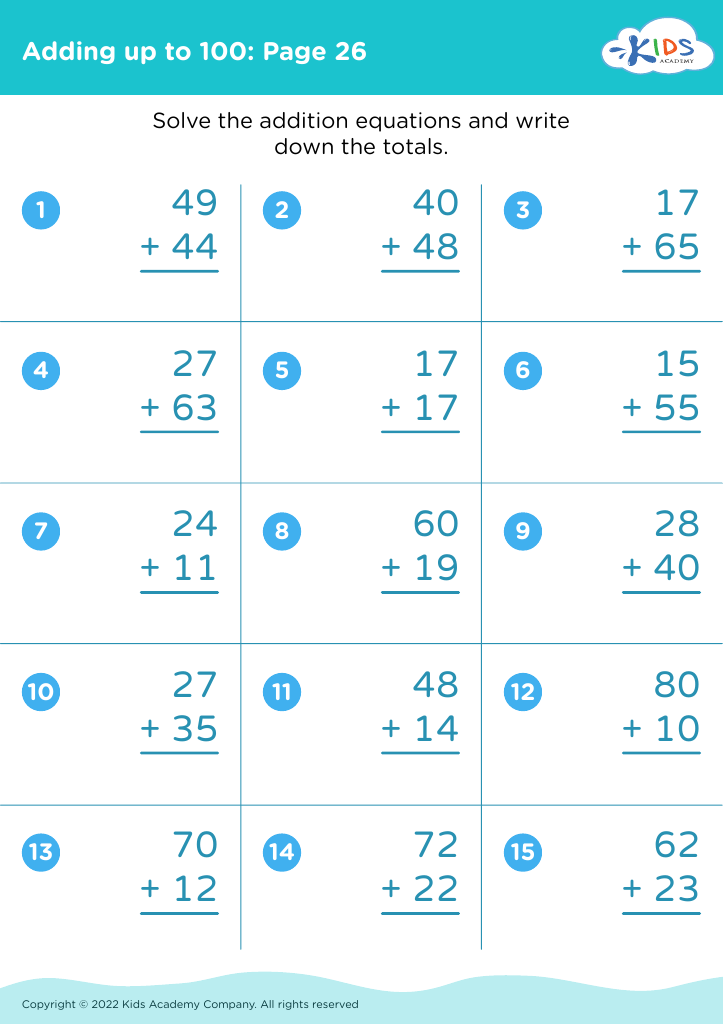
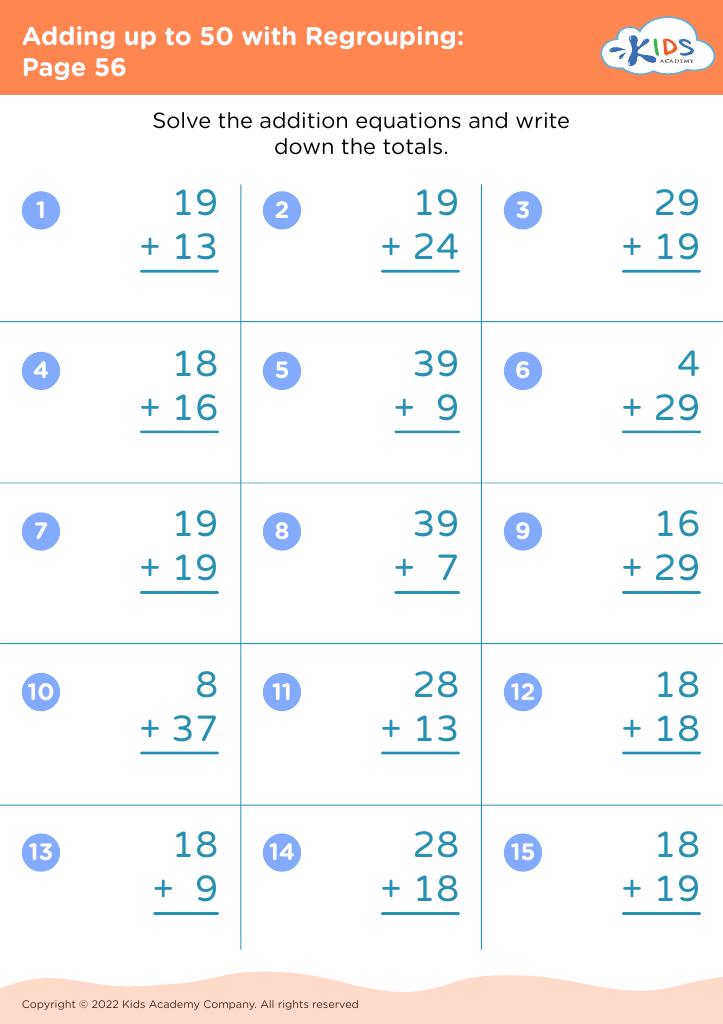
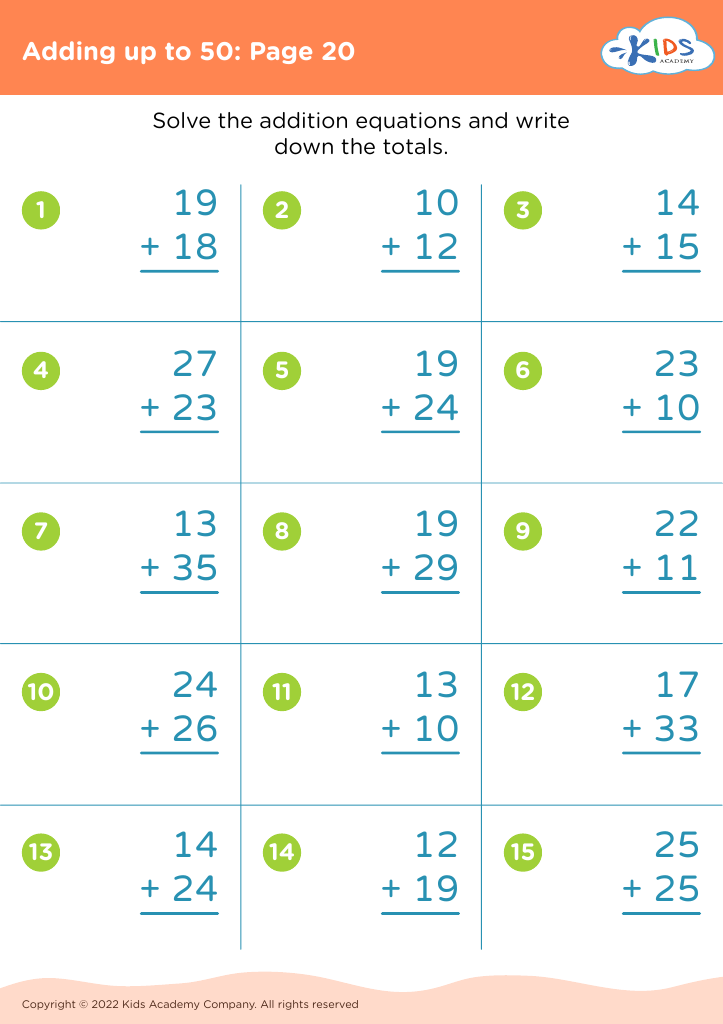








Parents and teachers should care about teaching subtraction and addition to children aged 4 to 7 because these foundational math skills are essential for overall cognitive development and everyday functioning. Mastering addition and subtraction not only helps young learners grasp basic numerical concepts but also fosters critical thinking and problem-solving abilities.
At this age, children are naturally curious and eager to learn. Engaging them with interactive and hands-on activities related to these operations can strengthen their number sense, promote social interactions through games, and cultivate a love for math. Additionally, early proficiency in these skills is linked to better academic performance in higher grades, setting the stage for continued success in mathematics and related subjects.
Moreover, understanding addition and subtraction supports children's practical life skills, such as counting items, managing money, and telling time. It builds their confidence in mathematics, making them more willing to tackle advanced concepts in the future. To ensure they are prepared not just academically but also in life, it's crucial for parents and teachers to prioritize and actively participate in their learning of these important arithmetic skills.








