Math skills improvement Addition Worksheets for Ages 4-7
4 filtered results
-
From - To
Boost your child's math skills with our engaging Addition Worksheets designed specifically for ages 4-7. These fun, interactive worksheets provide a perfect blend of learning and play, making math enjoyable for young learners. Tailored to reinforce basic addition concepts, each worksheet encourages practice through colorful illustrations and relatable examples. Suitable for homeschoolers and classroom settings alike, our resources help children develop confidence in their math abilities while improving their problem-solving skills. With an array of exercises ranging from simple equations to fun activities, our Addition Worksheets are an essential tool for parents and educators seeking to foster a love for learning in early childhood!
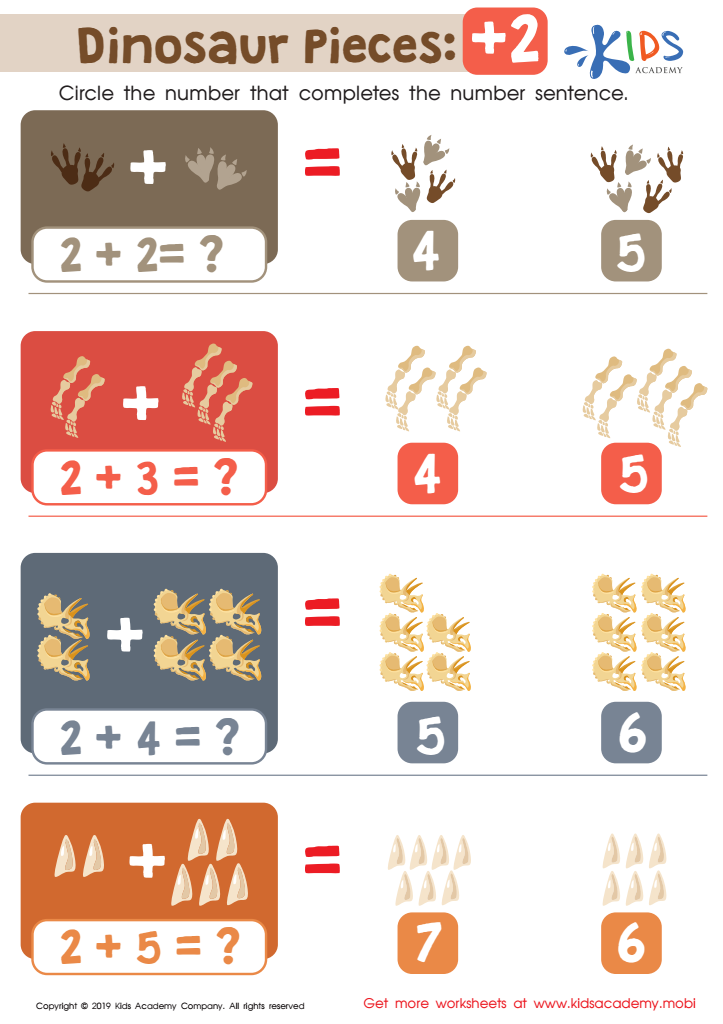
Dinosaur Pieces: +2 Worksheet
 Assign to My Students
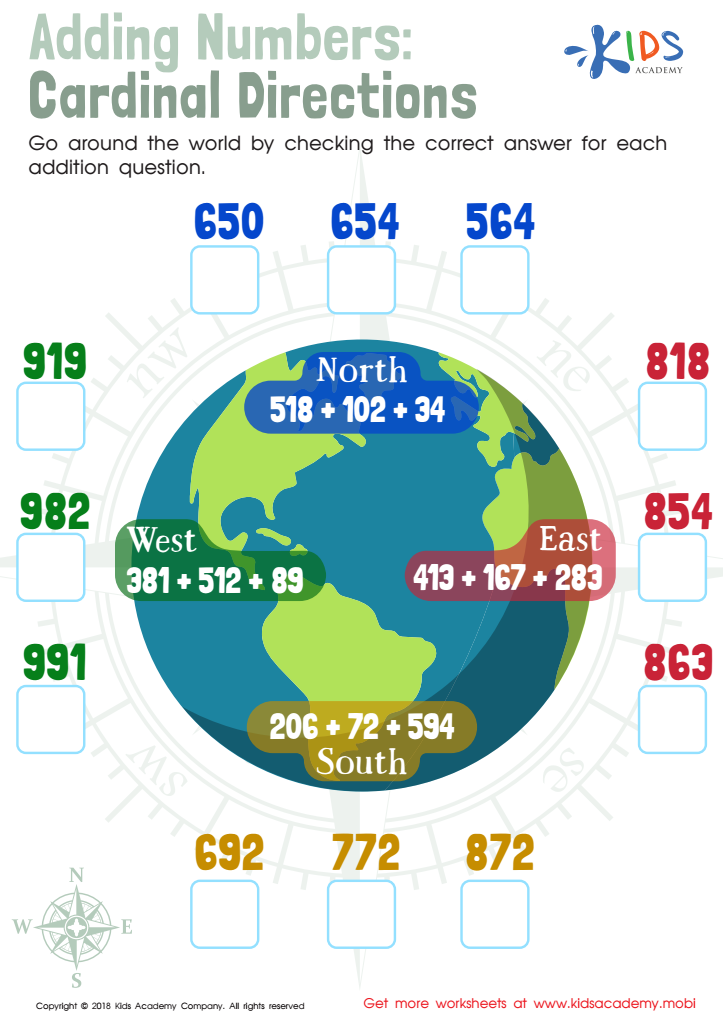
Adding Numbers: Cardinal Directions Worksheet








Parents and teachers should prioritize the improvement of addition skills in children aged 4-7 because early math proficiency lays a foundation for future academic success. During these formative years, children develop critical thinking and problem-solving abilities that extend beyond mathematics. Mastering basic addition helps young learners build confidence in their math skills and nurtures a positive attitude toward learning.
Additionally, addition is one of the fundamental building blocks of mathematics, influencing how children approach more complex concepts later on, such as subtraction, multiplication, and division. Early exposure to addition can also enhance cognitive skills, such as memory, attention, and logical reasoning.
Moreover, strong math skills are essential not only for academic achievement but also for everyday life. Helping children grasp addition encourages practical applications, such as counting objects, handling money, and understanding time, which are vital for their independence and everyday interactions.
Finally, involving parents and teachers in improving these skills reinforces the importance of collaboration in education and helps create a supportive learning environment. Focusing on addition during these critical years cultivates a strong mathematical foundation, fosters lifelong learning, and prepares children for a successful future in an increasingly STEM-focused world.








