
Numerical problem solving Addition Worksheets for Ages 4-7
3 filtered results
Difficulty Level
Grade
Age
-
From - To
Subject
Activity
Standards
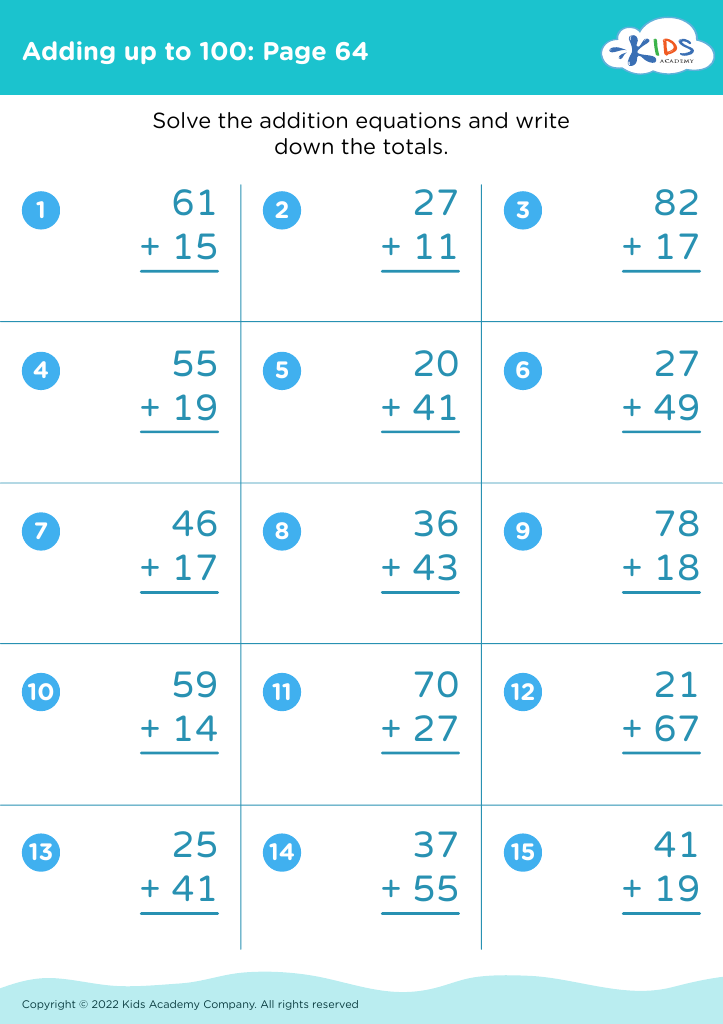
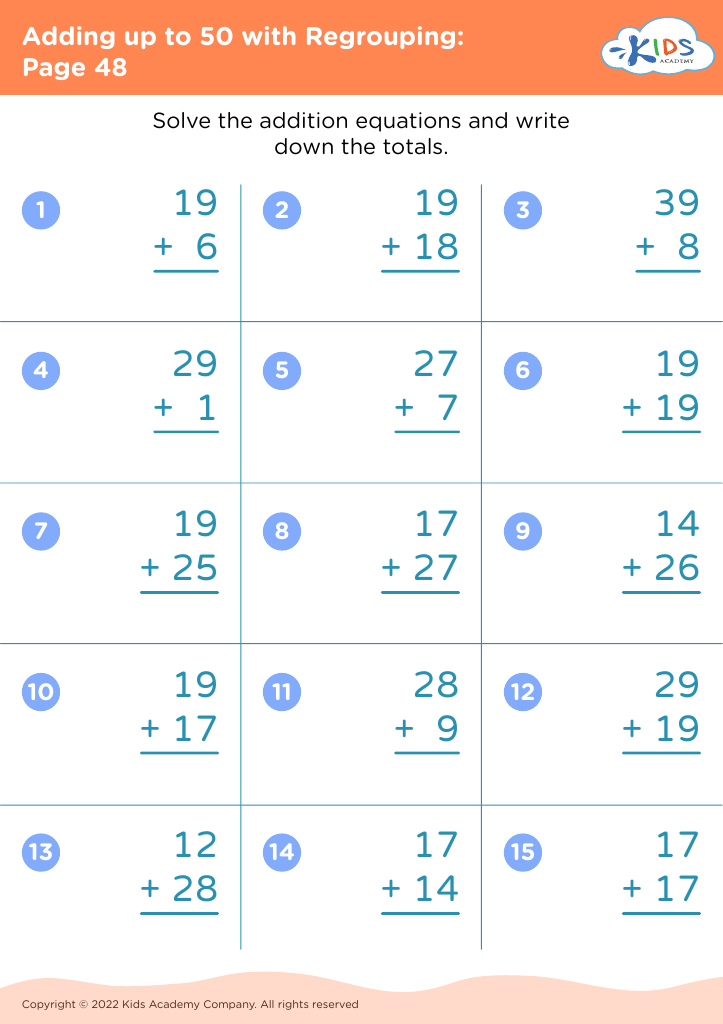
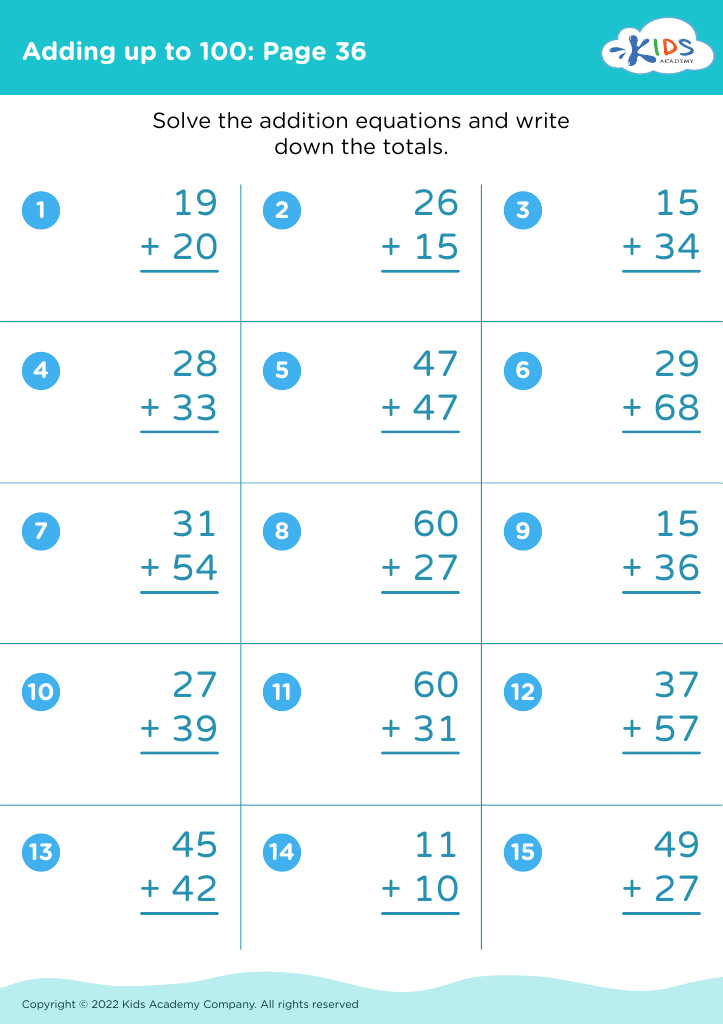
Discover the joy of learning with our Numerical Problem Solving Addition Worksheets for Ages 4-7. Perfectly tailored for young minds, these engaging activities are designed to build essential addition and problem-solving skills. Each worksheet is crafted to foster confidence and develop a strong mathematical foundation through fun exercises. Ideal for use at home or in the classroom, our worksheets combine playful designs with educational tasks, making math enjoyable and accessible. Download and print our worksheets today to give your child a head start in their mathematical journey while ensuring they have fun every step of the way!
Favorites
With answer key
Interactive
Join Kids Academy for Free
Who is primarily going to use this learning content?








Numerical problem-solving, specifically in the domain of addition, is crucial for children aged 4-7 because it lays the foundation for all future mathematical learning. Parents and teachers should care about this aspect because it contributes to the development of critical cognitive skills such as logical reasoning, pattern recognition, and analytical thinking. At this early age, children are highly receptive and curious, making it an optimal period for introducing foundational mathematical concepts.
Learning to solve addition problems enhances children's number sense—their understanding of numbers and their relationships. This foundational competence is crucial for all later arithmetic, from simple subtraction to more complex operations like multiplication and division. Moreover, mastering addition positively influences a child's confidence and attitude towards mathematics, turning it into a subject they can approach with enthusiasm rather than fear.
Incorporating addition into early education also supports broader academic development. It promotes fine motor skills through activities like writing numbers, and it helps with language development as children learn mathematical vocabulary. Through engaging, hands-on activities and games, children can experience the joy and satisfaction of overcoming challenges, which fosters a lifelong love of learning.
Therefore, prioritizing numerical problem-solving and addition in early childhood simultaneously nurtures a strong mathematical foundation and promotes overall cognitive and developmental growth.








