Practice inference skills Addition Worksheets for Ages 4-7
3 filtered results
-
From - To
Enhance your child's math journey with our "Practice Inference Skills Addition Worksheets," carefully designed for children ages 4-7. These engaging worksheets not only reinforce basic addition concepts but also promote critical thinking by encouraging kids to make inferences based on given information. Each activity is crafted to develop reasoning skills through fun, interactive exercises that connect addition to real-life contexts. With colorful illustrations and age-appropriate challenges, these resources stimulate young learners while fostering a love for math. Perfect for at-home learning or classroom use, our worksheets help children build a strong foundation for future academic success. Start your child's math adventure today!
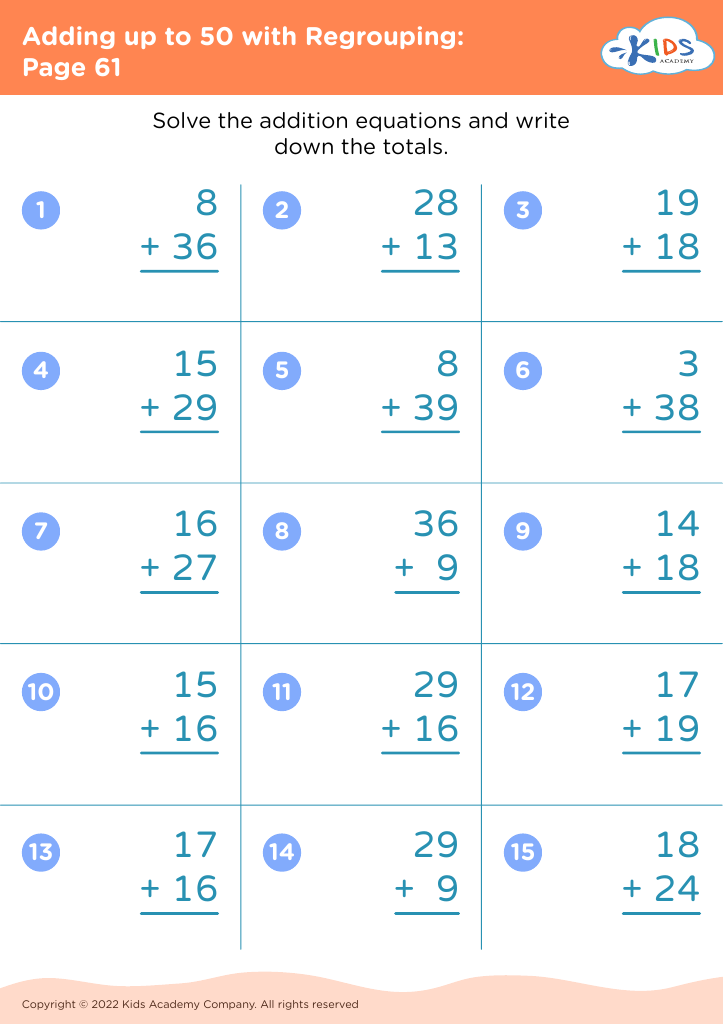
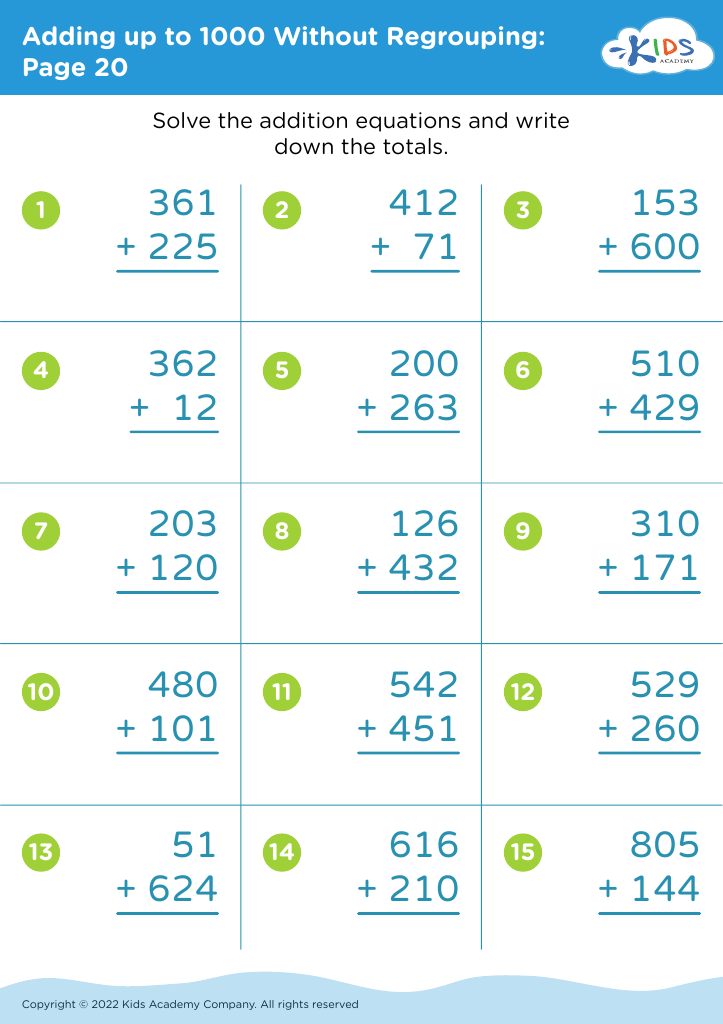
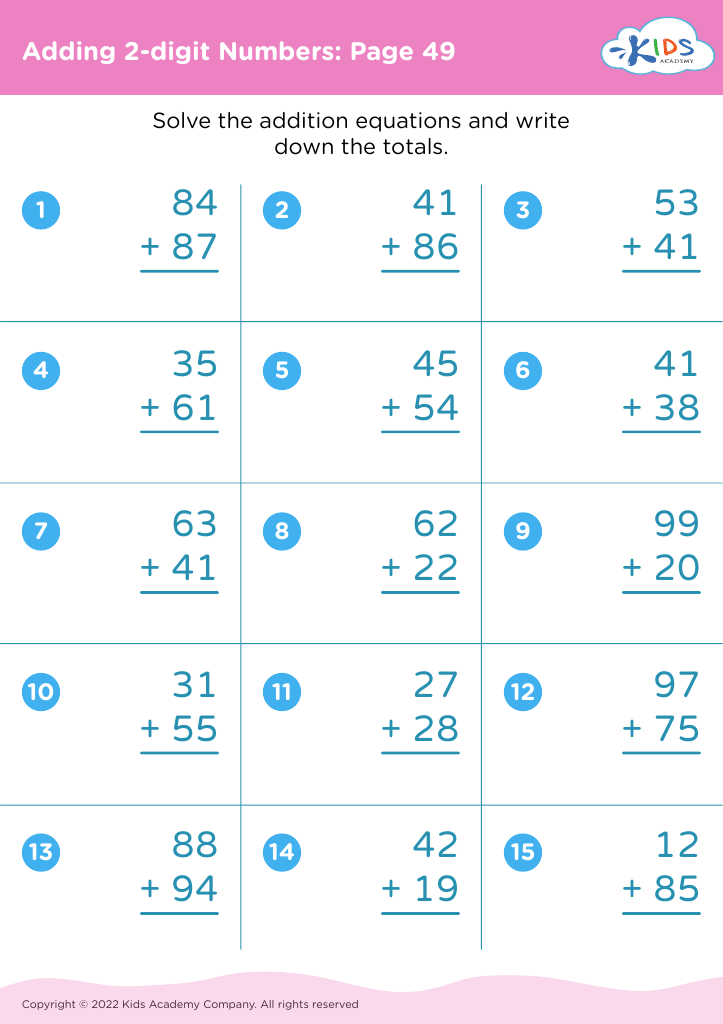








Parents and teachers should care deeply about developing inference skills related to addition for children aged 4-7, as these skills lay the foundation for advanced mathematical reasoning and problem-solving abilities. Inference skills enable children to understand relationships between numbers and their meanings beyond mere calculations. By engaging in activities that prompt children to infer sums or differences, educators and caregivers foster critical thinking, which is essential not only for mathematics but also for other subjects and everyday situations.
Practicing inference skills encourages children to think logically about numbers, allowing them to make connections and predictions, such as recognizing patterns or estimating sums. This type of thinking nurtures a growth mindset, where children learn to approach challenges with confidence. Additionally, building a strong conceptual understanding of addition supports future learning in more complex operations, such as subtraction, multiplication, and division.
When teachers and parents prioritize inference skills in addition, they not only enhance a child's maths competence but also promote cognitive development integral to successful learning. Ultimately, investing time in fostering these skills helps cultivate self-assured, independent learners equipped with problem-solving skills beneficial well beyond the classroom.








