Problem-solving practice Addition Worksheets for Ages 4-7
16 filtered results
-
From - To
Discover our engaging Problem-Solving Practice Addition Worksheets designed for children ages 4-7! These worksheets provide young learners with a fun way to develop essential math skills through real-world scenarios. Each worksheet encourages critical thinking and reinforces addition concepts, helping kids navigate various problem-solving situations. Ideal for classroom or home use, our resources promote interactive learning and enhance comprehension. With colorful illustrations and straightforward questions, children will enjoy solving math challenges while gaining confidence in their abilities. Perfect for parents and teachers looking to enrich their students' math journey, our worksheets foster a love for learning through play! Start exploring today!
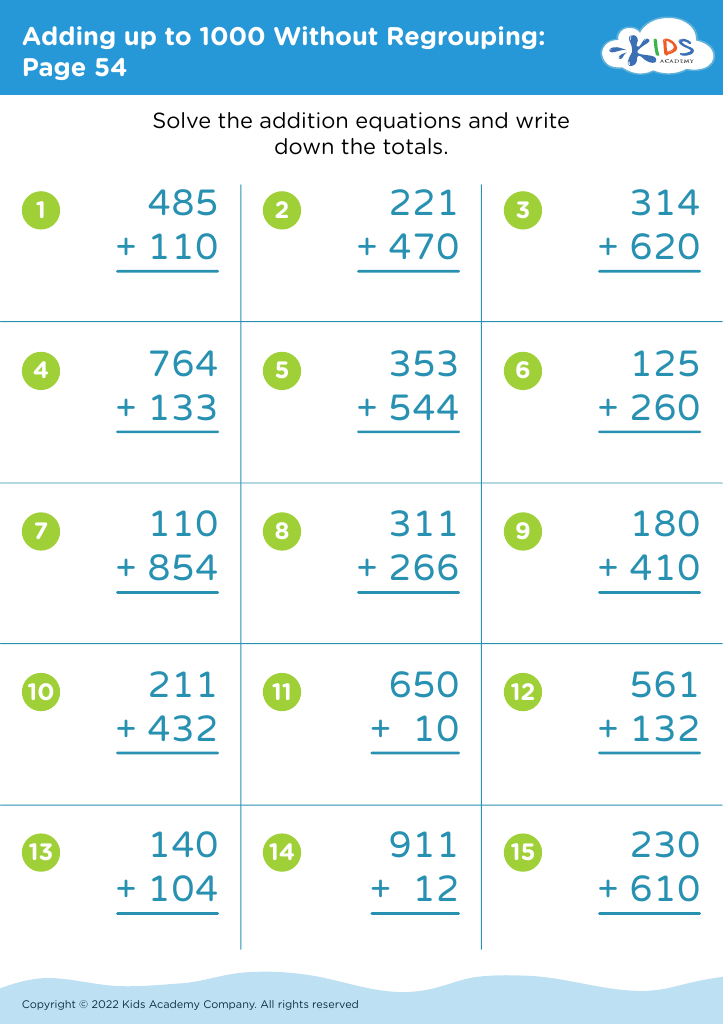
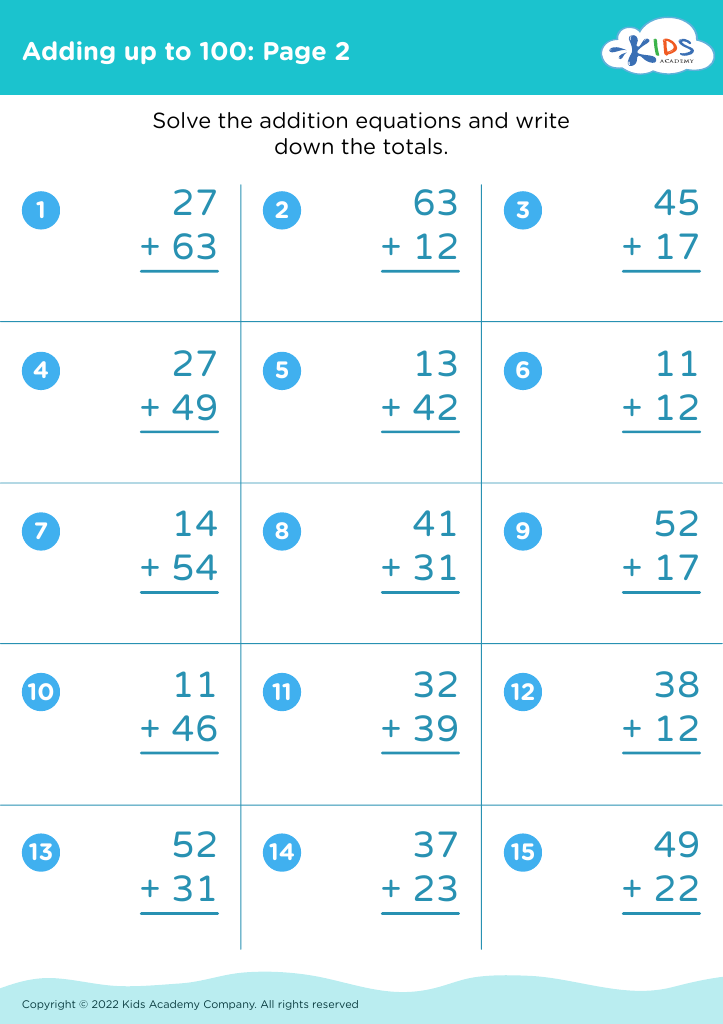
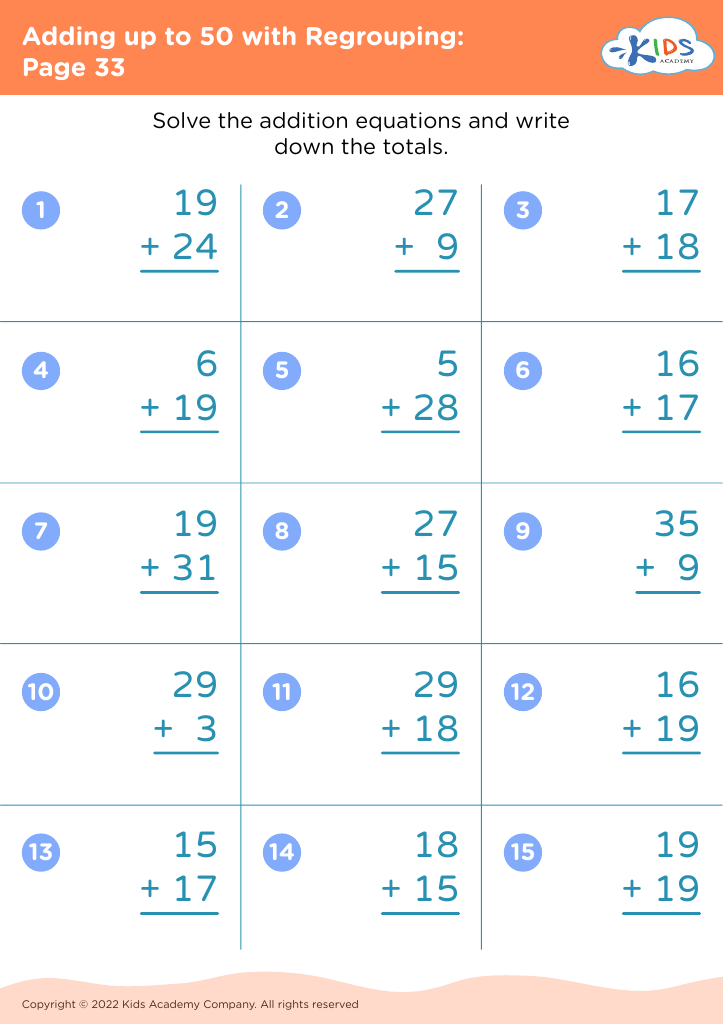
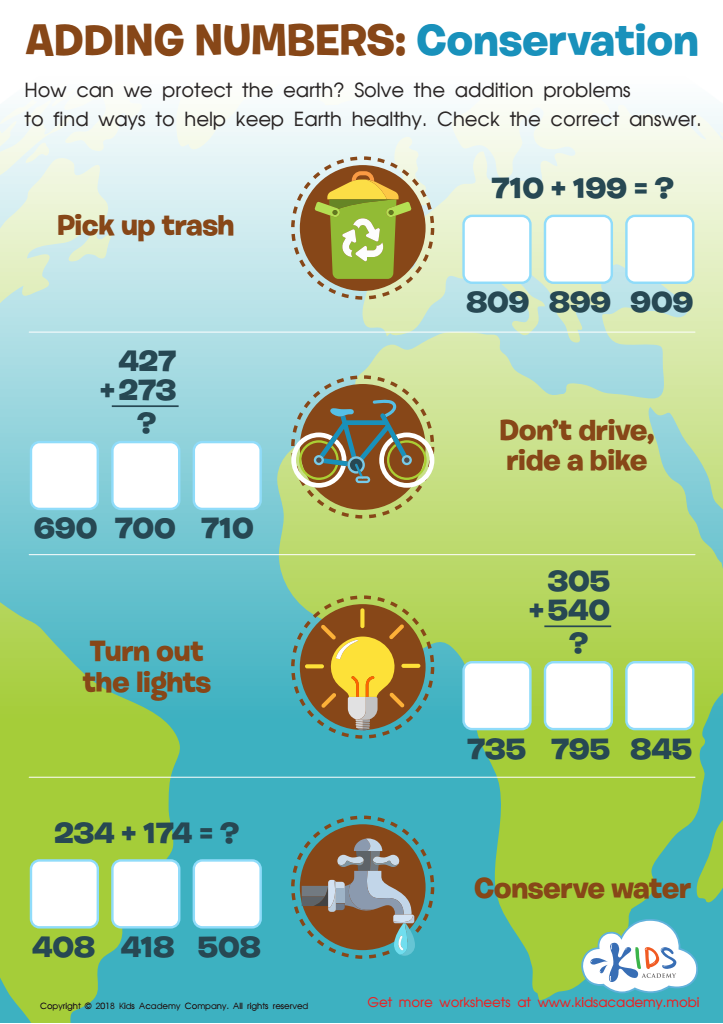
Adding Numbers: Conservation Worksheet
 Assign to My Students
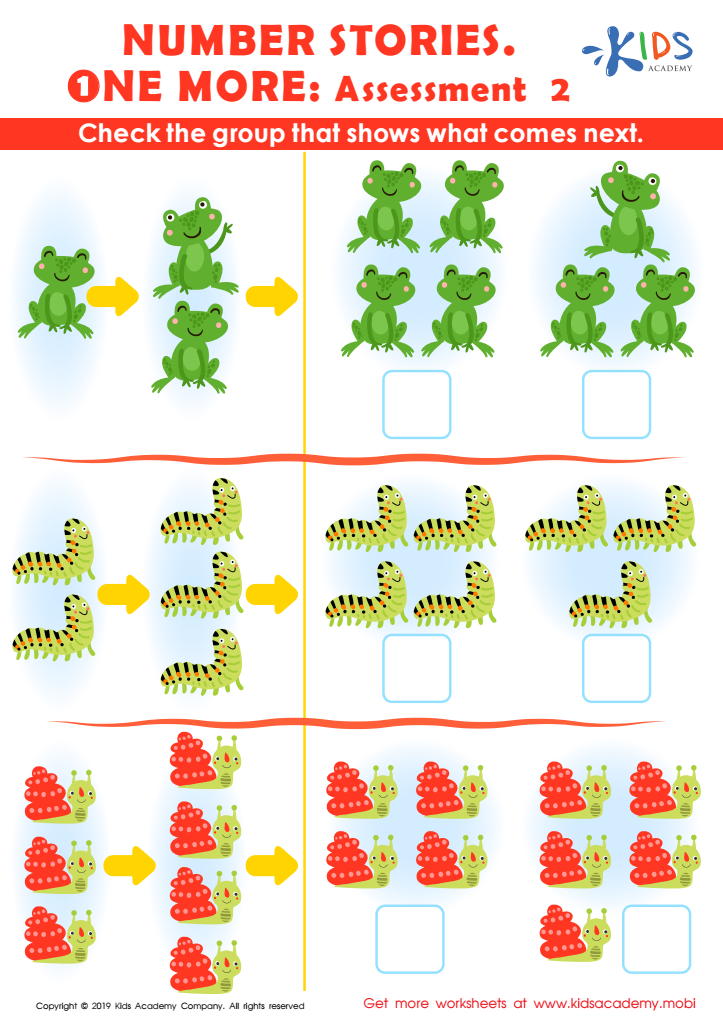
Number Stories One More – Assessment 2 Worksheet
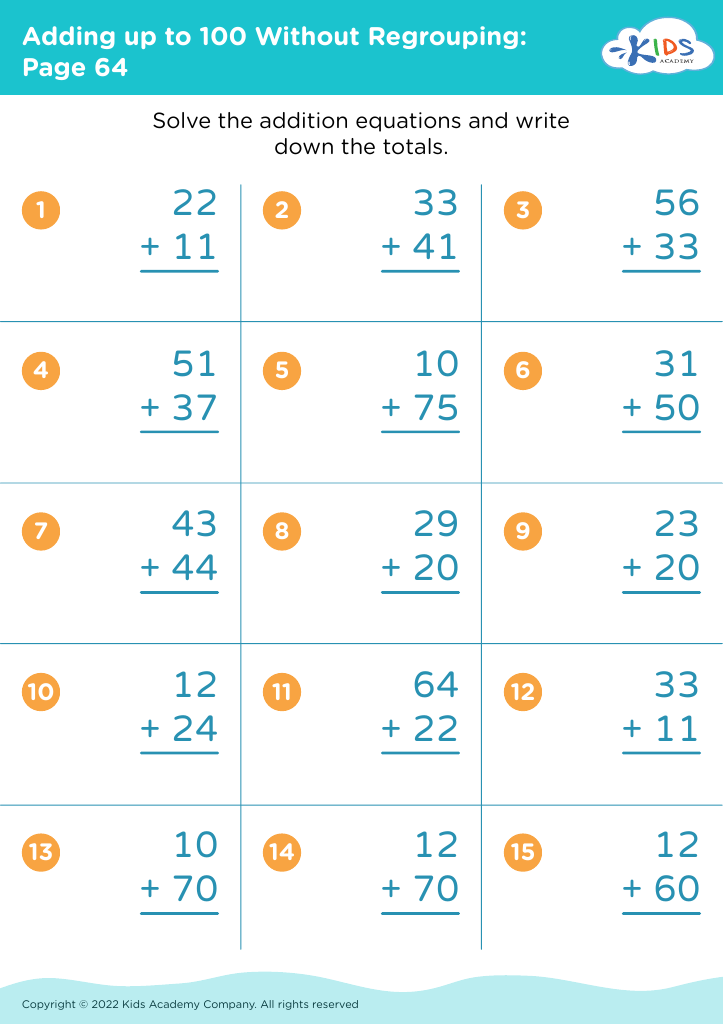
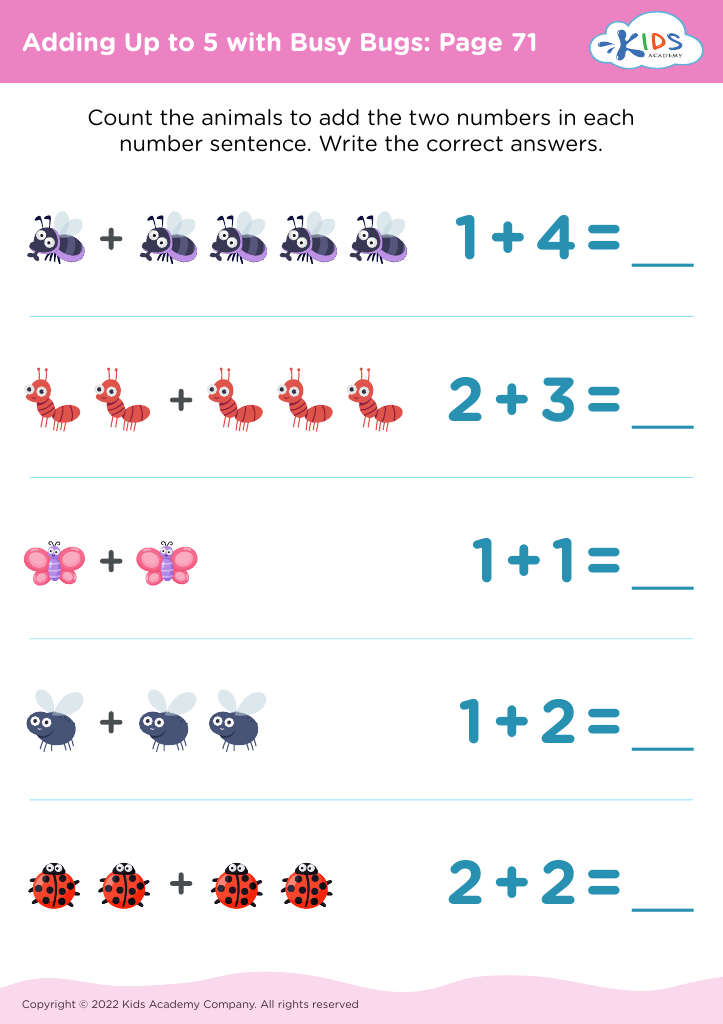
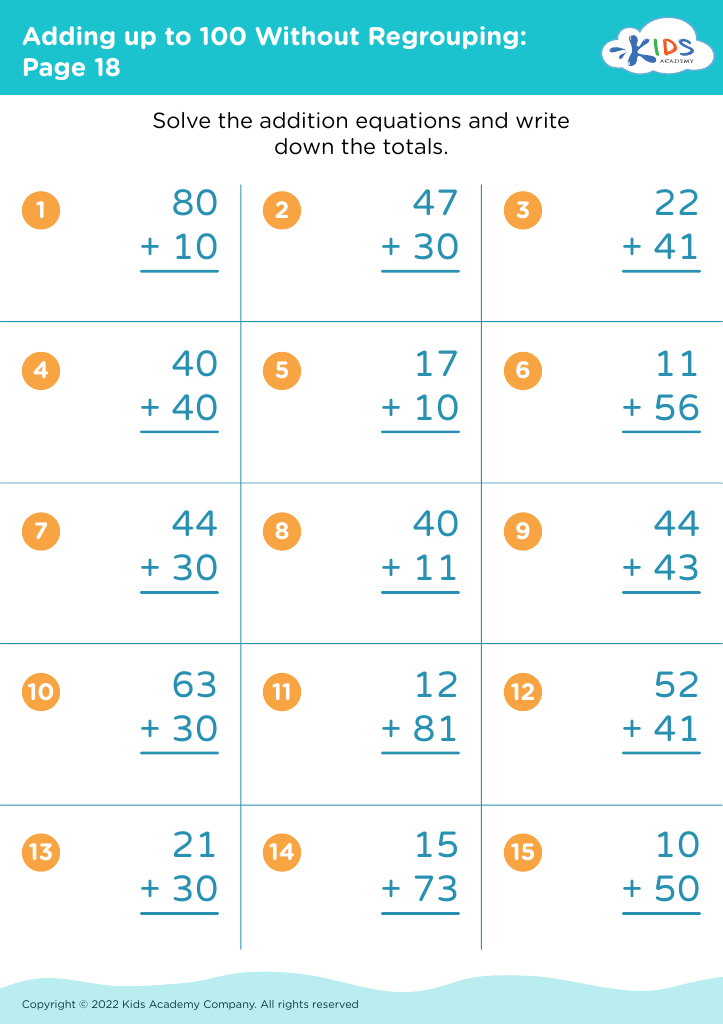
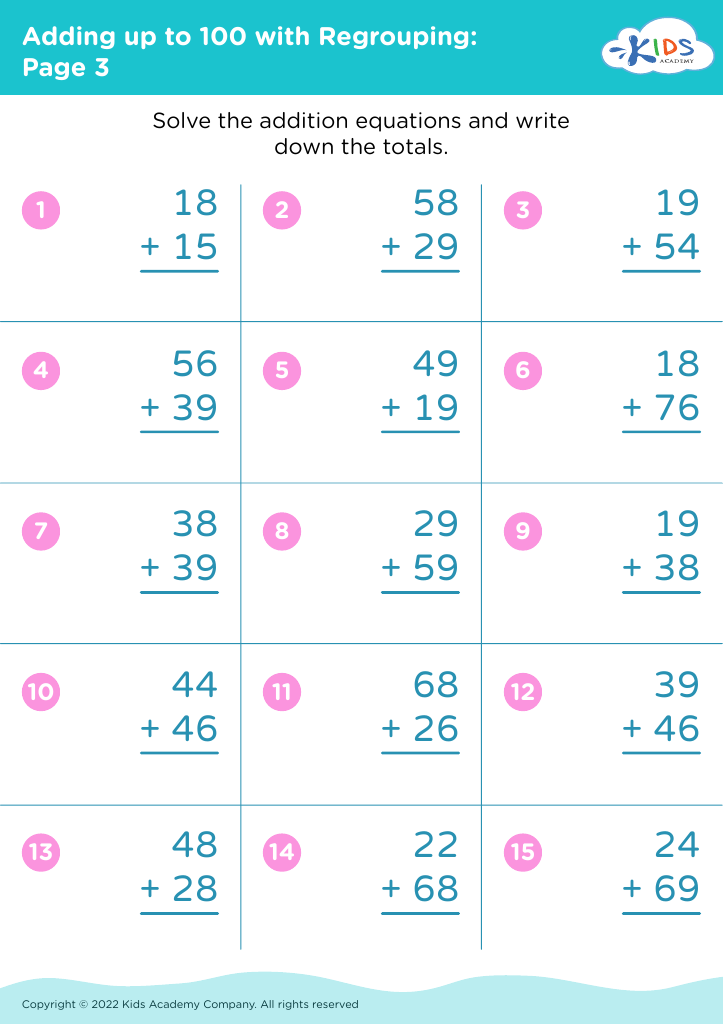
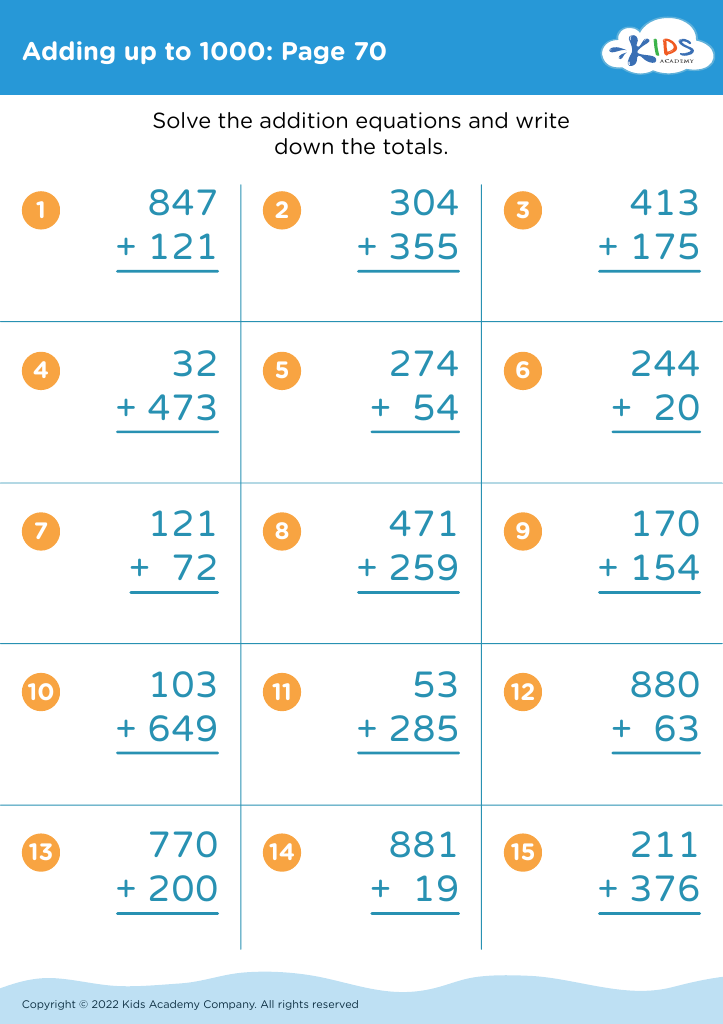
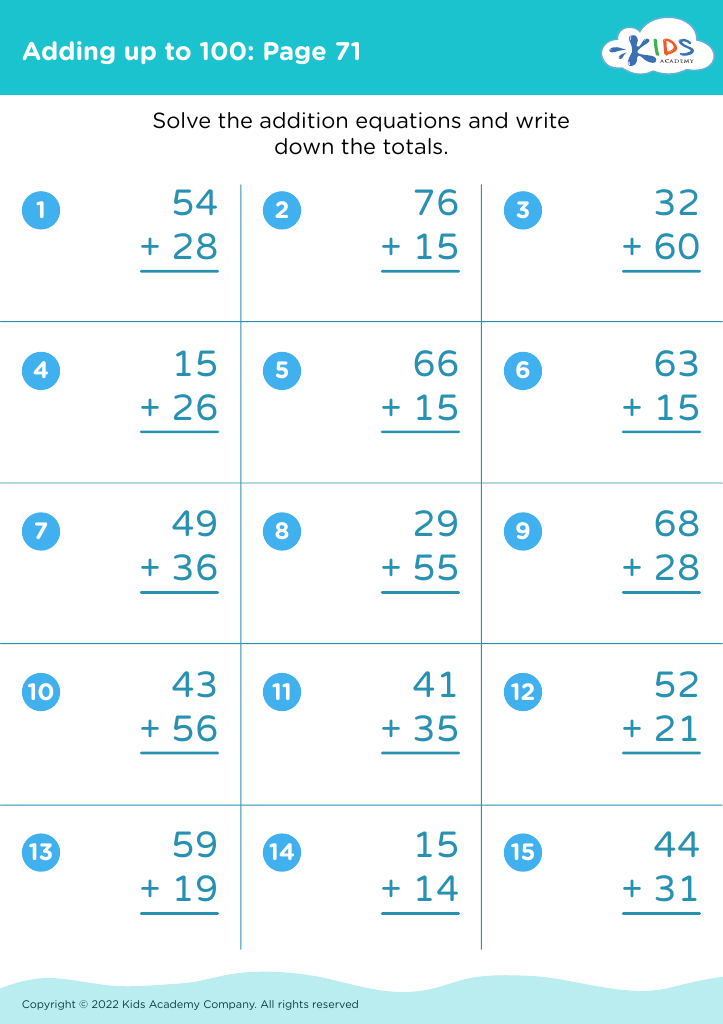
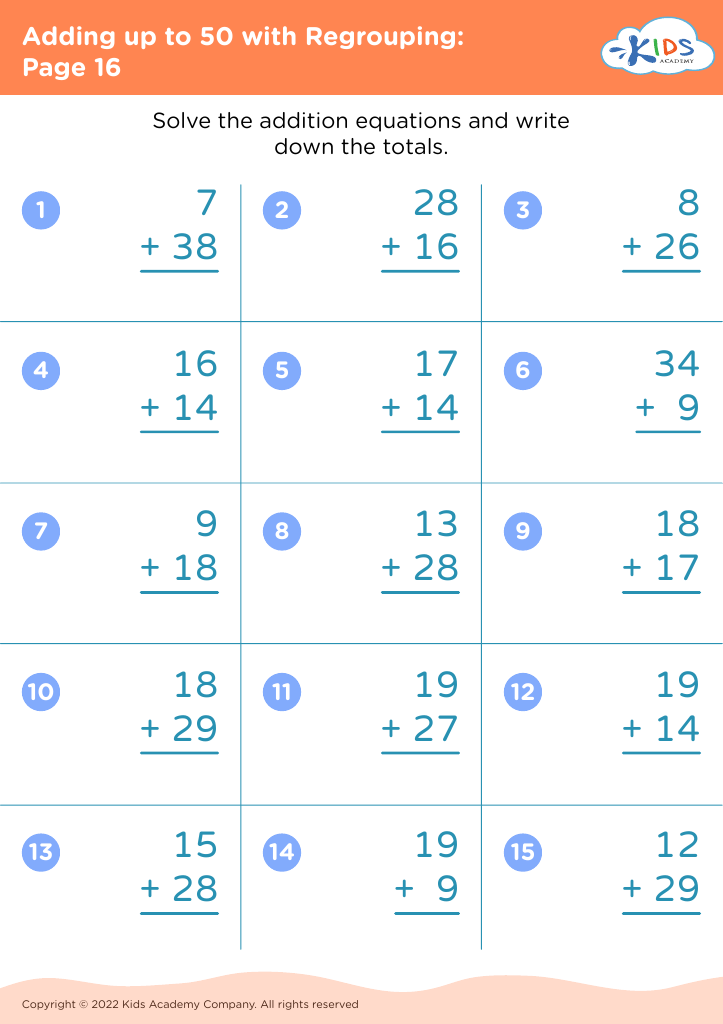
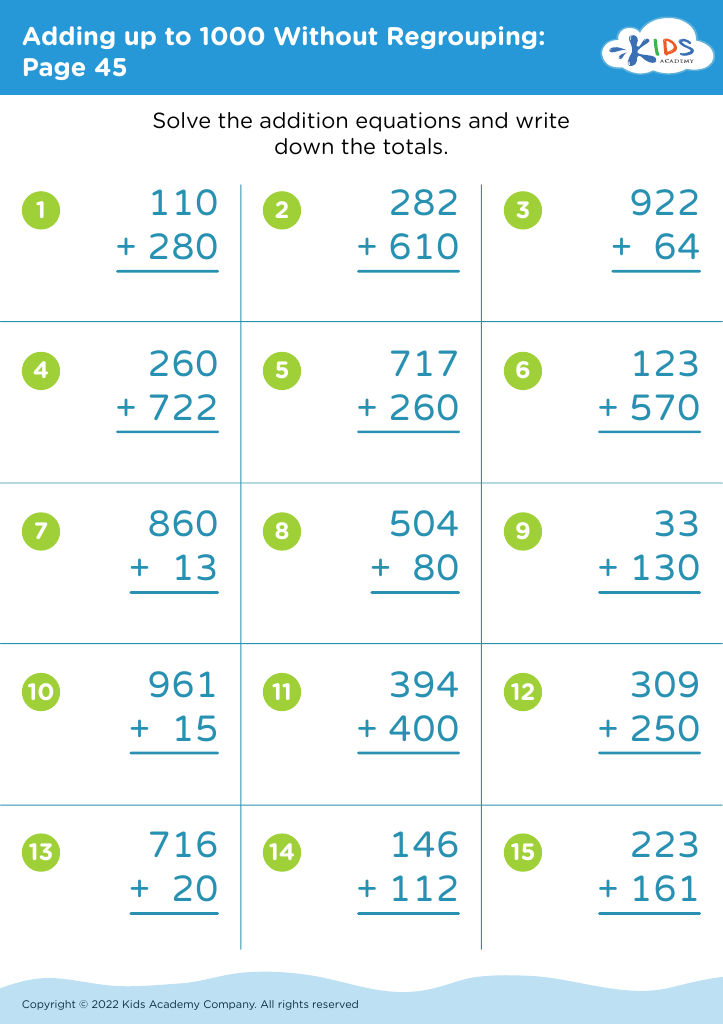








Problem-solving practice in addition for ages 4-7 is essential for several reasons. First, it lays a strong foundation in early mathematics, crucial for developing numeracy skills that will serve children throughout their academic careers. At this age, children are naturally curious and eager to explore, making it an ideal time to introduce problem-solving through engaging activities. This fosters a love for learning and instills a sense of achievement when they successfully solve addition problems.
Furthermore, problem-solving enhances critical thinking skills. As children encounter different addition scenarios, they learn to analyze situations, think creatively, and come up with effective strategies. This skill not only applies to mathematics but transcends into real-life situations, promoting independence and resilience.
Additionally, working on addition through problem-solving promotes collaboration and communication skills, especially in group settings. Children learn to articulate their thought processes and listen to their peers, broadening their understanding of various approaches.
Finally, integrating problem-solving in addition helps identify learning gaps early on. Teachers and parents can tailor support and resources based on individualized needs, ensuring each child achieves their potential in mathematics. Ultimately, recognizing the importance of these practices benefits both children's academic growth and their overall holistic development.








