Sea creatures identification Addition Worksheets for Ages 4-7
3 filtered results
-
From - To
Dive into addition practice with our Sea Creatures Identification Addition Worksheets, designed for children ages 4-7. These engaging worksheets combine math skills with marine wonders, allowing young learners to practice addition while identifying fascinating sea creatures. Each worksheet presents colorful underwater images, captivating kids and making learning fun. Strengthen foundational math skills and boost interest in ocean life with our expertly crafted exercises that balance education and entertainment. Ideal for classroom or at-home learning, these worksheets will charm your little ones into becoming confident in their addition abilities while exploring the mysteries of the deep blue sea.
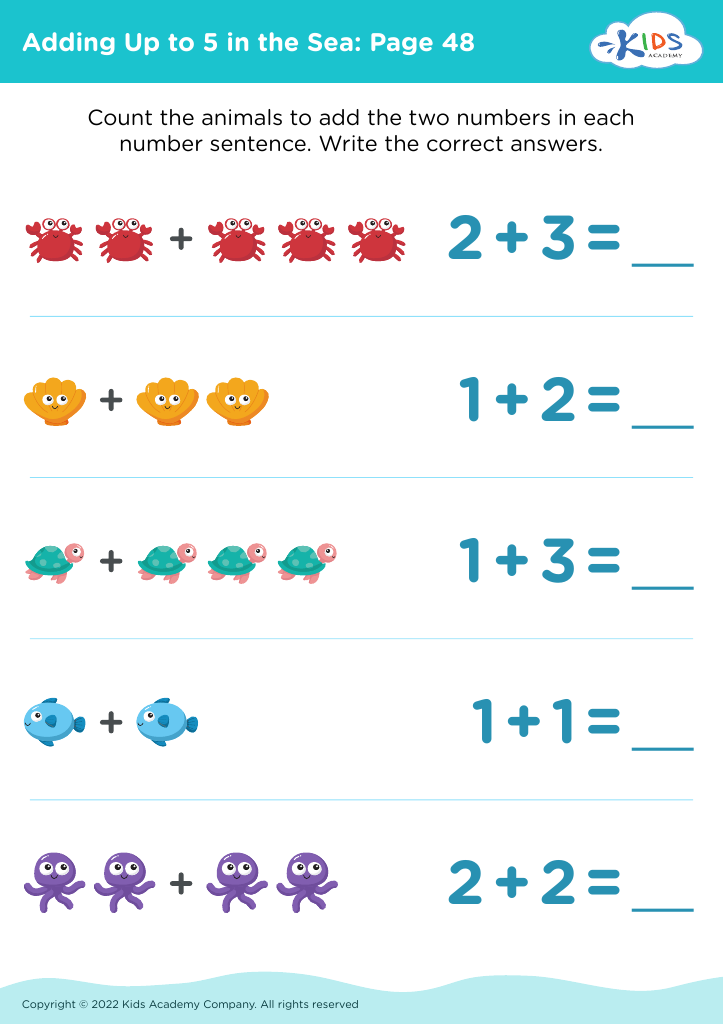
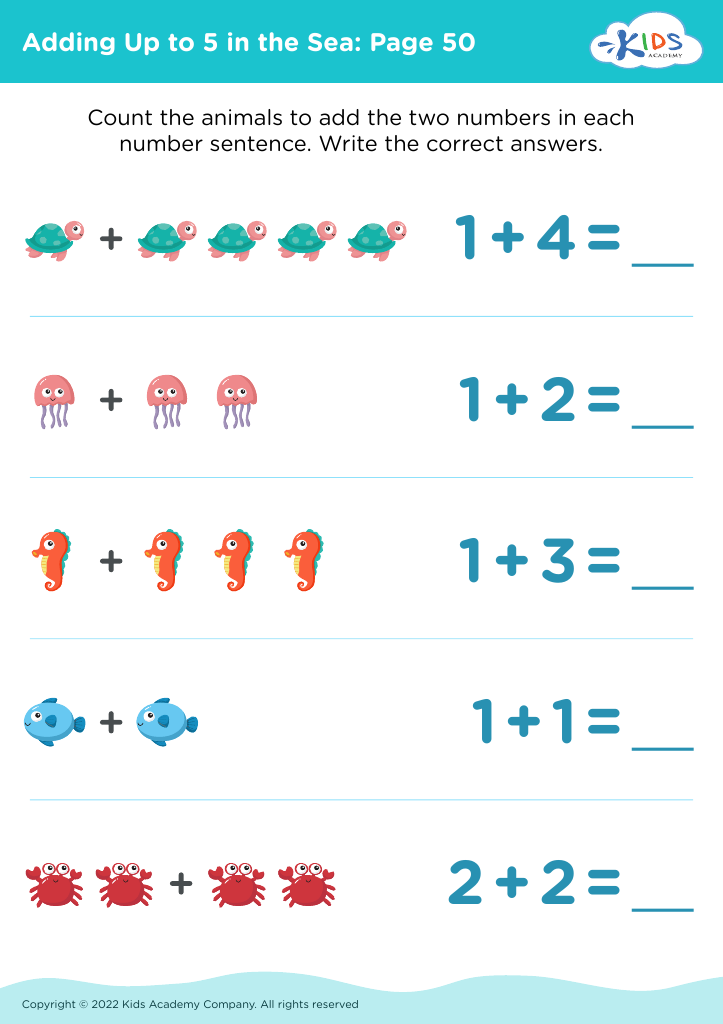
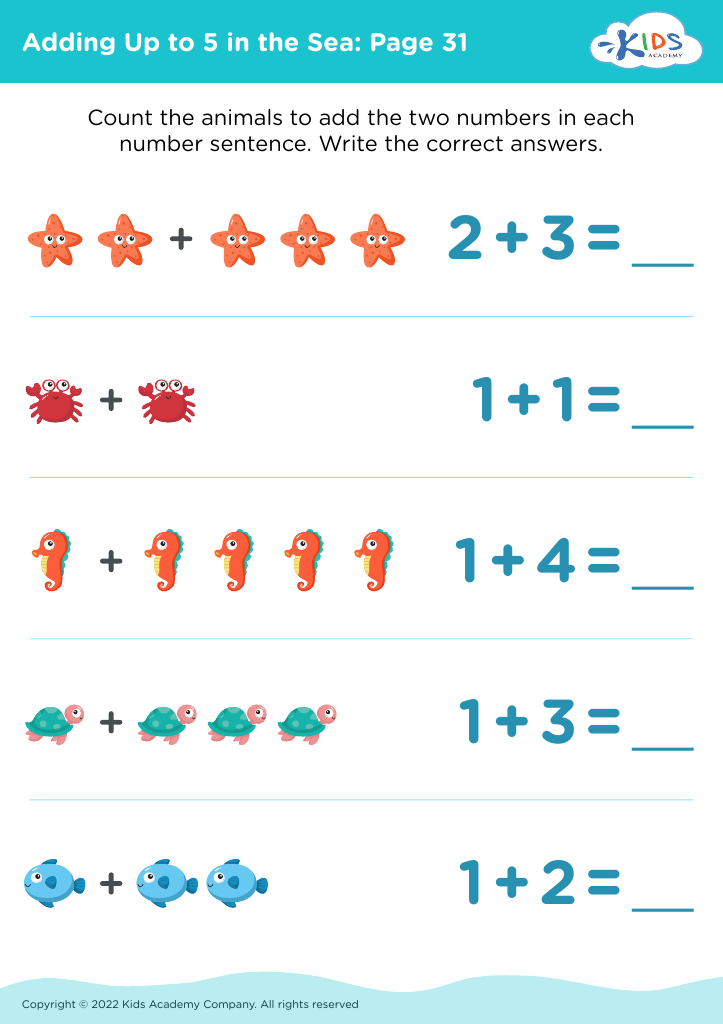








Introducing young children aged 4-7 to sea creatures and helping them identify different species can be incredibly beneficial for a number of reasons. Firstly, it ignites curiosity and fosters a love for the natural world. At this age, children are naturally inquisitive; learning about the diverse range of sea creatures can capture their imagination and make learning exciting.
Secondly, understanding sea creatures can be an early introduction to important scientific concepts. Children can learn about ecosystems, food chains, and habitats in a simple, relatable way. This foundational knowledge can support future learning in biology and environmental science.
Additionally, identifying sea creatures can enhance basic cognitive and observational skills. Noticing differences in shapes, colors, and sizes helps develop attention to detail and classification skills, which are fundamental aspects of early numeracy and literacy.
Another crucial aspect is promoting environmental awareness. By understanding marine life, children can develop respect and empathy for Earth’s oceans and the creatures that inhabit them. This can lay the groundwork for responsible environmental stewardship as they grow.
Lastly, activities around identifying sea creatures can provide excellent opportunities for family bonding or teacher-student interaction. Shared experiences in learning cultivate strong relationships and enhance social well-being. Thus, the benefits are multifaceted, whispering values of education, awareness, cognitive development, and emotional connections.








