Shape Recognition Addition Worksheets for Ages 4-7 - Page 2
31 filtered results
-
From - To
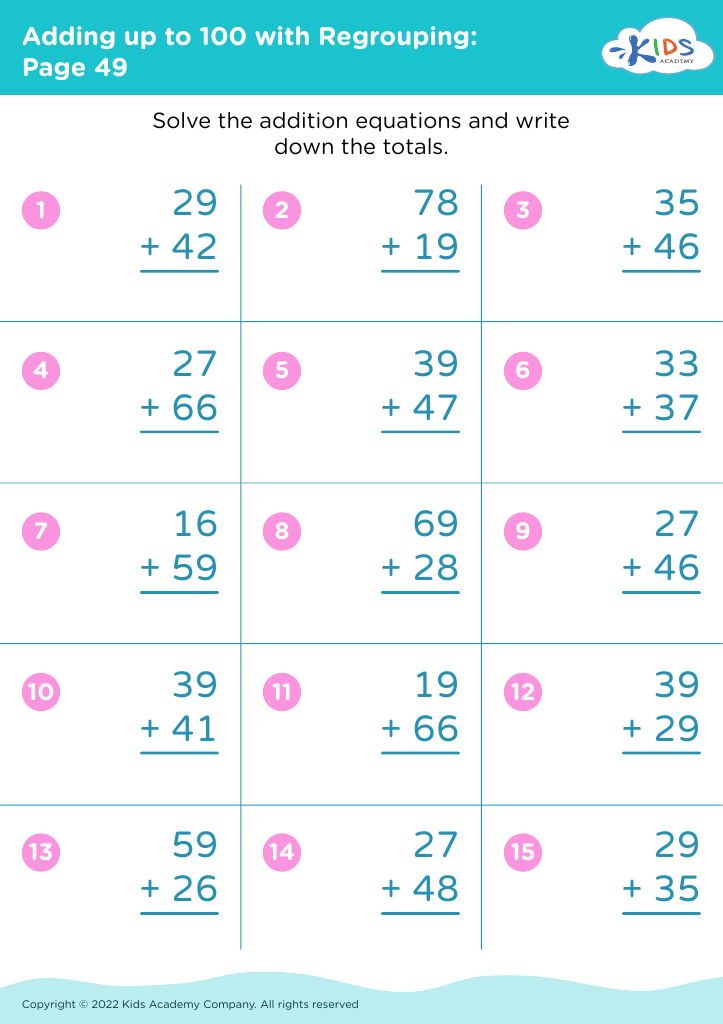
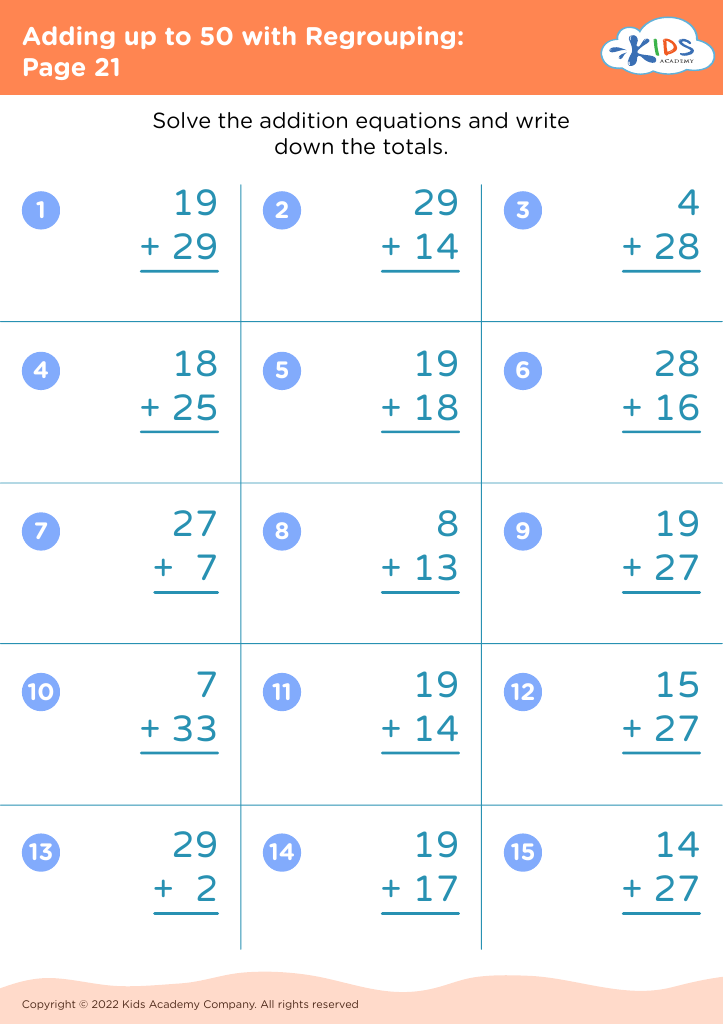
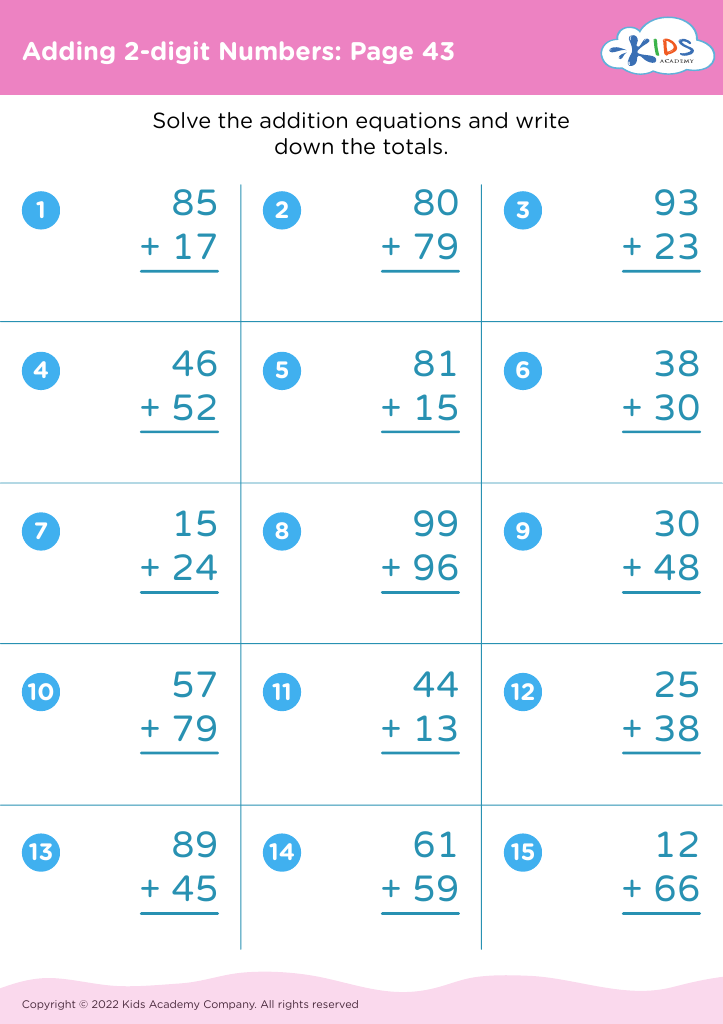
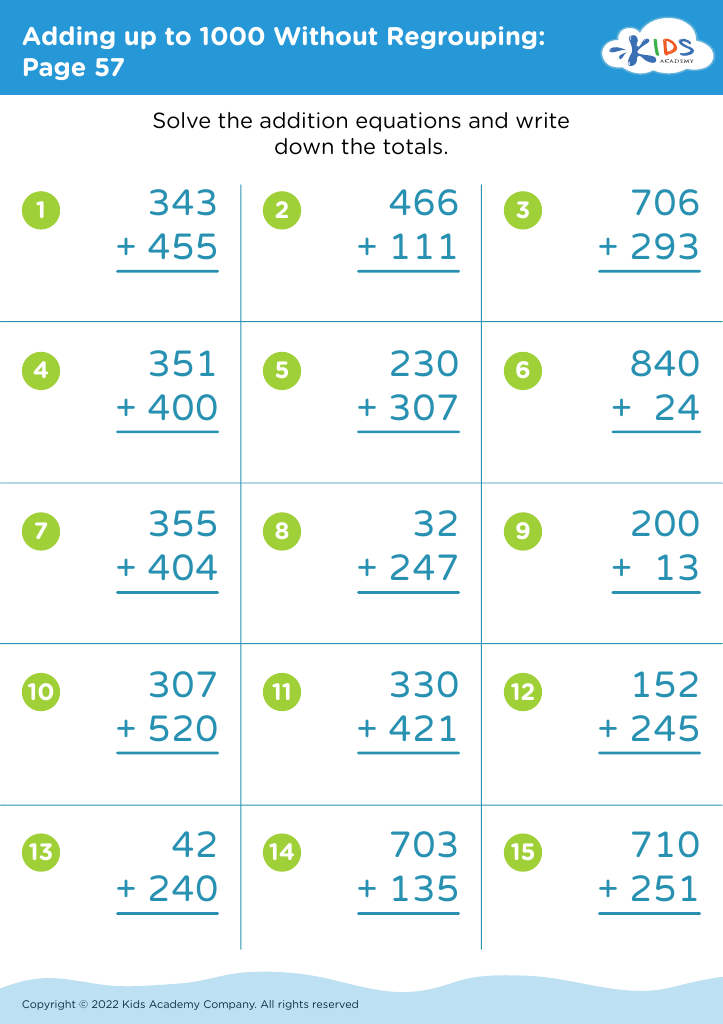








Shape recognition is a foundational skill that plays a vital role in the cognitive development of children aged 4-7. Understanding shapes not only enhances a child's visual perception but also forms the basis for essential mathematical concepts like spatial awareness and geometry. When children learn to recognize shapes, they are better equipped to engage in shape recognition addition activities, where they identify, combine, and compare various shapes.
These activities foster critical thinking and problem-solving skills as children begin to understand numerical relationships through visuals. Additionally, they promote fine motor skills when children manipulate shapes in hands-on activities, such as sorting or building with blocks. Furthermore, incorporating shape recognition into addition activities allows children to associate mathematical concepts with real-world objects, making learning more meaningful and enjoyable.
For parents and teachers, focusing on shape recognition addition encourages a love for learning and academic curiosity. It paves the way for more advanced math skills in later years, ensuring a strong educational foundation. By supporting young learners in this area, adults contribute to a well-rounded development, preparing them for future challenges in both mathematics and daily life. Thus, making shape recognition a priority can have lasting benefits for children's overall success.








