Sorting skills Addition Worksheets for Ages 4-7
4 filtered results
-
From - To
Unlock the potential in your young learner with our comprehensive "Sorting Skills Addition Worksheets for Ages 4-7"! Our expertly designed worksheets combine fun activities and essential math skills to help children sort objects and practice addition simultaneously. Perfect for early grade students, these engaging exercises offer colorful illustrations and intuitive prompts to foster logical thinking and foundational addition skills. Ideal for both classroom and at-home learning, our printable worksheets will captivate children’s interest while developing critical sorting and math abilities. Start your child’s educational journey with these entertaining and educational resources today!
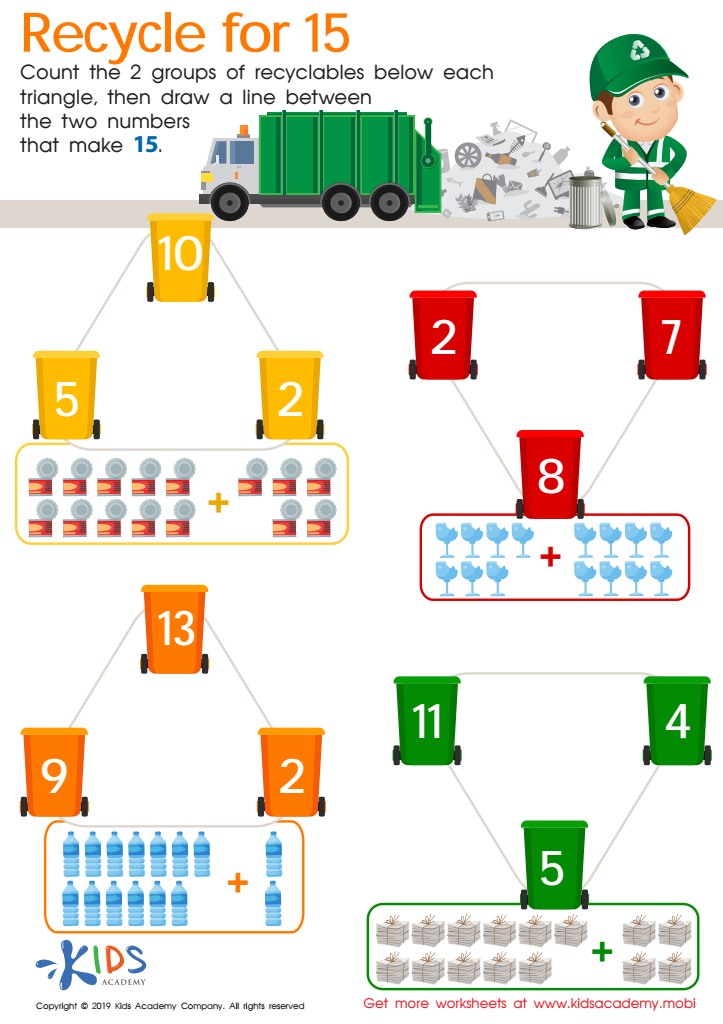
Recycle for 15 Worksheet
 Assign to My Students
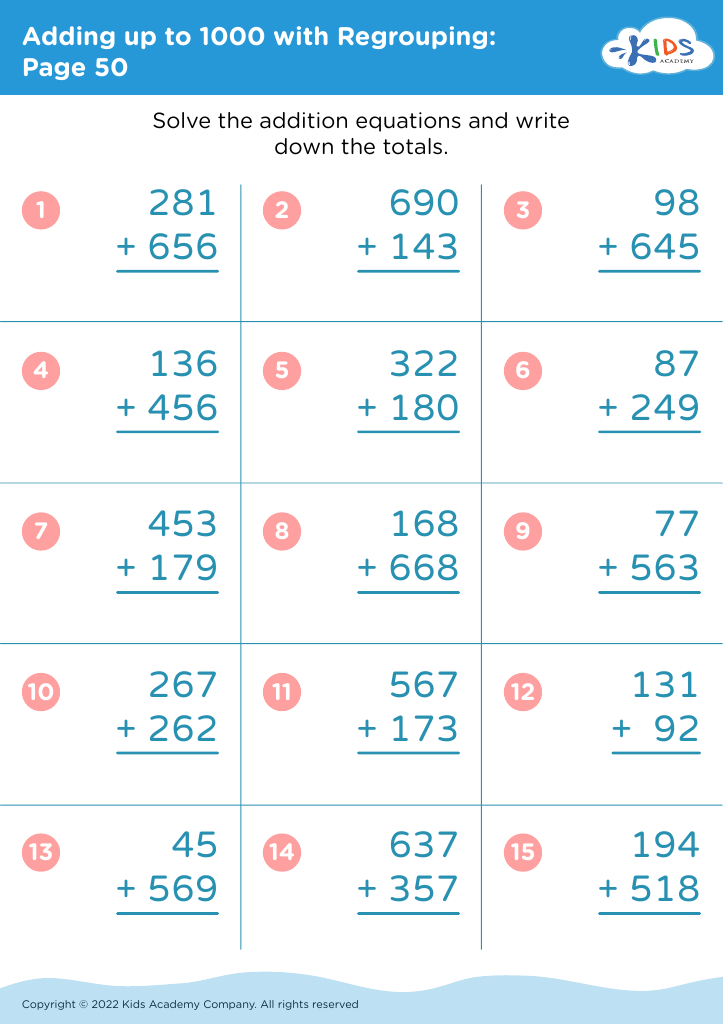
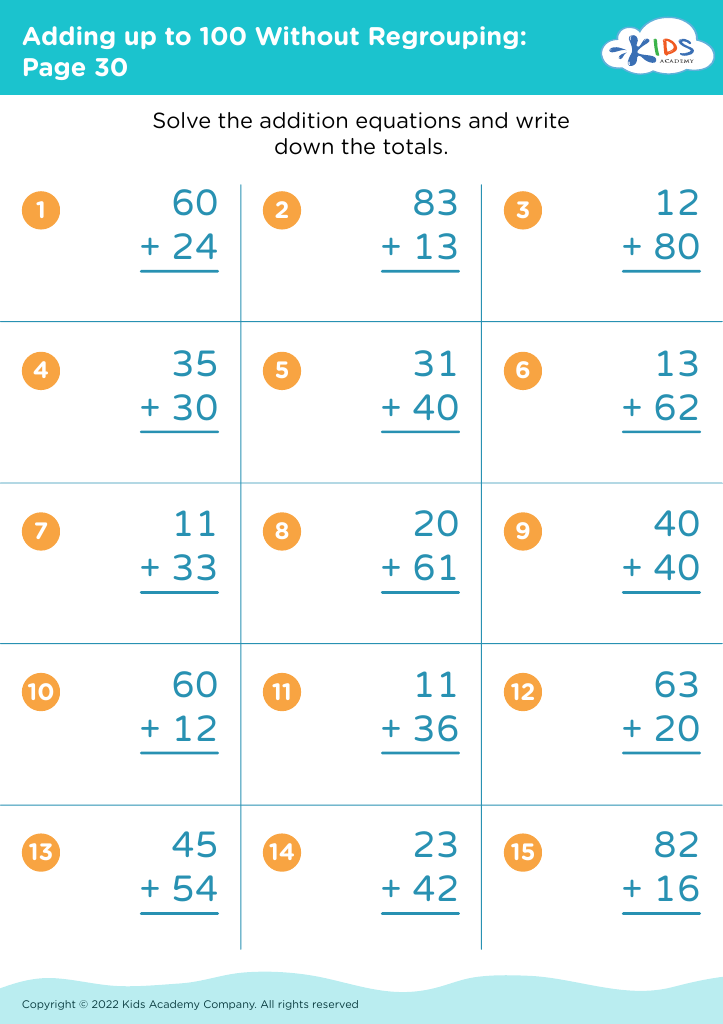
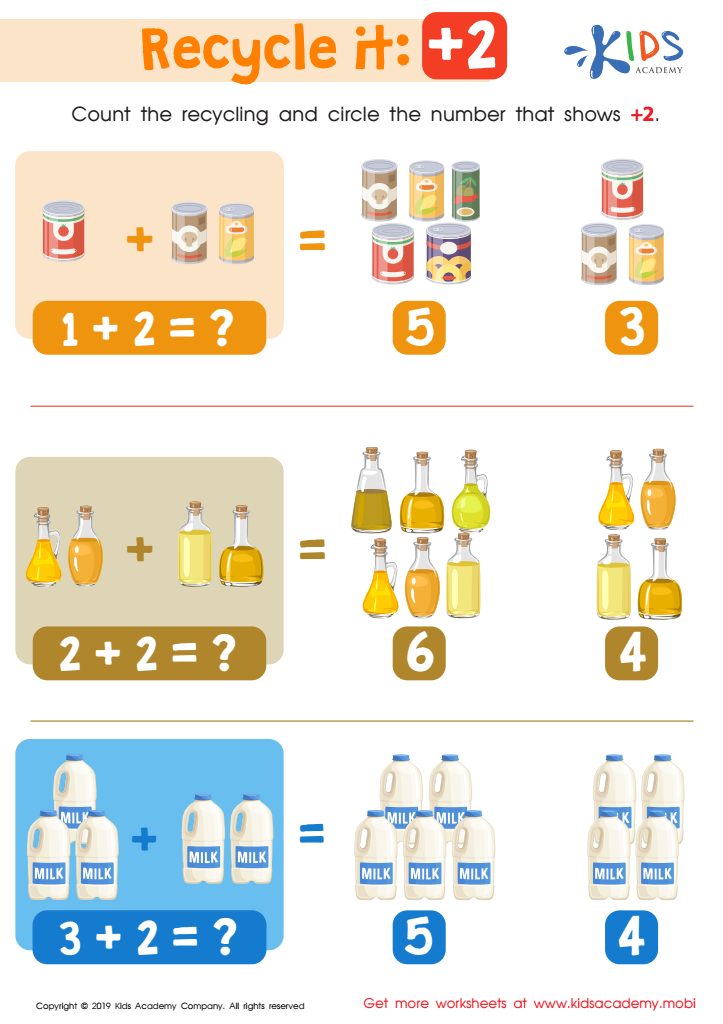
Recycle It: +2 Worksheet








Sorting skills and basic addition are foundational components in early childhood development, and nurturing these skills from ages 4-7 can profoundly impact a child’s future academic success.
Sorting teaches children to organize objects and information, honing their ability to recognize patterns and categorize items based on attributes like color, shape, size, or type. This form of cognitive classification is vital not only in mathematics but across all subjects. For instance, categorizing animals or understanding groupings in social studies become more intuitive for children with good sorting skills.
Basic addition, on the other hand, introduces young minds to the concept of combining quantities and understanding numerical relationships. This vital math operation is the cornerstone of more complex arithmetic problems they will encounter later on. Mastery of addition enhances logical reasoning and problem-solving abilities.
By actively engaging children in sorting and basic arithmetic, parents and teachers foster critical thinking, organizational abilities, and numerical literacy. These skills cultivate a child's confidence and enthusiasm for learning, laying a solid foundation for tackling more advanced educational concepts in their academic progression. Therefore, focusing on these skills during the formative years can play a significant role in a child's overall intellectual development.








