Telling time Addition Worksheets for Ages 4-7
3 filtered results
-
From - To
Enhance your child's math and time-telling skills with our "Telling Time Addition Worksheets for Ages 4-7." Designed to engage young learners, these fun and educational worksheets blend fundamental addition with the crucial skill of reading clocks. Perfect for preschool to second-grade students, our colorful, age-appropriate activities help children practice telling time to the hour and minute while reinforcing their addition abilities. Inspire confidence and build a strong mathematical foundation with our expertly crafted telling time addition worksheets. Visit our website to download these invaluable learning tools that turn math practice into an exciting adventure!
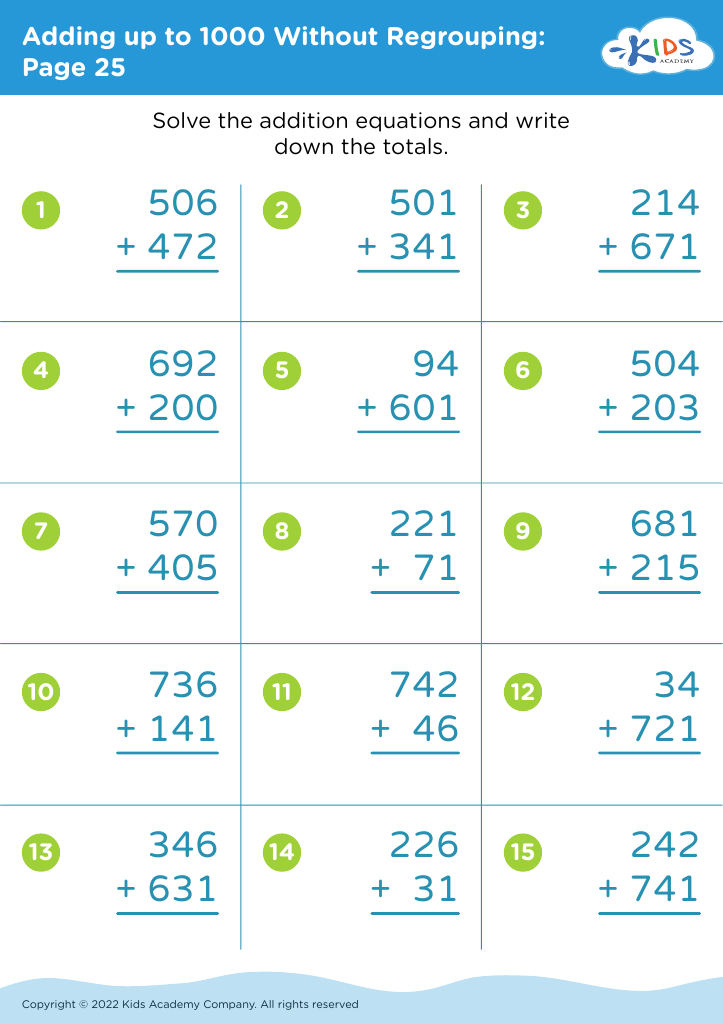
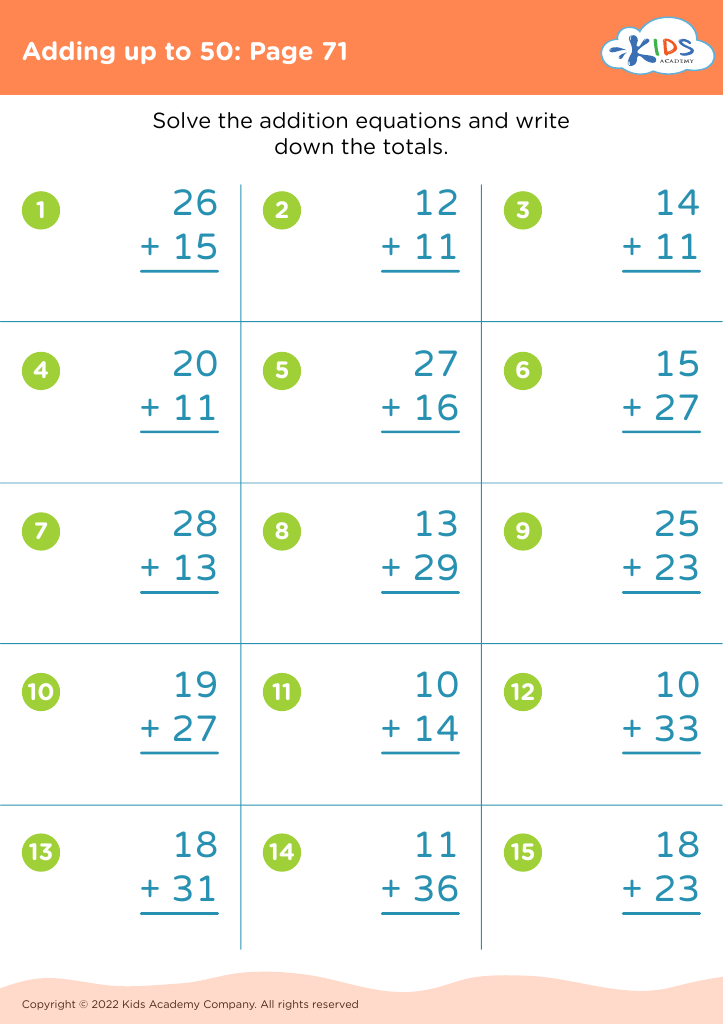
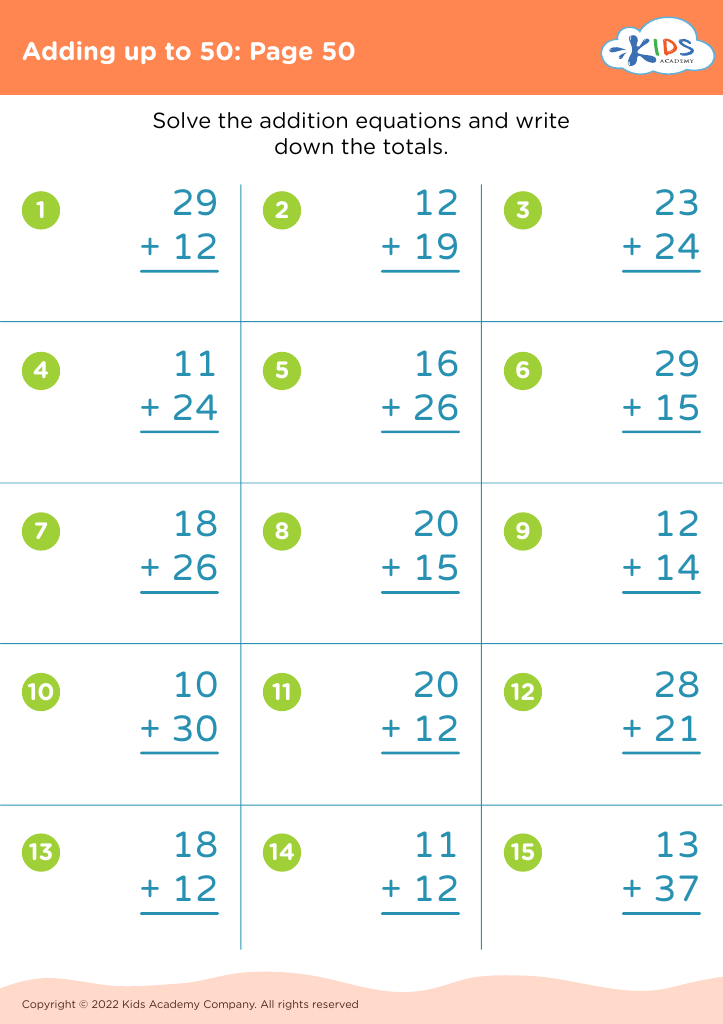








Teaching young children, ages 4-7, about telling time and addition is vital for their early development, and parents or teachers should prioritize these skills for several reasons. Firstly, learning to tell time helps kids understand the concept of time management, fostering a sense of routine and responsibility. It assists them in navigating their daily schedules, which is important for developing long-term planning and organizational skills they will use throughout their lives.
Additionally, introduction to time reinforces numeracy, helping young learners recognize number sequences and relationships, which is foundational for advancing in mathematics. Understanding AM and PM, hours and minutes, strengthens cognitive abilities and enhances performing sequential, logical reasoning.
On the other hand, addition is one of the fundamental building blocks of mathematics. It is crucial for developing a child's problem-solving and analytical skills. At this age, children naturally grasp concepts through playful and interactive learning. Counting fingers, using toys, and incorporating everyday objects can make addition practical and relatable, thus easier to understand.
Moreover, mastering these skills builds confidence. The self-assurance children gain from understanding time and addition positively impacts their overall learning experience, fostering a love for exploring new educational concepts. By focusing on these foundational skills, caregivers and educators empower children to grow into competent, self-assured learners prepared for future challenges.








