Understanding equality Addition Worksheets for Ages 4-7
3 filtered results
-
From - To
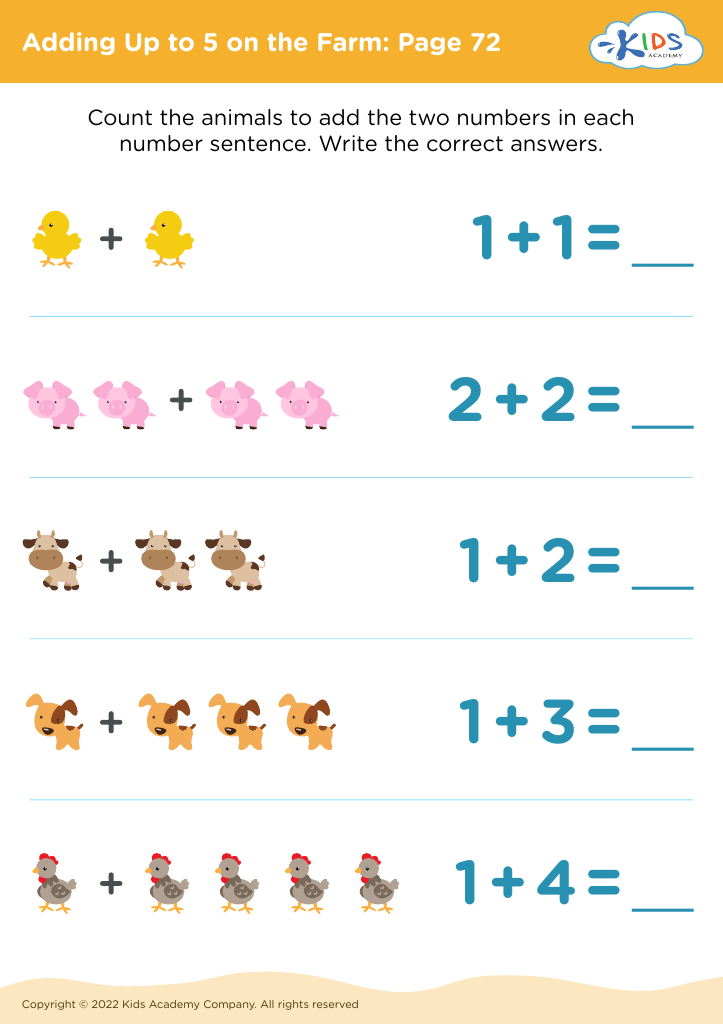
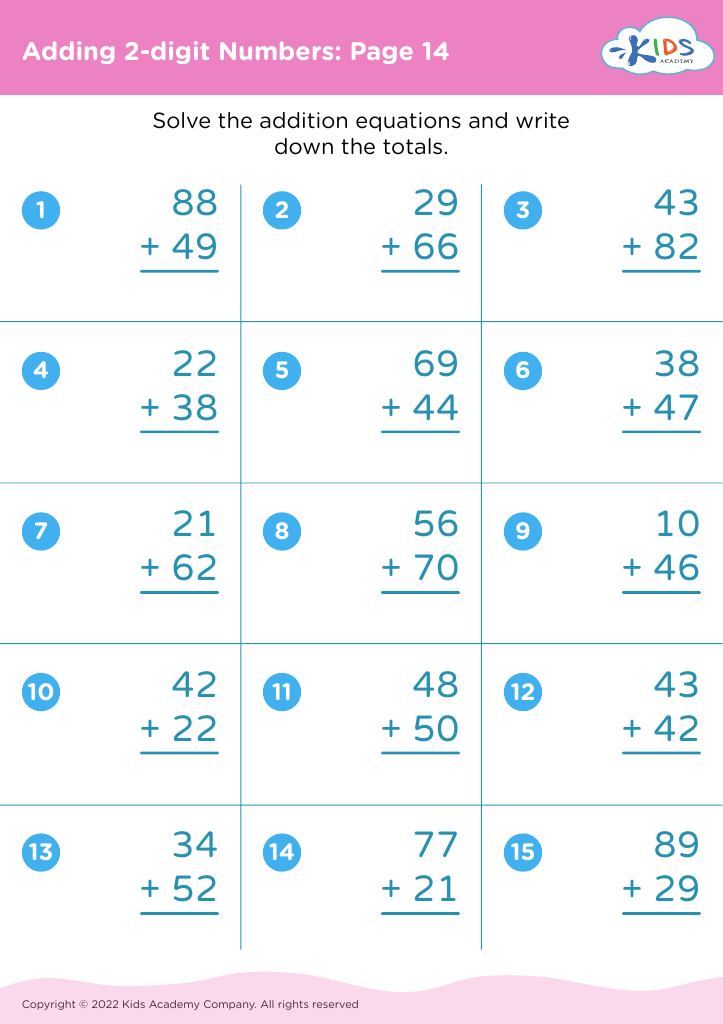
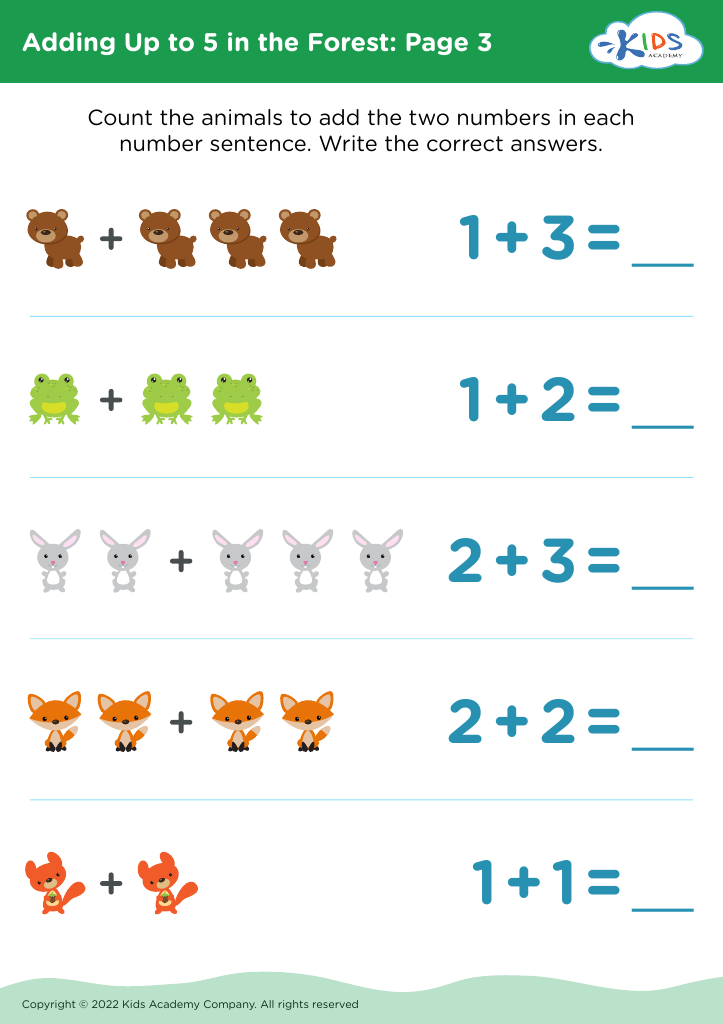
Discover our engaging "Understanding Equality Addition Worksheets" designed specifically for children aged 4 to 7. These worksheets help young learners grasp the fundamental concept of equality in math through interactive and visually appealing activities. By connecting addition with the idea of balance, kids enhance their problem-solving skills and develop a strong numerical foundation. The worksheets include fun exercises that encourage kids to find equal sums and explore the relationship between numbers, making learning enjoyable. Perfect for parents and educators, these resources support early math education and foster a love for learning. Help your child build confidence and understanding in math today!








Understanding equality and addition for children aged 4-7 is crucial for several reasons. First, these foundational mathematical concepts are key to promoting critical thinking and problem-solving skills. When children grasp the idea of equality, they learn that both sides of an equation must balance, which lays the groundwork for more complex mathematical operations in later years.
Moreover, mastering addition at this early age fosters numerical fluency, enabling children to perform calculations confidently and efficiently. This confidence spills over into other areas of learning, supporting their overall academic progress. Engaging with these concepts also enhances cognitive abilities, such as pattern recognition and logical reasoning.
For teachers and parents, promoting understanding in equality and addition means fostering a positive attitude toward mathematics. Encouraging exploration through games, manipulatives, and real-world examples can ignite a child's interest in mathematics and dispel any fear associated with the subject.
Furthermore, early intervention is key. If children develop a solid understanding of these concepts, they are more likely to succeed in future math-related tasks, reducing the chances of struggle later on. Ultimately, nurturing a strong foundation in equality and addition prepares children for lifelong learning and boosts their confidence and competence in mathematics.








