Understanding number relationships Addition Worksheets for Ages 4-7
5 filtered results
-
From - To
"Understanding Number Relationships Addition Worksheets" are essential educational tools for children aged 4-7. Our engaging worksheets are designed to introduce and build foundational addition skills through fun and interactive activities. These worksheets help young learners grasp the concept of number relationships, fostering a solid understanding of how numbers interact and combine to form sums. With a variety of colorful exercises and simple problems, children can practice addition while enhancing their critical thinking and problem-solving abilities. Perfect for both classroom use and at-home practice, these worksheets make learning math both enjoyable and effective for young minds.
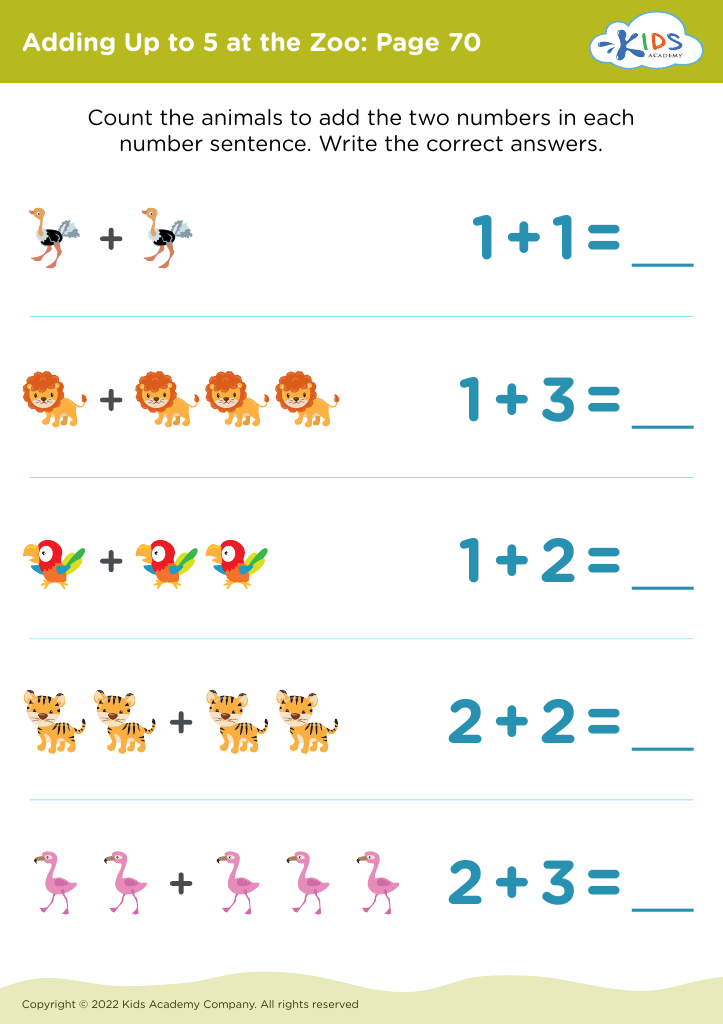
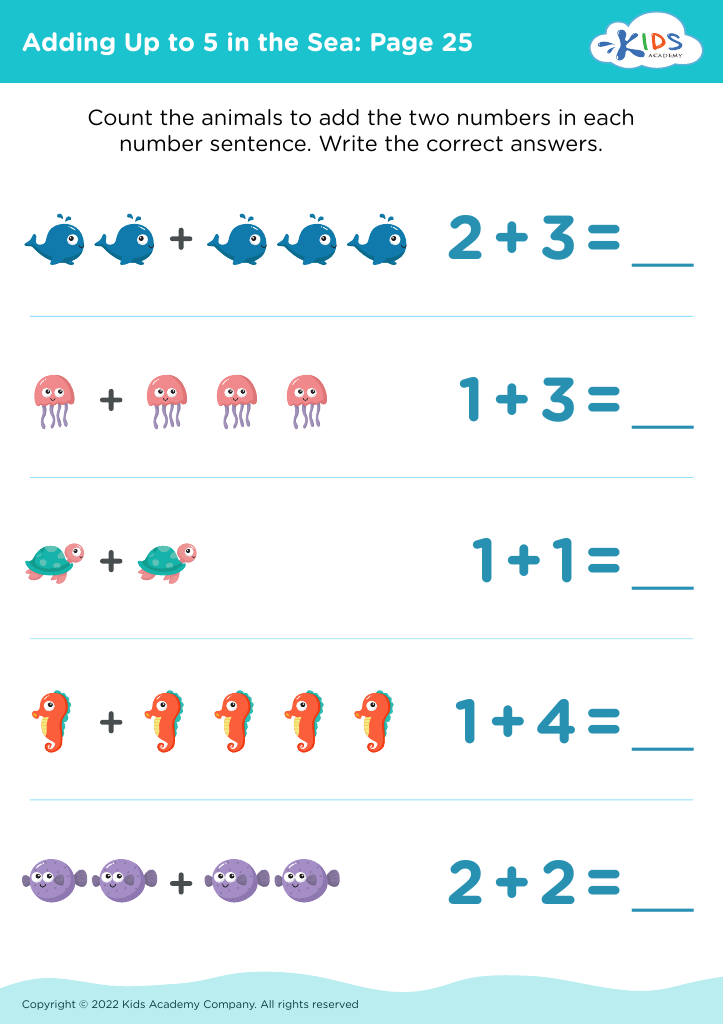
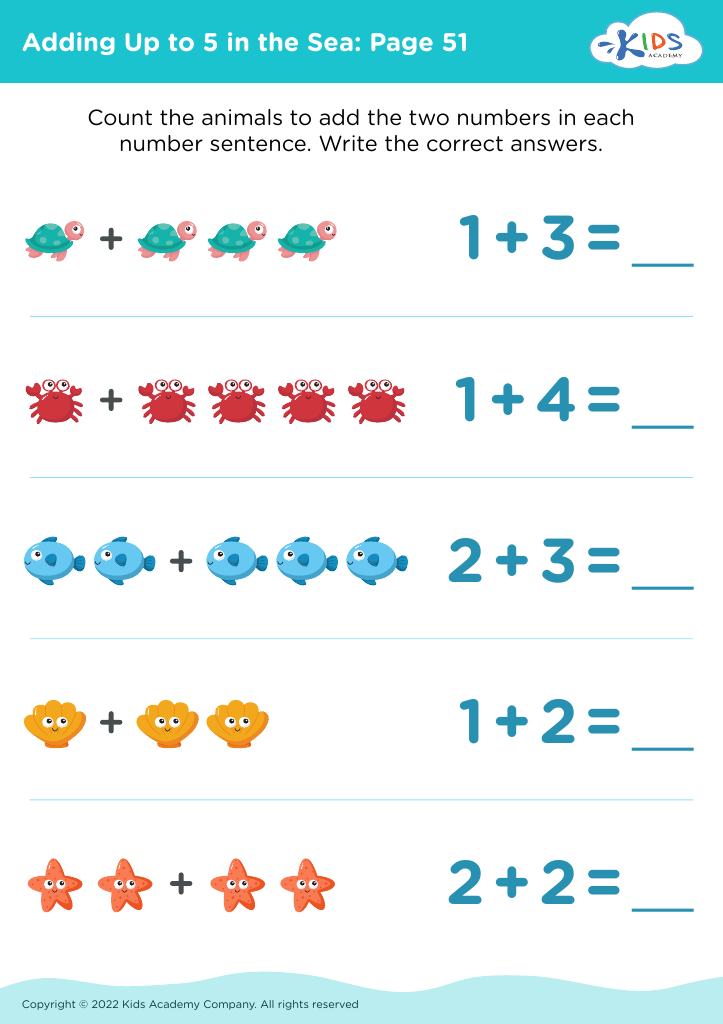
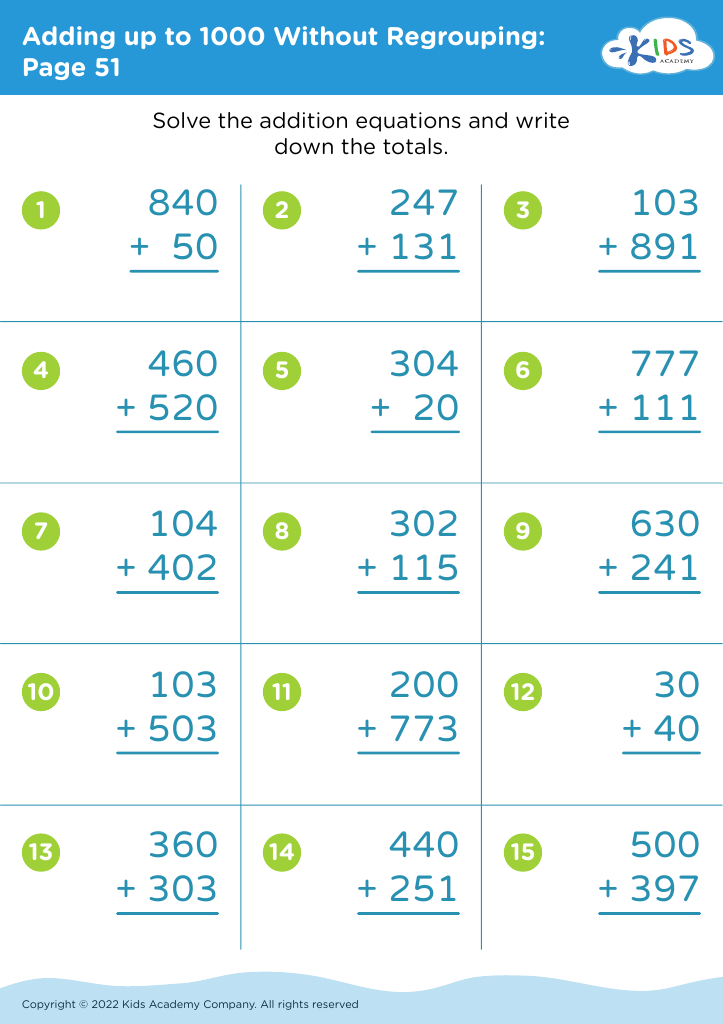
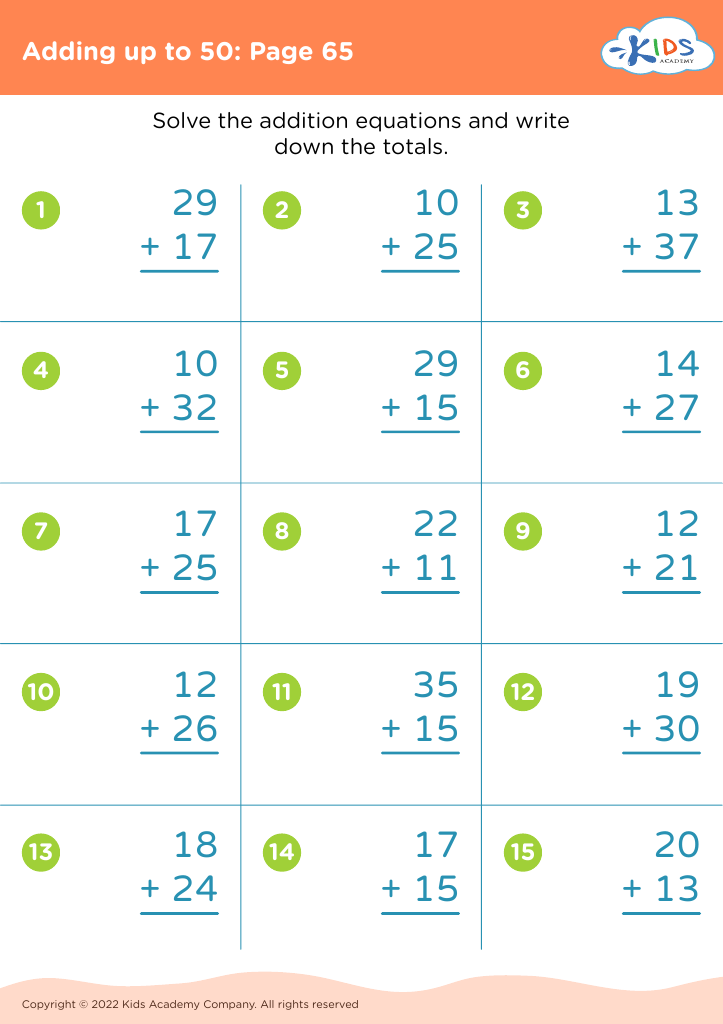








Understanding number relationships and addition is foundational for young children aged 4-7 as it sets the stage for all future mathematical learning. This early mathematical competency nurtures critical thinking, problem-solving skills, and numerical fluency which are crucial for more complex arithmetic operations and intellectual development.
At this age, children are in the formative stages of their cognitive development and are naturally curious. Introducing them to number relationships helps them understand how numbers can interact, relate, and transform. For example, grasping that 2 + 3 equals the same value as 3 + 2 introduces them to the concept of commutativity, which paves the way for more advanced mathematics.
Furthermore, understanding these concepts builds confidence and reduces anxiety toward math. When children can confidently manipulate numbers, they are more likely to enjoy math and pursue it in higher grades. Practical skills, such as telling time, managing money, and even logical reasoning, stem from early addition and numerical relationships.
Teachers and parents play a crucial role by providing engaging learning experiences, whether through games, storytelling, or daily activities. Supporting children in this journey not only enhances their mathematical understanding but also boosts overall intellectual growth, making it imperative for parents and educators to focus on these essential early concepts.








