Understanding number sequences Addition Worksheets for Ages 4-7
3 filtered results
-
From - To
Explore our engaging "Understanding Number Sequences Addition Worksheets for Ages 4-7," designed to elevate young learners' math skills. Perfect for early grade students, these worksheets focus on teaching addition through fun, easy-to-follow number sequences. Children will enhance their counting abilities, recognize patterns, and build a strong foundation in basic math concepts. With vibrant illustrations and interactive exercises, these printables make learning both enjoyable and effective. Help your child develop critical thinking and problem-solving skills, all while mastering the essentials of addition. Ideal for classroom use or at-home practice. Start your child's math journey today!
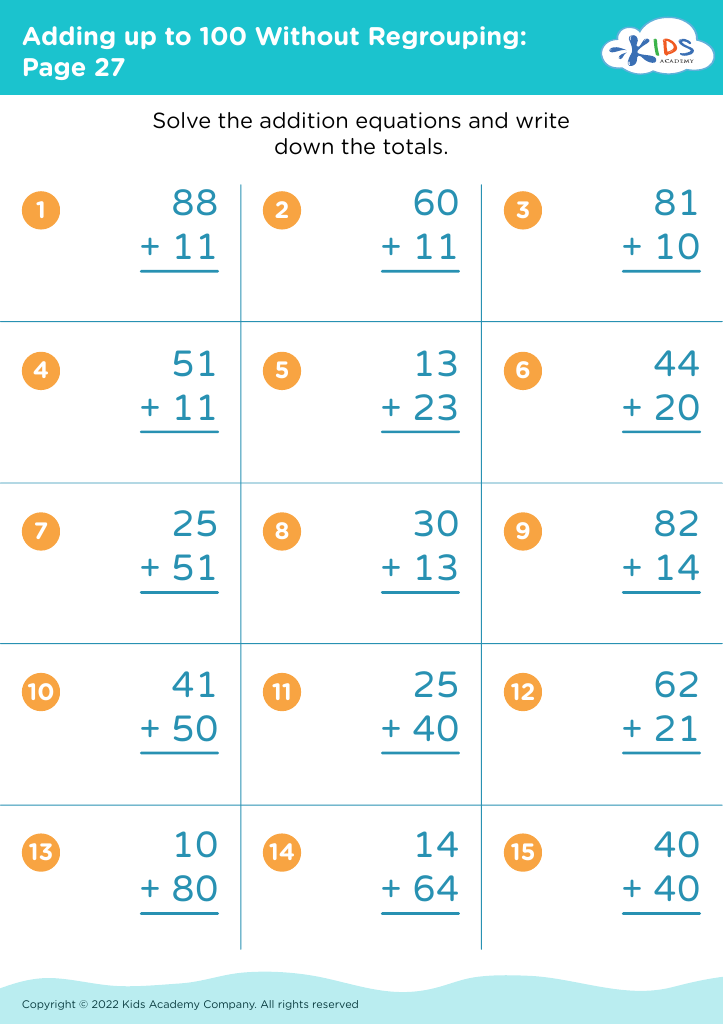
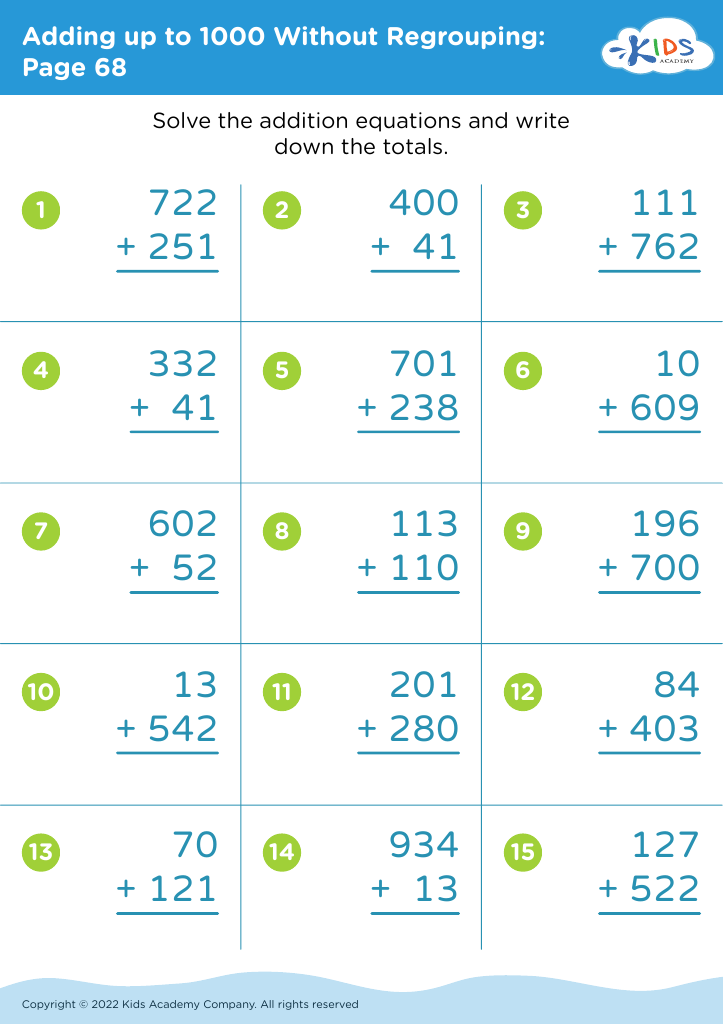
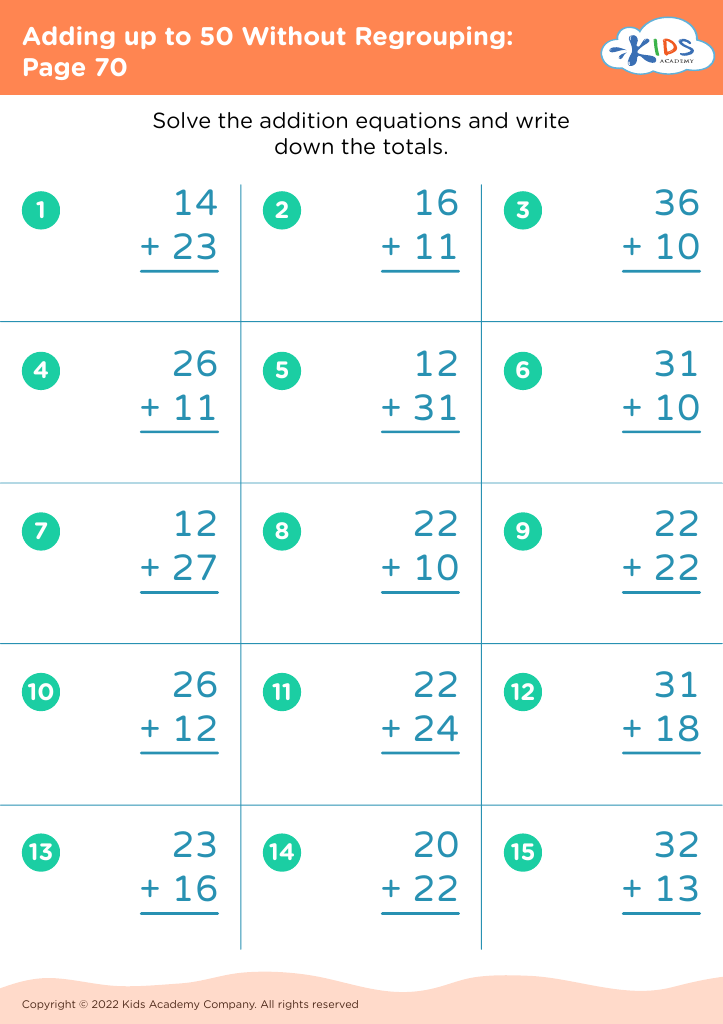







.jpg)
Understanding number sequences and addition is crucial for young children aged 4-7 as it lays the foundational skills for future mathematical learning and cognitive development. At this formative age, grasping number sequences helps children recognize patterns, which is a fundamental aspect of logical thinking and problem-solving. Knowing how to order numbers helps in everyday tasks and builds a sense of how numbers relate to each other.
Addition, meanwhile, introduces kids to basic arithmetic, showing them how to combine quantities in meaningful ways. These skills are essential not just in mathematics, but in understanding daily activities, such as counting items, telling time, and managing money as they grow older.
Moreover, early proficiency in number sequence and addition fosters confidence. When children master these skills at an early age, they build a positive attitude towards math, making them more likely to be successful and less anxious in later, more complex math topics. This confidence can spill over into other subjects, enhancing overall academic performance.
Parents and teachers play a vital role by providing engaging and age-appropriate activities that strengthen these skills. Toys, games, visual aids, and hands-on activities can make learning addition and number sequences enjoyable. In turn, this nurtures curiosity and a lifelong love for learning, equipping children with indispensable analytical skills for the future.








