Understanding sequencing Addition Worksheets for Ages 4-7
7 filtered results
-
From - To
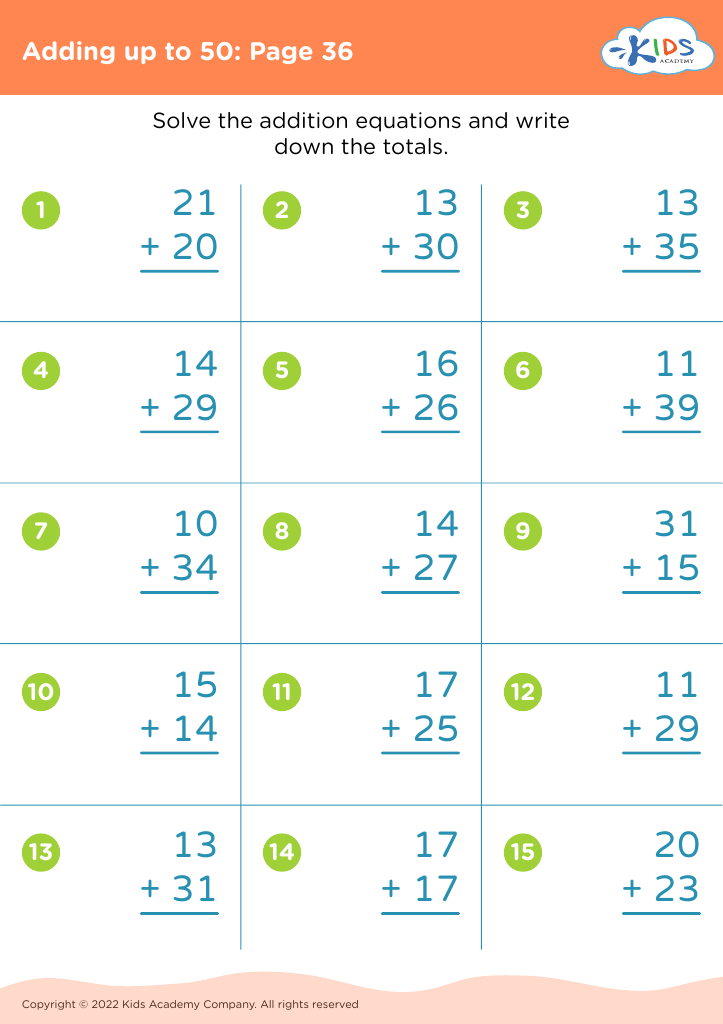
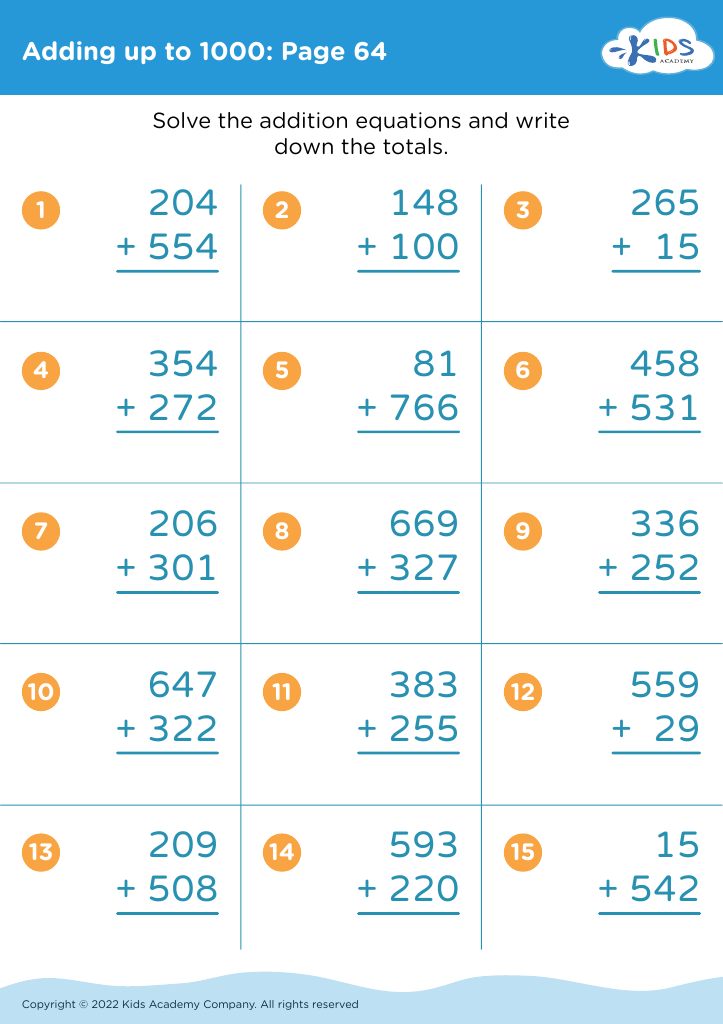
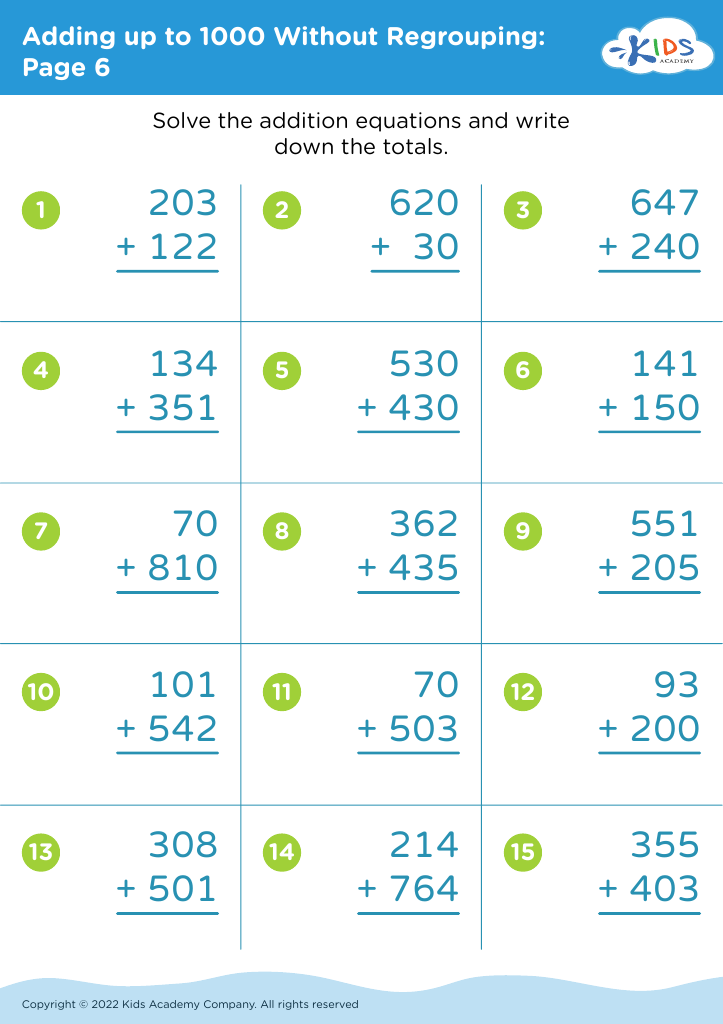
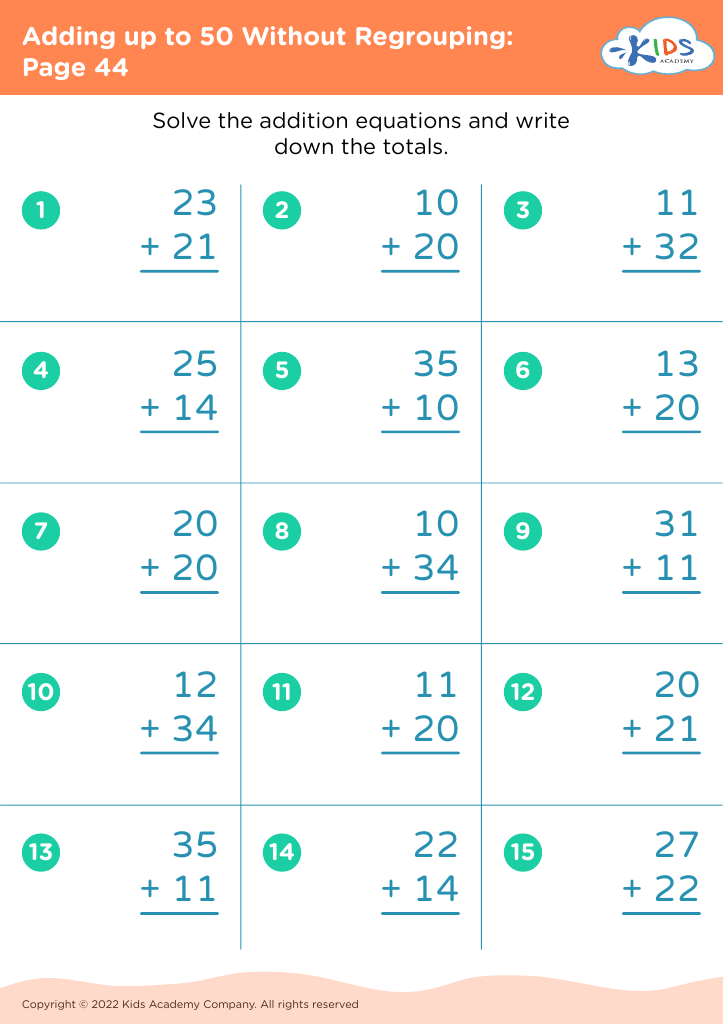
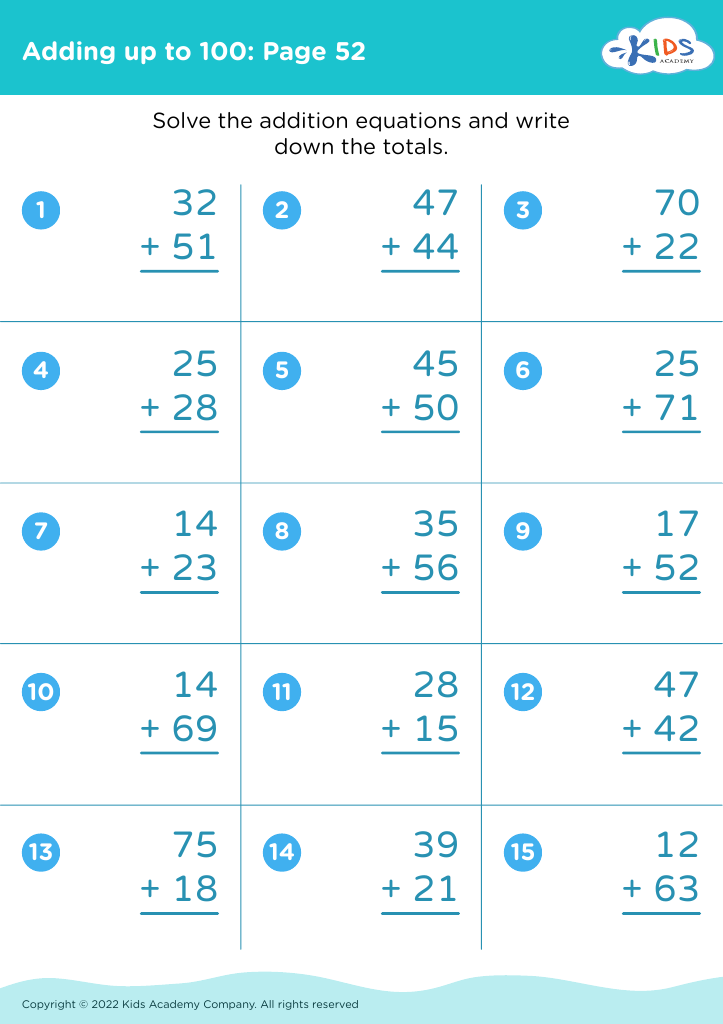
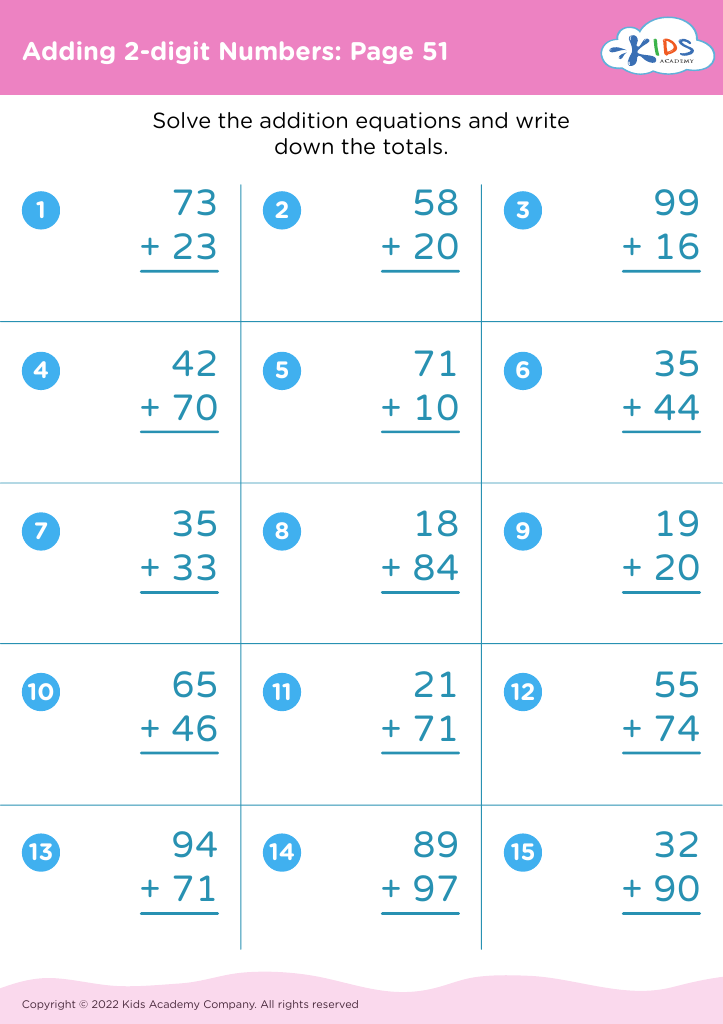
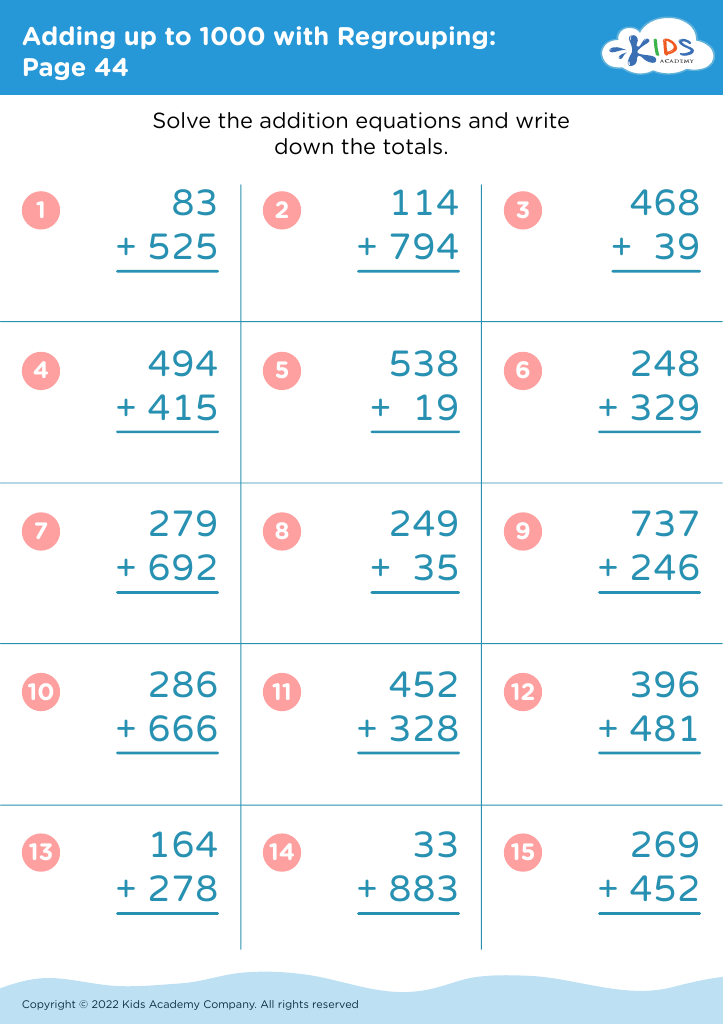
Unlock the foundational skills of mathematics with our "Understanding Sequencing Addition Worksheets" designed for children ages 4-7. These engaging worksheets provide young learners with delightful exercises that promote not only addition skills but also the ability to recognize and understand sequences. Students will explore the relationship between numbers through fun activities, enhancing their problem-solving abilities and critical thinking. Perfect for home or classroom use, these worksheets combine visual aids and interactive tasks to make learning enjoyable and effective. Support your child's math journey and cultivate their enthusiasm for learning with our colorful and thoughtfully crafted resources!




.jpg)



Understanding sequencing in addition is crucial for children aged 4-7, as it lays a foundational skill for their mathematical development. At this age, children are not just learning to add numbers; they are constructing an essential framework for logical thinking and problem-solving. Sequencing helps them grasp the order of operations, develop event-based thinking, and improve comprehension skills—vital elements for future success in math and other subjects.
For parents and teachers, fostering an understanding of sequencing presents an opportunity to enhance overall cognitive abilities in young learners. Engaging in sequential addition activities—like counting objects in groups, using visual aids, and playing math games—makes learning more interactive and enjoyable. It helps children not only understand numbers but also context, as they learn how addition can connect to real-world scenarios.
Moreover, mastering sequencing can ease anxiety around math and build confidence. Children who struggle to see the relationship between numbers may dread math, but a strong grasp of sequencing encourages a positive mindset. Ultimately, parents and teachers should care about understanding sequencing in addition because it equips children with critical life skills, promotes a love for learning, and ensures a smooth transition to more complex mathematical concepts as they grow.








