Underwater animal identification Addition Worksheets for Ages 4-7
3 filtered results
-
From - To
Dive into learning with our Underwater Animal Identification Addition Worksheets designed for children ages 4-7! These engaging worksheets combine math and marine life, helping young learners identify various underwater animals while practicing their addition skills. Each activity offers colorful illustrations and fun scenarios that promote visual recognition and foundational math abilities. Ideal for home or classroom use, our worksheets encourage interactive learning and make math enjoyable. Watch as your child develops confidence in their arithmetic skills while exploring the fascinating world beneath the waves. Perfect for early grade teachers, parents, and caregivers looking to inspire a love for math and nature!
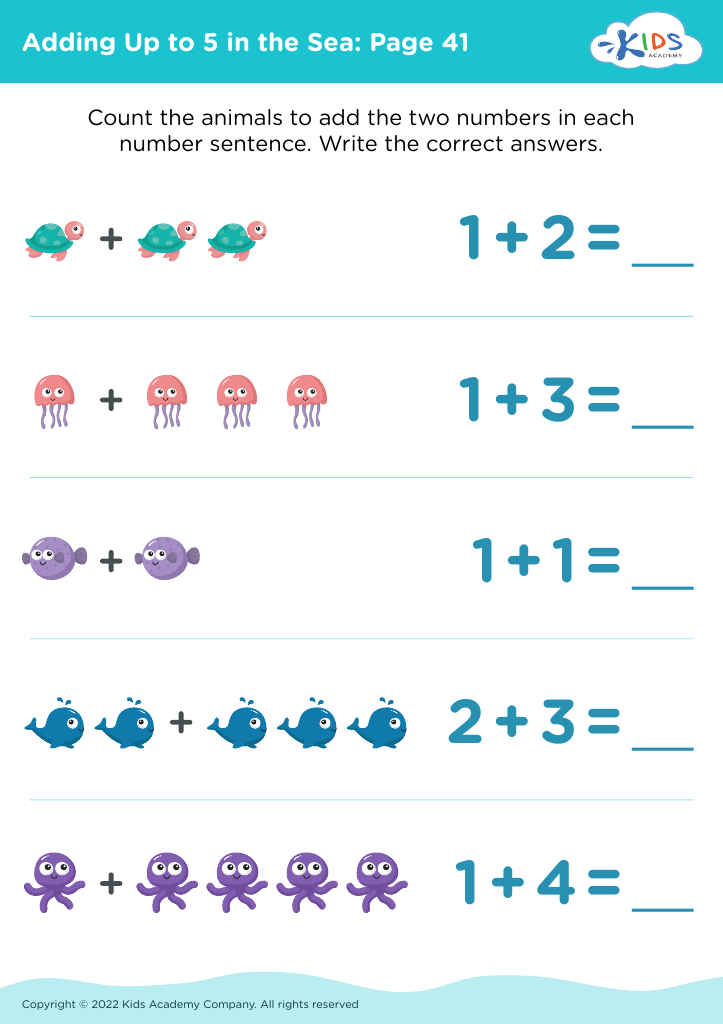
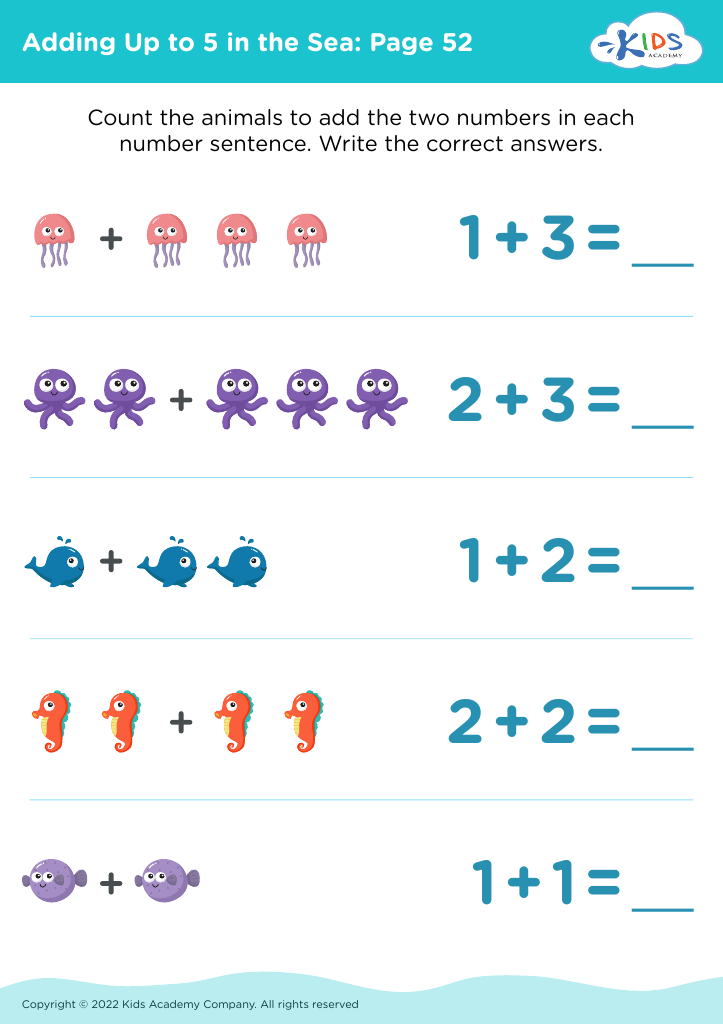
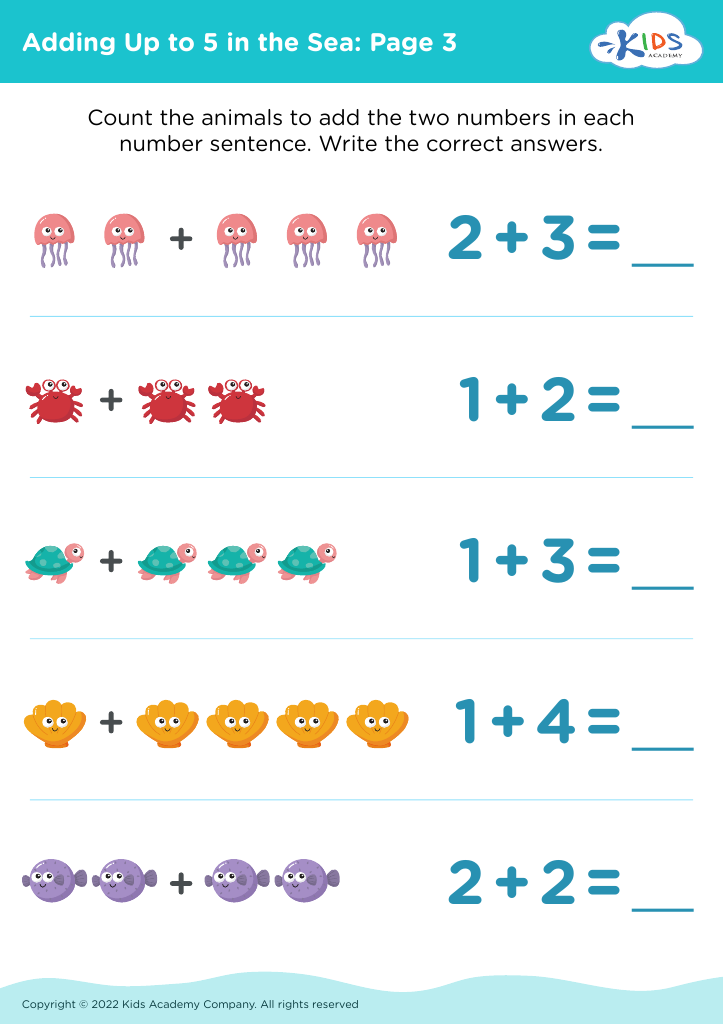








Parents and teachers should care about underwater animal identification for children aged 4-7 because it fosters essential skills and learning through engaging and immersive experiences. Understanding marine life not only captivates young minds but also lays the groundwork for environmental awareness and scientific inquiry. At this age, children are naturally curious, and teaching them to identify underwater animals can spark interest in biology, ecology, and the natural world.
Moreover, this activity promotes critical thinking and observation skills. By exploring features and characteristics of various underwater animals, children enhance their analytical capabilities and develop a nuanced understanding of biodiversity. Activities centered around animal identification can also be utilized to improve vocabulary and communication skills.
Additionally, integrating underwater animal identification into educational settings promotes collaborative learning and teamwork. Group discussions and projects allow children to share insights and knowledge, fostering social skills and relationships. Ultimately, by caring about this aspect of early education, parents and teachers equip children with valuable knowledge about marine ecosystems, urging them to become responsible stewards of the environment and increasing their appreciation for the world around them. This foundational learning lays the path for a lifetime of curiosity and respect for nature.








