Visual interpretation Addition Worksheets for Ages 4-7
5 filtered results
-
From - To
Enhance your child's math skills with our engaging Visual Interpretation Addition Worksheets designed for ages 4-7. These worksheets utilize vibrant illustrations and hands-on activities to help young learners grasp addition concepts through visual learning. By integrating colorful images and relatable scenarios, children can easily connect numbers to real-life contexts, making math fun and intuitive. Perfect for classroom settings or home practice, our visual worksheets promote critical thinking and reinforce fundamental math skills in an interactive way. Join us and support your child's mathematical journey while fostering a love for learning through playful exploration!
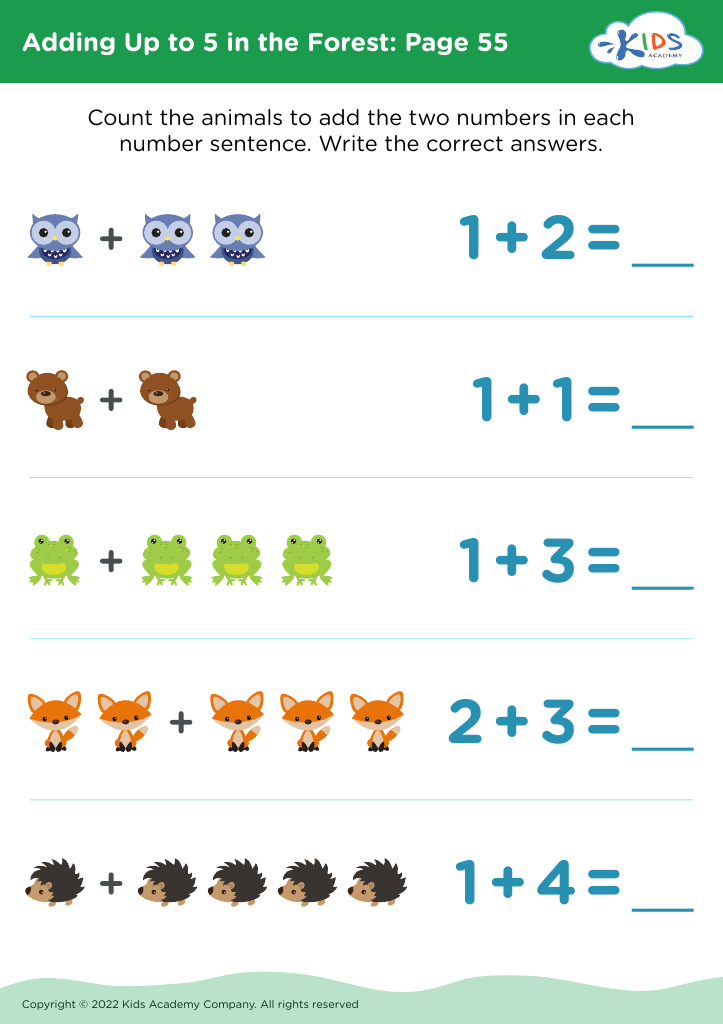
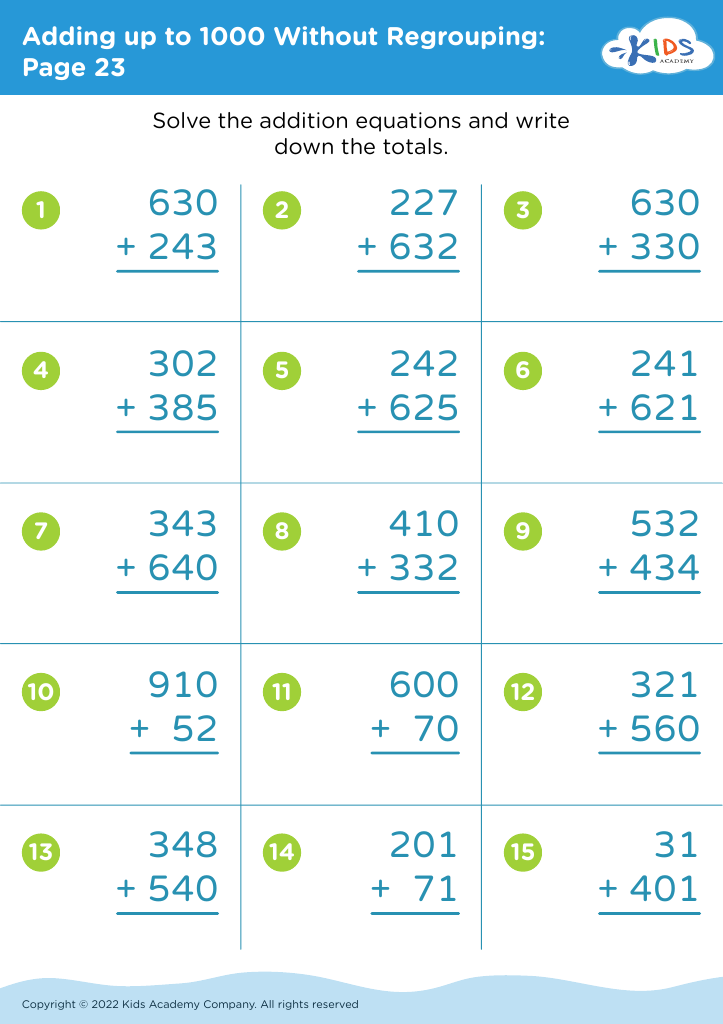
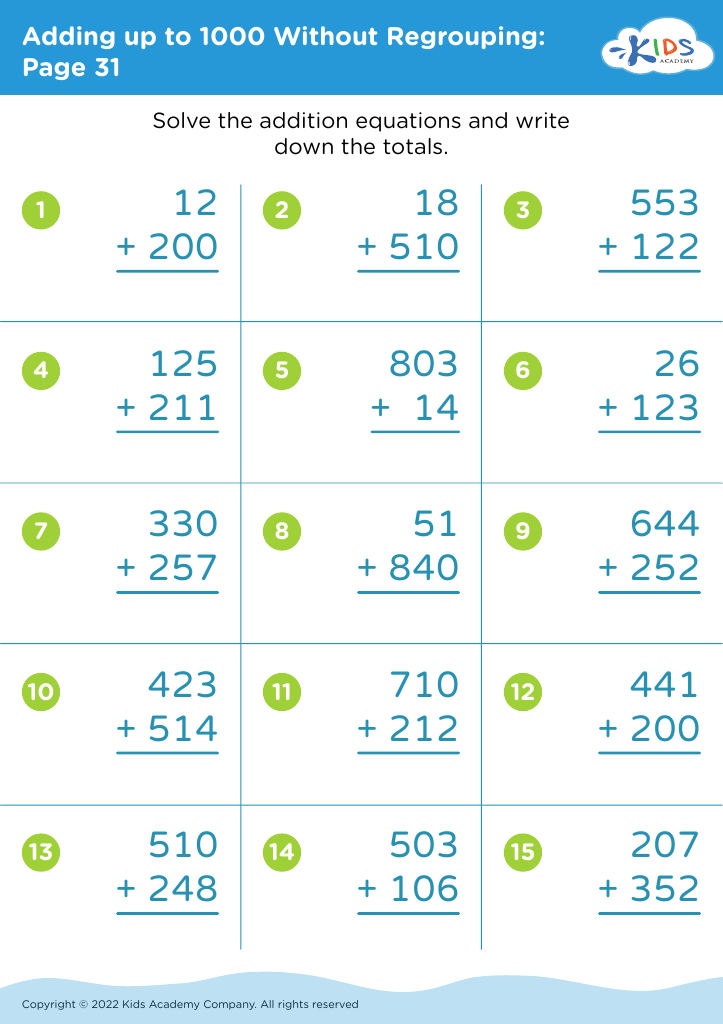
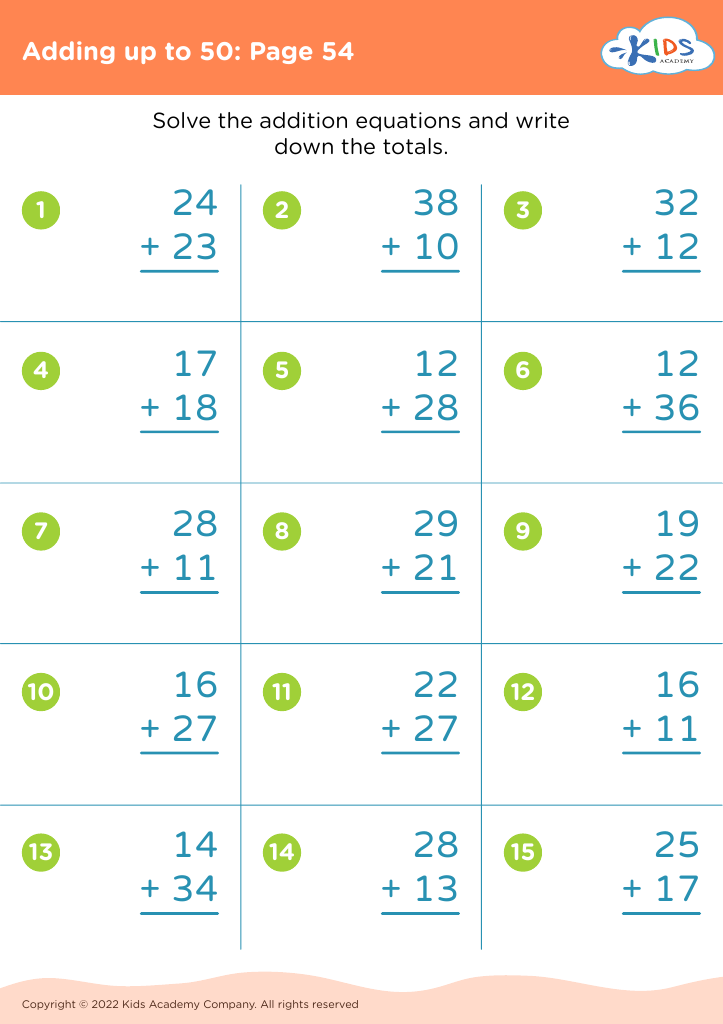
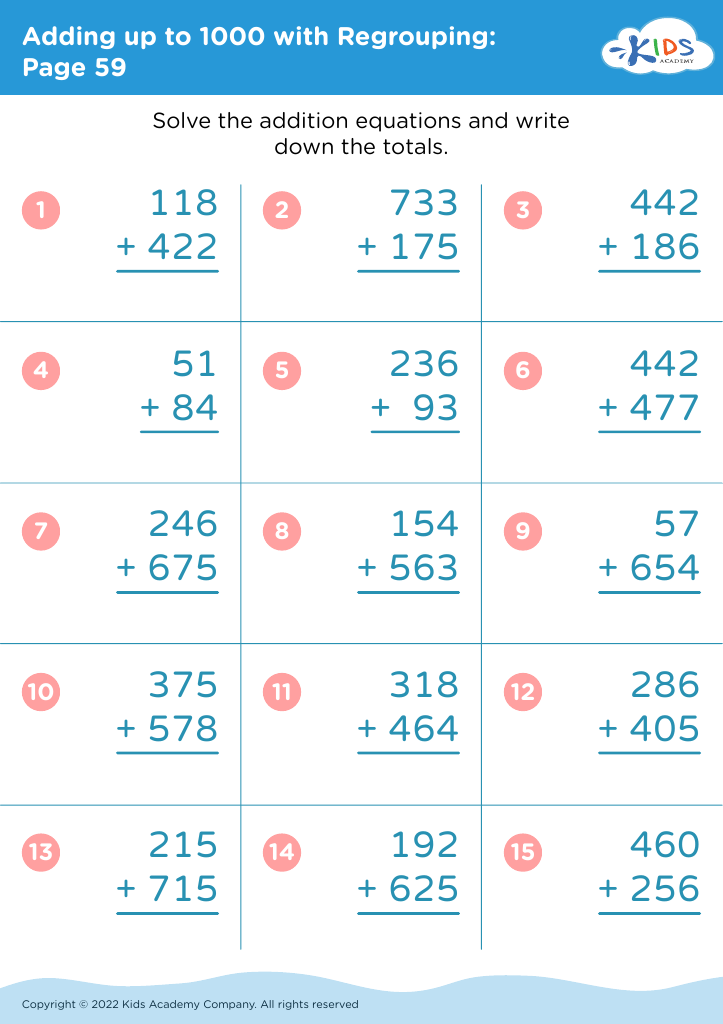








Visual interpretation of addition is crucial for children aged 4-7, as it lays the foundational skills for numeracy and problem-solving. During these formative years, children's cognitive abilities are rapidly developing, and incorporating visual aids can significantly enhance their understanding of mathematical concepts. Visual interpretation, such as number lines, counters, or drawings, helps children concretely grasp the concept of quantity and enhances their ability to manipulate numbers mentally.
Moreover, visual representation supports differentiated learning; children who might struggle with traditional methods can access and understand math better through engaging, dynamic visuals. As they progress in their education, strong visual skills will contribute to their ability to tackle more complex math concepts, making it essential to cultivate these skills early on.
Additionally, visual interpretation promotes critical thinking and encourages a deeper exploration of mathematics beyond rote memorization. Parents and teachers should prioritize this approach as it not only makes learning math enjoyable but also builds children's confidence, ultimately setting them up for success in later academic pursuits. Hence, fostering visual interpretation from an early age is vital for laying a strong mathematical foundation, ensuring children's long-term academic achievement and a positive attitude towards learning.








