Visual learning reinforcement Addition Worksheets for Ages 4-7
6 filtered results
-
From - To
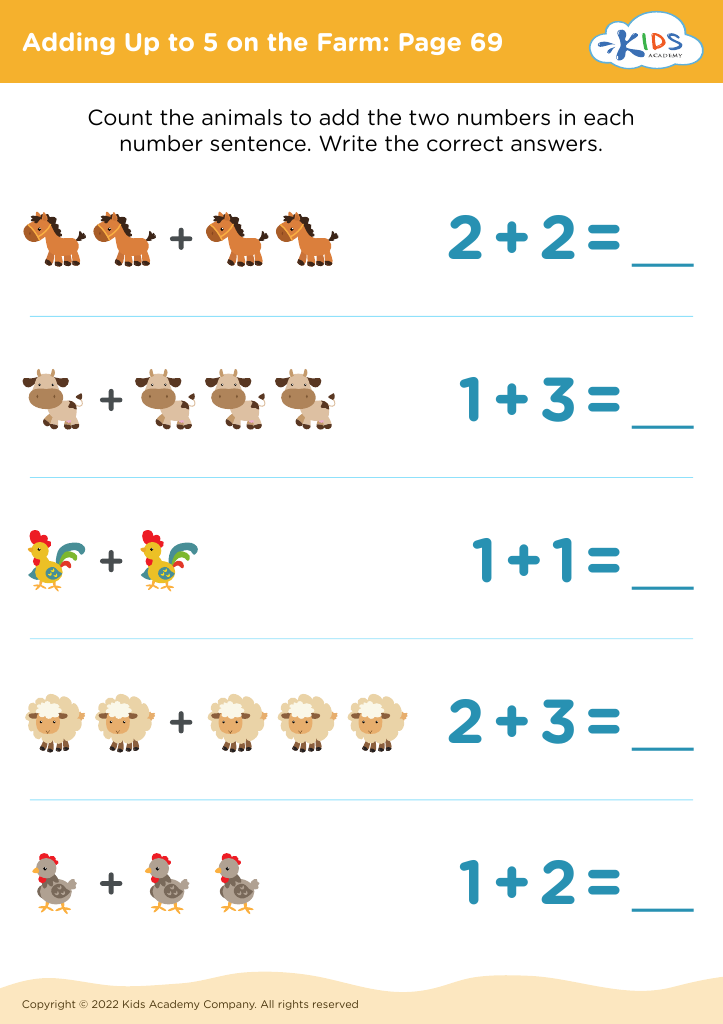
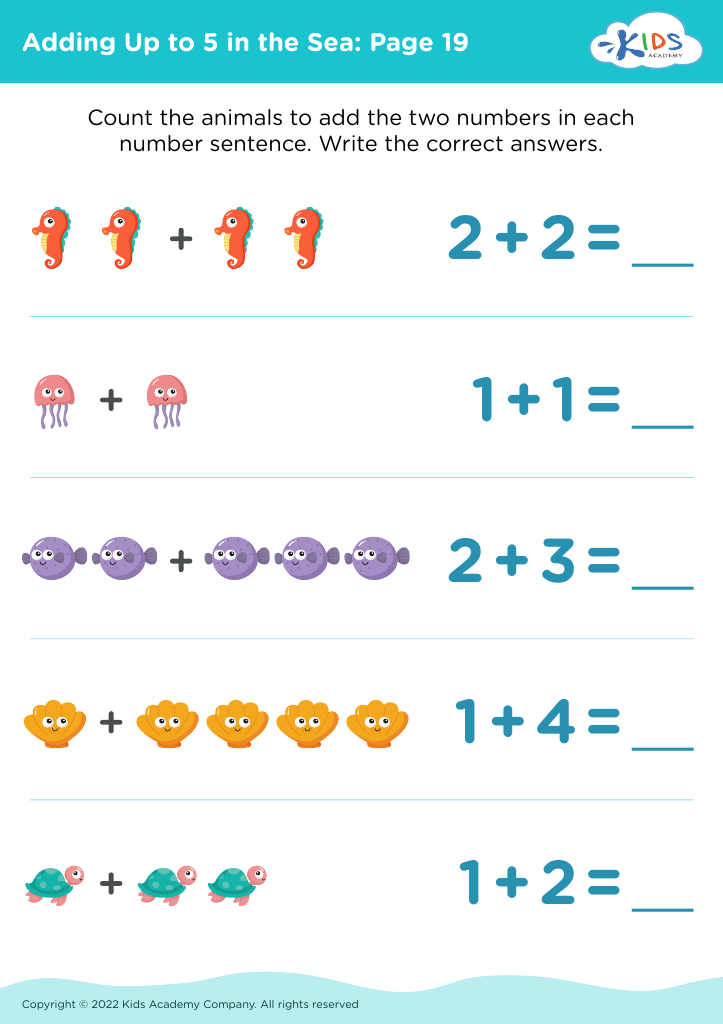
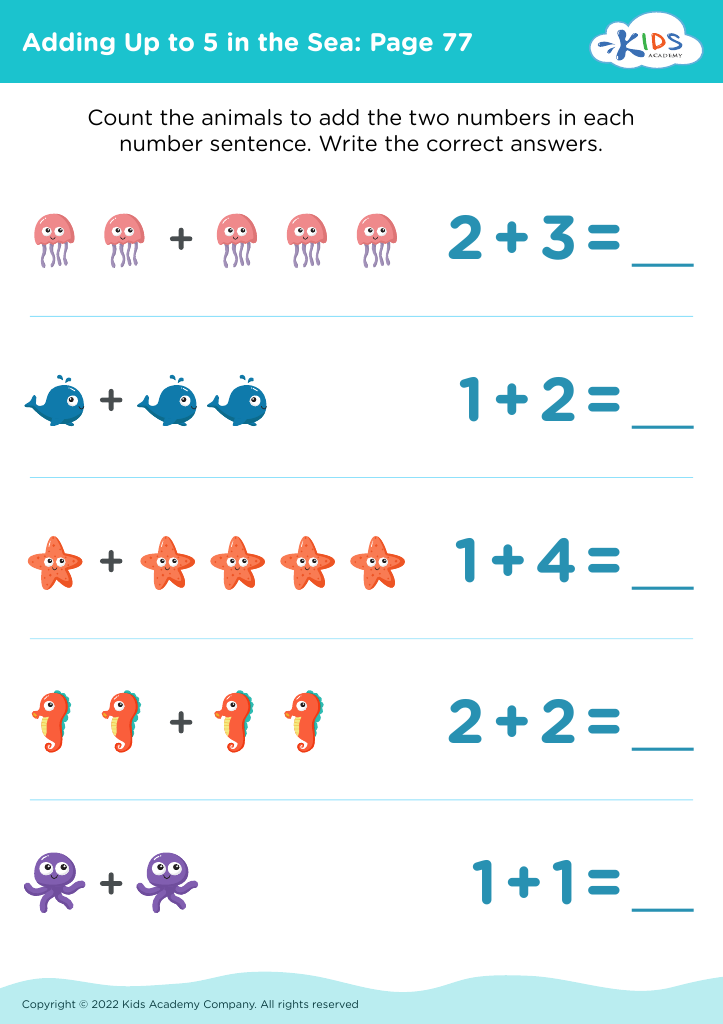
Our "Visual Learning Reinforcement Addition Worksheets" for ages 4-7 provide an engaging and effective way for young learners to master addition. Designed with colorful visuals and fun themes, these worksheets help children understand and recall addition concepts confidently. Each page features a variety of addition problems paired with visual aids like pictures, number lines, and fun characters to keep children motivated and interested. Ideal for both classroom and at-home learning, our worksheets support skill development, enhance problem-solving strategies, and make learning math enjoyable. Start building a solid foundation in math with these delightful worksheets today!
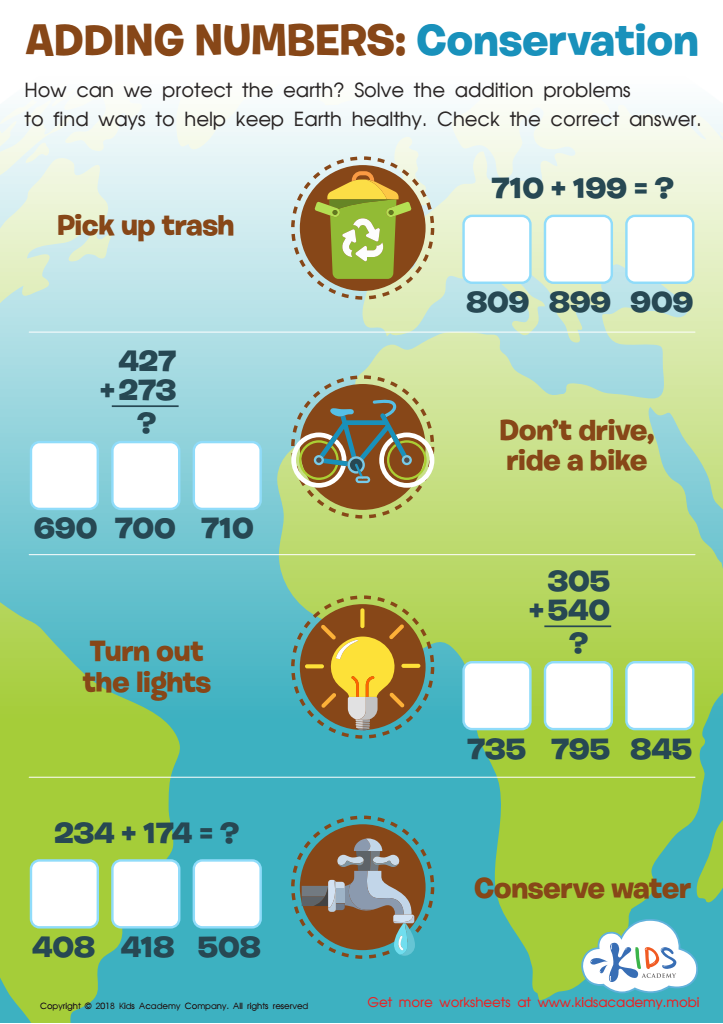
Adding Numbers: Conservation Worksheet
 Assign to My Students
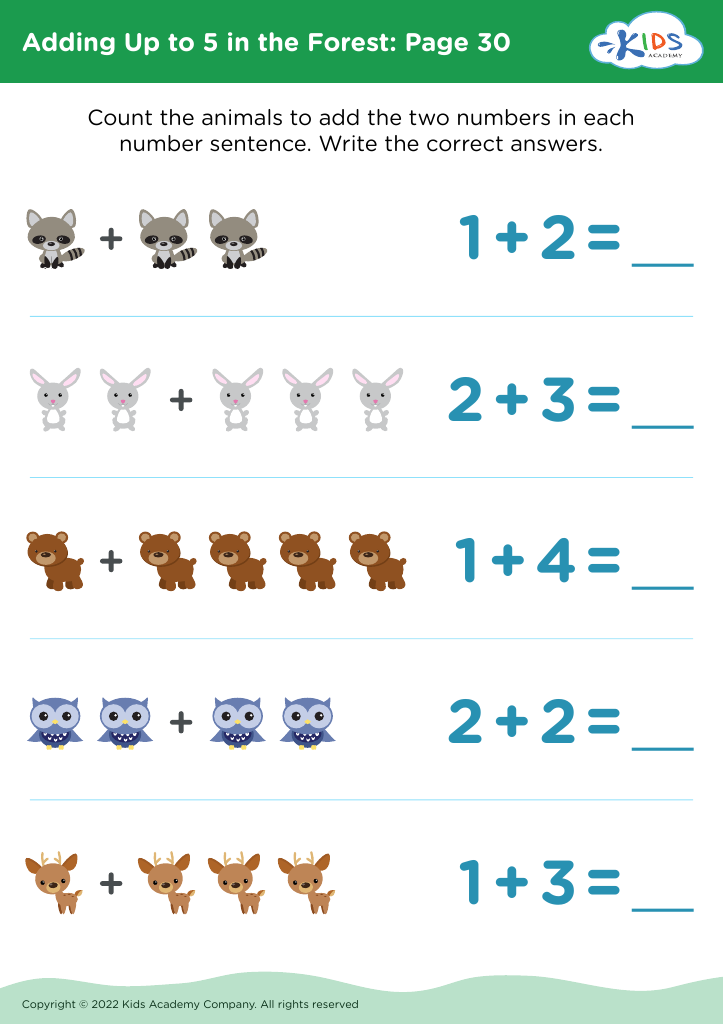
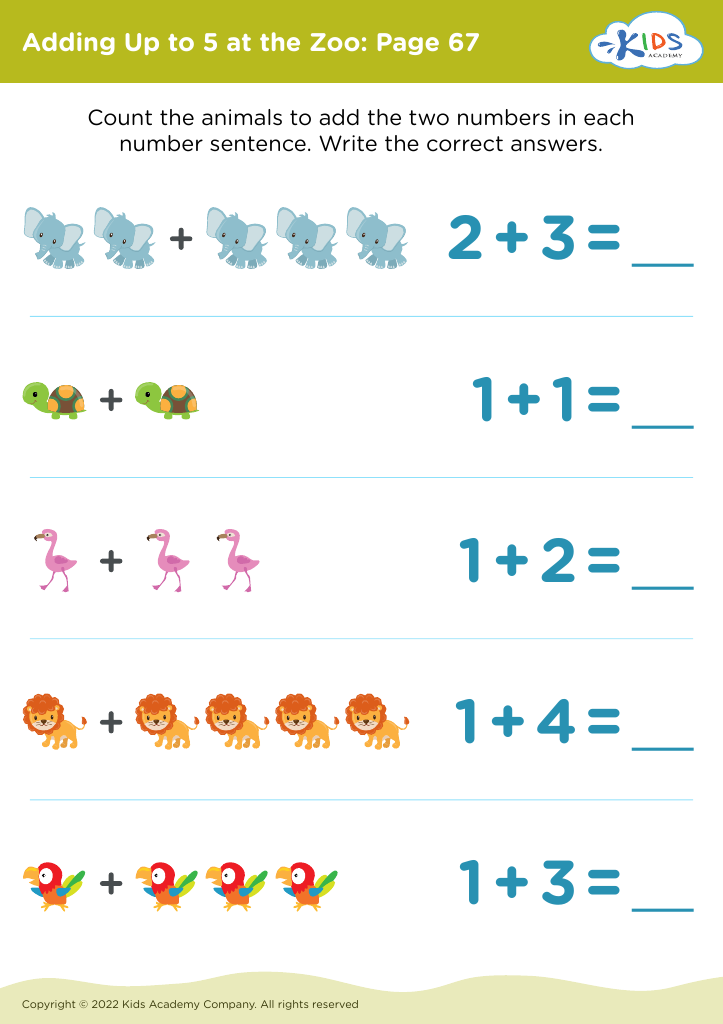



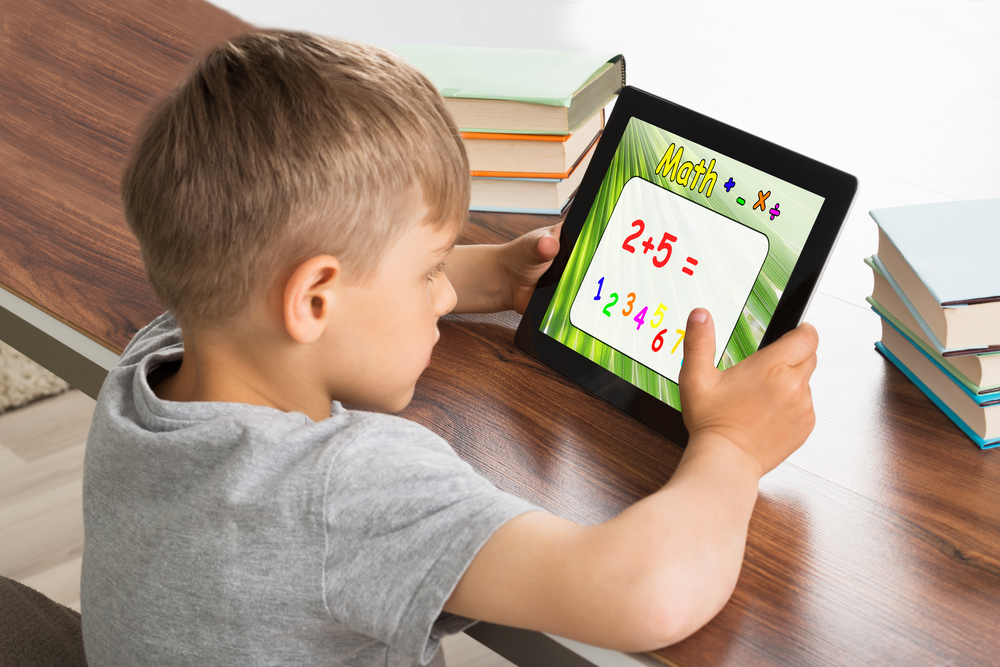




Visual learning reinforcement in teaching addition to children ages 4-7 is crucial for several reasons. At this developmental stage, young learners are naturally more engaged by visual stimuli, as their cognitive abilities are still developing. Visual aids like pictures, colorful tokens, and interactive tools help them better grasp abstract mathematical concepts.
First, visual learning aids make abstract concepts concrete. Whether through physical objects like counting bears or digital graphics such as animated number lines, visual representations simplify the addition process by making it tangible. This concrete understanding forms a foundation for more complex mathematical operations in later years.
Second, visual reinforcement enhances memory retention. When children see addition displayed in multiple formats—such as through number bonds, ten-frames, or addition charts—they are more likely to remember these concepts. Visualization coupled with action strengthens neural pathways, aiding long-term retention.
Third, visual aids cater to varied learning styles. Not all children learn the same way; some may find auditory narration ineffective, while visual illustrations click instantly. Visual reinforcement helps diverse learners achieve academic success, boosting their confidence and enthusiasm for math.
Lastly, visual reinforcement can engage and motivate children. Fun, interactive, and visually appealing tools transform learning into an enjoyable activity rather than a chore, sparking curiosity and fostering a love for math from a young age. Ensuring children have access to visual learning tools can significantly impact their mathematical development.








