Visual Perception Skills Addition Worksheets for Ages 4-7
5 filtered results
-
From - To
Enhance your child's math skills with our engaging Visual Perception Skills Addition Worksheets designed for kids ages 4-7! These fun and interactive worksheets focus on developing essential visual perception abilities while reinforcing basic addition concepts. With a variety of colorful images and thoughtfully crafted exercises, your little learners will improve their ability to recognize patterns, shapes, and quantities. Whether at home or in the classroom, these worksheets make learning math enjoyable and effective. Perfect for early education settings, our resources are tailored to support young minds in building strong foundational skills in math. Download now and watch your child's confidence grow!
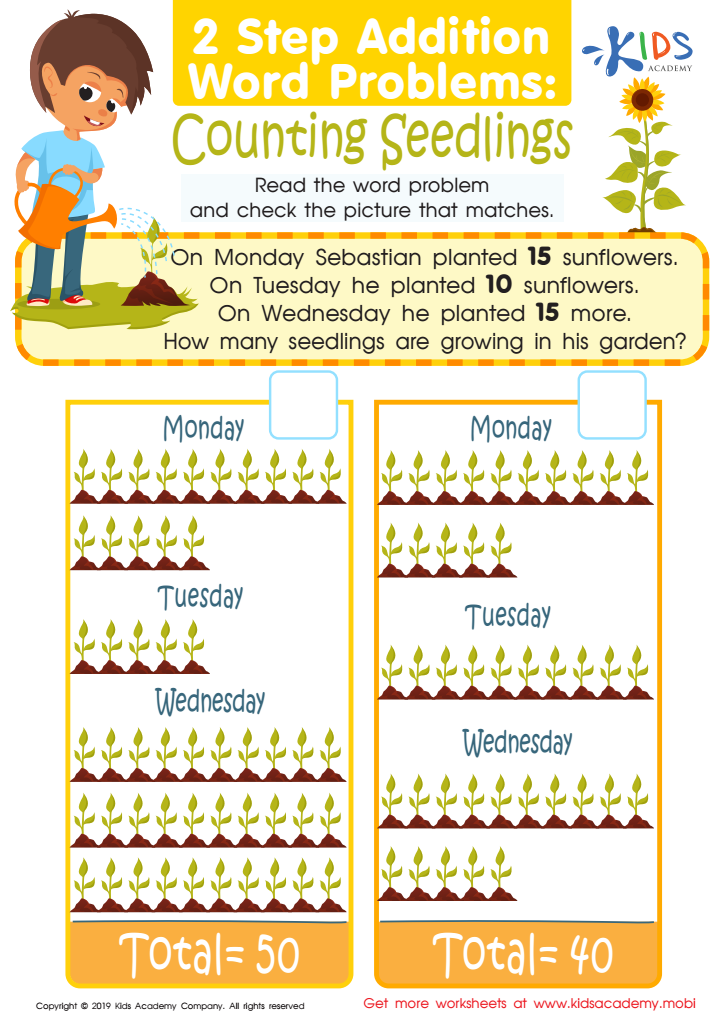
Counting Seedlings Worksheet
 Assign to My Students
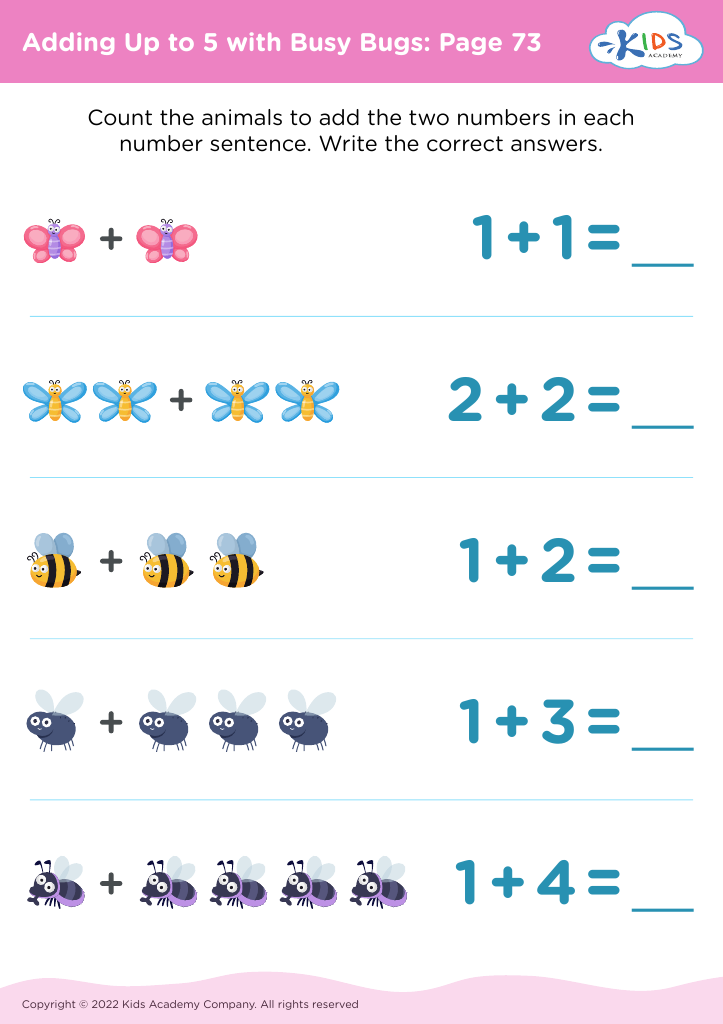
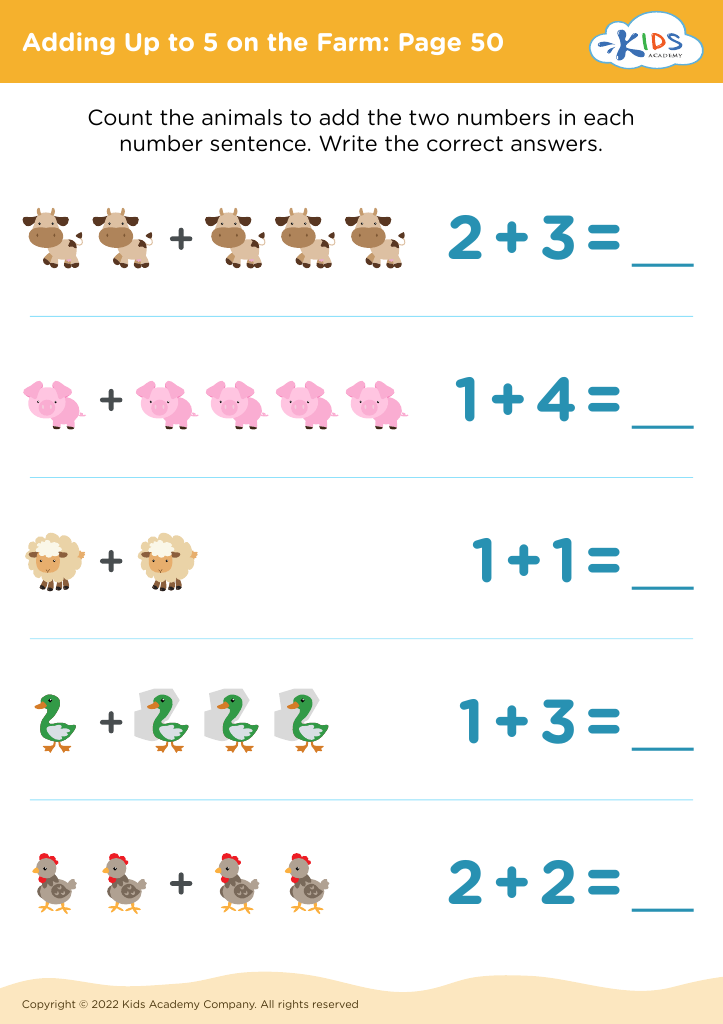
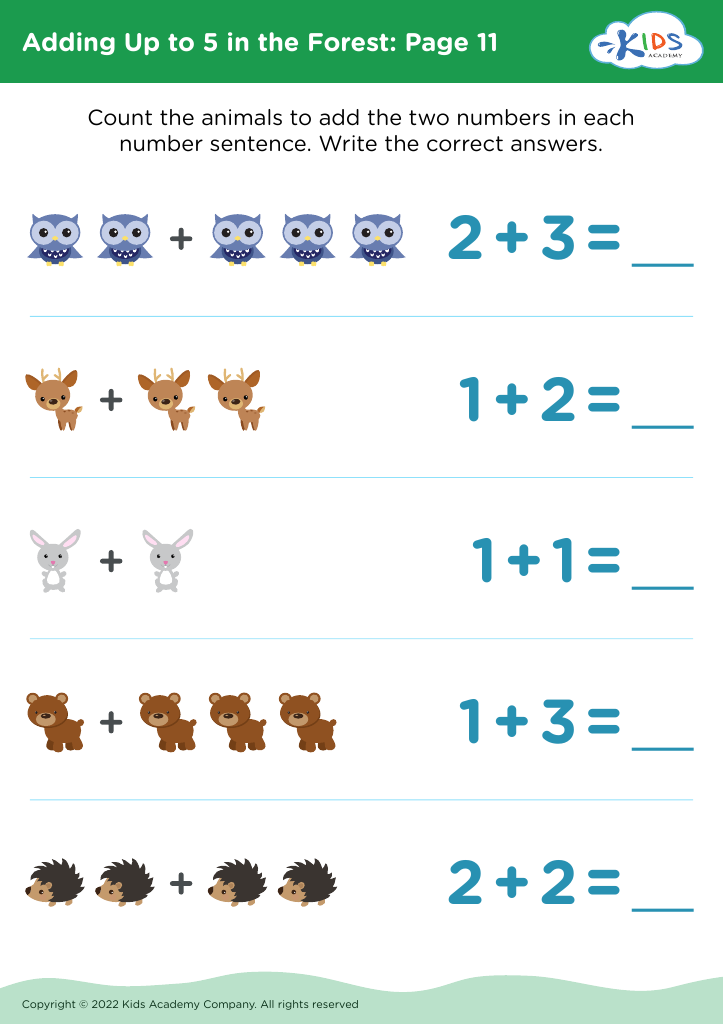
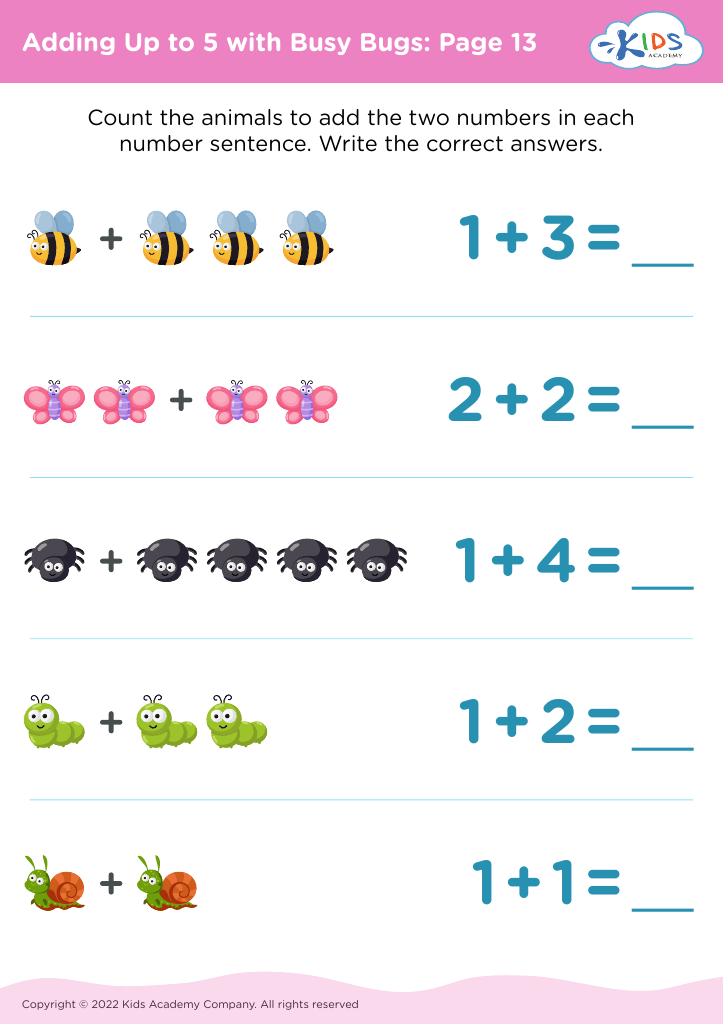








Visual perception skills are crucial for children aged 4-7 as they form the foundation for numerous learning experiences and daily activities. These skills involve the ability to interpret and make sense of visual information, encompassing aspects like distinguishing shapes, recognizing patterns, and understanding spatial relationships. For parents and teachers, nurturing these abilities is essential because they directly impact a child's academic success, particularly in early literacy and math skills.
Children who struggle with visual perception may face difficulties in reading (struggling to recognize letters) and math (misinterpreting numbers or symbols). Early intervention and focused activities can enhance these skills, promoting confidence and motivation in learning. By integrating games, puzzles, and hands-on activities that target visual perception into home and classroom environments, caregivers can foster critical thinking and problem-solving abilities.
Moreover, strong visual perception skills can aid in fine motor development, helping children master tasks like writing and drawing. As a result, parents and teachers should prioritize these skills to support overall developmental growth, ensuring that children build a solid foundation for future academic and life success. Investing time and resources in visual perception helps create an enriching environment that encourages learning and discovery.








