Visual representation comprehension Addition Worksheets for Ages 4-7
5 filtered results
-
From - To
Explore our engaging Visual Representation Comprehension Addition Worksheets designed specifically for children aged 4-7. These worksheets utilize colorful visuals and relatable scenarios to enhance young learners' understanding of addition concepts. By connecting numbers to illustrative images, children will build their math skills in a fun and interactive way. Each worksheet encourages critical thinking, fosters problem-solving, and captures children's attention, making learning enjoyable. Perfect for classroom use or at-home practice, these resources help ensure children develop a strong foundation in math while boosting their confidence. Dive into a world of learning with our visually appealing worksheets and watch your child excel in addition!
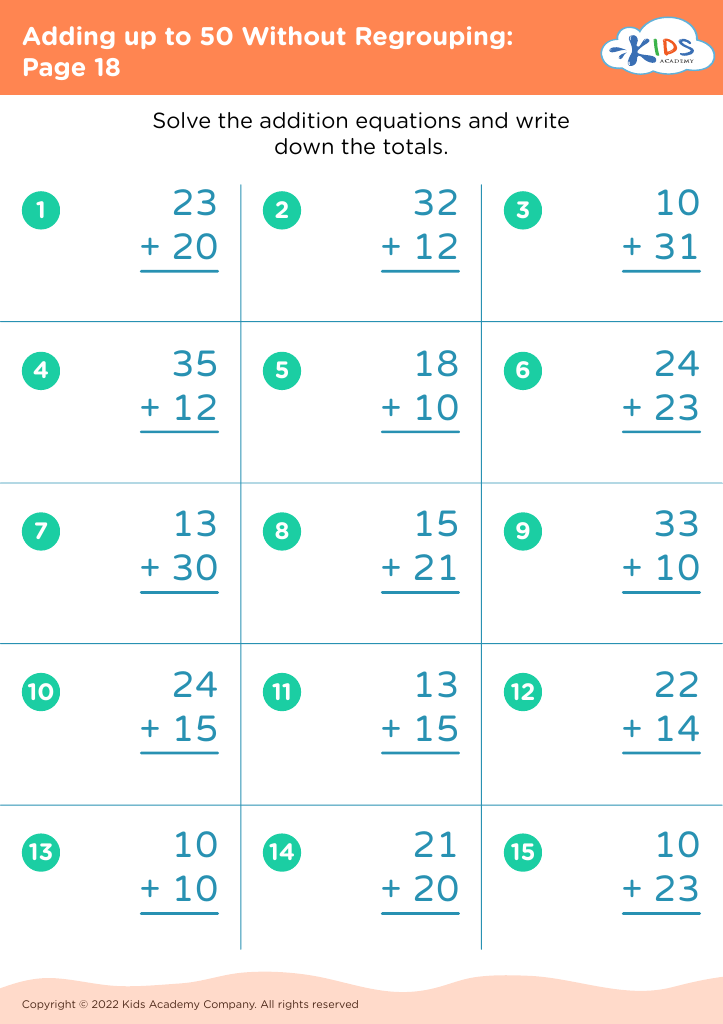
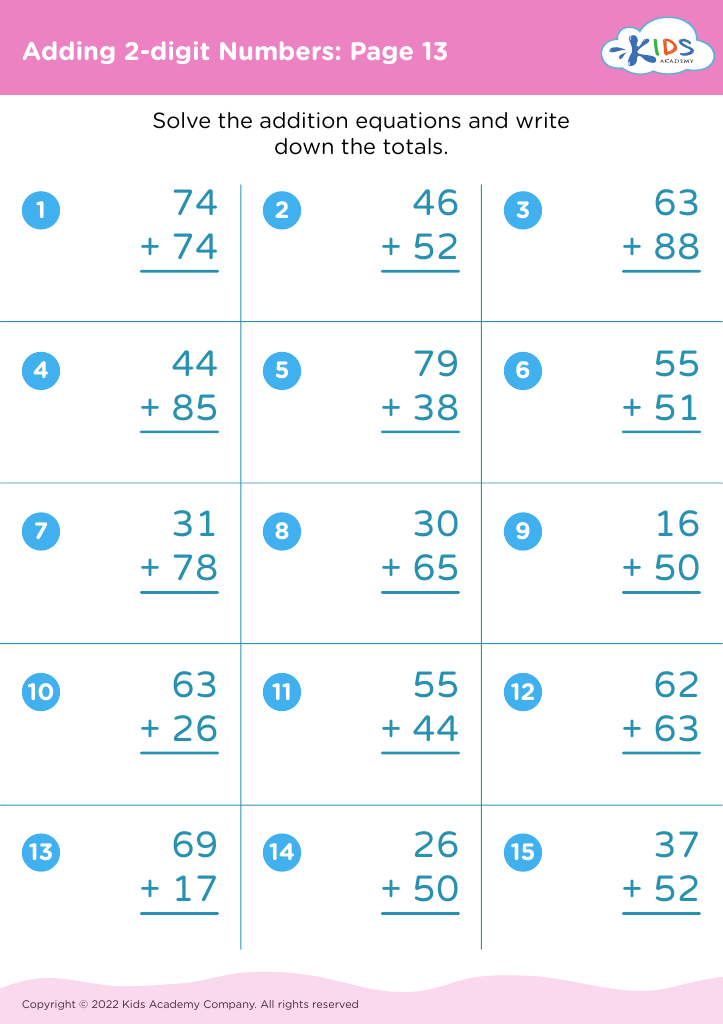
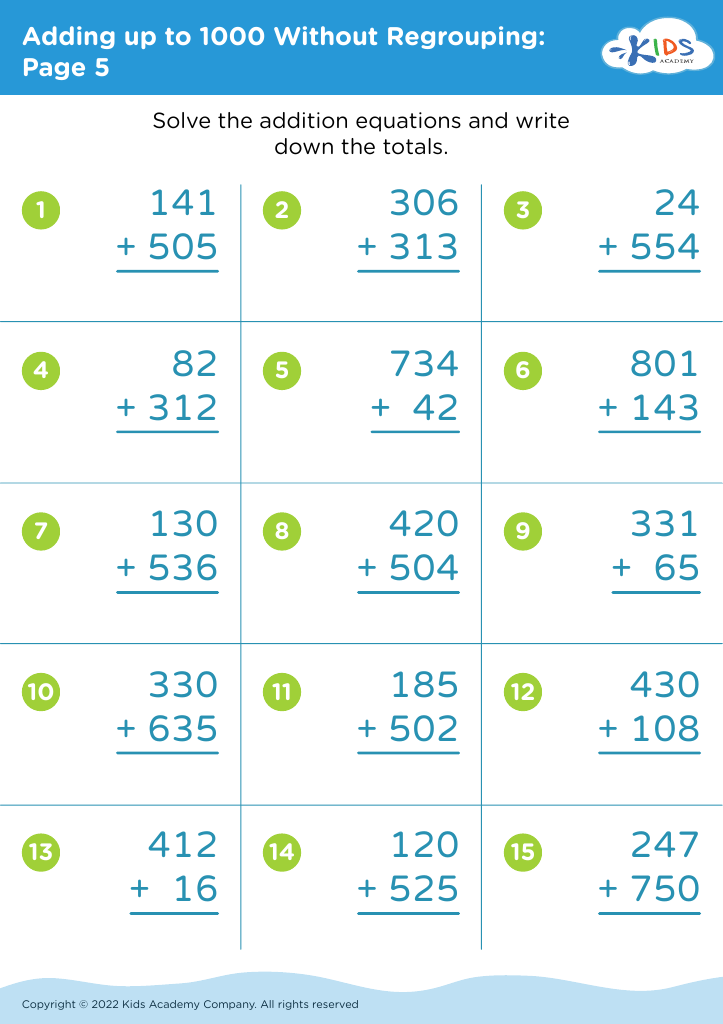
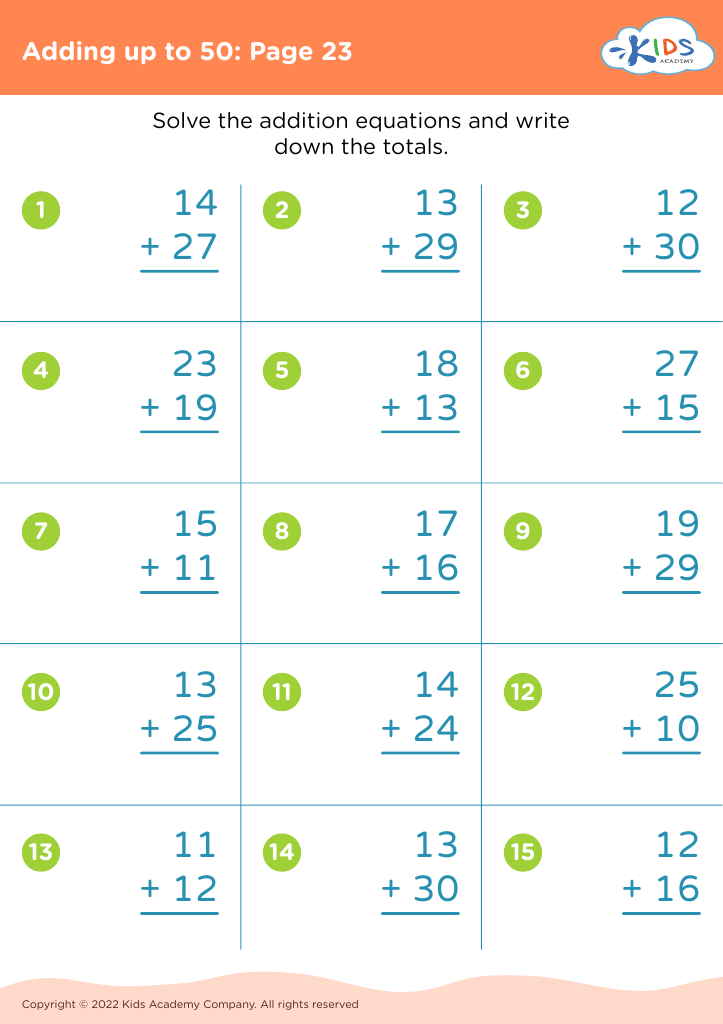
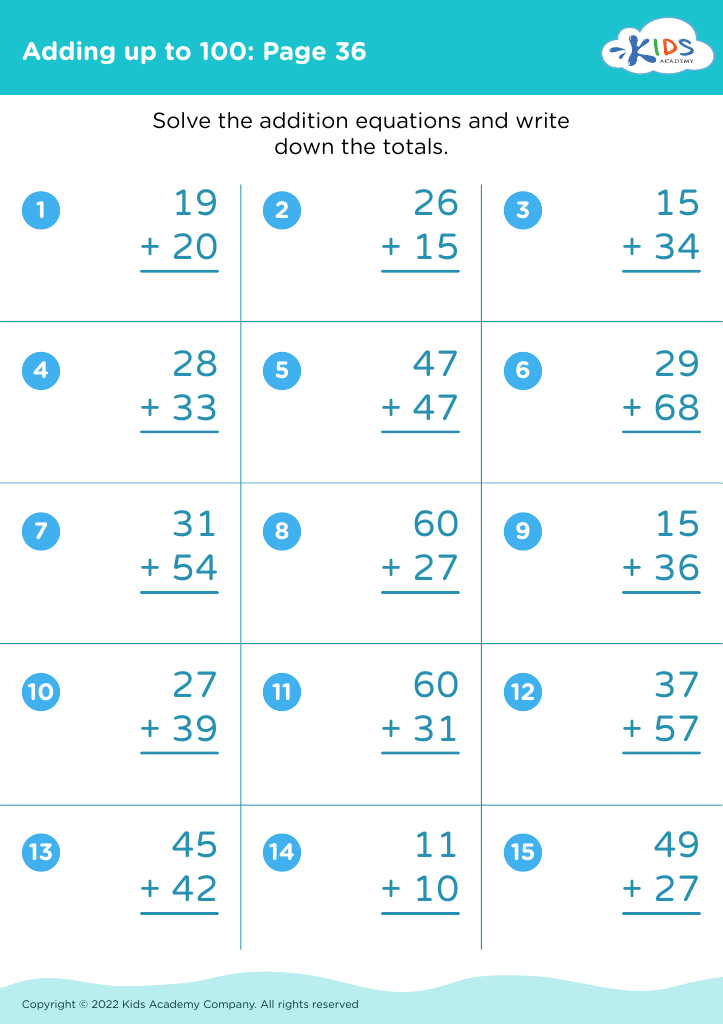








Visual representation comprehension is crucial for young learners, especially in foundational math skills like addition, for several reasons. First, at ages 4-7, children are in a developmental stage where they use visual aids to make sense of new concepts. Utilizing visuals, such as drawings, charts, or manipulatives, helps them grasp the abstract concept of addition, transforming numbers into tangible ideas they can easily understand and relate to.
Moreover, visual aids can cater to diverse learning styles. Some children may struggle with verbal instructions or numerical symbols, but respond positively to pictures and models. This can build their confidence, encouraging a growth mindset in math.
Additionally, fostering a strong understanding of addition through visual representation sets a solid foundation for future mathematical concepts. Understanding addition not only prepares children for more complex operations like subtraction, multiplication, and division, but also nurtures critical thinking and problem-solving skills.
By prioritizing visual representation comprehension in addition, teachers and parents can create a more engaging, effective learning environment. This approach can reduce anxiety around math, gearing children towards discovery and exploration rather than fear, thus nurturing a lifelong positive attitude towards learning.








