Visualization skills Addition Worksheets for Ages 4-7
3 filtered results
-
From - To
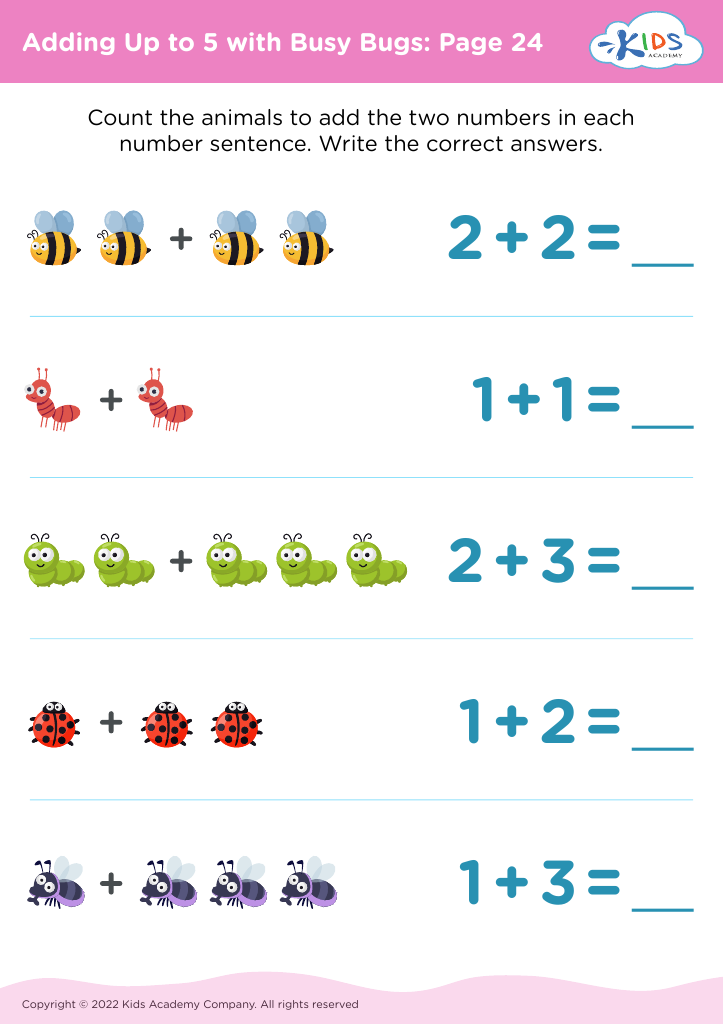
Enhance your child's mathematical journey with our Visualization Skills Addition Worksheets, designed for ages 4-7. These engaging, colorful worksheets focus on developing essential visualization skills that lay the groundwork for understanding addition concepts. Through fun and interactive exercises, kids learn to visualize numbers, grasp quantities, and improve their problem-solving abilities. Our age-appropriate activities foster cognitive growth and build confidence, encouraging a positive attitude towards math. Perfect for home or classroom use, these worksheets will make learning addition enjoyable and effective. Start your child's math adventure today with our carefully crafted visualization skills resources, ensuring a strong foundation for future success in math!
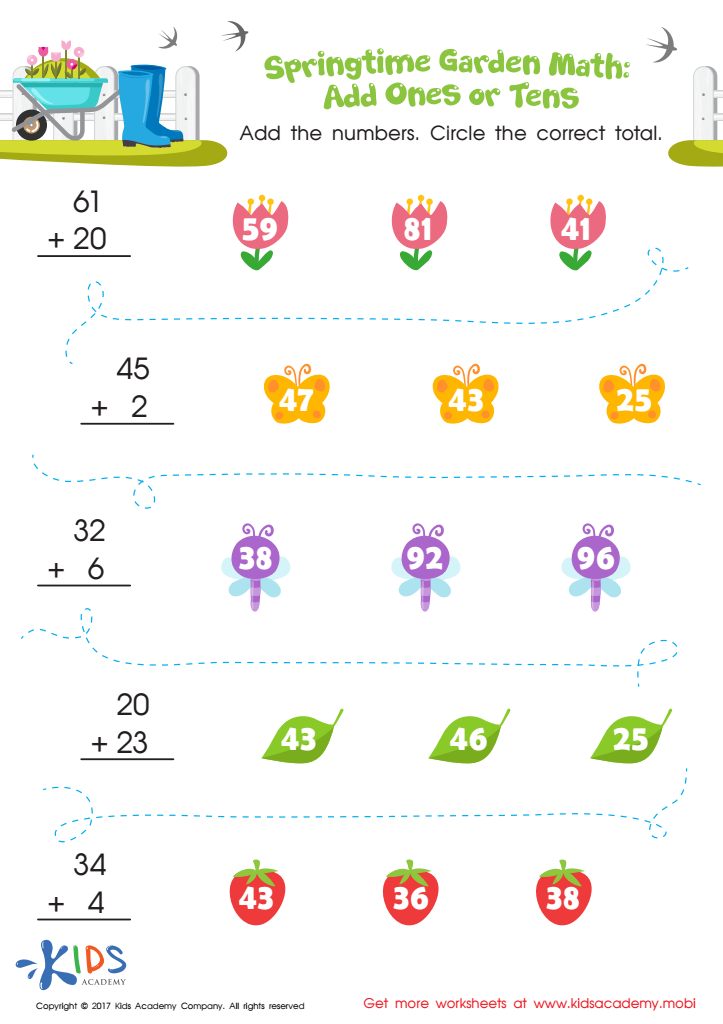
Springtime Garden Math Worksheet
 Assign to My Students
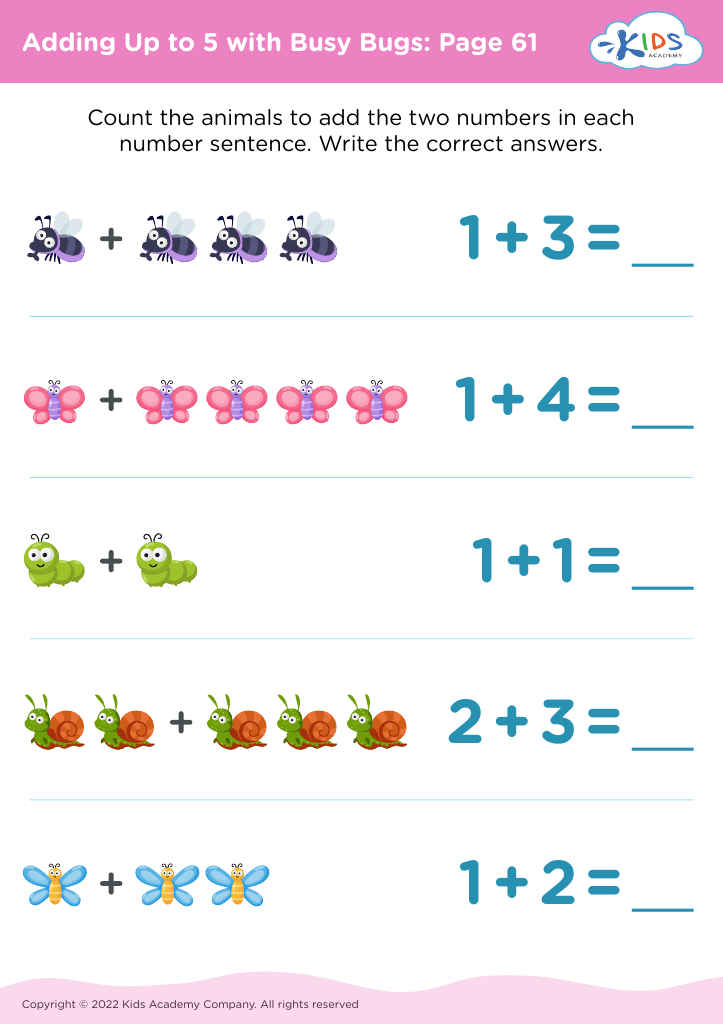








Visualization skills are crucial for children aged 4-7, particularly when it comes to mastering addition. These skills enable young learners to create mental images of numerical concepts, fostering a deeper understanding of mathematics. When kids visualize numbers and relate them to tangible objects or scenarios, they can grasp abstract ideas more easily, turning addition into a concrete concept.
Parents and teachers should care about these skills because they form the foundation for future mathematical learning. Children who develop strong visualization abilities in early grades are better equipped to handle more complex math tasks later on. This boosts their confidence and engagement in learning, helping them to see math as an enjoyable challenge rather than a daunting subject.
Moreover, visualizing addition supports different learning styles. Enhancing these skills through games, story problems, and hands-on activities can accommodate diverse learners, ensuring that each child finds their pathway to success. As the future stewards of their education, parents and teachers can promote a positive attitude toward math by highlighting the importance of visualization, ultimately contributing to lifelong learning and problem-solving skills that extend beyond the classroom. Creating an engaging, visualization-rich environment will help ensure all children thrive in their mathematical journeys.








