Color recognition Arrays Worksheets for Ages 4-7
3 filtered results
-
From - To
Discover our engaging Color Recognition Arrays Worksheets designed for children aged 4-7! These fun, interactive activities help young learners identify and understand colors through visually stimulating arrays. Tailored to develop essential cognitive skills, our worksheets encourage color differentiation and enhance visual recognition in a playful, educational way. Perfect for home or classroom use, these resources promote creativity and support early math concepts while keeping children excited about learning. With a variety of themes and activities, your little ones will enjoy exploring colors in an innovative format. Download and encourage your child’s color recognition journey today!
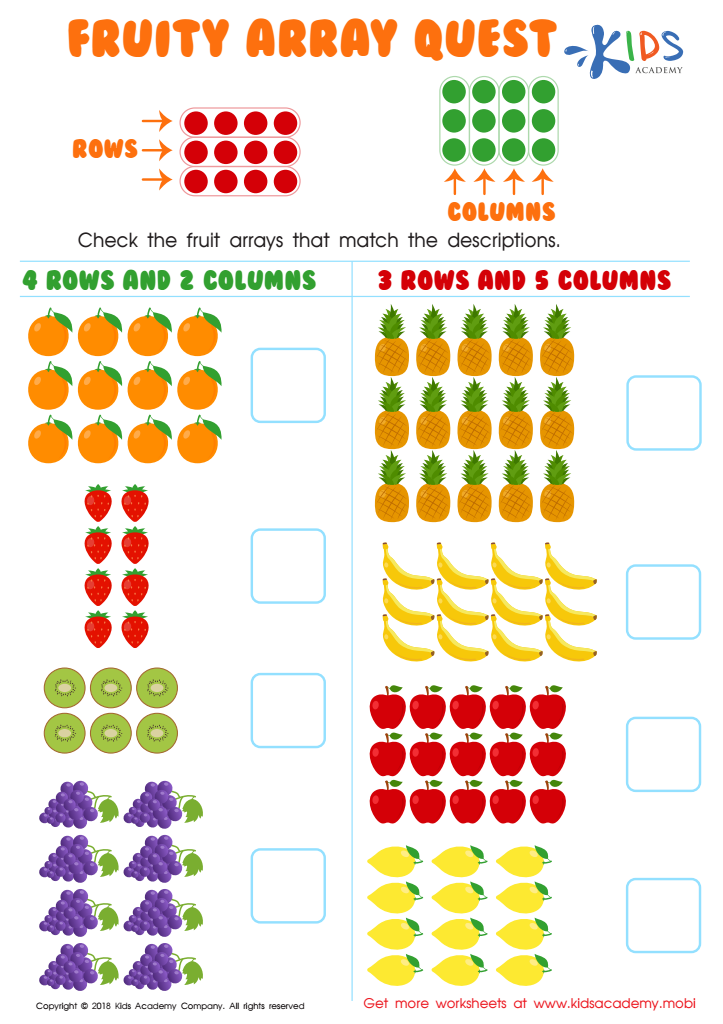
Fruity Array Quest Worksheet
 Assign to My Students
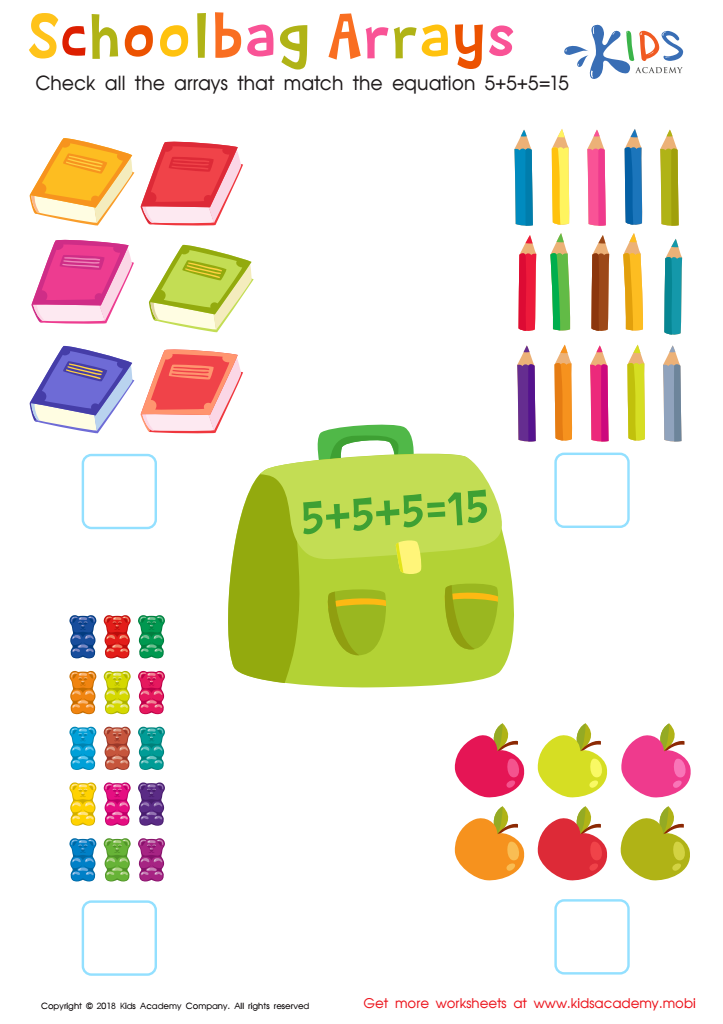
Schoolbag Arrays Worksheet
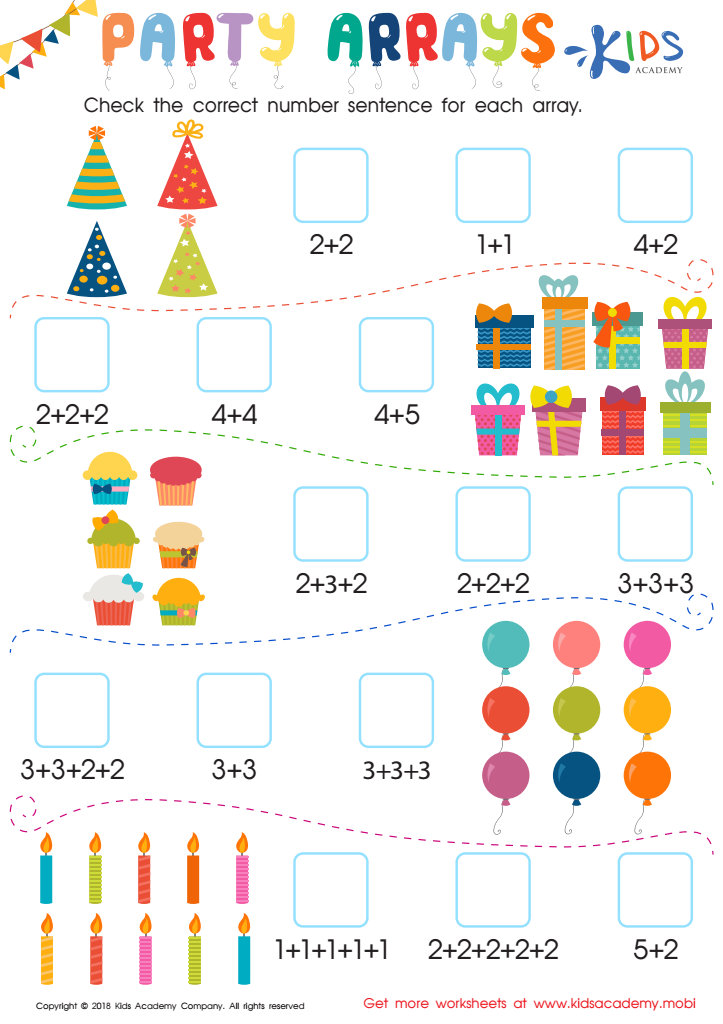
Party Arrays Worksheet








Color recognition arrays play a critical role in the early development of children aged 4-7. At this crucial stage, children are not only learning to identify colors, but they are also developing essential cognitive skills. Educational tools involving color recognition help to enhance visual discrimination, which is foundational for later learning in mathematics and literacy.
Parents and teachers should care about these arrays as they engage children's natural curiosity and creativity. By using color recognition arrays in varied and interactive ways, children can enhance their communication skills, practice social interaction during group activities, and even engage in problem-solving as they categorize and compare colors.
Additionally, color recognition is tied to emotional development; different colors can evoke varying emotions and responses, allowing discussions about feelings. Recognizing and expressing these emotions is a key aspect of social-emotional learning.
Moreover, incorporating color-related activities can make learning enjoyable and memorable. When children participate in playful experiences centered around colors, they establish a positive association with education, fostering a lifelong love of learning. Ultimately, color recognition arrays provide a multifaceted approach to learning, facilitating skill development while also nurturing imagination and emotional intelligence in young learners.








