Visual representation comprehension Fractions of Shapes Worksheets for Ages 4-7
3 filtered results
-
From - To
Explore our engaging "Visual Representation Comprehension: Fractions of Shapes Worksheets" designed specifically for children aged 4-7! These interactive worksheets help young learners grasp the concept of fractions through colorful shapes and visuals. By recognizing and dividing shapes into equal parts, kids develop essential math skills in a fun and stimulating way. Each worksheet features appealing graphics that capture children's attention, making it easier for them to understand how fractions work in real life. Perfect for home or classroom use, these resources promote critical thinking and visual comprehension, ensuring that foundational math skills are acquired with enjoyment and ease!
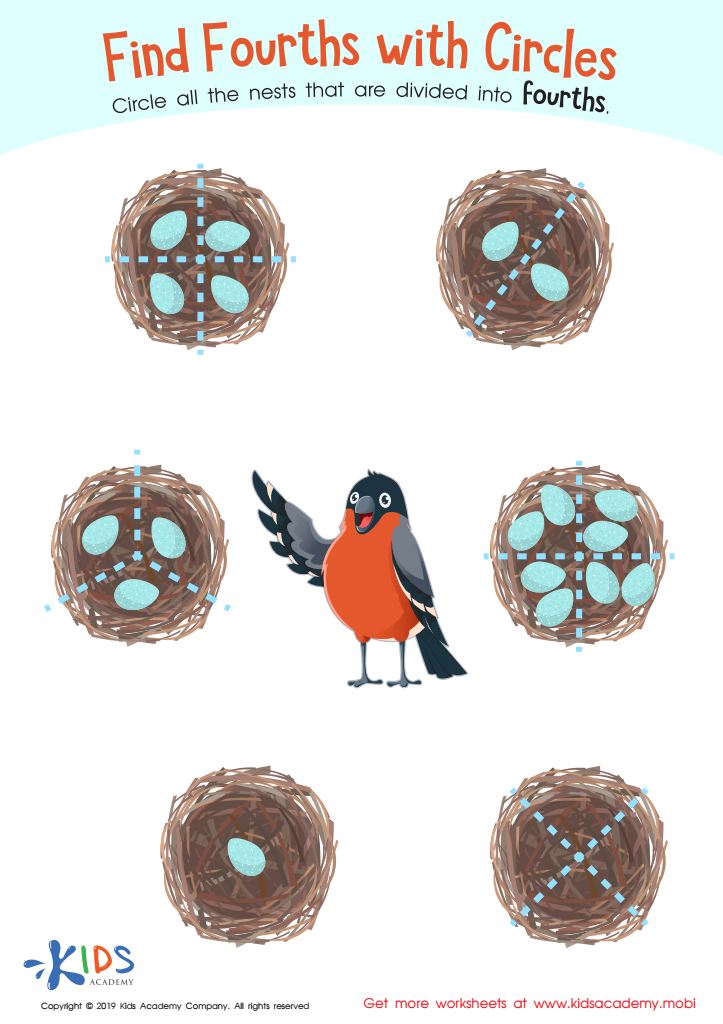
Find Fourths Circles Worksheet
 Assign to My Students
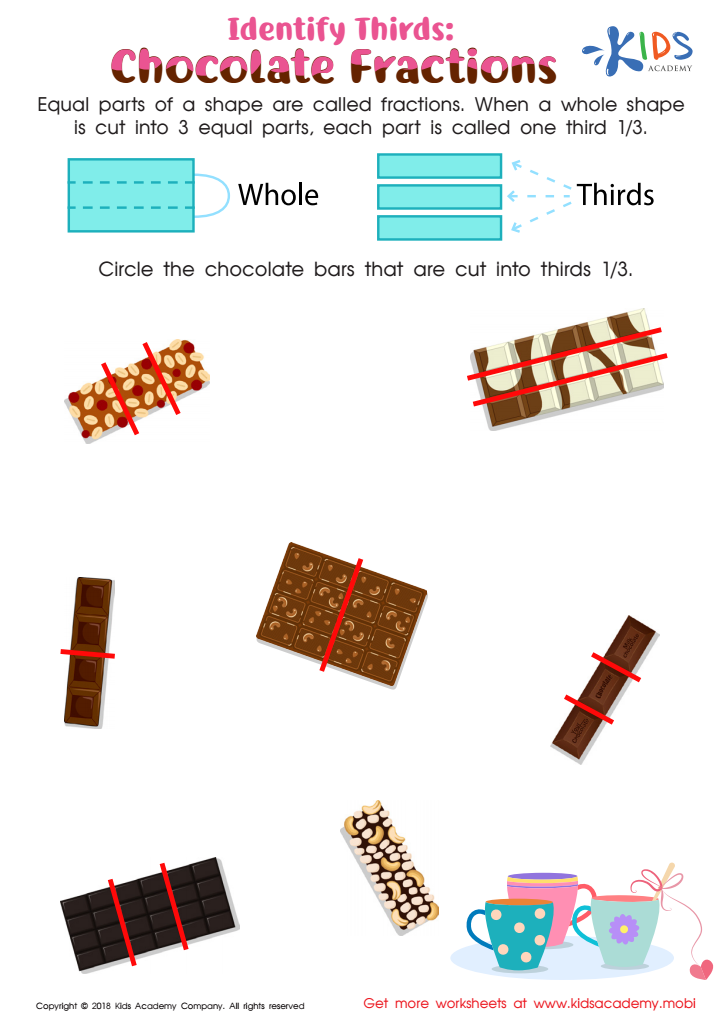
Identify Thirds: Chocolate Fractions Worksheet
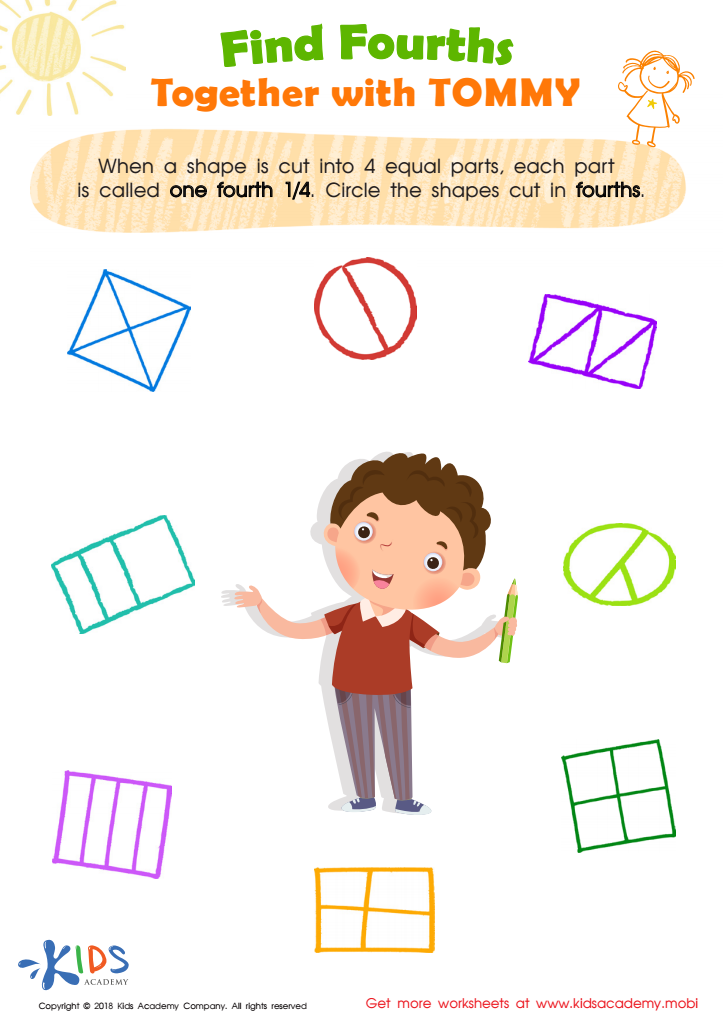
Find Fourths Together with Tommy Worksheet








Visual representation comprehension of fractions, especially of shapes, plays a crucial role in early mathematics education for children aged 4 to 7. Understanding fractions conceptually ignores mere memorization and instead fosters deeper cognitive skills, promoting critical thinking and problem-solving. Visual aids such as pie charts, number lines, or shape divides help children grasp how fractions function within a whole, laying the groundwork for future mathematical learning.
For parents and teachers, incorporating fractions through visual means can create engaging, fun, and interactive learning experiences. This age group is naturally curious and learns best through hands-on activities. By using tangible fractions like dividing a pizza or chocolate bar, educators can tie mathematical concepts to real-world scenarios, thereby enhancing a child's ability to comprehend and relate to their learning.
Furthermore, mastering visual fractions helps children connect with various mathematical properties, reinforcing their ability to understand ratios and proportions in later grades. This foundational knowledge boosts confidence and a positive attitude toward mathematics, reducing anxiety surrounding complex topics in the future. Ultimately, supporting visual representation comprehension in fractions ensures that children are well-equipped to tackle math challenges as they progress through their education.