Basic geometry Geometry Worksheets for Ages 4-7
3 filtered results
-
From - To
Discover our engaging Basic Geometry Worksheets designed specifically for children ages 4-7! These printable resources provide a fun and interactive way for young learners to explore foundational geometry concepts. Each worksheet features vibrant illustrations and simplified exercises to help kids recognize shapes, understand spatial relationships, and develop essential problem-solving skills. Perfect for use at home or in the classroom, our geometry worksheets promote hands-on learning and encourage creativity. Alongside core academic skills, they build confidence in young mathematicians. Download now and watch your child's understanding of geometry grow through playful practice and enjoyable activities!
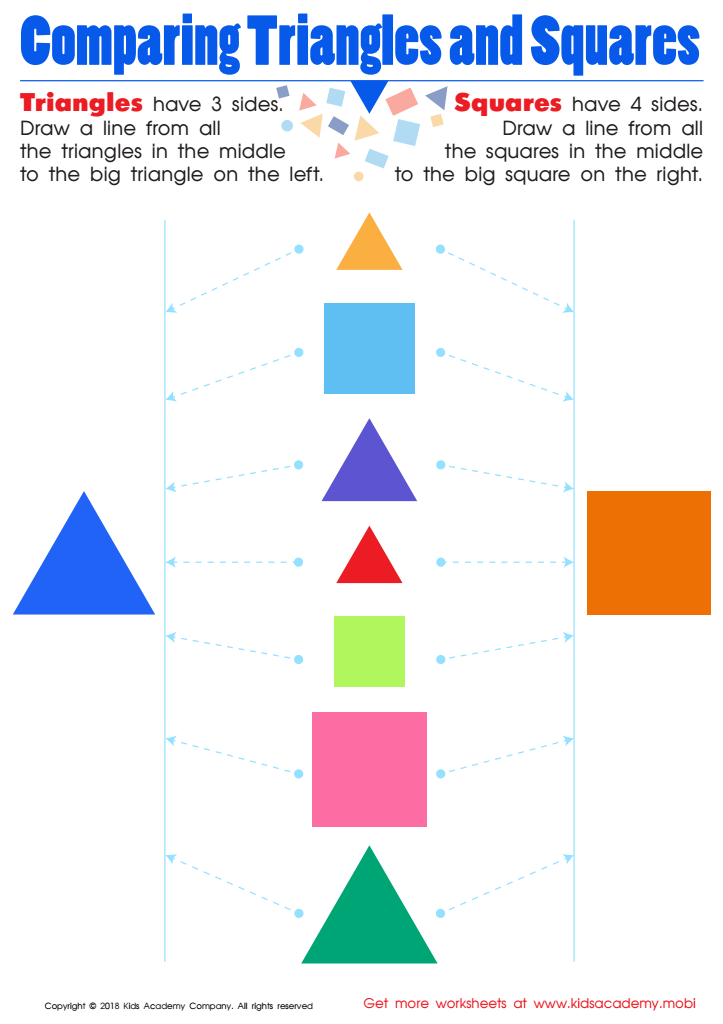
Comparing Triangles Squares Worksheet
 Assign to My Students











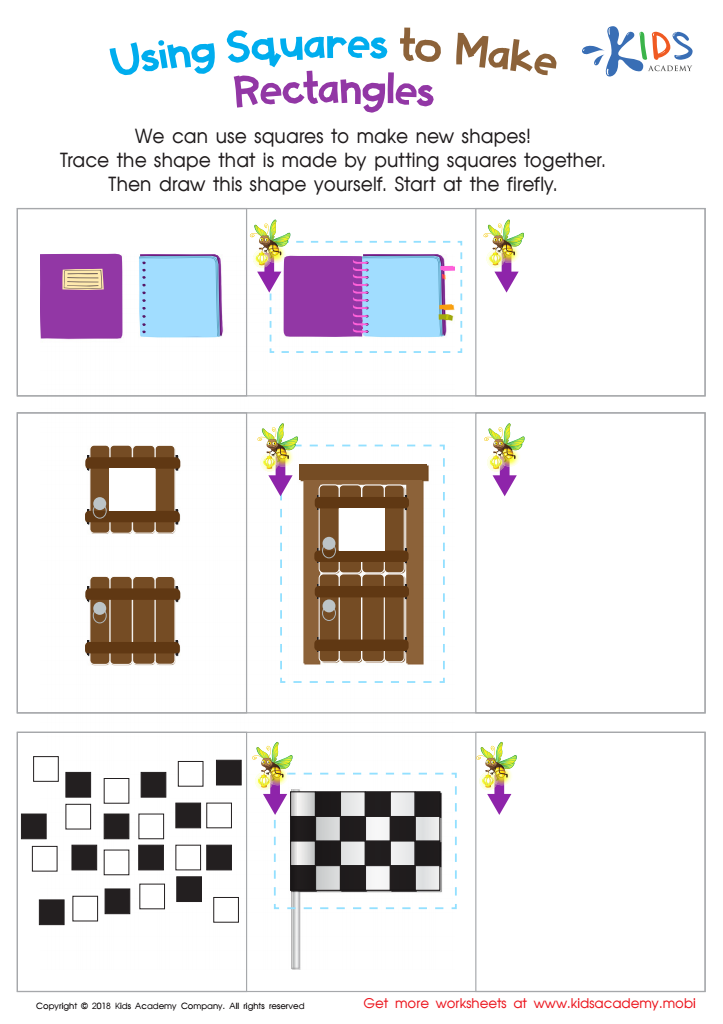
Using Squares to Make Rectangles Worksheet
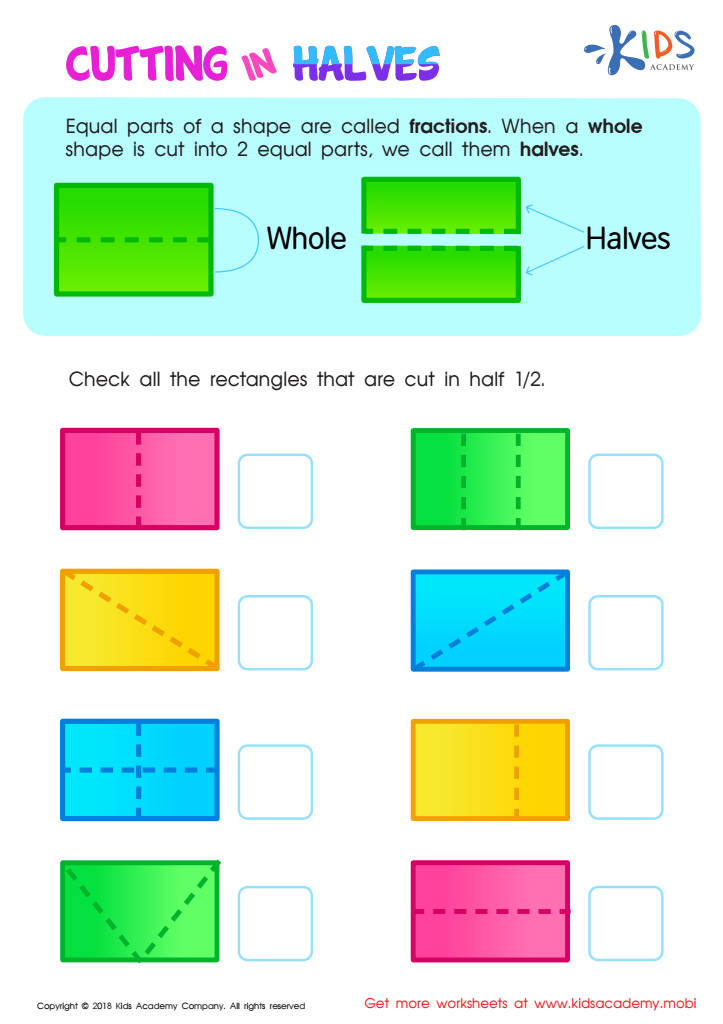
Cutting in Halves Worksheet








Basic geometry lays the foundation for critical thinking and problem-solving skills essential for children's development. For children aged 4-7, geometric concepts help them understand shapes, sizes, spatial awareness, and relationships between objects. This foundational knowledge enhances their cognitive abilities, enabling them to categorize, compare, and make connections with the world around them.
Parents and teachers should care because geometric principles encourage curiosity and exploration. Activities involving shapes and patterns foster creativity, allowing children to express themselves while developing key skills such as observation and reasoning. Moreover, early exposure to geometry supports math readiness, paving the way for more complex mathematical concepts later in school.
Incorporating geometry into everyday activities—like cooking, building with blocks, or simply recognizing shapes in the environment—can transform learning into a fun and interactive experience. This engagement not only promotes a solid understanding of essential mathematical skills but also boosts children's confidence and enjoyment of learning.
Ultimately, supporting early geometry education equips children with vital tools that not only apply in academics but also in their everyday life, enhancing their ability to navigate their environment and solve problems as they grow.








