Differentiating shapes Geometry Worksheets for Ages 4-7
3 filtered results
-
From - To
Introduce your child to the exciting world of geometry with our "Differentiating Shapes Geometry Worksheets for Ages 4-7"! Tailored for young learners, these fun and engaging activities help children recognize, differentiate, and understand basic shapes. The worksheets feature vibrant images and interactive exercises designed to foster a strong foundation in geometrical concepts. Perfect for enhancing critical thinking, fostering creativity, and promoting problem-solving skills, our expertly crafted worksheets are ideal for both classroom use and at-home learning. Transform your child's mathematical journey with our comprehensive, age-appropriate geometry resources. Explore, identify, and enjoy the captivating possibilities of shapes today!
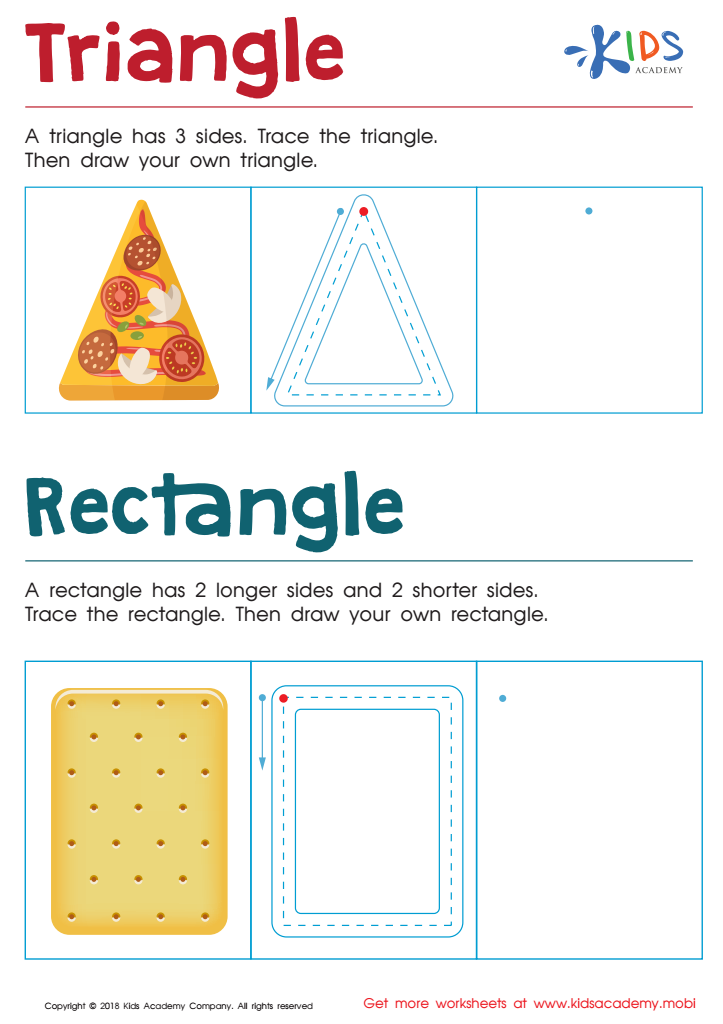
Triangle Rectangle Worksheet
 Assign to My Students











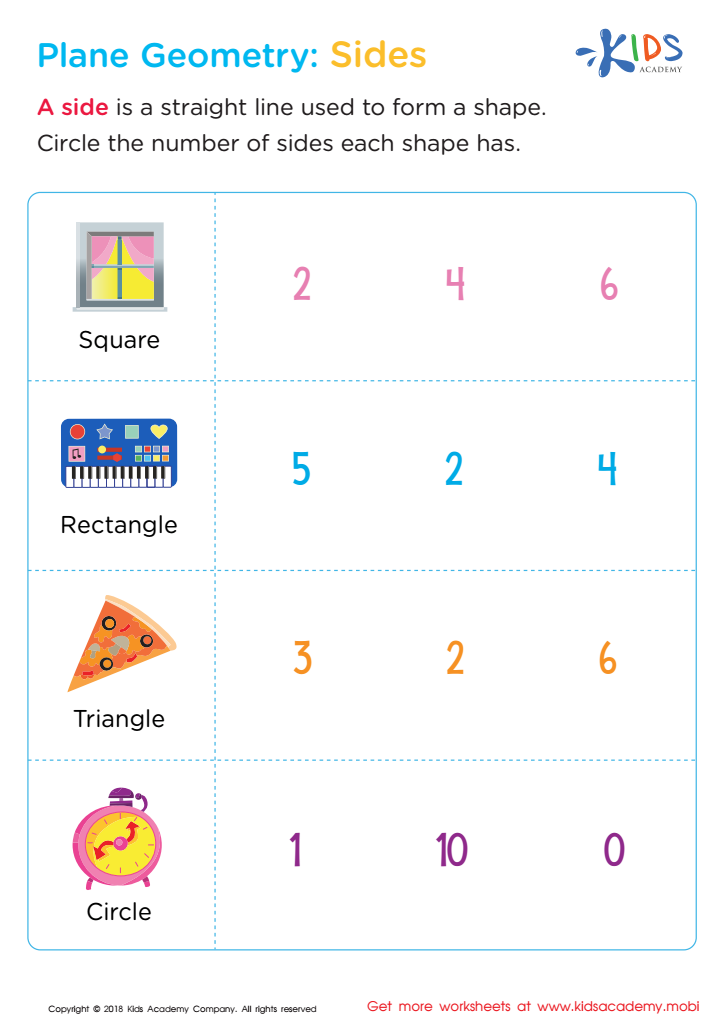
Plane Geometry: Sides Worksheet
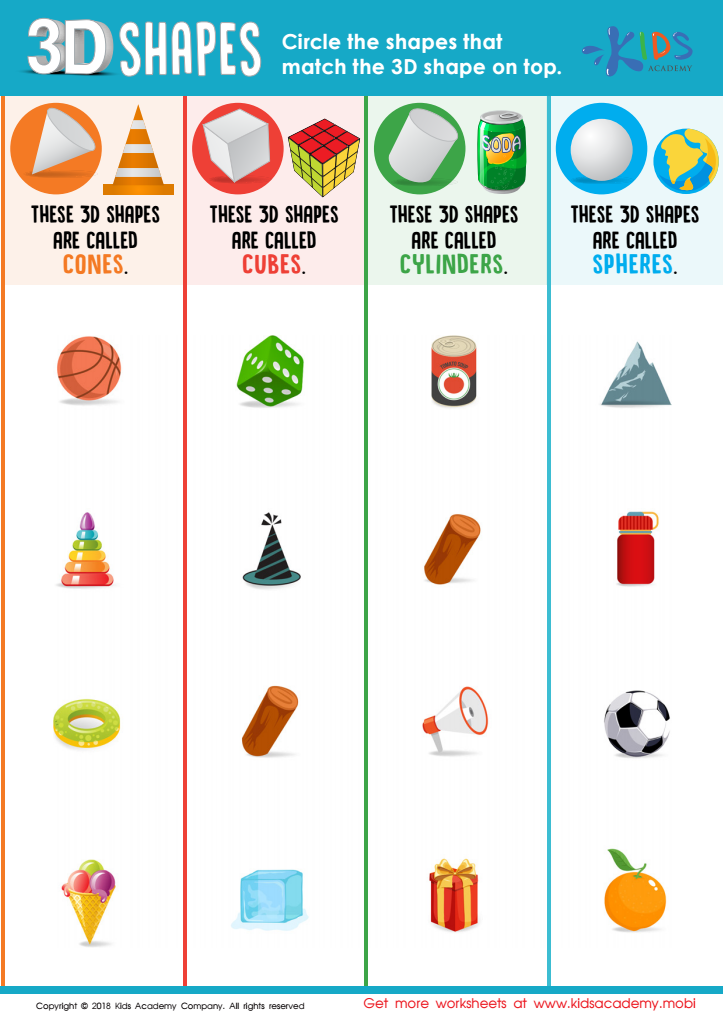
3D Shapes Worksheet








Differentiating shapes in geometry is crucial for young children aged 4-7 for several reasons. At this developmental stage, kids are honing their cognitive abilities, and identifying and categorizing shapes helps build the foundation for more complex mathematical concepts. Geometry encourages spatial awareness, which is essential for problem-solving and understanding the world around them. Recognizing shapes also improves their ability to grasp other subjects like reading and writing; for example, distinguishing a "circle" from an "oval" translates to correctly identifying the letter “o” in different contexts.
Early mastery of shape differentiation aids in developing fine motor skills, as children often manipulate shapes through drawing or physical activities, like using shape-sorter toys. This tactile experience reinforces their understanding and retention. Furthermore, geometry plays a significant role in everyday life – lace classifiers based on food - like a slice of pie being a triangle –can spark connections between geometric concepts and real-world applications, making learning more relatable and exciting.
Finally, fostering a positive attitude towards learning at a young age lays the groundwork for later academic achievement and a love for lifelong discovery. When children succeed in understanding how shapes fit into their world, their overall confidence blossoms, encouraging them to tackle new challenges eagerly. Thus, parents and teachers should commit to integrating geometric learning in early education.








