Learning addition Numbers Worksheets for Ages 4-7
4 filtered results
-
From - To
Discover engaging addition worksheets designed specifically for children ages 4-7! Our resources aim to make learning addition fun and accessible. With colorful illustrations and varied exercises, kids will practice their addition skills through interactive activities that enhance number recognition and basic arithmetic. These worksheets are perfect for reinforcing classroom learning or providing extra practice at home. Tailored to suit young learners, our materials inspire confidence and build a strong foundation in math. Whether your child is a beginner or ready for a challenge, our addition worksheets cater to all skill levels—helping them develop critical thinking and problem-solving abilities. Start your math journey today!
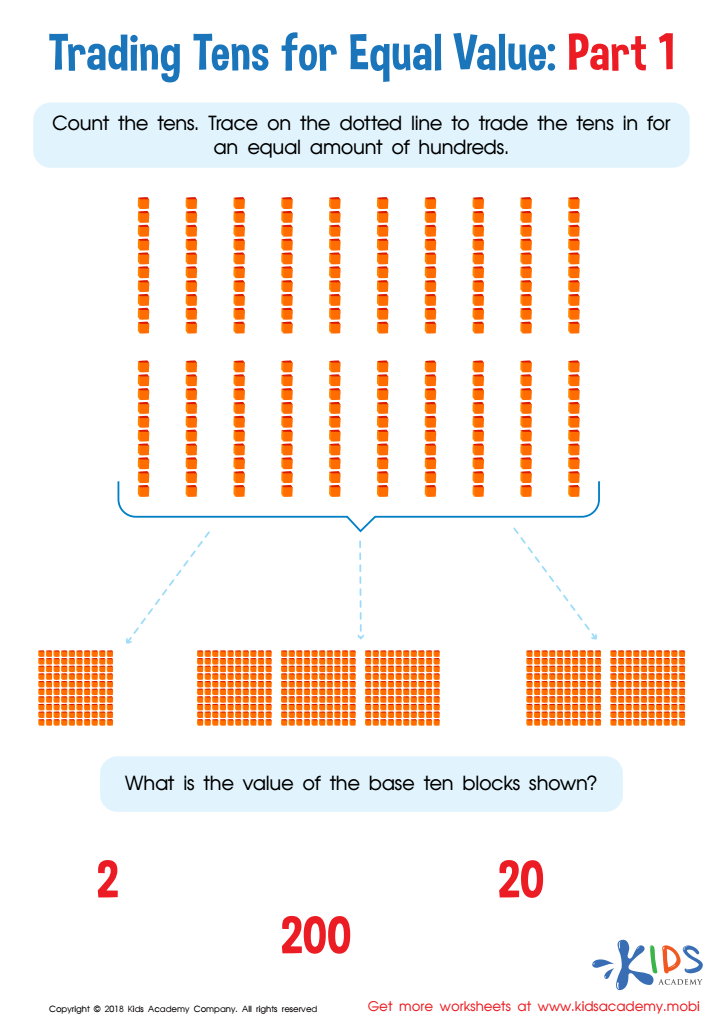
Trading Tens for Equal Value Worksheet: Part 1
 Assign to My Students
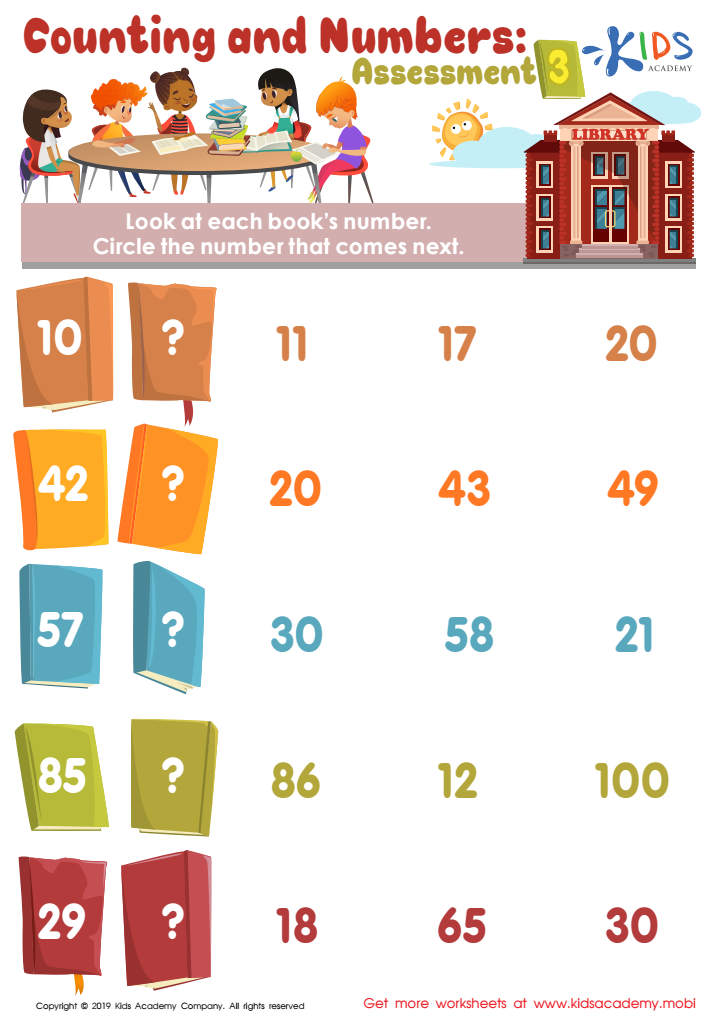
Counting and Numbers: Assessment Worksheet
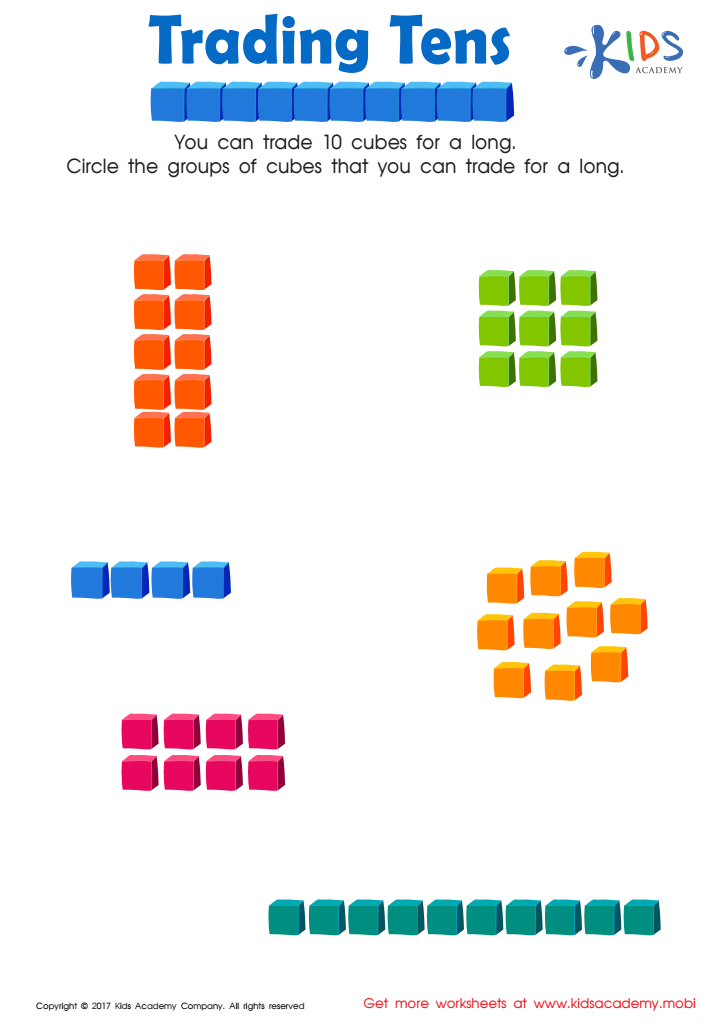
Trading Tens Worksheet
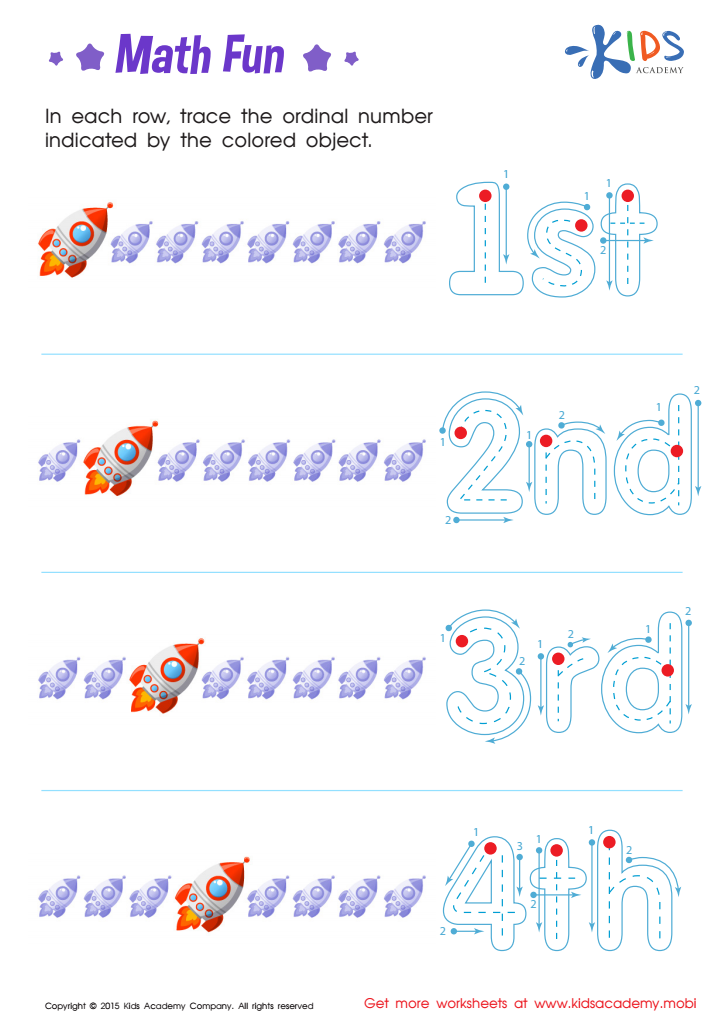
Ordinal Numbers: Math Fun Worksheet








Teaching addition to children aged 4-7 lays a vital foundation for their mathematical understanding and overall cognitive development. At this young age, children's brains are highly adaptable and receptive, making it an ideal time to introduce core concepts like addition. Mastering basic addition skills not only enhances mathematical proficiency but also fosters problem-solving abilities and critical thinking.
Moreover, understanding addition supports a child's confidence in their academic journey. Children who grasp these concepts early are more likely to perform better in school, creating a positive cycle of learning. Early mastery of addition also aids in the development of language skills, as children become familiar with numerical vocabulary and phrases associated with addition.
In a broader context, foundational math skills are crucial for daily life functions, from counting change to measuring ingredients in cooking. Additionally, early competency in mathematics is often linked to future success in STEM (Science, Technology, Engineering, and Mathematics) fields, which are increasingly significant in today's job market. Thus, parents and teachers should prioritize the learning of addition to not only equip children with essential math skills but also help them thrive in various aspects of their lives.








