Money recognition Numbers Worksheets for Ages 4-7
3 filtered results
-
From - To
Introduce your little learners to the world of money with our Money Recognition Numbers Worksheets for Ages 4-7! Designed to combine fun and education, these worksheets help young kids understand and identify different coins and bills while improving their number recognition skills. Through a variety of engaging activities, children will match numbers to corresponding currency items, compare values, and practice simple addition and subtraction with money. Perfect for preschoolers and early elementary students, these worksheets provide a critical foundation in both math and financial literacy, preparing kids for real-life transactions. Make learning about money an enjoyable adventure today!
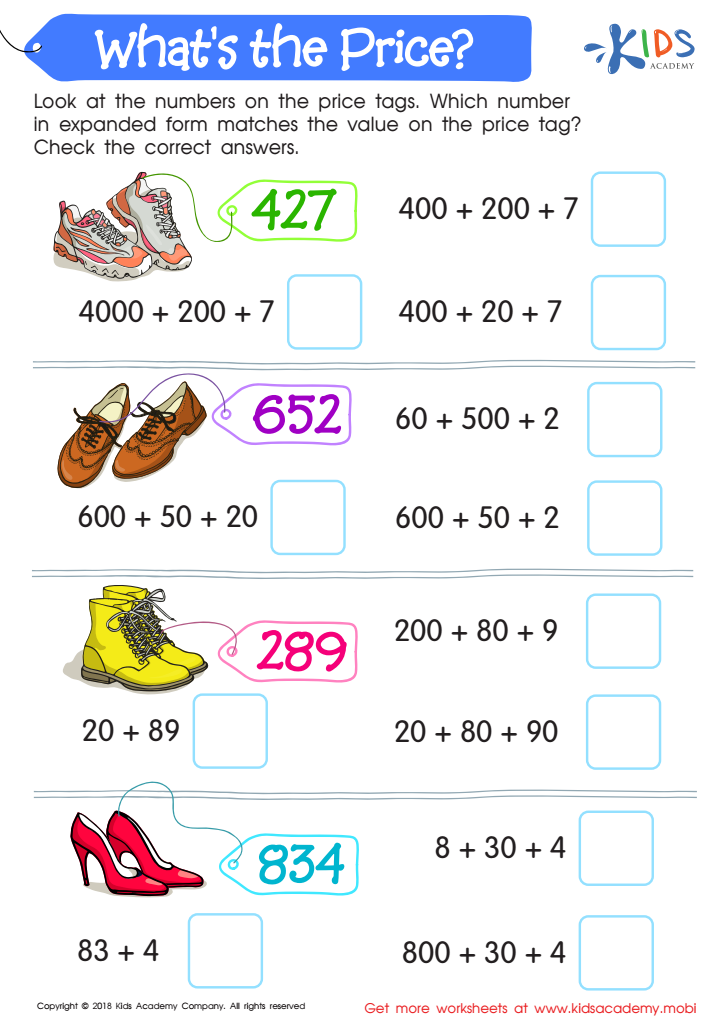
What's the Price? Worksheet
 Assign to My Students
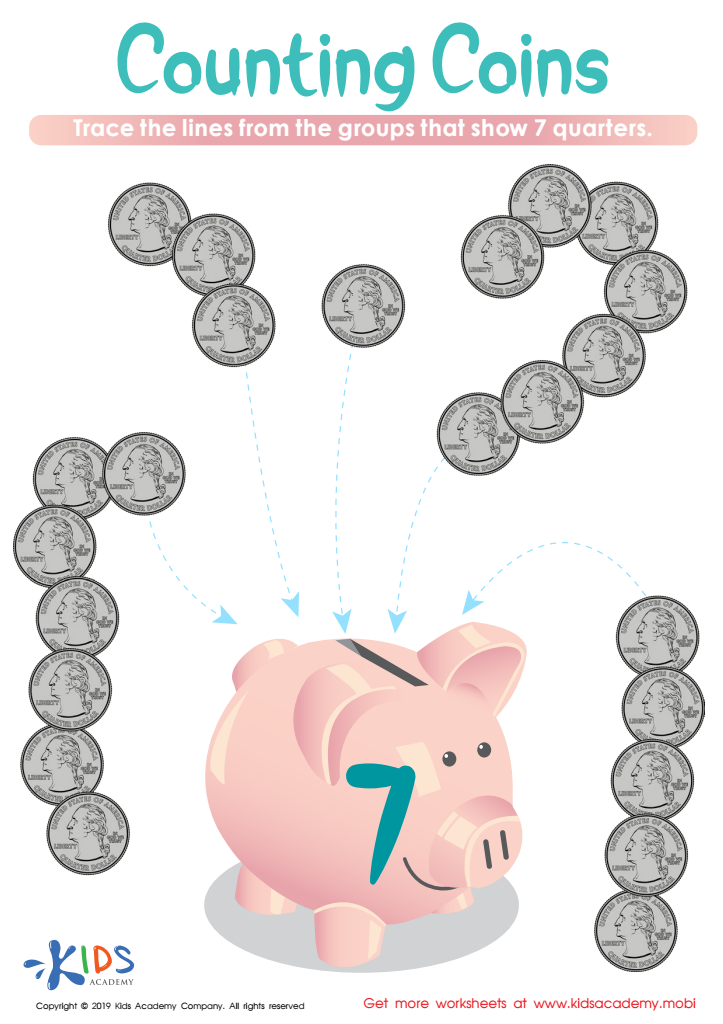
Counting Coins Worksheet
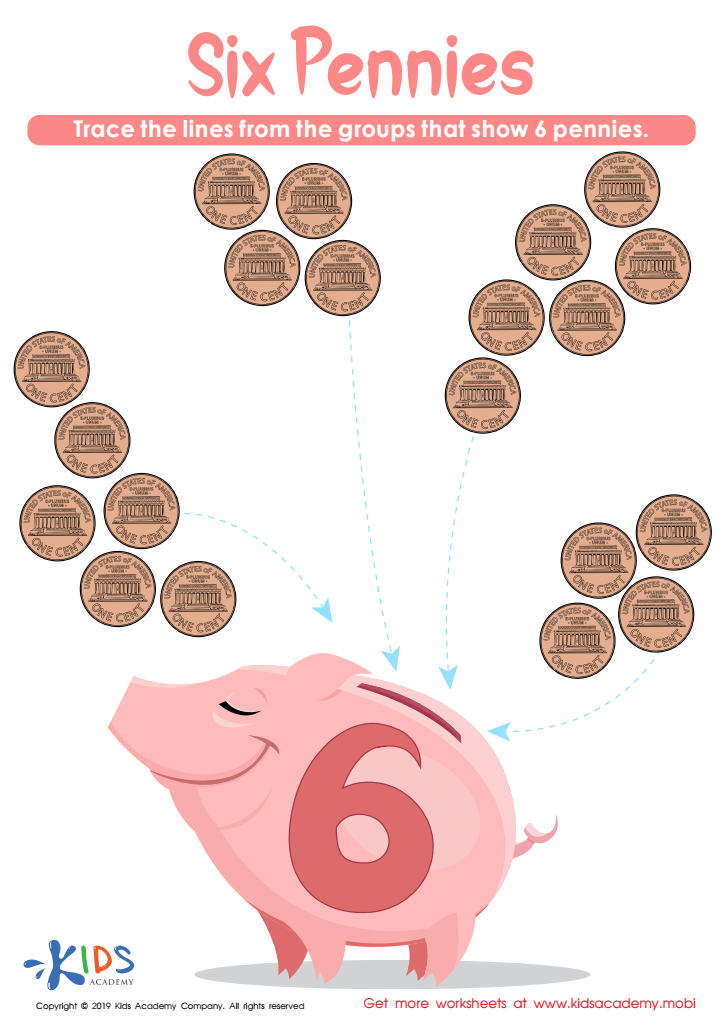
Six Pennies Worksheet



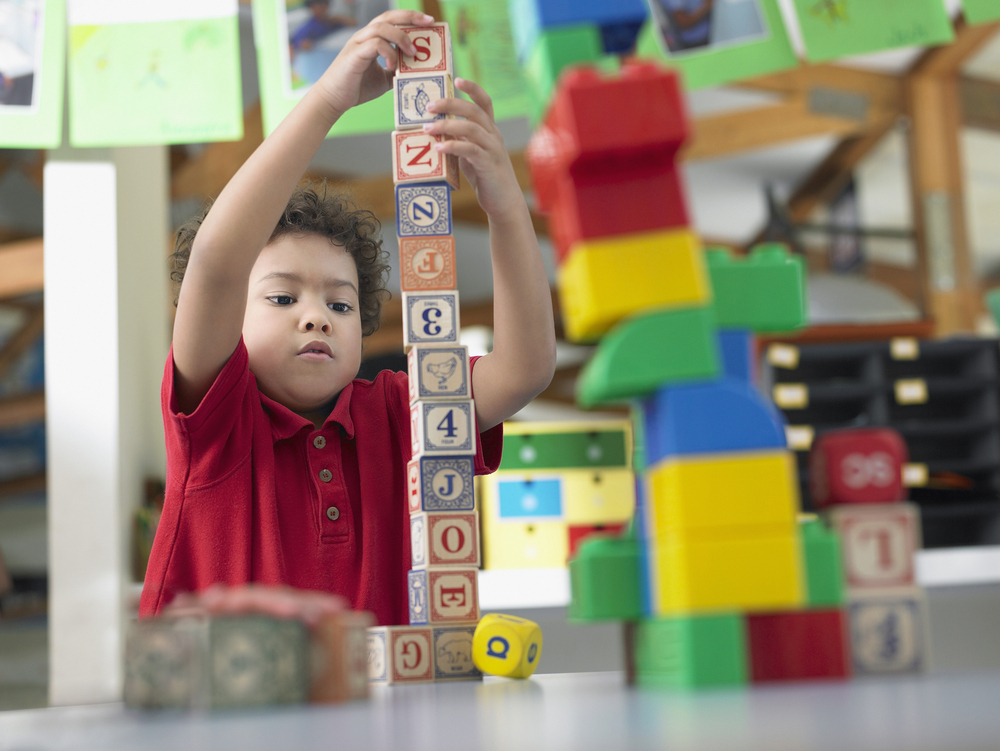




Money recognition and understanding numbers are critical skills for children ages 4-7 as they lay the groundwork for future financial literacy and numerate competence. By caring about and fostering these skills, parents and teachers equip children with essential life skills and educational advantages.
At this developmental stage, children are like sponges, capable of absorbing and retaining new concepts with ease. Introducing them to money and numbers helps them grasp fundamental mathematical concepts such as counting, addition, and subtraction. Recognizing different coins and bills, along with their values, cultivates categorization skills and comparative reasoning, paving the way for more advanced math later on.
Additionally, money recognition augments their understanding of the world. Children start to comprehend basic economic principles like exchange and value, gaining a practical viewpoint on everyday transactions. These insights foster a sense of responsibility and the beginnings of financial decision-making—the basis for smarter financial management in later life.
Moreover, these activities enhance cognitive development, including memory, problem-solving, and attention to detail. Hands-on exercises, like role-playing a shopping experience, also significantly enhance social, communication, and decision-making skills.
In summary, emphasizing money recognition and numbers in early education provides numerous cognitive, practical, and social benefits that ensure children are well-prepared for academic achievements and informed, responsible life choices.








