
Addition up to 5 Math Worksheets for Ages 4-7
4 filtered results
Difficulty Level
Grade
Age
-
From - To
Subject
Activity
Standards
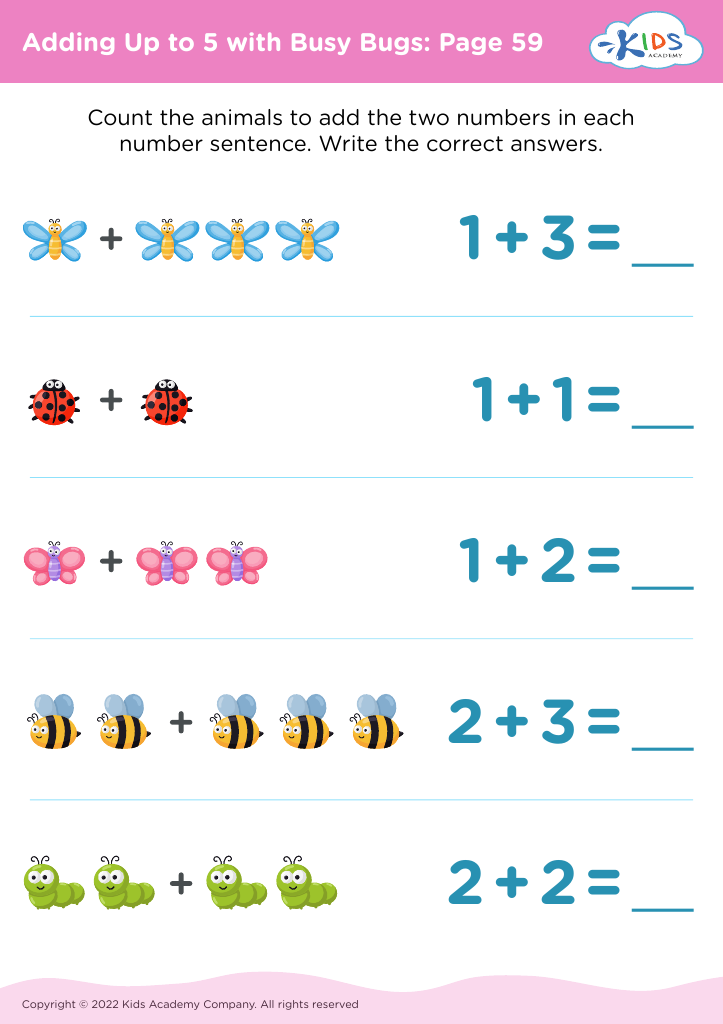
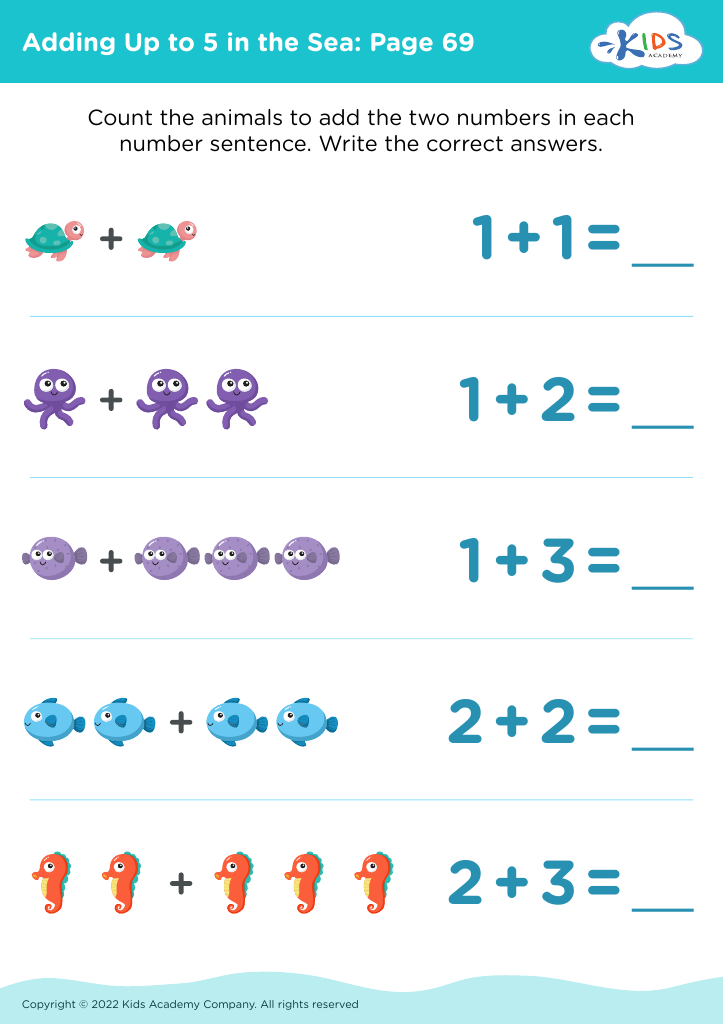
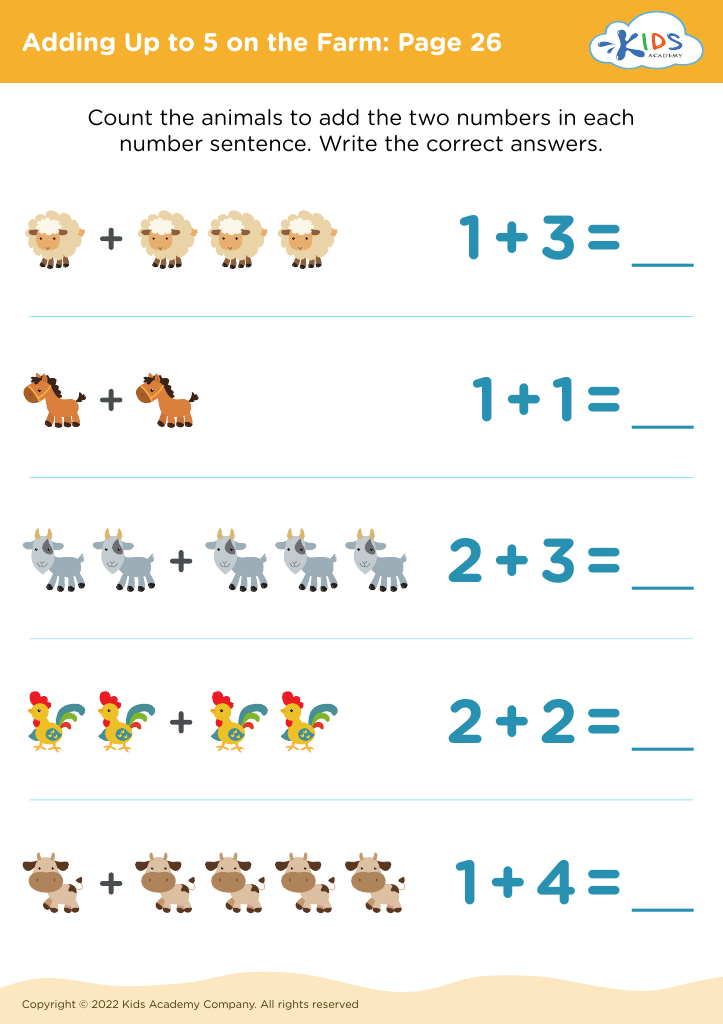
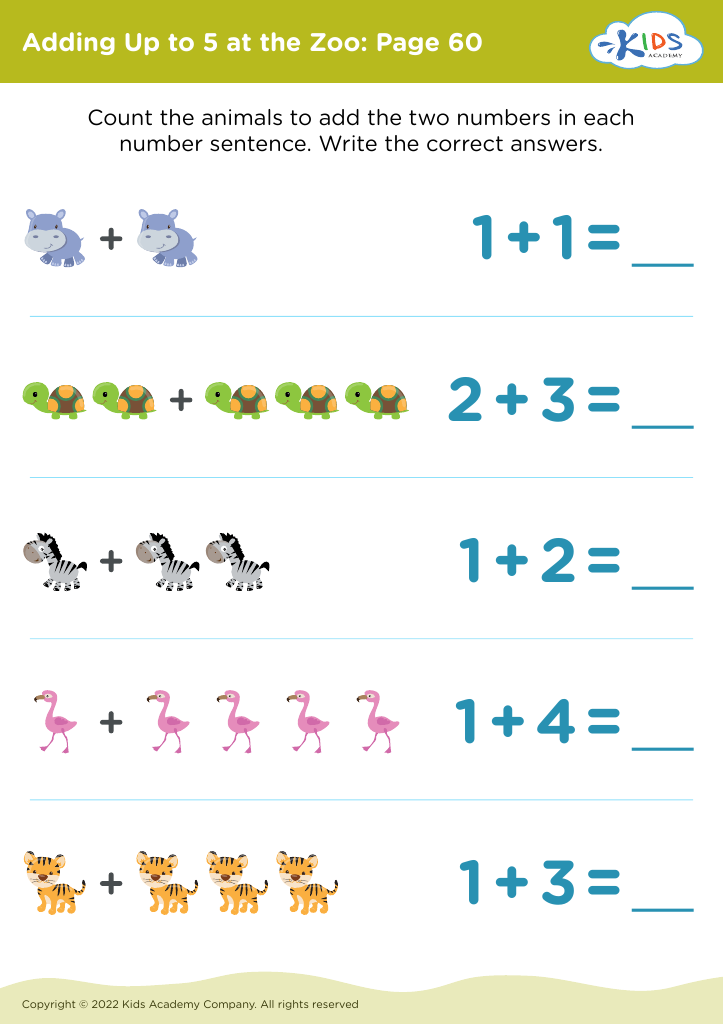
Introduce young learners to the basics of math with our "Addition up to 5" worksheets, perfect for children ages 4-7. Each engaging and colorful worksheet is designed to make learning fun while developing essential addition skills. These printables help children grasp numbers and simple math concepts through interactive exercises that feature playful themes and relatable scenarios. Ideal for both classroom and home use, these worksheets provide a strong foundation in math by promoting hands-on practice in a supportive, easy-to-understand format. Boost your child's confidence in math with our expertly crafted addition worksheets today!
Favorites
With answer key
Interactive
Join Kids Academy for Free
Who is primarily going to use this learning content?








Parents and teachers play a pivotal role in nurturing early mathematical skills in children, and understanding addition up to 5 is a crucial building block for those aged 4-7. During these foundational years, young children are naturally curious and eager to explore numerical relationships. Introducing simple addition fosters this curiosity and builds a sense of achievement and confidence. Recognizing and practicing addition up to 5 helps children grasp fundamental mathematical concepts, such as number recognition, counting, and one-to-one correspondence.
These early math skills are essential for developing logical thinking and problem-solving abilities. As children progress through their educational journey, a solid understanding of addition provides a reputable framework for tackling more complex arithmetic operations. This early mastery encourages a positive attitude toward mathematics, reducing math anxiety and promoting a lifelong appreciation for numeracy.
Moreover, engaging activities that involve addition, such as using manipulatives, visual aids, and interactive games, make learning enjoyable and foster a hands-on understanding. Teachers and parents should invest time and resources in these endeavors to cultivate a strong mathematical foundation. This investment ultimately supports the child’s overall academic growth and helps them excel not only in mathematics but in other disciplines where analytical skills are required.








