Basic geometry Math Worksheets for Ages 4-7
3 filtered results
-
From - To
Introduce your child to the fun world of shapes and patterns with our Basic Geometry Math Worksheets designed for ages 4-7, available at Kids Academy. These engaging printables help young learners explore foundational geometry concepts through hands-on activities and colorful exercises. Kids will enhance their spatial awareness, shape recognition, and logical thinking while tackling puzzles that involve identifying, comparing, and composing shapes. Ideal for preschool through early elementary, these worksheets make geometry meaningful and enjoyable for young minds. Perfect for classroom or home use, start building strong math skills today with these creative and educational resources!
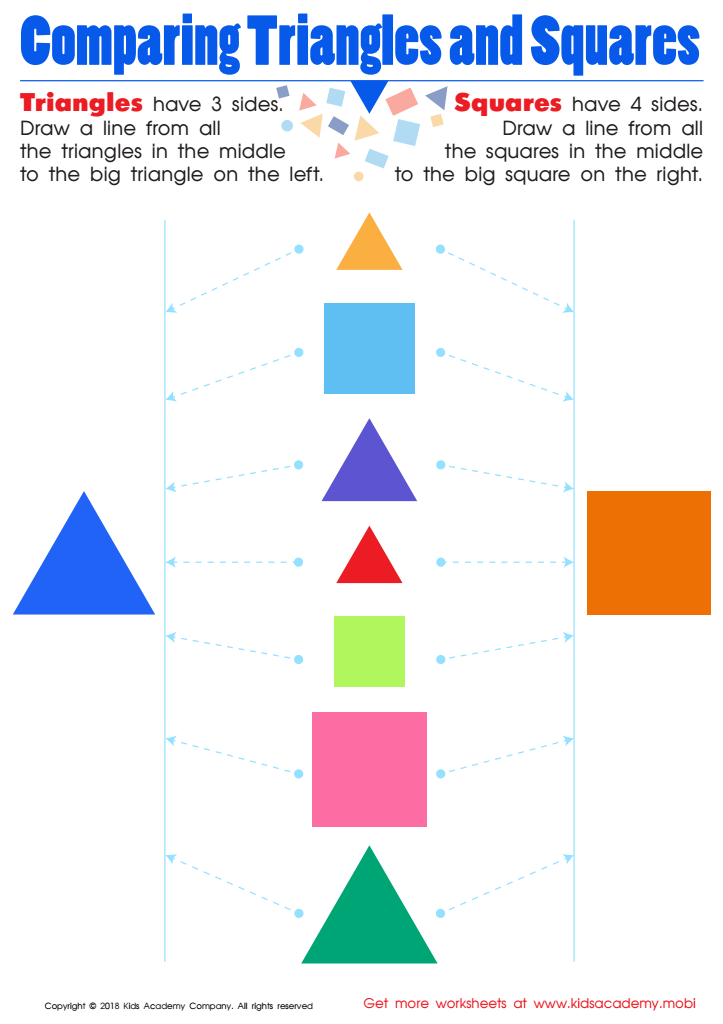
Comparing Triangles Squares Worksheet
 Assign to My Students
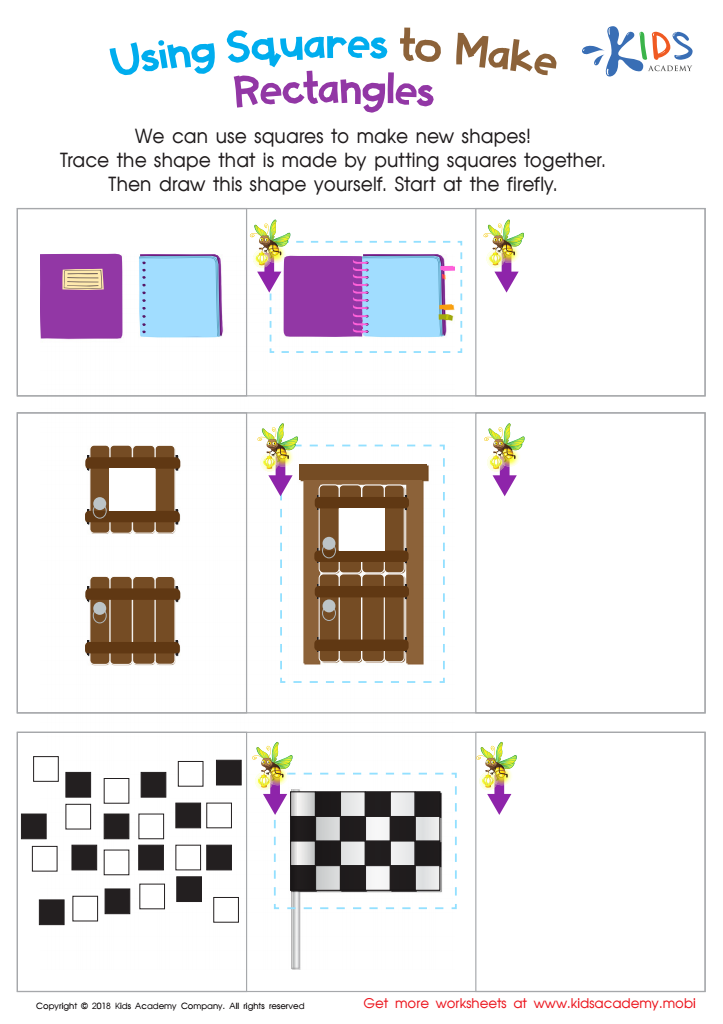
Using Squares to Make Rectangles Worksheet
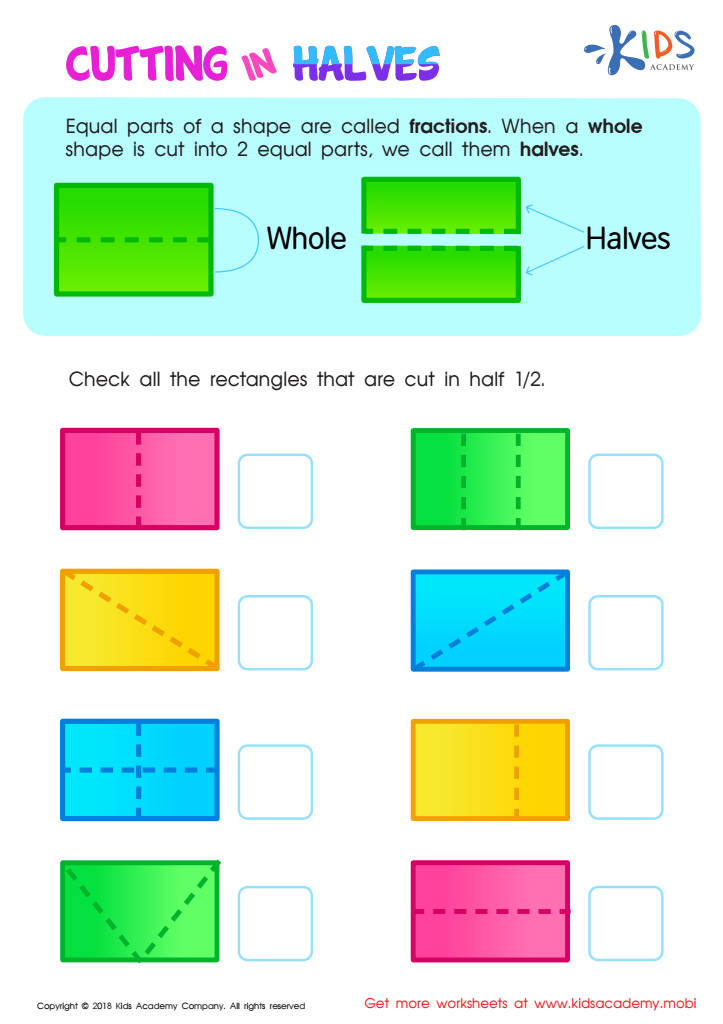
Cutting in Halves Worksheet







Parents and teachers should prioritize basic geometry for children aged 4-7, as it lays a vital foundation for cognitive and spatial development. Early exposure to shapes, patterns, and spatial reasoning fosters essential problem-solving and critical-thinking skills that benefit children across various subjects. At this young age, children are naturally curious and absorb information quickly; introducing them to geometry can enhance their engagement and enjoyment in learning.
Understanding basic geometric concepts such as recognizing and naming shapes, understanding symmetry, and grasping spatial relationships not only strengthens math proficiency but also improves fine motor skills and hand-eye coordination. For instance, tracing shapes can develop pencil control, aiding in writing readiness.
Moreover, early geometry education correlates with improved academic performance. It prepares children for more advanced math and fosters a positive attitude towards the subject. Activities like building blocks, puzzle games, and drawing can make learning geometry fun and experiential, aiding in concept retention.
Parents and teachers play a crucial role in introducing these concepts in an enjoyable and interactive way. Encouraging this learning in everyday environments can make the subject less abstract and more relatable. By investing in a strong geometric foundation, we equip children with skills that benefit their academic journey and everyday problem-solving scenarios.








