Basic math abilities Math Worksheets for Ages 4-7
3 filtered results
-
From - To
Unlock your child's potential with our Basic Math Abilities Math Worksheets for ages 4-7. Designed to build a strong foundation in early math skills, these engaging, printable worksheets cover essential topics such as counting, addition, subtraction, shapes, and patterns. Tailored for young learners, our worksheets make learning interactive and fun. Each activity is crafted to boost confidence and ensure mastery of fundamental math concepts. Perfect for use at home or in the classroom, our meticulously designed resources will nurture your child's math abilities and instill a love for learning from an early age. Start your child's math journey today!
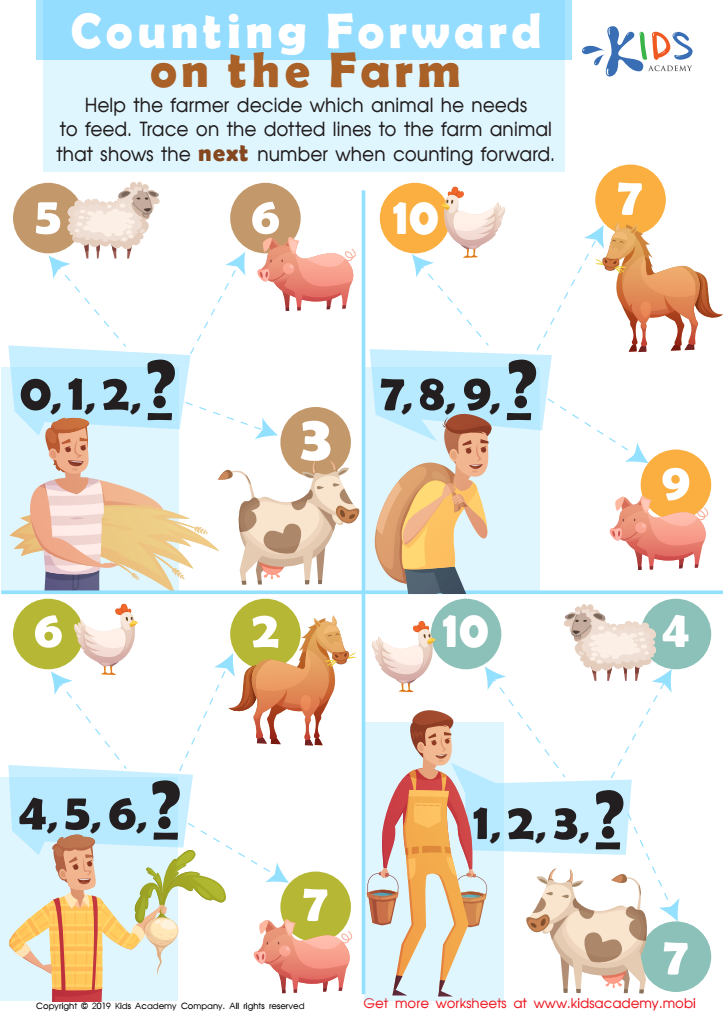
Counting Forward On the Farm Worksheet
 Assign to My Students
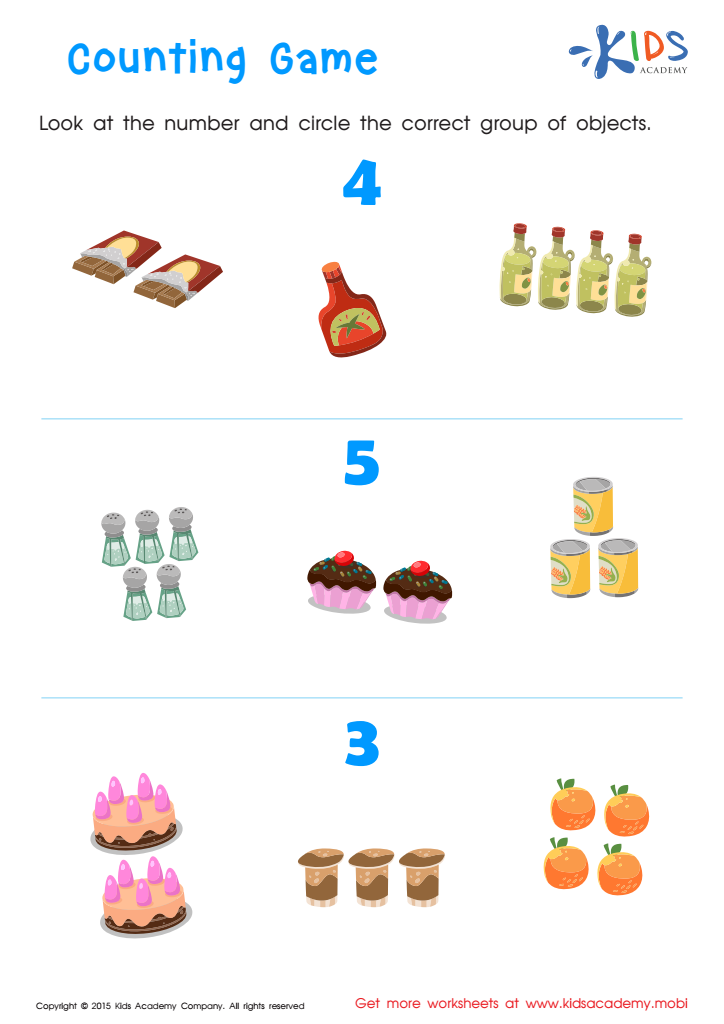
Counting Worksheet







Basic math abilities for children aged 4-7 are critical and merit the attention of both parents and teachers. At this stage, children's brains are exceptionally malleable and responsive to new information. Developing foundational skills in areas such as number recognition, counting, and basic arithmetic sets the groundwork for more complex mathematical concepts later in life.
Understanding basic math helps children in a multitude of ways. For instance, it enhances their problem-solving abilities, critical thinking, and logical reasoning, skills they will use across various subjects and real-life situations. Additionally, early math skills are strong predictors of later academic success, not just in mathematics but also in other areas like reading.
Math is also omnipresent in everyday life, from telling time to understanding money to cooking measurements. Children with solid math foundations will find daily tasks easier and more intuitive. Furthermore, early positive experiences with math can foster a lifelong interest and confidence in the subject, diminishing math anxiety and boosting self-esteem.
In essence, ensuring early acquisition of basic math skills equips children with crucial tools for both academic achievement and practical life. That's why it's essential for both parents and teachers to prioritize and nurture these skills during the formative years of ages 4-7.








